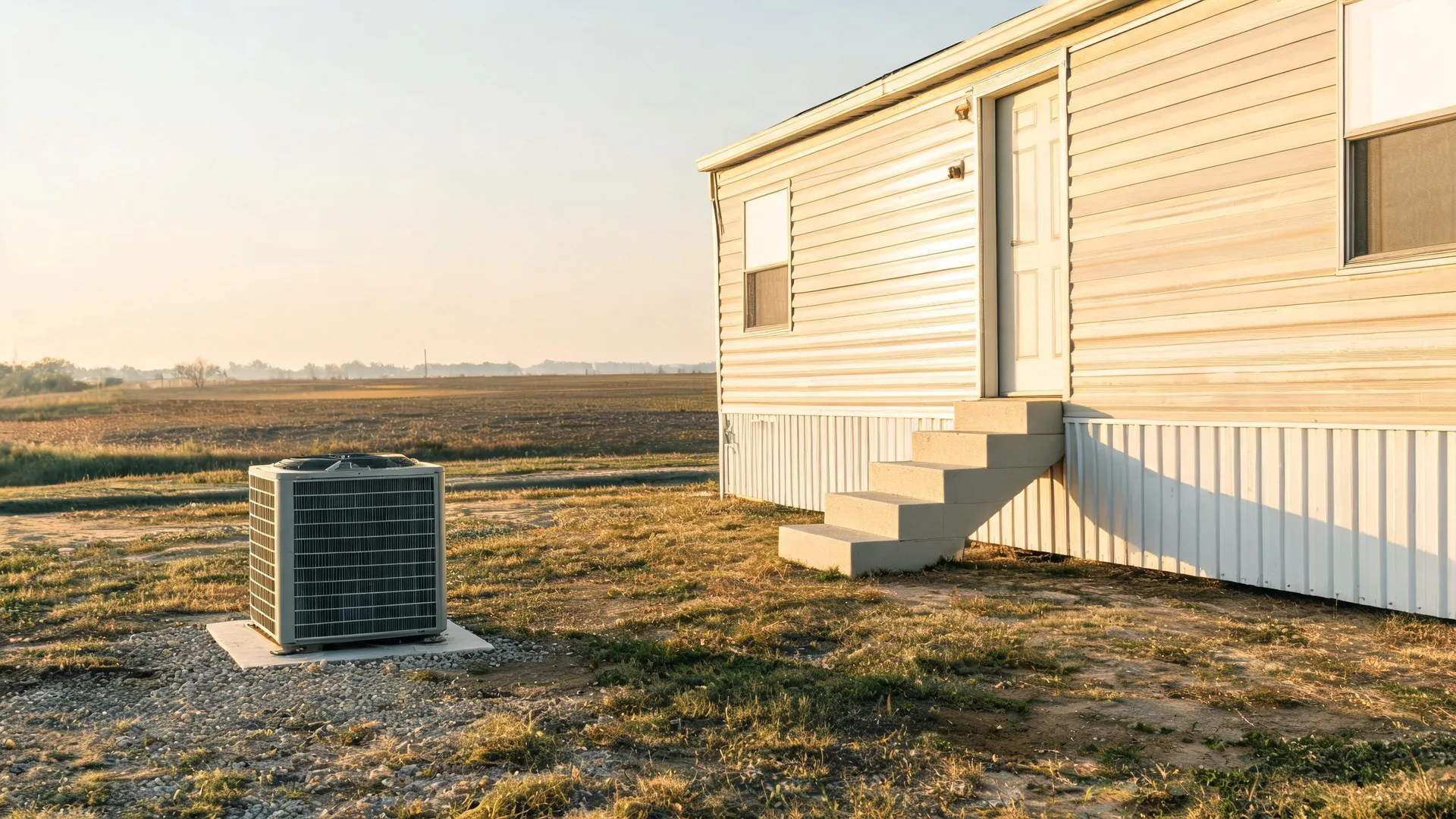
Paulding County sees real storm damage
Paulding County recorded 143 severe weather events between 2015 and 2024, including 125 rounds of damaging wind, 7 hail events, and a tornado. That outdoor unit sits outside through all of it.

Takes about a minute. No obligation.
Paulding County recorded 143 severe weather events between 2015 and 2024, including 125 rounds of damaging wind, 7 hail events, and a tornado. That outdoor unit sits outside through all of it.
Hail can dent a cabinet and bend the fins without stopping the heat pump that day. Wind-blown branches and debris do the same. A unit that still runs after a storm isn't necessarily a unit that came through fine.
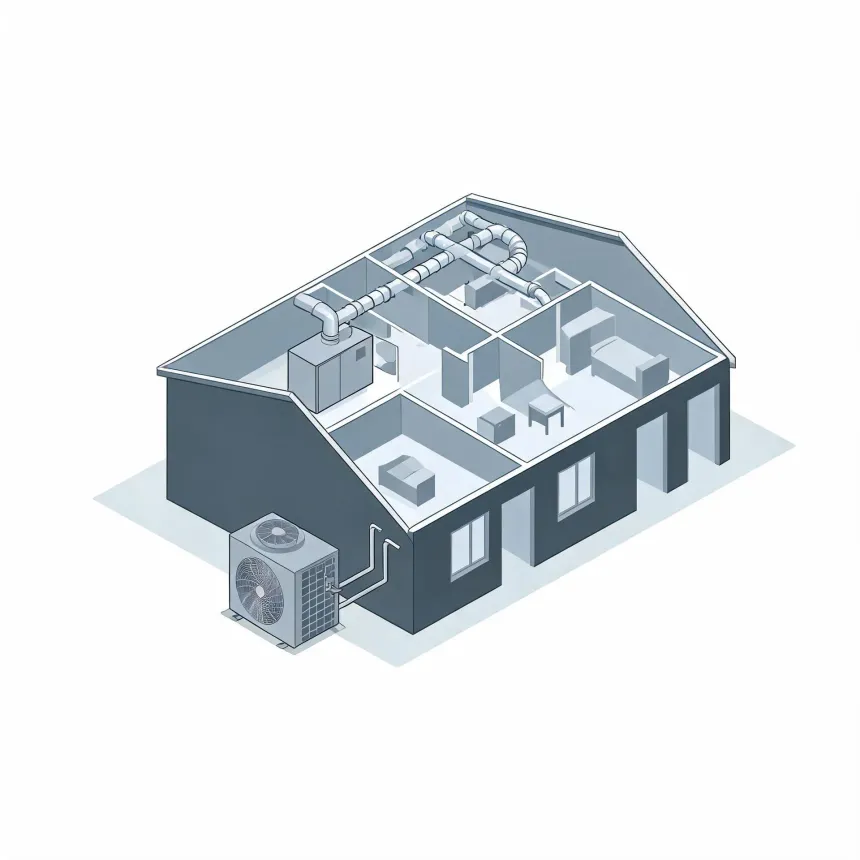
NOAA nClimDiv, 1991–2020 normals
A heat pump has a reversing valve, something a straight AC never needs.
When that valve sticks, the system blows the wrong temperature air or won't switch over at all.




If your heat pump came with a newer house here, get the diagnosis before you plan on replacing anything. A sticking reversing valve or a failed capacitor is a repair on a system that age, not a reason to start over. The repair fixes the part that failed and leaves the rest of the unit alone. Ask the contractor what actually broke before any talk of a new system comes up.
If that outdoor unit took hail or wind this year, get it checked even though it still runs. A bent cabinet or damaged fins don't always stop a heat pump right away, and the damage doesn't announce itself later either. Have it looked at now, before the next storm finds the weak spot.
Find a contractorBefore you call anyone, check the thermostat first. Make sure it's set to heat or cool as needed, the setting hasn't slipped, and the batteries aren't dead if it uses them. Go to the breaker box and look for a tripped breaker on either the indoor air handler or the outdoor unit. If one's tripped, reset it once. If it trips again, stop and leave it off. Walk outside and look at the outdoor unit. Clear away leaves, grass clippings or anything piled against the cabinet, since blocked airflow around the coil makes the whole system work harder and can shut it down on its own. Check the air filter. A filter clogged with dust chokes off airflow and can cause the coil to ice over, and a frozen coil can look like the system stopped working entirely when really it just needs the ice to clear. If you see ice on the outdoor unit or the refrigerant lines, turn the system off and let it thaw rather than running it harder. Look at the vents inside the house and make sure none of them are closed or blocked by furniture or rugs. If the system is blowing air that feels wrong for the setting, or making a noise it didn't make before, that's worth telling the contractor exactly as you heard it. Those are the checks that are safe to make yourself. Anything involving the refrigerant lines, the electrical connections or the inside of the cabinet is a job for someone with the right tools and training.
A heat pump that blows cool air when it's set to heat, or won't switch over at all, usually points to the reversing valve or a stuck contactor. Short cycling, where the unit kicks on and off in quick bursts instead of running a full cycle, points to a different problem, often the thermostat or a refrigerant issue. Either way the system is telling you something specific, not just acting up.
Ice on the outdoor unit or the lines means something is stopping the system from running its normal defrost cycle. A grinding, clicking or squealing sound that wasn't there before usually means a motor bearing or a loose part, not something to wait out. Weak airflow from the vents even with the filter clean can mean the blower motor is struggling or a duct has come loose. None of these clear up on their own.
A heat pump that's icing up, short cycling or making a new noise is already telling you something failed. Keep running it and that one bad part usually takes a second one down with it. A failing capacitor makes the compressor draw more current than it should, and a compressor run that way too long can seize for good. Ice that isn't allowed to clear starves the coil of airflow, and the system keeps trying to push air through it anyway. Short cycling wears the contactor and the compressor with every extra start, and starting is the hardest thing either one does. The fix for the small problem is usually straightforward. The fix for what it turns into usually isn't.
Age and symptom tell you more than instinct does. A system in its first half of life is almost always worth fixing, since one failed part doesn't mean the rest is going too. A compressor that's actually failed is a different question, because it's the most expensive part in the cabinet and the one a contractor can't just swap a component on. Ask what broke and whether that part has a track record of taking others down with it, like a bad capacitor that strained the compressor before it blew. A reversing valve or a contactor replaced on its own, with the compressor and coils still sound, is time and money spent on a system that still has years in it.