Below 35°F
This is where Paulding County winters push a heat pump hardest, since the outdoor unit needs backup heat to keep up and any fault in that switch-over leaves you with cold air.

No phone calls to make
A heat pump that won't heat in cold weather usually means the system has switched to backup heat, or can't switch to it, or the outdoor unit has stopped running altogether. This page walks through why that happens and what it takes to fix. Instead of calling around Paulding County and explaining the problem to one company after another, you get matched with one licensed local contractor who works on heat pumps all winter.
Skip the callsA heat pump that blows cold air or won't come on in cold weather is usually stuck between its two heat sources. Below about 35 degrees, the outdoor unit can't pull enough heat from the air on its own, so the system is supposed to bring on backup heat, either a set of electric strips or a gas furnace working alongside it. When that switch fails, you get cold air, or no air at all, right when Paulding County hits a hard freeze. Other times the outdoor unit itself has iced over and can't defrost, or a failed component has shut it down completely while the indoor blower keeps running on backup heat alone. Either way, the system is telling you something specific broke, not that the whole unit is worn out. A technician checks the reversing valve, the defrost control, and the backup heat strips or furnace to find which one quit, then repairs that part so both sides of the system work together again.




This is where Paulding County winters push a heat pump hardest, since the outdoor unit needs backup heat to keep up and any fault in that switch-over leaves you with cold air.
A heat pump that won't shift between its outdoor unit and backup heat needs someone who works on this equipment locally and knows which part usually causes it.

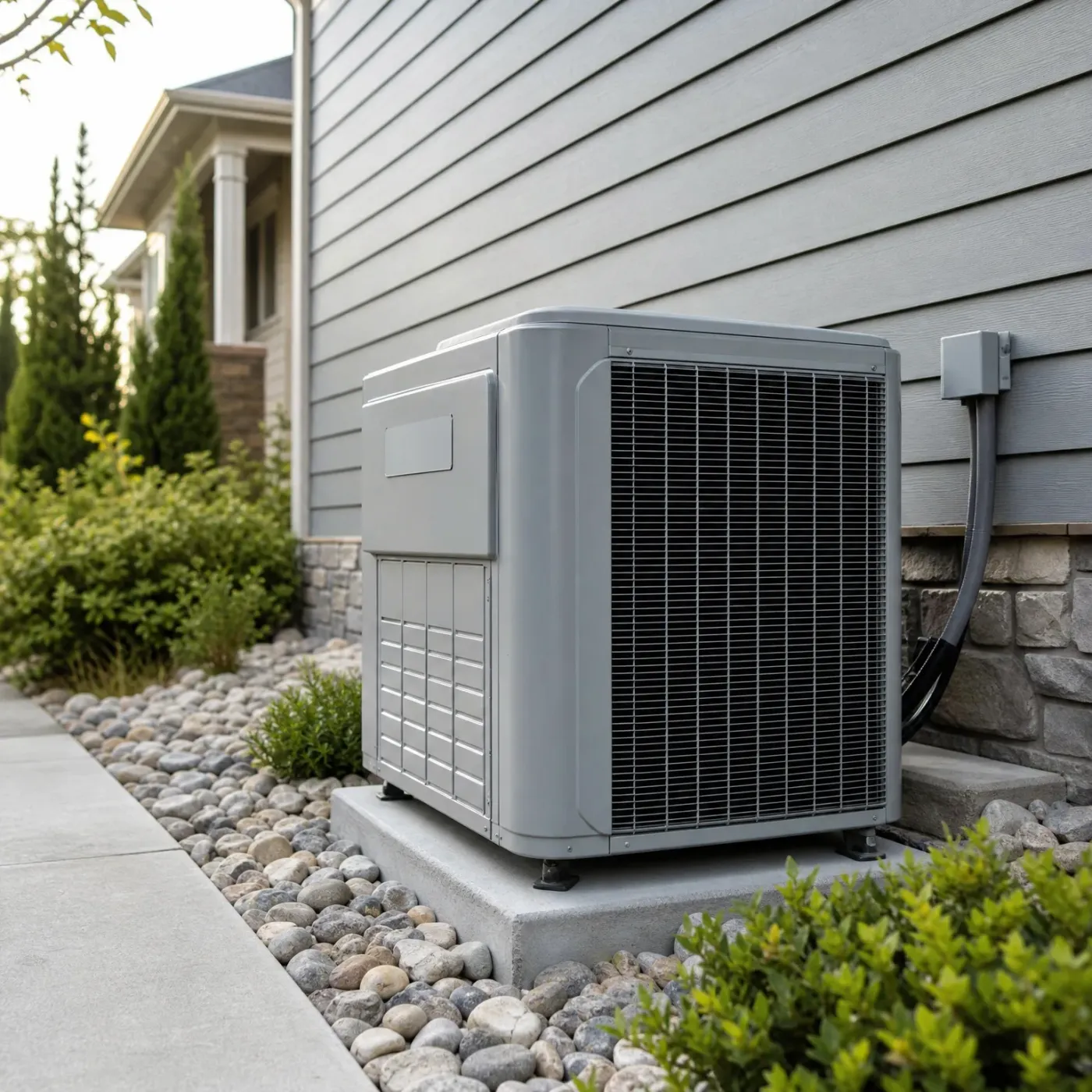
This is a heat pump doing its job. The outdoor unit cycles on when it needs to, pulls what heat it can from the air, and shuts off clean when the thermostat is satisfied. No ice built up on the coil, no strange noise from the fan, no backup heat kicking in before it should.

Weathering like this on the cabinet often means years of hard use, and an older unit has had more chances for a failed sensor, a worn contactor, or a reversing valve that won't shift. Once a heat pump this age falls behind, it tends to need a hand getting through the cold months.


A licensed pro who works in Paulding County gets your request.
Explain the job once and skip repeating it on every call.
No fee to send it, and nothing to sign.
The air coming out of the vents feels cool, not warm, even with the thermostat turned up. The outdoor unit might be running nonstop, or it might not be running at all. You may hear it click and try to start, then stop. If frost or ice has built up on the outdoor coil, that's a sign the defrost cycle isn't working right. Some homes see the thermostat stuck on "emergency heat" without anyone touching it. Left alone through a cold snap in Paulding County, this means the house runs colder than you've set it, the backup heat carries the whole load, and the electric or gas bill climbs for every day it stays that way.
Thermostat calls for heat and signals the outdoor unit to start
Reversing valve shifts so the system pulls heat from outside air
Outdoor unit runs its compressor to gather what heat it can
Defrost control checks the outdoor coil for ice buildup


Winter nights average 34°F
Winter nights here average 34°F, right at the point where a heat pump leans on backup heat to keep the air warm.
Heat runs October through April
That's about seven months a year your system has to switch between modes correctly, October through April, with no room for a stuck valve or failed sensor.
Cooling runs May through September
Summer runs May through September, so the outdoor unit doesn't get much rest before winter asks something different of it again.
NOAA nClimDiv 1991-2020


Cold air from the vents is not a system on its last leg. It is a heat pump caught between its two heat sources, unable to make the switch it is built to make when the outdoor temperature drops. Somewhere in that hand-off, a part has failed, and finding which one is the job in front of you.
That job goes faster with someone who already knows the usual suspects. A contractor who services heat pumps around Paulding County through winters like this one has seen the reversing valve stick, the defrost control misread the coil, the strips fail to kick in, often enough to know where to look first. That means one visit aimed at the right part instead of a string of guesses billed by the hour.
You also only deal with one contractor, matched to your equipment and licensed to work on it, rather than fielding calls from several companies trying to win the job before anyone has looked at your system. One visit, one diagnosis, one repair.
Once the fault in that switch-over is found and fixed, whether it is the reversing valve, the defrost control, or the backup heat failing to engage, the system goes back to doing what it was designed to do: pull what heat it can from the outside air, lean on backup heat when it is too cold to do that alone, and move warm air through the vents without you thinking about which part is carrying the load.

Explain it one time