


Heat pump frozen over in Grovetown, GA

RepairHeat PumpColumbia County, GA
Step 1 of 2

What ZIP code is the job in?

A heat pump frozen over outside is usually trying to defrost itself and losing the fight, or something is stopping the defrost cycle from running at all. Normally the outdoor unit ices up a little in cold weather, then switches into defrost mode for a few minutes to melt it off before going back to heating. If you see a thick layer of ice covering the coil or the whole cabinet, something in that cycle has failed: a stuck reversing valve, a bad defrost control board, a sensor that isn't reading right, or a fan that's slowed or stopped so the coil never gets cold air moving across it. Low refrigerant does the same thing, since a coil running too cold frosts over faster than it can clear. Running the system while it's iced over can strain the compressor, so the right move is to shut it off and let it thaw before anyone opens it up to find the actual cause.

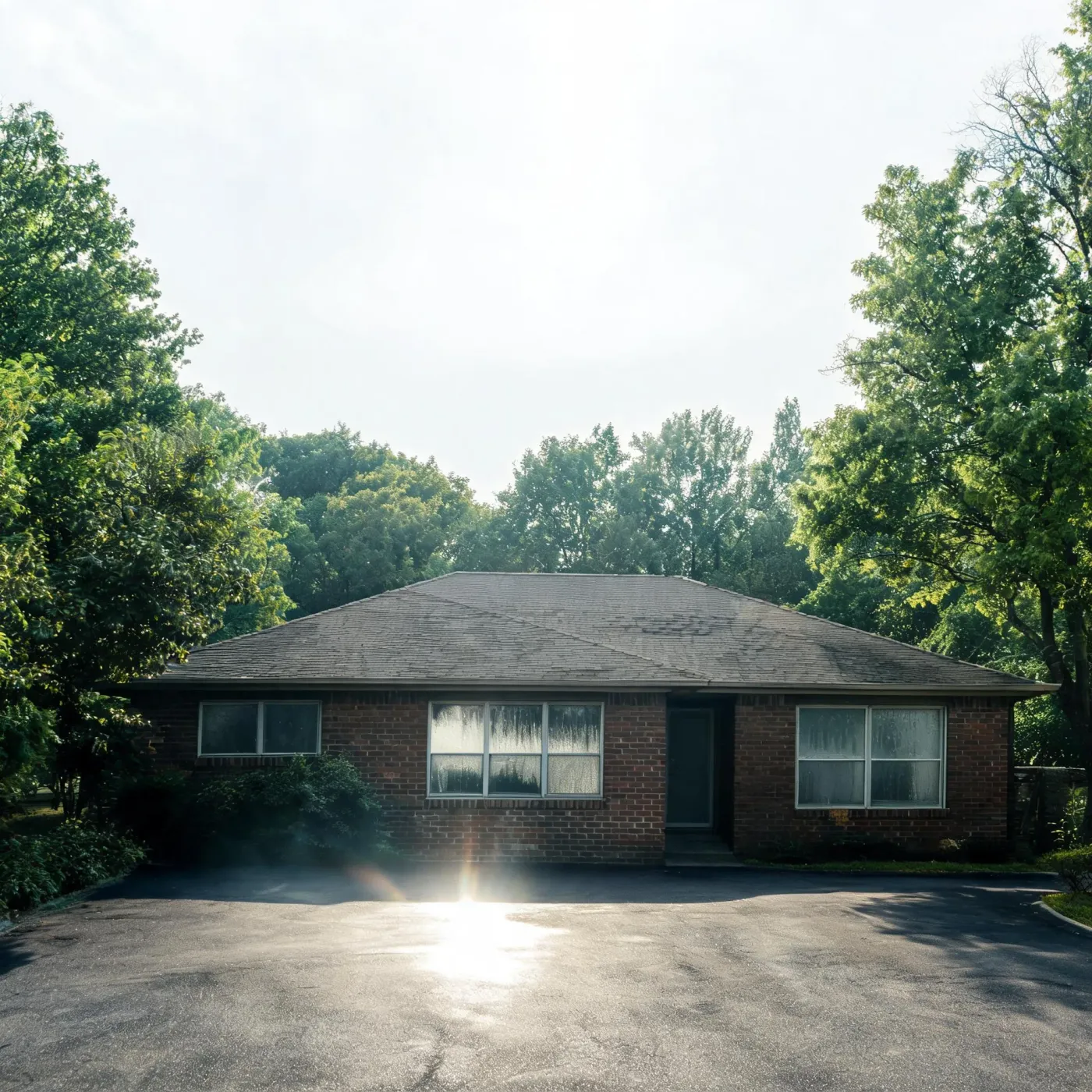
A single-story brick house with a hipped shingle roof, large front windows and a central door, fronted by a wide paved driveway with sun flare, surrounded by green deciduous trees.

Summer air in Columbia County holds a dew point around 68°F, National Weather Service records for the area show. Air that heavy means your heat pump is pulling more moisture out of the house every time it runs, and the coil stays wetter longer between cycles. Come winter, that same coil is where frost forms when temperatures drop, and a unit that's been working hard all summer can be slower to shed ice once it's cold enough to matter. If you're seeing ice now, the coil and the defrost cycle are the places to look, not just the outdoor temperature.

NASA POWER T2MDEW

Why is ice covering my outdoor unit right now

Go look at the outdoor unit. If you see a solid white or gray crust over the coil, sides, or bottom, instead of a light frost, that's past normal. You might hear the fan straining to turn, or notice no warm air at the vents even though the system is running. Sometimes there's a hissing or a puddle forming underneath as the ice starts to melt and refreeze. Inside, rooms may feel like they're not getting warm no matter how long the system runs. Left alone, that ice keeps building, the coil stays blocked, and the compressor can end up straining against a system that isn't moving air the way it should.

  1. Outdoor temperature drops and frost starts forming on the coil.

  2. A sensor near the coil reads the frost buildup directly.

  3. The reversing valve switches, sending hot gas backward through the coil.

  4. The outdoor fan stops so heat isn't blown away outside.

Why does my heat pump ice up so often here

  • Winter nights average 37°F

    Nights in the high 30s sit right where coils frost up easy but defrost cycles still have to work to clear it.

  • Heat runs November through March

    Five months of heat means five months of nightly frost and defrost, more chances for one bad cycle to leave ice behind.

  • Cooling runs May through September

    Five months of cooling keep the coil running near-constant too, so a unit that struggles to defrost in winter gets little rest in summer either.

NOAA nClimDiv 1991-2020

Turn the system off and wait

Switch the thermostat to off and leave the outdoor fan alone. Most ice melts on its own in an hour or two once the unit stops running, especially if you switch the system to fan only or just shut it down. This tells you something too. If the ice is gone in a couple hours and doesn't come back right away, the problem may have been a one-time cold snap. If it's back the next night, something in the defrost cycle isn't working and won't fix itself by waiting again.


Call someone who works on these

A frozen coil that keeps coming back usually means a bad defrost sensor, a stuck reversing valve, or a refrigerant charge that's off, and none of those are things you find by looking at the unit from outside. Rather than searching around and getting quotes from several companies explaining the same ice over and over, you get connected with one local contractor who works on heat pumps in Columbia County through the winter and knows which of those parts tends to fail first in this area's cold snaps.

A gray-haired bearded man in a dark knit sweater sits on a light gray sofa in a sunlit living room, looking to his left, with a framed artwork, a potted palm, and a curtained glass door behind him.
A middle-aged man in a dark green sweater sits on a light grey sofa looking toward a sunlit window, with a wooden shelving unit, lamp and potted plants in the background.
A man in a dark green sweater sits on a light grey sofa in a sunlit living room, looking to his left, with a shelving unit, houseplants, framed art and a large window behind him.
A gray-haired bearded man in a dark green sweater sits on a light gray sofa in a sunlit living room with a potted plant, framed picture, and dark shelving in the background.

No calling every shop in Columbia County

You've already shut the system off and watched the ice melt, or you've watched it build right back up by the next cold night. Either way, the unit has told you something is wrong with the defrost cycle, not just the weather. Figuring out whether it's a bad sensor, a stuck reversing valve, or a fan motor that's lost its timing takes someone who works on heat pumps through a Columbia County winter and knows which of those fails first. Without that, you're left searching for an HVAC contractor, calling a few, explaining the ice and the timing and what you tried, then waiting on quotes to compare. Submit this request instead and it goes to one licensed contractor local to Grovetown, someone who's seen this same frost pattern on other units nearby this season. No other company calls you about it. That frees you up to deal with the actual problem, a cold house and an outdoor unit that won't clear itself, instead of the search for who can fix it.

You call a repair company, they send a tech who's never seen your system before, and you pay for the visit whether they figure it out or not.

A contractor who works on heat pumps in Columbia County every winter has seen this same freeze pattern on dozens of units and knows which part in the defrost cycle usually quits first.

A woman with shoulder-length dark brown hair in a cream knit cardigan sits in an upholstered armchair beside a window, looking off to the side, with a white bookshelf and potted plant blurred behind her.
A woman with dark hair in a bun sits on a sofa with a child resting his head on her shoulder, both wrapped in a cream knit blanket, with a lit lamp and bookshelf in the dim background.

The outdoor unit isn't just reacting to cold air. A defrost board controls the whole thing on a timer, checking on a set schedule whether the coil has gotten cold enough to need clearing. It relies on a sensor clipped right to the coil to make that call, and if that sensor has slipped or reads wrong, the board has no reason to start defrost at all. Even when defrost kicks in, the job isn't done until the reversing valve shifts and sends hot gas through the coil to melt the ice. A valve that's stuck or losing strength can start that process without finishing it. There's also a relay that's supposed to stop the outdoor fan during defrost. If it sticks, the fan keeps blowing outside air across the coil while it's supposed to be warming, and the heat never gets the chance to melt anything. Low refrigerant charge works against all of this from a different angle, pulling the coil colder than it should run and building frost faster than a normal cycle can clear it.

How the defrost cycle actually works

  • A defrost board or control runs the whole cycle on a timer, usually checking every 30, 60 or 90 minutes whether frost conditions are met.
  • A thermostat or sensor clipped to the outdoor coil has to read cold enough, often around 32°F or lower, before the board will even start a defrost.
  • If that sensor reads wrong or sits loose against the coil, the board never gets the signal and the unit keeps running while ice builds.
  • The reversing valve has to physically shift to send hot refrigerant gas outside, and a valve that's stuck or weak can't clear the coil even when defrost starts.
  • A stuck relay can leave the outdoor fan running during defrost, which blows the heat straight off the coil instead of melting the ice.
  • Low refrigerant charge drops the coil temperature further than it should go, so frost forms faster than a normal defrost cycle can keep up with.
An outdoor air conditioning condenser unit on a concrete pad beside a house with light horizontal siding and a concrete block foundation, with bare soil and small green plants around it.
Before you get your heat pump repair
A dark gray outdoor condenser unit on a concrete pad beside a house with beige horizontal siding, with a gray electrical disconnect box and conduit on the wall, mulch beds, a hosta plant, a shrub, and mowed lawn in front.
After you get your heat pump repair
A gray outdoor condenser unit on a raised pad beside a house with horizontal lap siding, with refrigerant lines, conduit and an electrical disconnect box on the wall, and shrubs on a mulch bed to the left.

Running clean

This is what a heat pump should look like outside your house. The coil stays clear, the lines run tight to the disconnect, and nothing is piled up around the base. Defrost cycles come and go on their own and you never see them.

A weathered gray outdoor condenser unit on a concrete pad beside a house with horizontal vinyl siding, with conduit, refrigerant lines, and an electrical disconnect box on the wall behind it.

Buried and struggling

Dust and grime on the grille block airflow the coil needs to shed frost. Dead leaves piled at the base do the same from below. A unit that sits like this through a Columbia County winter is more likely to ice over and stay that way.

Keep Running It or Get It Looked At

Keep running it

  • Ice builds thicker with every cycle since the system never gets a real chance to clear the coil.
  • The outdoor fan can seize against ice, and that strain is what burns out a fan motor.
  • Liquid refrigerant can return to the compressor when the coil stays frozen, which wears the compressor itself.
  • Your house loses heat faster than the system can replace it, so indoor temperatures drift down even with the thermostat set normal.
  • Every hour it runs iced up is an hour of electricity spent moving almost no heat, on a system already working against a power rate that isn't cheap.

Get it looked at

  • A contractor who works on heat pumps around Columbia County can usually tell from the ice pattern whether it's the defrost board, the sensor, or the reversing valve.
  • Diagnosing it yourself means guessing between a handful of parts that all show the same symptom from outside.
  • A tech who services this equipment every winter has likely already seen your exact model freeze up this way.
  • Fixing the actual cause stops the freeze from coming back the next cold night, instead of just melting this one instance.
  • You deal with one contractor who already knows the local freeze pattern, not a round of calls comparing strangers.
An outdoor condenser unit beside a horizontally sided house, encased in thick ice with hanging icicles, on a snow-dusted ground at sunset with bare trees in the background.

Six-thirty, still dark, and you go out for the trash pickup before work. The side yard is quiet, grass stiff with frost, and your breath shows. Then you see it: the outdoor unit isn't a gray box anymore, it's a block of ice. Thick, solid, built up over the coil and down around the base, with a crust on the sides thick enough to catch the porch light. No hum from the fan. No warm air pushing out the top like there should be. You stand there a second, trash bag still in hand, and you already know this isn't the usual light frost that burns off by nine. This one's been sitting all night, maybe longer.

A closed silver laptop and a white cup of coffee on a saucer sit on a wooden table in front of a wooden chair, a plain beige wall, a potted leafy plant and a window with greenery outside.

Ice on the unit means the defrost cycle isn't doing its job

A frozen heat pump isn't a mystery once you've watched it happen a few times. Either the defrost cycle never kicks in, or it kicks in and can't keep up. Both point to a part that needs a look from someone who can test it, not a guess from across the yard.

That's the part most people get stuck on. You don't know if it's the defrost board, the sensor, the reversing valve or the fan motor, and calling around to find out means explaining the same ice, the same timing, the same questions to three different companies before anyone even looks at it. A contractor who works on heat pumps around Columbia County in the winter can tell you what's likely wrong from what you describe, then confirm it on the unit. One visit, one answer, and you're not stuck sorting quotes from strangers.

A speckled beige ceramic vase holding thin dried branches sits on a round wooden table near a window with sheer curtains, with a dark upholstered chair and draped blanket blurred in the background.
A house roofline with a stone chimney rises above trees, with a tall pine, Spanish-moss-draped oak branches, and misty hills in the background.

Skip calling around

Answer a few questions

Sending the form costs nothing.

A frozen unit won't clear itself if the defrost board or sensor is the problem, and running it that way night after night is what burns out a fan motor or compressor. One visit from someone who knows this freeze pattern tells you which part failed, instead of you guessing through another cold snap.