
Heat pump stuck on emergency heat in Savannah, GA
A heat pump stuck on emergency heat means the outdoor unit has stopped running and the system has switched over to the backup electric strips to keep the house warm. Something is keeping the compressor from working, a tripped breaker, a frozen outdoor coil, low refrigerant, or a failed component like a contactor or capacitor. The thermostat has an emergency heat setting you can turn on by hand, and sometimes it gets switched on by mistake or never gets switched back. If it stayed on by itself, the system made that call because it isn't seeing the outdoor unit respond. Winters in the Savannah area are mild, so the strips can keep a house comfortable for a while, but they use far more electricity than the heat pump does to do the same job, and with power costing what it does here, that difference shows up fast on the bill. Running on emergency heat for a day while you sort out a repair is normal. Leaving it there is not a fix.
Why would your heat pump need emergency heat in Savannah?
Winter nights average 42°F
Winter nights here average 42°F, not the single digits that strain emergency heat elsewhere, so a stuck heat pump is a repair to fix, not a freeze to survive.
Heat runs November through March
Heat runs November through March here. A heat pump stuck on strip heat for even part of that stretch costs more than most homeowners expect to pay for electric heat.
Cooling runs May through October
Cooling runs May through October, twice as long as heat does. The same compressor that quit on you in winter has to carry the much longer part of the year.
NOAA nClimDiv 1991-2020
Why the compressor shuts off
- A thermostat switch set to EM HEAT or AUX manually overrides the compressor and locks the system on strip heat alone.
- The outdoor unit has a low-voltage control board that tells the compressor to run; a tripped breaker or blown fuse there forces emergency heat on.
- A frozen outdoor coil trips a safety switch that shuts the compressor down and hands heating over to the electric strips until it thaws.
- Low refrigerant charge can trip the same high-pressure or low-pressure switch that disables the compressor and triggers emergency heat.
- A failed reversing valve can leave the system unable to pull heat from outside air, so it defaults to strip heat instead.
- A contractor checks the breaker, the defrost cycle and the low-voltage wiring in that order to find which one is holding the compressor off.
Emergency heat is a fallback, not a feature you're meant to use day to day. The system has a switch, often inside the air handler or on an outdoor control board, that only lets the compressor run when a set of conditions is met. When one of those conditions fails, the switch opens and the strips take over automatically. Sometimes the cause is as simple as the thermostat itself. Some thermostats have a physical EM HEAT setting, and if that got bumped or set by mistake during a filter change or a thermostat swap, the heat pump will run on strips even though nothing is actually wrong with it. That's the one a homeowner can check without any tools. Everything past that point takes a meter and some knowledge of the system. A tripped breaker or a blown low-voltage fuse on the outdoor unit cuts power to the compressor directly. A coil that's iced over trips a safety switch meant to protect the compressor from running against solid ice. Refrigerant that's low, from a slow leak most likely, drops the pressure enough to trip a switch that does the same thing. A reversing valve that's stuck or failed can't redirect refrigerant to pull heat from the outside air at all, so the system locks itself onto strips as the only option left. A contractor works through the breaker, the defrost cycle and the low-voltage wiring in that order, because each one rules out the next.


Your thermostat might still say 72 and the house might feel fine, but the system behind that number has changed. The heat strips are doing all the work now, and they run on raw electricity instead of the compressor cycling refrigerant, so they cost more to run every hour they're on. That shows up fastest on your power bill, but it shows up other places too. Air coming out of the vents will feel hotter than you're used to, because strip heat works differently than a heat pump moving warm air. The breaker that forced this switch, if that's what happened, is now carrying a heavier load than before, and a breaker that tripped once under less strain can trip again. Outside, if ice caused the problem, it doesn't go away on its own while the unit sits idle. None of this is an emergency tonight. But every day it runs this way is a day the original problem, whatever tripped it, sits unaddressed and the cost of running the house climbs.
What This Is Doing To Your House
- A heat pump running on strip heat alone can push a Chatham County power bill up by a few hundred dollars in a single billing cycle.
- Electric resistance heat draws far more current than a working compressor, so breakers and the backup heat strips themselves take more wear.
- Rooms may feel warm enough on emergency heat, but vents will blow air that's noticeably hotter than a working heat pump ever produces.
- If a frozen outdoor coil is the cause, ice can build up on the refrigerant lines and fan while the compressor sits idle outside.
- A breaker that tripped once to force emergency heat can trip again under full load, leaving the house without any heat at all.
- The longer the outdoor unit sits off, the more likely a minor issue, a stuck contactor or a bad sensor, turns into a bigger repair.




Get the right pro for your heat pump
A heat pump stuck on emergency heat in Chatham County rarely gets better on its own. The outdoor unit needs a technician to check the breaker, the control board and the coil before it will run again, and until that happens the strips keep carrying the whole load. Guessing which part failed wastes the one thing you can't get back, which is the days you spend paying for backup heat instead of a working compressor. A contractor who services heat pumps around Savannah all winter has seen this exact fault, the one that locks a system onto strip heat, more times than any homeowner will. Getting matched with one means someone local looks at your specific unit and tells you what actually failed, instead of you working through it by trial and error while the power bill climbs. That's the part worth handing off now, before another cold night runs on strips alone.
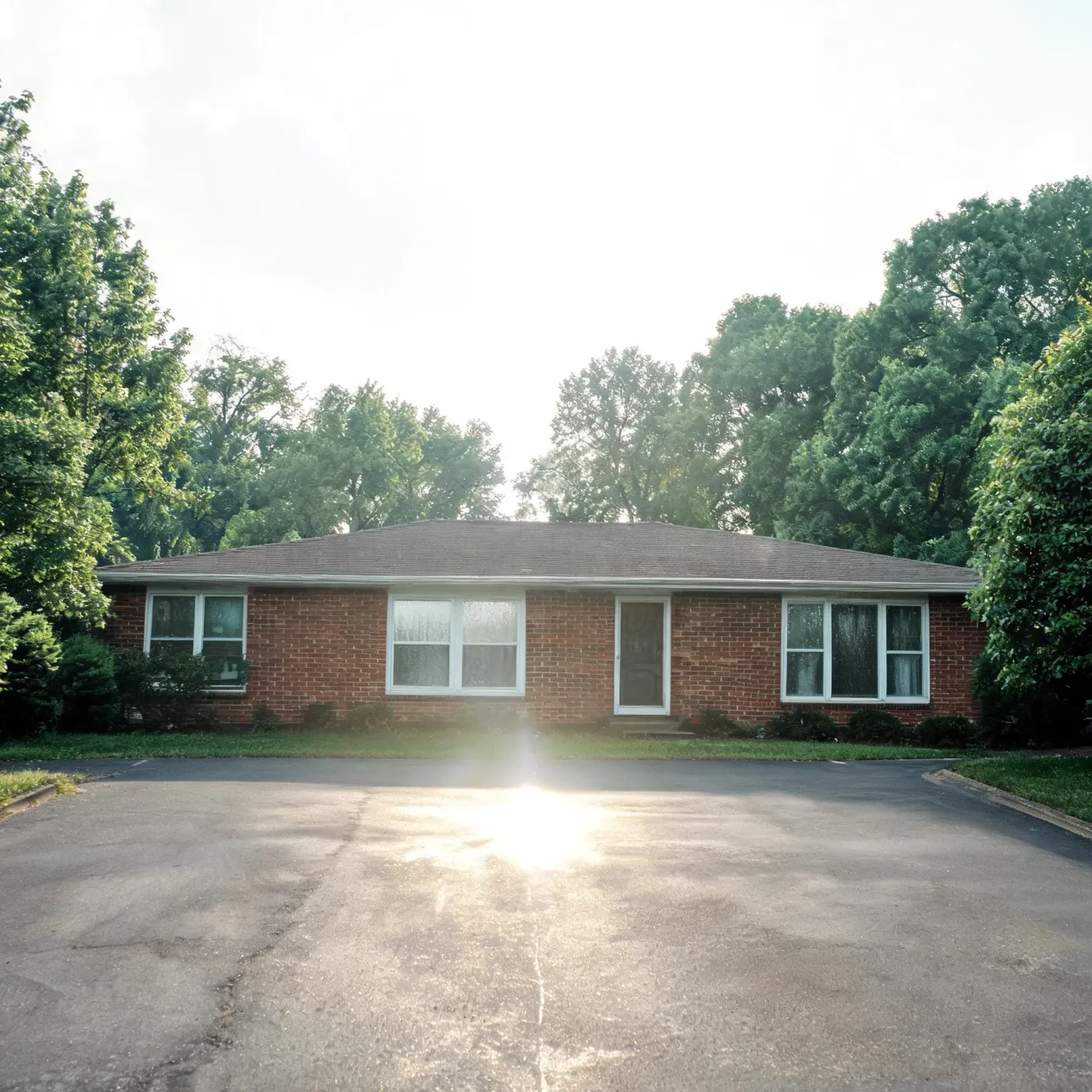
That same humidity works against the compressor long before winter comes. A Chatham County summer holds a dew point near 72°F, and a heat pump has to wring that moisture out of the air every time it cools the house. The coil stays wet for hours on end, and anything that keeps condensate from draining or air from moving across it, a dirty filter, a weak fan, a coil losing refrigerant, wears on the same parts that have to reverse and carry the house through winter. A unit that struggled through August is a likely candidate for the one stuck on strips in January. Source: NOAA climate normals, Chatham County, GA.
NASA POWER T2MDEW
What are you noticing around the house right now
The thermostat still says heat, but the air coming out of the vents feels different, warm but not hot like it used to run. The outdoor unit is quiet, maybe not running at all, while the indoor blower keeps going. You might notice the system takes longer to bring the house up to temperature, or it runs almost constantly without shutting off. Check your power bill against last month's. If the strips have been carrying the house for more than a day or two, you will likely see it there before you see it anywhere else. None of this damages the house, but it does mean you are paying full price to heat with the most expensive method the system has, while the actual problem goes unfixed.
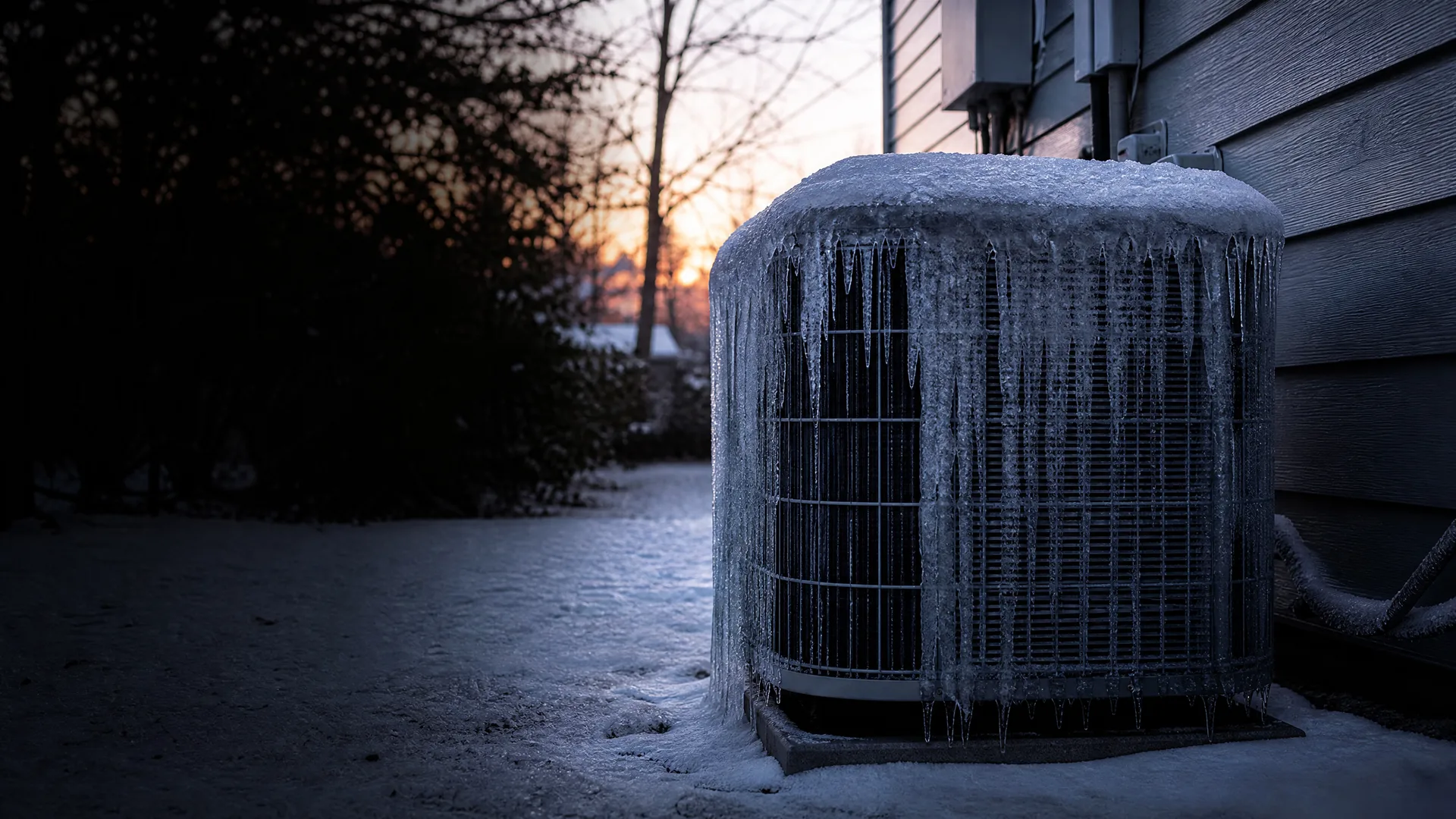
You go out for the paper a little after six and the side yard is still dark, just the porch light catching the unit by the fence. It's wearing a thick shell of ice, over the coils, over the bottom edge, down into the grass around the pad. No fan noise, no hum, nothing. The air coming off it is still, the kind of still that means it's been off a while, maybe since sometime in the night. Your breath shows in the cold the way it does maybe a dozen mornings a year here. Inside, the vents are still blowing, just warm, not the heat you're used to. You stand there a second looking at the ice before you go back in.

Emergency heat is the system telling you what it needs
A heat pump stuck on emergency heat in Chatham County is working around a problem, not fixing one. The strips will keep the house warm, but they won't tell you why the outdoor unit stopped, and they won't turn it back on. That takes someone checking the breaker, the control board, and the coil to find what actually failed.
A local contractor who works on these systems all winter has seen most of what causes this, a frozen coil, a tripped breaker, a control board that lost its signal to the compressor. Getting matched with one means someone who already knows what to check first comes out to look at your unit, not a dispatcher sending whoever's free. One contractor, one visit, and a system that goes back to running the way it was built to run.


A pro who works on heat pumps
No charge to send it. You decide if you hire them.
A local contractor who works on heat pumps all winter can usually tell within minutes why yours switched to strip heat, because the same few causes show up again and again in Chatham County homes.