



What a heat pump does on a 34 degree night here
Winter here is mild more than it's cold. The overnight low averages 34°F across December, January and February, and the heat runs seven months, October through April. That matters because a standard heat pump has two different limits, and your average winter night sits below both. Below 40°F its heat output falls short of what it's rated for. Below about 35°F it often needs backup heat to make up the difference. The average low here is 34°F.
That doesn't mean the heat pump is struggling most nights. It means it's working harder than its rating suggests on an average night, and leaning on backup heat on the colder ones. About 65 nights a year here drop to freezing or below, under a third of the nights the heat runs. Those are the nights backup heat matters most. Only about 0.1 of those nights a year reach 0°F, so the deep cold that pushes a heat pump hardest is almost never what you're dealing with in Paulding County.
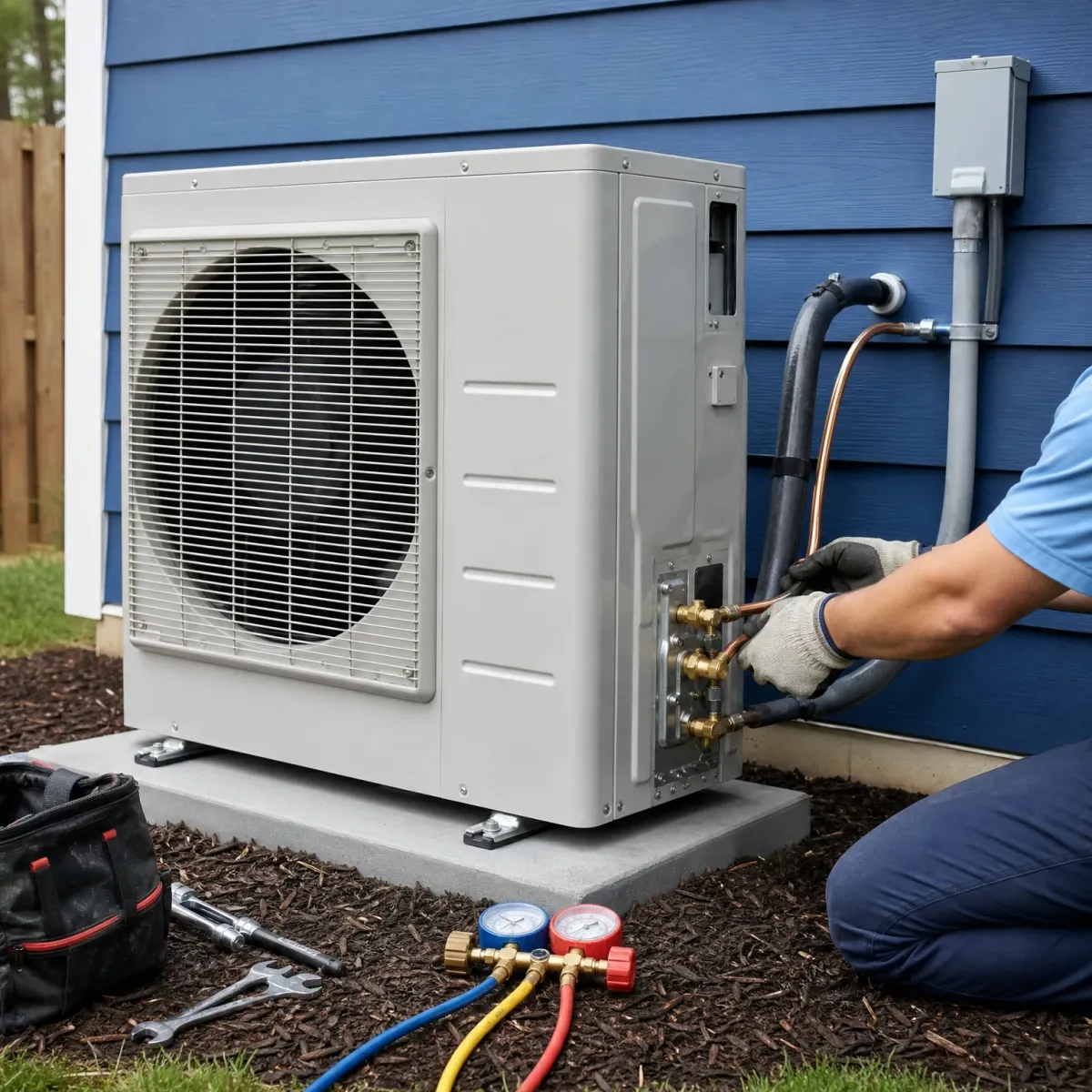
A cold-climate heat pump is built for exactly this gap. To earn that label, a unit has to keep at least 70 percent of its 47°F heating capacity once it's down to 5°F, and still produce more heat than the electricity it uses. In field tests of these units in occupied homes, backup heat covered only a small share of the total heat needed between 0°F and 35°F, and the units running on backup alone was rare even above 0°F. A standard heat pump leans on backup heat through the range this county sits in all winter. A cold-climate one mostly doesn't.