A nighttime street scene featuring a row of lit white colonial-style houses with wrap-around porches, flanked by oak trees draped in Spanish moss.

Furnace Repair in Dallas, GA

Tell us about the job

Takes about a minute. No obligation.

RepairFurnace or heatingPaulding County, GA
Step 1 of 2

What ZIP code is the job in?

The igniter wears out first

Most furnace calls trace back to the hot surface igniter. It heats up every cycle to light the gas, and that constant heating and cooling eventually cracks it. When it fails, the furnace runs the blower but never fires, so you get cold air or nothing at all.


A dirty flame sensor mimics a bigger problem

The flame sensor tells the control board the burner actually lit. If soot builds up on it, the board shuts the gas off a few seconds after ignition, over and over. It looks like the furnace is dying, but the fix is usually just cleaning that one rod.

7 months
October through April, your furnace is on duty
34°F
the average winter night it heats against
52%
of homes here heat with gas, so most furnaces here burn gas
3 winter storms
in ten years, the nights a failure hurts most
Isometric line illustration of a cutaway house showing interior rooms with furniture and a furnace with ducting and a flue pipe extending through the roof.
Your furnace works hardest from November through March.

NOAA nClimDiv, 1991–2020 normals

A furnace that short cycles, turning on and off in quick bursts, is usually protecting itself from a restricted filter or a cracked heat exchanger.

Keep running it like that and you risk the heat exchanger failing outright, so get it looked at before the next cold stretch.

Furnace off since spring, first cold week in October is when weak parts give out

Heat runs October through April
Winter nights average 34°F
Climate zone 3A

A furnace that keeps running with a problem rarely stays a one-part fix. A cracked heat exchanger that still fires will keep flexing with every cycle, and the crack spreads. A clogged filter that never gets changed forces the blower motor to work harder against that restriction, and motors run hot when they're starved for airflow. Let a safety switch trip over and over instead of fixing what's tripping it, and you're wearing out the switch along with whatever it was protecting. What starts as one worn part can end up taking the blower motor or the heat exchanger down with it.

Half the homes here were built in 2002 or later, which is why repair makes sense

Half the homes in this county were built in 2002 or later. If your furnace came with a house that age, it hasn't had many years on it yet, and the parts inside are likely still good. That makes repair the right call rather than a stopgap before a bigger failure.

Find a contractor
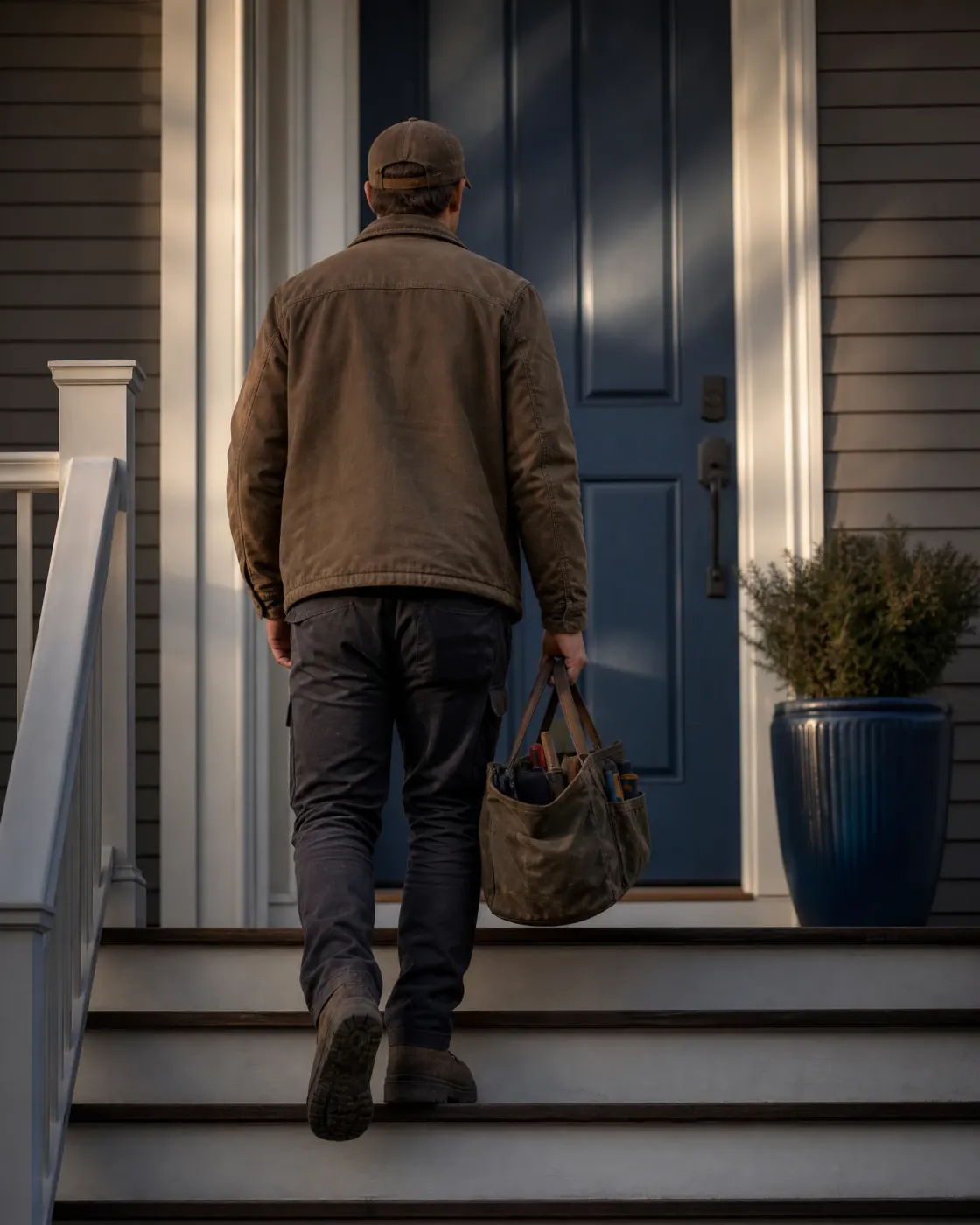
A man in a cap and brown jacket, seen from behind, climbs porch steps toward a blue front door while carrying a canvas tool bag, with a potted shrub in a blue planter beside him.
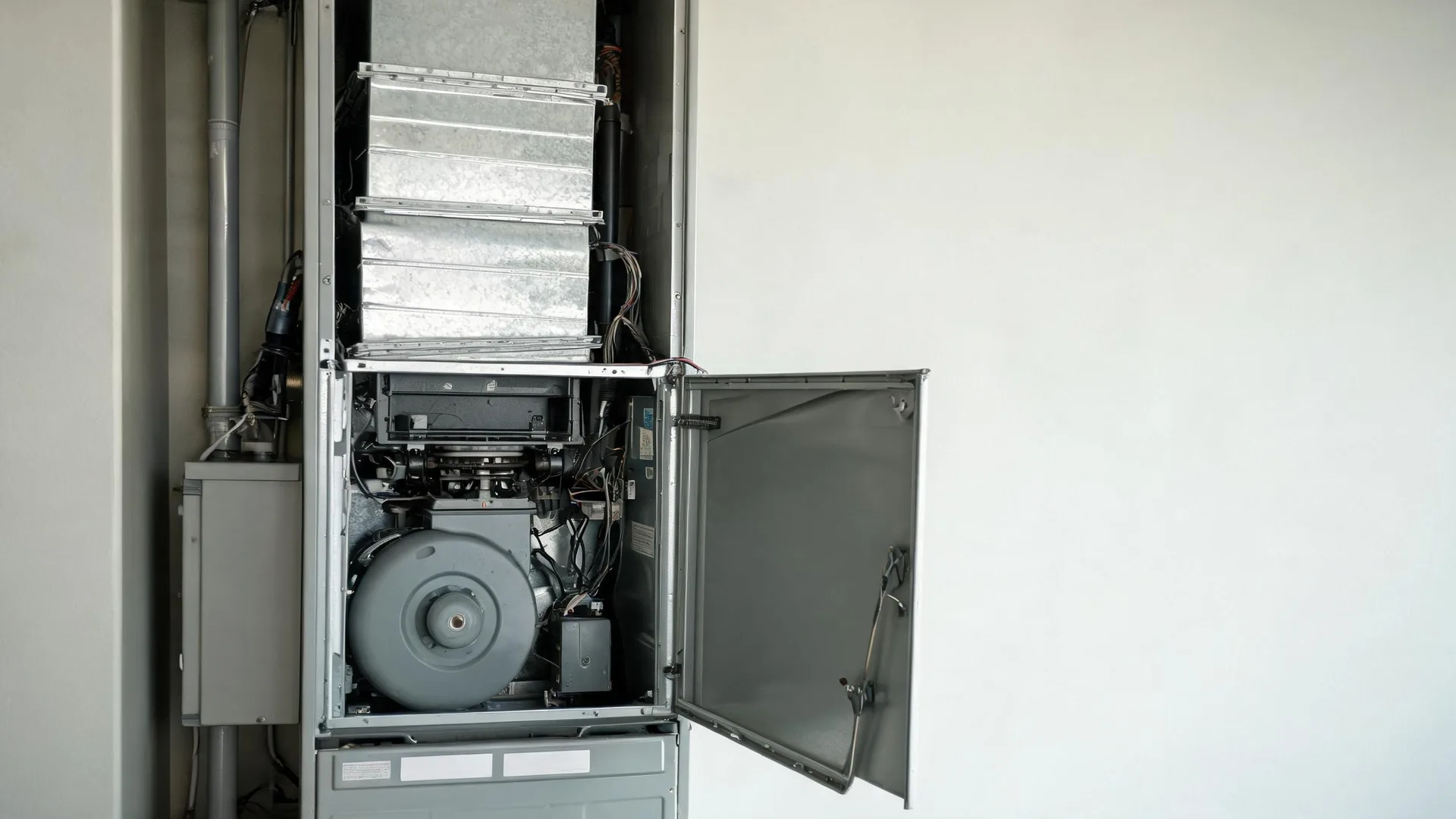
A gray gas furnace with attached ductwork and piping installed in an unfinished concrete basement.

Seven months of work a year

Furnace here runs about seven months a year, October through April. The rest of the time it sits idle. Overnight lows average 34°F in December and January, which is cold enough to run the furnace steady but not the kind of extreme that pushes a system to its limit. Less time running and less strain each time it does means a furnace here tends to hold up well, and that's exactly why fixing what's wrong usually makes more sense than writing it off.

Check the thermostat and the filter first

Make sure the thermostat is set to heat and set above room temperature, and check the batteries if it has a screen that's dim or blank. Then pull the filter and hold it up to a light. If you can't see light through it, that restriction could be enough to trip a safety switch and shut the whole furnace down.

Look at the service panel and the switch on it

Furnaces have a power switch that looks like a regular light switch, usually mounted on or near the unit itself, separate from the breaker. It gets bumped off or switched off during other work and forgotten. There's also a door panel held by clips or screws that has to be fully seated, since the furnace won't run with it loose or removed.

An unfinished concrete basement containing a metal HVAC air handler, exposed wooden ceiling joists with sheet-metal ducts, a hanging bare bulb, copper pipes, and stacked cardboard boxes.

A new furnace would cut about $130 a year off heating for a typical Paulding County home.

  • A new high-efficiency furnace$610 a year
  • An older furnace$740 a year

Estimates for a typical Paulding County home, compared with an older unit built to the previous federal minimum, from EIA household energy data, Georgia fuel prices and NOAA climate normals. Your home will differ.

Repair makes sense when one part has failed and the heat exchanger is sound.

Replacement makes sense when the heat exchanger is cracked or the furnace keeps needing parts.

Age matters less than what's actually failed. A furnace that won't ignite because of a cracked igniter or a dirty flame sensor is a straightforward repair, since you're replacing one part that does one job. A cracked heat exchanger is a different decision, because that part isn't meant to be opened up and patched, it's meant to be replaced as a unit, and once it's compromised the whole furnace is working around a safety problem rather than a performance one. The question worth asking isn't how old the furnace is, it's whether the part that failed is one that normally gets swapped on its own or one that usually means the furnace is done. A tech checking it should be able to tell you which kind of problem you've got before they tell you what it costs to fix.