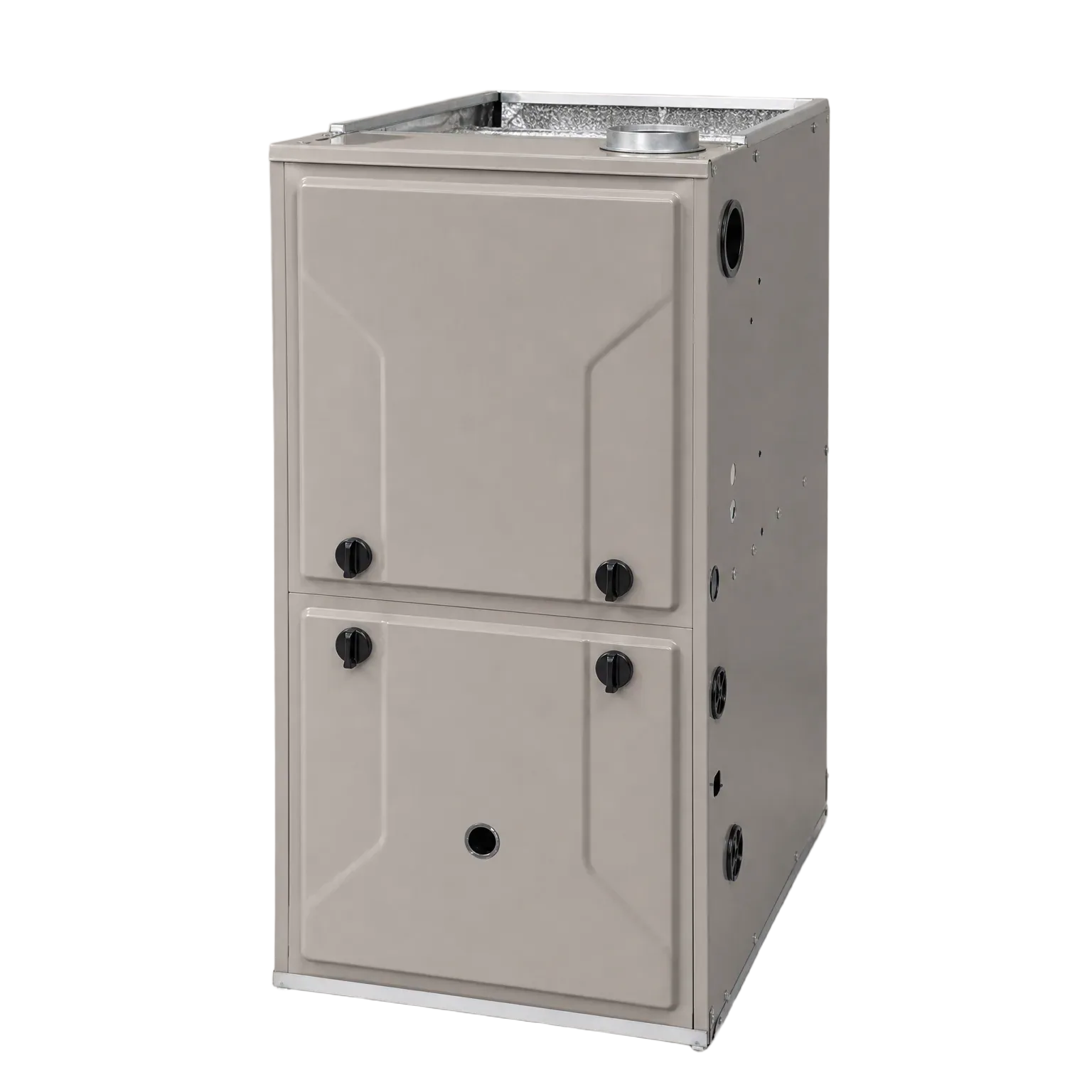

Furnace running well
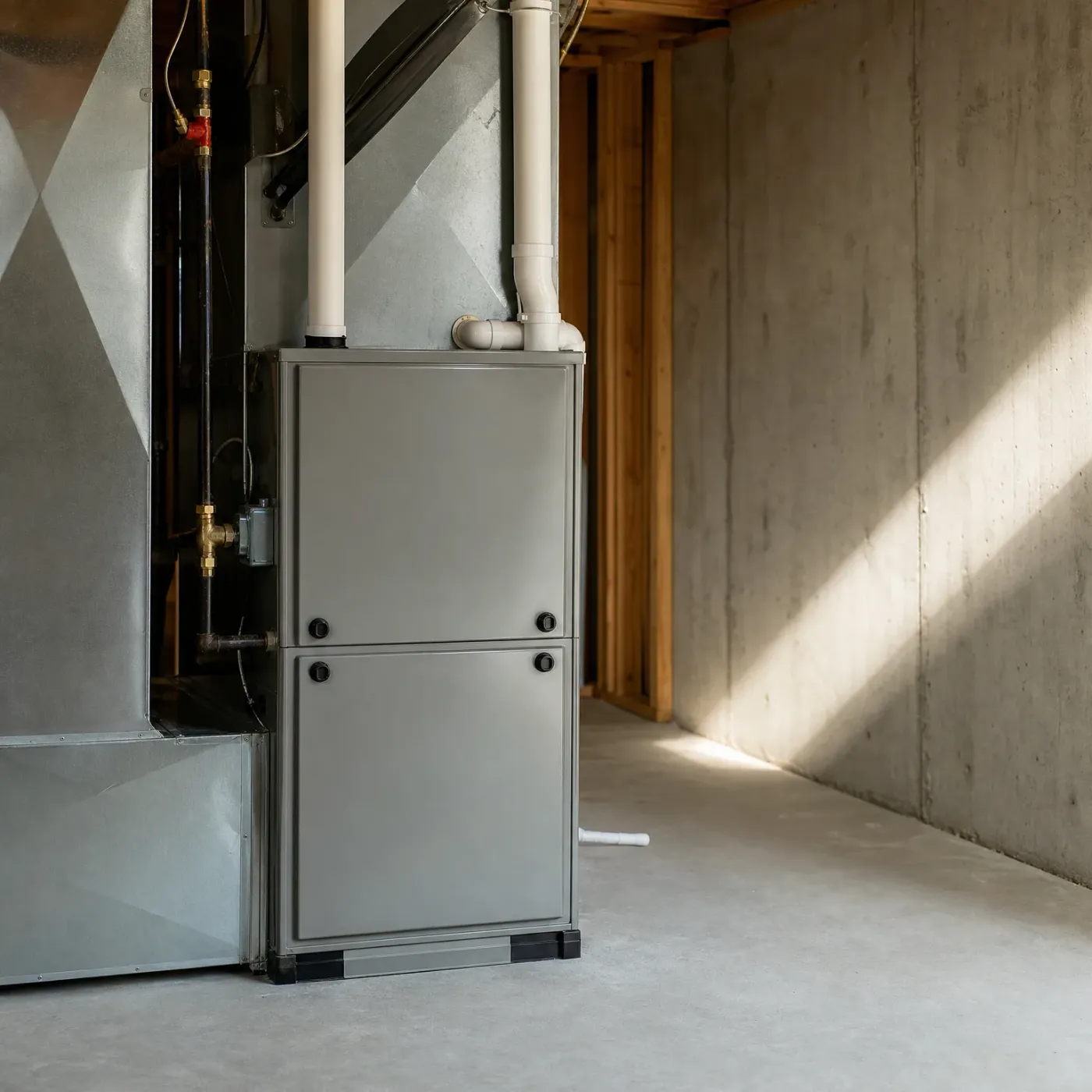
This is what a furnace should look like: clean, connected, doing its job. If yours still heats every room evenly and shuts off without a fuss, there's no reason to touch it. Keep up with the filter and let it run out its years.
Your furnace has been running longer each winter and the bill keeps climbing. Maybe it's making a noise it didn't used to make, or the heat doesn't feel as even through the house. You're not sure if this is a repair or if you're past that point. Cobb County winters ask a lot of a gas furnace, and you want to know whether to call someone for a fix or start planning for a new system.
A gas furnace is built to last 15 to 20 years, and most homes in Cobb County heat with gas. Past that point, the heat exchanger and other parts have cycled on and off thousands of times every winter, and they wear out whether or not anything has broken yet. If yours is in that range and a repair bill is already on the table, that's usually the sign to stop patching it. If it's needed more than one repair this winter, or the burner or blower sounds different than it used to, that's worth taking seriously even on a newer unit. A furnace that can't hold a steady temperature through a Cobb County winter is costing you in gas use long before it quits for good.


This is what a furnace should look like: clean, connected, doing its job. If yours still heats every room evenly and shuts off without a fuss, there's no reason to touch it. Keep up with the filter and let it run out its years.

Dust like this builds up over a lot of winters, and age catches up with the parts you can't see. If yours is old enough to look like this and it's starting to struggle, replacing it before it fails on a cold night beats waiting for the breakdown.
Walk through the house in January and feel for it. One room runs warm while another stays cold no matter where you set the thermostat. The furnace kicks on more often and runs longer each time, and you notice because the gas bill shows it. It might bang or rattle when it starts, or let out a burnt smell that wasn't there last winter. Dust seems to settle faster than it used to. None of this means it'll quit tomorrow, but a furnace working this hard is more likely to leave you without heat on the coldest night of the year, and a cracked heat exchanger is a safety problem, not just a repair bill.


Skip the round of in-home estimates for a new furnace.
Sending the form costs nothing.
A gas furnace heats by pulling air across a heat exchanger, a folded metal chamber with flame on one side and your house air on the other. That exchanger is what fails as a furnace ages. Years of heating and cooling cycles make the metal expand and contract until it cracks. A crack means combustion gas can mix into the air moving through your ducts, and that's why a cracked heat exchanger is the one failure that ends the conversation about repair. Technicians test for this with a combustion analyzer or by looking for cracks with a camera, not by guesswork. If yours tests bad, the furnace gets replaced regardless of its age or how well it otherwise runs. It's also why a furnace that trips its carbon monoxide detector, even once, needs that inspection before it runs again, not after the next cold snap.


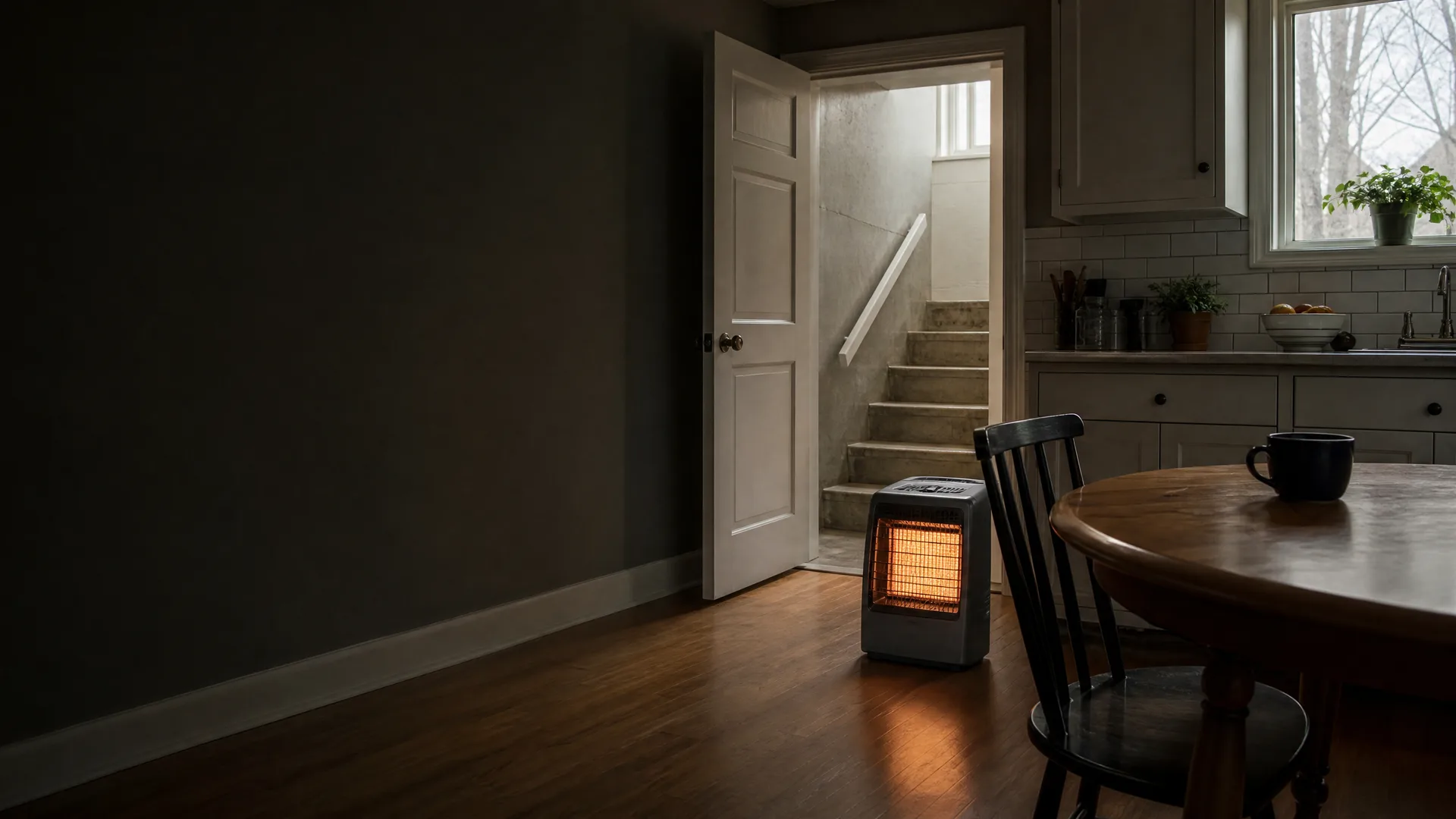
It's a little after six, still dark, and the kitchen is the only warm room you'll get before work. The space heater sits by the table, cord stretched to the outlet, its coil throwing orange light across the floor. Behind it the basement door stands open, because that's where the furnace is, and it's been quiet down there in a way it shouldn't be. You've got a mug in one hand and your coat already on, and you're doing the math on how many mornings this winter have started exactly like this one. Cobb County can get down into the 20s overnight this time of year, and the heater takes the edge off one room while the rest of the house sits cold.
Winter nights average 34°F
Winter nights here average 34°F, right at freezing, so the furnace is working to close that gap most nights it runs.
Heat runs November through April
Heat runs November through April in Cobb County. That's half the year your furnace has to hold up, not just a few cold snaps.
68.2% of homes heat with gas
68.2% of homes in Cobb County heat with gas. If yours is one of them, the heat exchanger is the part that matters most as it ages.
NOAA nClimDiv 1991-2020 · ACS 2020-2024

A furnace that heats every room evenly and shuts off without a fuss has earned the rest of its years. One that's cracking its heat exchanger, rusting through the cabinet, or costing more to patch than it's worth has told you plainly it's done. Most furnaces in Cobb County run from November to April, and what you do this winter should match what you actually found when you looked, not a guess.
If you're still not sure which side of that line you're on, you don't have to work it out alone or start calling furnace companies around Mableton one by one. Answer a few questions about what your furnace is doing and a contractor who knows gas furnaces in this area will reach out and look at your specific situation instead of a stranger's.

Describe the project once instead of to every installer.
You're not committing to anything by asking.