How long a furnace lasts in Peachtree City, GA

Your new furnace project goes to an installer who works in Fayette County.

Connect with a pro

A gas furnace in Fayette County typically lasts 15 to 20 years. Winters here are mild, so your furnace isn't working hard most of the year, and that light use is the main reason furnaces in Peachtree City tend to run toward the long end of that range rather than the short one. What shortens a furnace's life is usually not age by itself but how well it was installed and how often it gets serviced. A unit that's short-cycling, making more noise than it used to, or running up your gas bill without explanation is telling you something, even if it hasn't hit 15 years yet. If your furnace came with the house and you don't know its age, the data plate inside the access panel will have a manufacture date. Once a furnace passes the 15 year mark, it's worth having someone look at it before a cold snap forces the question.

A gray-haired man in a dark coat dusted with snow stands in a warmly lit home entryway, with a lamp, sofa, window and white staircase banister behind him.
An older man with gray hair and a beard, wearing a dark coat dusted with snow and a blue plaid scarf, stands smiling in a dimly lit entryway with a window, framed picture, table lamp and staircase behind him.
A gray-haired, bearded man in a dark winter coat with snow on the shoulders stands in a doorway of a home interior with a lit lamp, framed pictures, a potted plant and a staircase behind him, and an evergreen wreath at the left edge.
A gray-haired man in a dark coat with snow on the shoulders and collar stands smiling in a dimly lit entryway with a paneled front door, lamps, and a framed picture in an adjoining room.

Is your furnace telling you it's getting old?

You might hear it kick on with a bang or a rattle it didn't used to have. The air coming out of the vents feels cooler than it should, or one room never quite warms up like the rest of the house. The burner flame looks yellow or flickers instead of burning steady blue. Your gas bill climbs even though you haven't changed the thermostat. Some of these are small and fixable. But a furnace that's cycling on and off more than it used to, or one that needs a repair call every winter, is usually past the point where fixing it keeps making sense. Left alone, an aging furnace can crack a heat exchanger, which is a safety problem as well as a comfort one.

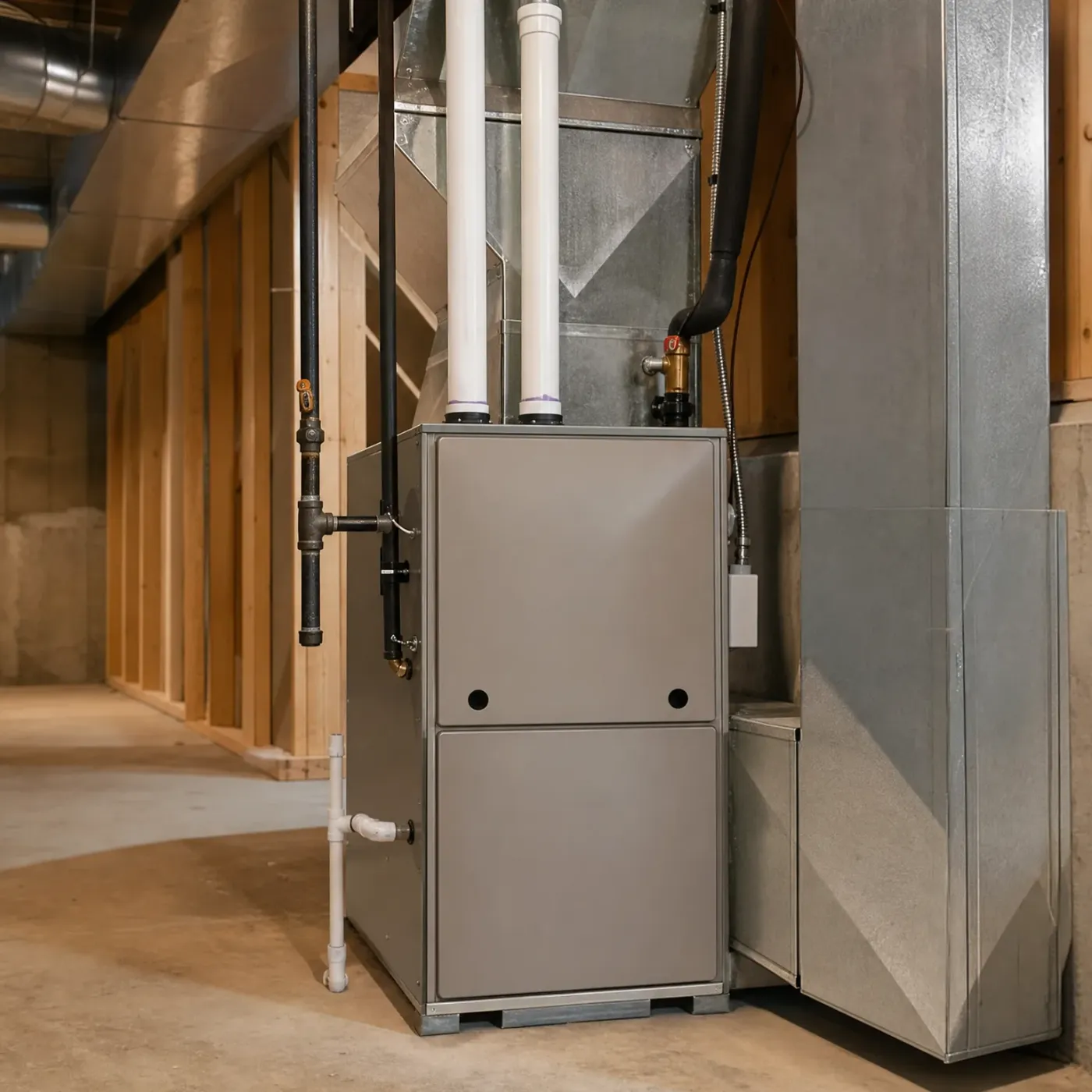
A basement utility area with a gray furnace, sheet-metal ductwork, pipes, plastic-covered walls, a concrete floor, and a black shelving unit holding storage bins.

Running the way it should

This is a furnace doing its job: clean burners, tight connections, a cabinet with no rust on it. Mild winters here mean a furnace like this won't see hard use, and it can keep heating the house for years past the point most people start expecting trouble.

A gray metal furnace with louvered vent panels stands on a concrete basement floor beside galvanized ductwork, gas and plastic pipes, and foil-faced insulation along the ceiling and wall.

Showing its age

Rust on the cabinet and a furnace this old are worth a second look, even in a county where winters stay easy on the equipment. Years of gas lines and ductwork sitting in a damp basement will do this. A furnace at this stage is closer to the end than the start.

Repair It or Replace It

Keep repairing

  • A single repair, even an igniter or a flame sensor, usually costs far less than a new furnace.
  • If the furnace is still inside that 15 to 20 year range, one more repair can carry it through another mild Fayette County winter.
  • You already know how it runs and what maintenance it's had, which you lose the moment you swap it out.
  • Parts for a furnace that's a known quantity are often easier to source than you'd expect if it's a common model.
  • A repair now buys time to plan a replacement instead of being forced into one on the coldest night of January.

Replace now

  • Past 15 to 20 years, each repair is a bet on a furnace that's already closer to its end than its beginning.
  • A new furnace runs on a warranty, so the next few winters come without a repair bill hanging over them.
  • If the heat exchanger is cracked, that's not a repair, that's a furnace that has to be replaced for safety.
  • Newer furnaces are built to use less gas for the same heat, which matters even with mild Peachtree City winters.
  • Replacing it ends the guessing of whether the next cold snap brings another breakdown or gets you through clean.
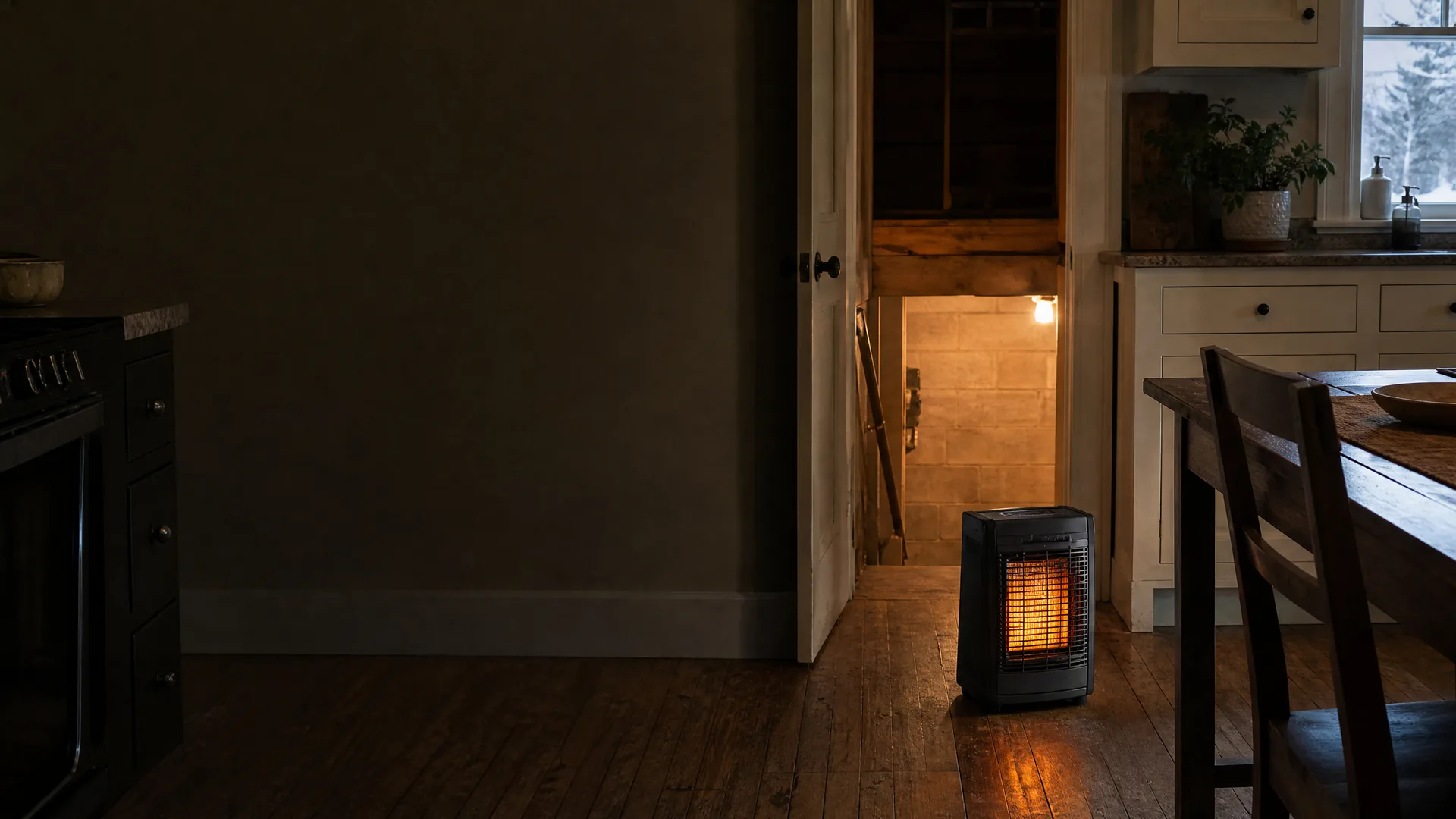
A dimly lit interior with wood plank flooring where a small portable heater with a glowing orange element sits near an open doorway, with a stove at left, kitchen cabinets and a potted plant at right, and a wooden table and chair in the foreground.

The thermometer dropped hard overnight, the kind of morning that still catches people here off guard. You're up before the rest of the house, standing in the kitchen in a sweatshirt, and the space heater is pulled close to the table, its coil glowing orange. The basement door behind it is open, the way it's been for a week now, ever since the furnace started skipping its morning cycle. You can hear the house settling but not the burner catching. Your coffee's getting cold faster than it should. You keep meaning to go down and look at it yourself, but you don't know what you'd be looking for.


Why doesn't a Peachtree City furnace wear out faster?

  • Winter nights average 35°F

    Overnight lows average 35°F in December, January and February here. A furnace built to handle real cold isn't strained by that, so it ages slowly.

  • Heat runs November through March

    Heat runs November through March in Fayette County, about five months. The other seven, your furnace sits idle and can't rack up wear.

  • 63.5% of homes heat with gas

    63.5% of homes in Fayette County heat with gas, the same setup lasting 15 to 20 years when it isn't pushed hard every winter.

NOAA nClimDiv 1991-2020 · ACS 2020-2024

A beige furnace with two access panels stands against a concrete basement wall, with galvanized sheet-metal ductwork, a white PVC pipe, flexible conduit and insulated ducting around it.
Before you get your furnace installation
A gray furnace with white PVC vent pipes stands beside sheet-metal ductwork in a basement with a smooth concrete floor, exposed wood framing, and plastic sheeting on the walls.
After you get your furnace installation
A gray high-efficiency furnace in an unfinished basement, connected to sheet metal ductwork, white PVC vent pipes, a black gas line and flexible conduit, with concrete floor and wood-framed walls nearby.

A pro who works on furnaces

Describe the project once instead of to every installer.

A local installer who puts in furnaces gets your project.

Find a pro near me

It costs nothing to send, and you don't have to hire anyone.

A dark high-efficiency furnace on a concrete pad in a basement, connected to galvanized ductwork, white PVC vent pipes, and copper and black gas piping, with concrete walls and wood framing nearby.
A furnace like this moves heat through clean ductwork and vents its exhaust through tight, well-sealed PVC pipe.
A gas furnace with a louvered upper panel stands on a concrete pad in a basement, flanked by sheet-metal ductwork, white PVC and metal pipes, and insulated columns.
Rust creeping up the cabinet and a drain pipe like this one are signs the furnace is wearing out from the inside.

How a Furnace Actually Works

  • A gas furnace fires its burners first, then the blower waits about 30 seconds before pushing out warm air.
  • A flame sensor confirms the burners actually lit, and shuts the gas valve if it doesn't detect a flame.
  • The inducer motor runs before ignition to clear the heat exchanger of any leftover exhaust.
  • Every flame the burners make passes through a heat exchanger that keeps combustion gas separate from the air going into your ducts.
  • A cracked heat exchanger is usually what ends a furnace's life, since it lets exhaust mix with the air headed into your home.
  • The limit switch shuts the burners off if the heat exchanger gets hotter than it should, which protects it from cracking early.

A furnace doesn't just blow hot air the second it kicks on. The burners light first. Before that happens, the inducer motor runs for a few seconds to pull any leftover exhaust out of the heat exchanger, so the burners aren't lighting into old combustion gas. Once the burners fire, a flame sensor checks that they actually caught. If it doesn't sense a flame, it shuts the gas valve rather than let gas keep flowing unburned. Only after the burners are confirmed lit does the blower start, usually about 30 seconds later, which is why you feel a short delay before warm air shows up at the vents. All of that heat passes through the heat exchanger, a set of metal chambers that let the furnace warm the air going into your ducts without letting combustion gas mix into it. A limit switch watches the temperature of that heat exchanger and cuts the burners if it runs hotter than it should, which is partly what keeps it from cracking before its time. When a heat exchanger does crack, usually from years of heating and cooling cycles, it's typically what ends a furnace's life, since a crack lets exhaust leak into the air your ducts carry through the house rather than keeping the two separate the way the furnace was built to.

Winter nights average 35°F

A 35°F night asks a lot less of your furnace than a hard freeze would. It cycles on, brings the house up to temperature, and shuts off again without straining to catch up. That's the kind of night your furnace sees most often here, all winter.

NOAA nClimDiv 1991-2020

Replace it now, planned

You pick the week. The old furnace comes out on a day that works for your schedule, before a cold snap forces the issue. You've got time to compare a contractor's recommendation against what the furnace has actually needed in repairs, and to ask about sizing instead of taking whatever fits the budget that afternoon. If the blower or heat exchanger is already showing its age, you're not betting another Fayette County winter on it.

Wait for it to fail

Nothing changes until the furnace won't light, usually on one of the colder mornings of the year. Then it's a same-day call, whatever contractor can get there, and a furnace picked under pressure instead of compared ahead of time. If it's within that 15 to 20 year range, waiting costs you nothing most winters. Past that range, you're deciding on a new furnace while the house is already cold, with less room to weigh options.

A woman with dark shoulder-length hair sits wrapped in a gray fleece blanket on a sofa with an open book on her lap, beside a lit lamp and a dark window.
A bearded man in a plaid flannel shirt looks out a window at snow-covered conifer trees, with a steaming ceramic mug on the sill and wooden shelves holding dishes and a plant behind him.
A beige high-efficiency furnace with white PVC vent pipes stands beside galvanized sheet-metal ductwork in a basement with a concrete floor, exposed wood studs, and metal piping along the wall.

This is what normal looks like

PVC pipes for intake and exhaust, a sheet-metal plenum running tight to the ductwork, no rust on the cabinet. A furnace set up like this is burning gas cleanly and moving the heat where it's supposed to go.

An older beige furnace with a louvered vent panel stands on a concrete basement floor beside galvanized sheet-metal ductwork, a metal flue pipe and vertical pipes along a concrete wall.

This one is further along

The cream cabinet and flexible metal flue are older styling, not a flaw by themselves. But paired with an aging cabinet, that flue connection and the block wall vent are worth a look if the furnace is heating unevenly or cycling strangely.

A woman in a gray sweater and jeans stands in an open wood front door of a white stucco house while a man in a dark jacket walks toward her on the entry path.

So how long will your furnace last?

Most furnaces in Fayette County see 15 to 20 years of service, and mild winters here are a big part of why. If yours is inside that range and running the way it should, there's no reason to do anything but keep up with it. If it's past that range, or showing the signs that come with age, it's worth finding out where it actually stands before a cold snap makes the decision for you.

Getting that answer usually means calling around, explaining the same problem two or three times, and trying to compare quotes that aren't written up the same way. You can skip that part. Answer a few questions about your furnace and your house, and a contractor who works in Peachtree City will reach out to look at your specific situation and tell you where you stand.

A living room with a cream sofa and knit throw beside a window, with a wooden coffee table in the foreground holding a round woven tray, a small bowl, and a speckled vase of green leafy branches.
A single-story stone-clad house with low-voltage path lights along a gravel bed and lawn at dusk, with a tree line and orange sky on the horizon.

Furnace Installation

Get your furnace to the right pro

New system or replacementFurnace or heatingFayette County, GA
Step 1 of 2

What ZIP code is the job in?

  • A corner of a room with an upholstered wood-framed armchair holding a floral pillow, a round side table with a ceramic lamp, books and a vase of greenery, a framed landscape painting on the wall, a patterned rug, and a sunlit multi-pane window.
    • Get in touch with a local installer about a new furnace.
    • Get matched with a pro who works on furnaces in Fayette County.
  • Interior corner with a wood-framed window showing green foliage outside, a framed landscape print on a beige wall, and a rounded stone vase of leafy branches on a wooden cabinet.
    • Send the form and stop researching installers for the new furnace.
    • One request ends the search for a furnace installer.
  • A pale ceramic vase holding olive branches sits on a dark wooden countertop beside a carved wooden dough bowl, next to a wood-framed window and a light painted plank wall.
    • Skip the round of in-home estimates for a new furnace.
    • Fill out one short form instead of calling around.
  • A dark wood round side table holding a brass lamp with a cream shade, a blue-and-white patterned bowl, and a white textured pot of greenery, beside an upholstered chair with a gray patterned cushion and a white-framed window showing green trees and flowering shrubs.
    • A licensed installer who works in Fayette County gets your project.
    • One installer gets your project, so there's no bidding war over it.