

How long a furnace lasts in Georgia

One request ends the search for a furnace installer.

Hand it off

How long does a furnace last in Georgia?

Most homes in Georgia heat with electricity, and a furnace here does a fraction of the work it would do further north. You're thinking ahead to next winter, not dealing with a breakdown tonight, and you want a straight number so you know whether to plan for a repair or start looking at replacement.

A furnace in Georgia typically lasts 15 to 20 years

Georgia winters are short, so a furnace here doesn't run nearly as many hours a year as one in a colder state. Less runtime means less wear on the heat exchanger and the blower motor, which is why furnaces in Georgia tend to land at the long end of what a furnace can do anywhere. Age alone doesn't tell the whole story. A unit that's 18 years old and still starts up fine, holds a steady flame, and heats evenly can keep going a while longer. One that's short cycling, making noise on startup, or tripping its limit switch is closer to the end even at 12 or 13 years, especially if it sat unused through hot, humid summers between heating seasons.

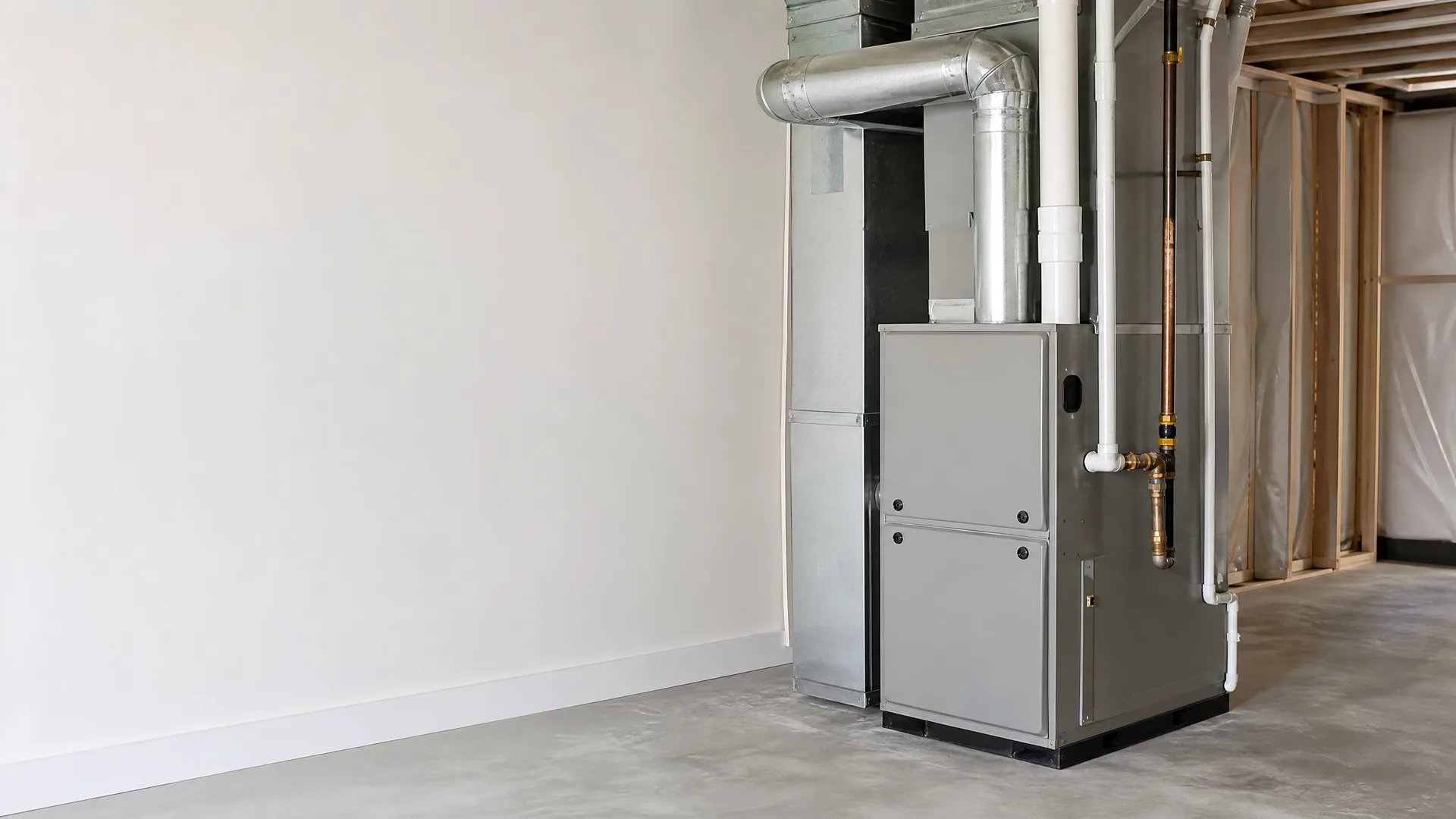
A dark gray furnace connected to galvanized sheet-metal ductwork, white PVC vent pipes and copper piping, standing against a plain light wall in a room with a bare concrete floor and exposed wood framing at left.

Why it runs light here

A furnace only works when the thermostat calls for heat, and in Georgia that's a short list of days. Most homes here lean on electric heat the rest of the time, so the furnace sits idle more than it runs. Every cycle wears the igniter and the heat exchanger a little. Fewer cycles over a winter means less wear added up by spring, year after year, compared to a furnace running through a long, hard winter further north.

A gray high-efficiency furnace with sheet-metal ductwork, white PVC vent pipes and copper piping stands against a wall in an unfinished basement with a concrete floor and insulated wood stud framing at right.

What actually ends its life

Age alone doesn't retire a furnace. A cracked heat exchanger does, or an igniter that fails enough times that replacement parts cost more sense than they're worth. Humid summers don't help, since the furnace and its ductwork sit through months of muggy air even when the heat's off. Moisture around the cabinet or the vent can work on metal parts year round, whether the burners ever fire or not.

Is your furnace telling you it's on its way out?

A furnace near the end runs louder than it used to, with a bang or rattle when it kicks on. It might take two or three tries to light instead of one, or the air coming out feels cooler than it should. Some rooms stay cold while others heat fine. You may notice a burning smell the first few times you use it each year, which usually clears, but one that lingers is worth taking seriously. Since you're only running this thing a few months out of the year, these signs can creep up slowly and get written off as nothing. Left alone, a failing furnace can crack its heat exchanger, which is a safety issue, not just a comfort one.

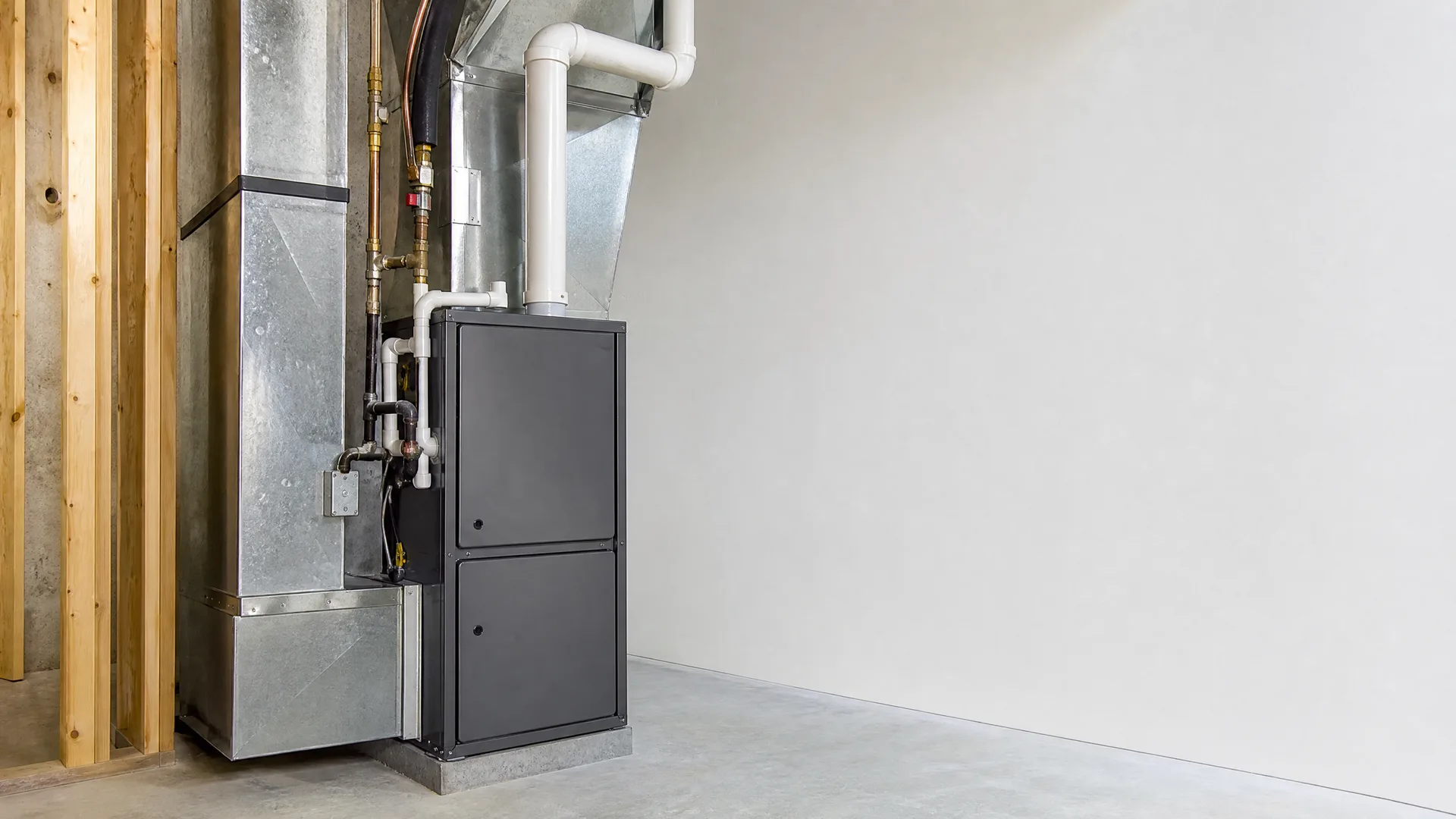
A dark high-efficiency furnace on a concrete pad in a basement, connected to galvanized ductwork, white PVC vent pipes, and copper and black gas piping, with concrete walls and wood framing nearby.

Running the way it should

A furnace like this fires on the first try and holds a steady flame. The ductwork, the exhaust pipe, the gas line all stay dry and tight where they connect. You don't notice it, because it starts, runs its cycle, and shuts off clean.


A gas furnace with a louvered upper panel stands on a concrete pad in a basement, flanked by sheet-metal ductwork, white PVC and metal pipes, and insulated columns.

Nearing the end

This one has had years to show wear in a basement that doesn't change much season to season. The drain pipe stains or drips, the metal conduit shows its age, and the unit works harder for the same heat. That's the point to start looking at a replacement.

A man in a navy sweater reclines with closed eyes in a beige armchair in a living room, with a lamp, wooden cabinet, bookshelf, potted plant, and a side table holding a newspaper and mug nearby.
A man in a blue henley shirt reclines on a leather chair with his eyes closed, beside a window, a houseplant, a side table with a newspaper and a dark mug.
A man in a gray sweatshirt reclines with his eyes closed in a dark leather chair, with a bookshelf behind him and a side table holding folded newspapers, a mug, and a potted plant by a window.
A man in a blue sweater leans back on a brown leather chair with his eyes closed and a slight smile, in a room with bookshelves, framed pictures, a potted plant by a window, a folded newspaper and a dark mug on a table.
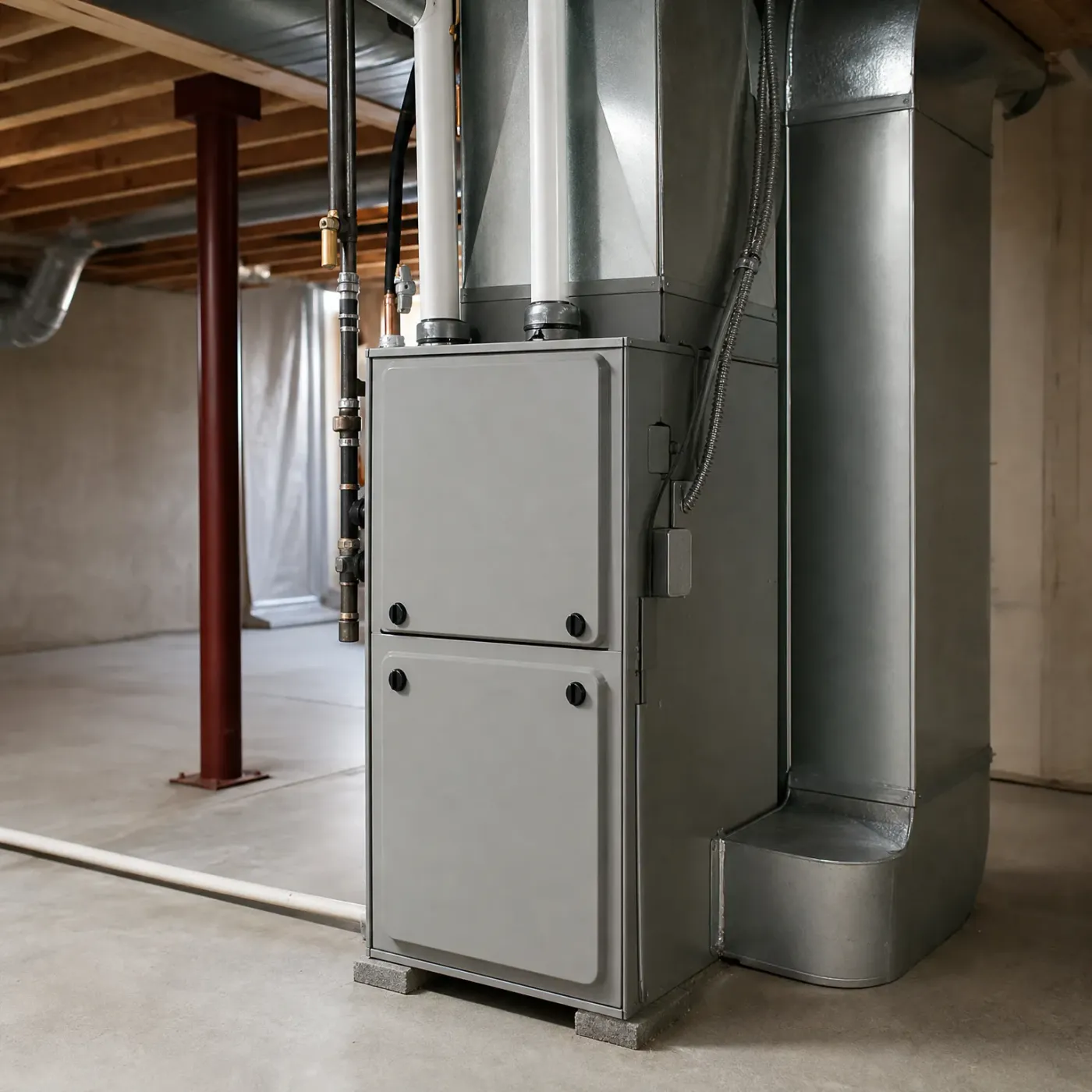
A gray high-efficiency furnace with two access panels stands on blocks in a basement, connected to sheet-metal ductwork, PVC vent pipes, flexible conduit, and gas and water piping, beside a red support column and exposed wood joists.

One request and it's handed off

One installer gets your project, so there's no bidding war over it.

Send the form and the search for an installer is over.

Find a licensed furnace pro

Sending the form costs nothing.

A beige high-efficiency furnace with white PVC vent pipes stands beside galvanized sheet-metal ductwork in a basement with a concrete floor, exposed wood studs, and metal piping along the wall.
A furnace in good shape like this one lights fast, runs quiet, and heats the house evenly through the cold snaps Georgia gets.
An older beige furnace with a louvered vent panel stands on a concrete basement floor beside galvanized sheet-metal ductwork, a metal flue pipe and vertical pipes along a concrete wall.
An older furnace like this one can still run, but it's working harder each winter to do what it used to do without trouble.

How a furnace actually runs

  • A furnace lights by sparking an igniter, which heats a flame sensor that confirms the burners caught before the blower turns on.
  • The inducer motor pulls air through the heat exchanger first, clearing the line so exhaust doesn't back up into the house.
  • Heat passes to the air through a metal heat exchanger, and that part cracking is usually what ends a furnace's life.
  • A dirty flame sensor reads a weak signal as no flame at all, so the furnace shuts off even though it lit fine.
  • Short cycles, the kind common in Georgia winters, start and stop the igniter far more often than long, steady runs do.
  • The blower motor runs longer than any other part each winter, since it moves air well after the burners shut off.

Start a furnace up and there's an order to it. The igniter glows hot first, then the burners catch, and a flame sensor checks that they really did before the blower pushes any warm air into the house. Before any of that, the inducer motor clears the heat exchanger so exhaust has a path out instead of backing up. That heat exchanger is the part doing the real work, pulling heat off the flame and into the air passing over it, and it's usually the part that decides when a furnace is done. Metal that heats and cools over and over eventually cracks, and once it does, the furnace gets replaced rather than repaired.

The flame sensor causes more false alarms than actual failures. A film of dust or soot on it reads as no flame, so the furnace shuts itself down as a safety measure even though the burners lit fine. In Georgia, where the thermostat calls for heat in short bursts rather than long steady runs, that sensor and the igniter cycle on and off far more often relative to the hours they actually run. Each start is a small bit of wear, and a furnace here racks up a lot of starts without racking up many hours.

The blower motor sees more runtime than anything else in the system. It keeps moving air for a stretch after the burners shut off, clearing the last of the heat out of the exchanger, so by the end of a winter it's logged more hours than the parts that do the igniting.

A gray furnace cabinet in a basement, connected to galvanized sheet-metal ductwork and white PVC pipes, against a concrete wall with exposed metal piping and insulation overhead.
Before you get your furnace installation
A gray high-efficiency furnace with two PVC vent pipes stands in an unfinished basement beside sheet-metal ductwork, a framed and plastic-covered wall, and a bare concrete wall with vertical pipes.
After you get your furnace installation

Keep the furnace you have

A furnace that still lights on the first try and holds a flame doesn't need to be replaced just because it's older. If it's heating the house evenly and the bang or rattle hasn't started, you can get another winter out of it, maybe more. Parts on these units can be repaired one at a time as they wear, and in Georgia a furnace that's used lightly year after year often lasts longer than the same unit would somewhere colder. Waiting costs you nothing if the signs aren't there yet.

Plan the replacement now

If your furnace is already hard starting, running louder, or blowing air that feels cooler than it should, waiting for it to fail means doing it in the cold with no choice in timing. Planning ahead lets you pick the unit and the week, instead of scrambling when the first real cold snap hits. A furnace installed before the weather turns means it's tested and ready when you actually need it, not something you're troubleshooting on a 30 degree morning with the family waiting on heat.

Winter nights average 36°F statewide

A 36°F night is well within what a furnace handles without strain. It cycles on, brings the room back up, and shuts off, rather than running long stretches to chase a deep cold like further north.

NOAA nClimDiv 1991-2020 county normals weighted by homes

A furnace in Georgia runs light and tends to last because of it, but light use doesn't mean no use, and the day it won't light or won't hold a flame still arrives on its own schedule. When it does, you don't need five companies calling you back at once, sizing up the job over the phone, pushing to get on your schedule first. You need one licensed contractor local to you, someone who services this equipment every winter and already knows what tends to fail in a furnace that sits idle most of the year and gets asked for heat on the cold nights only. That's the kind of match this page sends you toward. Whether your furnace needs a repair or the time's come to replace it, the answer to how long it lasts was never a fixed number. It was always going to depend on how it was maintained, how it was used, and what shows up the day it stops cooperating.

A dimly lit basement with concrete floor and walls, exposed wood joists, and a furnace with sheet-metal ductwork and copper piping on the left side.

Done looking for a furnace pro

Only one pro gets your request, so you hear from one company.

New system or replacementFurnace or heatingGeorgia
Step 1 of 2

What ZIP code is the job in?