Furnace making a loud noise in Dallas, GA

Get matched with a pro who fixes furnaces in Paulding County.

Get a local pro

Why is my furnace making a loud noise?

A loud noise from the furnace in the middle of a cold snap is unsettling, especially when it kicks on at night and wakes the house. Some noises mean the furnace needs a service call soon. Others mean shut it off and call now. The sound itself usually tells you which.

The noise tells you what's wrong

A bang when the furnace starts usually means gas is building up before it lights, then igniting all at once. A squeal points to the blower motor or its bearings. Rattling is often a loose panel or screw working its way out. A grinding or scraping sound means a part inside the blower assembly is hitting something it shouldn't. With winters here cold enough that most Paulding County homes run gas heat for months straight, a furnace that bangs or grinds and keeps running is putting that wear into every cycle. A bang on startup is worth a call soon. Grinding, or a burning smell with any noise, means shut the furnace off and have it looked at before running it again.

A smiling man with dark curly hair in a dark green henley shirt sits on a light sofa in a living room with large windows, a lamp, shelving, a stone fireplace, and a bowl of popcorn in the foreground.
A smiling man in a dark long-sleeved henley shirt sits on a beige sofa in a living room, with a bowl of popcorn and a remote on the table in the foreground and shelves, a lamp, and a doorway behind him.
A smiling man with graying hair and stubble in a blue henley shirt sits on a gray sofa with cushions in a living room, with a bowl of popcorn on a wooden table in the foreground.
A smiling man in a dark green long-sleeve shirt reclines on a sofa in a dimly lit living room, with a bowl of popcorn on a side table in the foreground and a bookshelf, lamp, and houseplant behind him.

Why does a furnace noise matter more here than somewhere warmer

  • Winter nights average 34°F

    Nights average 34°F in December, January and February, so a furnace that quits overnight leaves a cold house to wake up to, not just a quiet one.

  • Heat runs October through April

    Heat runs about seven months a year here, October through April, so whatever is making that noise gets worked hard for most of the year.

  • 51.6% of homes heat with gas

    Just over half of homes in Paulding County heat with gas, and a bad noise in a gas furnace is worth checking sooner rather than later.

NOAA nClimDiv 1991-2020 · ACS 2020-2024

A bang when the burners light usually means gas is building up before it catches, and that burst of flame is hard on the heat exchanger over time. A screech points to the blower motor or its bearings, and a blower that quits mid-cycle on a January night means the house loses heat while you sleep through it. Rattling that gets louder with the fan running can be a loose panel, but it can also be something working its way free inside the cabinet. None of these fix themselves, and with the furnace carrying the house from October into April, a noise you put off checking in November is a furnace you're depending on through the coldest nights of the year. If it stops instead of just making noise, there's no backup heat in most homes here, only the gas furnace doing the job. A technician can tell you in one visit whether it's a part wearing out or something that needs attention right away.

A gray high-efficiency furnace with white PVC vent pipes stands on a concrete pad in a basement, beside sheet-metal ductwork, copper piping and a poured concrete wall with wood framing at left.
A furnace like this one runs quiet, with a steady hum from the blower and a soft whoosh when the burners light.
A beige gas furnace in a basement with a metal flue pipe, galvanized sheet-metal ductwork to its left, and gas and water pipes along the concrete wall to its right.
A furnace left to run with a loud noise long enough can end up like this one, worn and closer to a breakdown on a cold night.
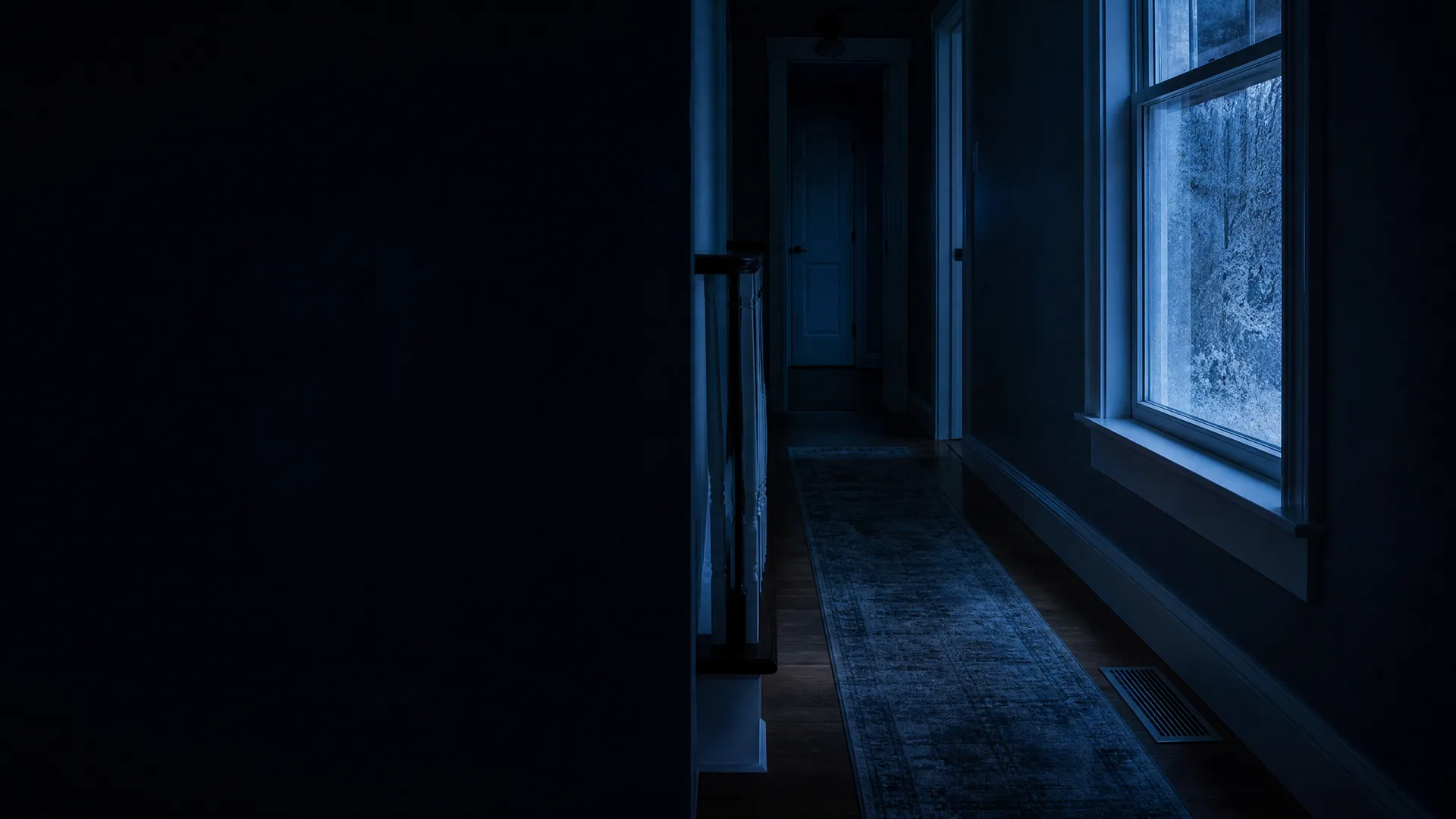
A dark interior hallway lit only by blue light from a window on the right, with a runner rug on a wood floor, a floor vent, a closed door at the far end, and a stair railing at left.

You hear it before you're all the way awake. Two in the morning, and the bang from downstairs comes up through the floor. You lie still and listen for the blower to settle into its usual hum. It doesn't come. The vent by the hallway stays quiet, no air moving through it, and the window at the end of the hall has frost creeping up the inside of the glass. Paulding County nights sit around 34 degrees this time of year, and you can feel the house already giving that heat back. You pull the blanket up and reach for your phone, because this is the kind of thing that waits for morning only if you let it.

A pro who works on furnaces

A furnace does not start banging or screeching for no reason, and it does not stop on its own either. Whatever is loose, worn or gas-starved in there stays that way until someone with the right tools opens it up. You could wait and see if the noise settles down, but a furnace running rough on a night when it's 34 degrees outside is not the time to find out it won't. Paulding County winters ask a lot of these systems, seven months of regular use, and a noise that shows up now usually means something has already been working loose for a while. Getting a contractor out to look at it is the only way to know if this is a small fix or the start of something worse. Send the request and let someone who does this for a living tell you what's actually wrong, instead of guessing at it yourself while the house gets cold.

What a bang does to the exchanger

A burst of flame from delayed ignition hits the heat exchanger harder than a normal light-off. That part is thin metal, shaped to heat up and cool down evenly every cycle. A hard bang flexes it the wrong way, and over enough cycles a crack can start along the seam. Once that happens, gas and air can mix where they shouldn't. A furnace with a cracked heat exchanger has to be shut down and the exchanger replaced, not patched. The bang itself may only last a second, but it happens every time the burners light, which can be several times a night once the temperature drops into the 30s.

Why the blower bearing matters here

The screech people hear is usually metal on metal, the blower motor's bearing wearing past the point where it turns smooth. That motor runs almost nonstop on the coldest nights to keep pace with the house losing heat. A bearing already worn enough to screech is close to seizing, and a seized blower motor won't push air at all even if the burners are still lighting fine. At that point the furnace can be heating with nowhere for the heat to go. Replacing a blower motor is a straightforward repair when it's caught before it locks up.

Winter nights average 34°F

At 34°F overnight, a furnace that cuts out from a bad part left to get worse doesn't just go quiet. It lets the house cool fast, and the backup plan for most people here is a blanket, not another heat source.

NOAA nClimDiv 1991-2020

A gray high-efficiency furnace stands on a concrete basement floor beside sheet-metal ductwork, with white PVC vent pipes and a black flexible line running up to exposed wood floor joists, next to a wood-framed post against a concrete wall.

Running quiet

This is what a furnace sounds like when nothing is wrong with it. Air moves through the ductwork steady, the burners light with a soft whoosh, and the blower settles into a hum you stop noticing after a minute. No bangs, no screeching, nothing grinding under the floor.

A beige metal furnace with a louvered front panel stands on a concrete floor against a concrete wall, connected to galvanized sheet-metal ductwork and a metal pipe.

Worn and struggling

This furnace has been left to run through its noise for a while. Whatever started as a bang or a screech didn't fix itself. It wore on a part that keeps wearing until it fails outright, usually on a night too cold to be without it.

An older beige furnace with louvered front panels stands on a concrete basement floor beside galvanized ductwork, metal and plastic pipes, exposed wood framing, and a cylindrical water heater at right.
Before you get your furnace repair
A gray high-efficiency furnace in a basement with PVC vent pipes, sheet-metal ductwork, copper and insulated pipes, a water heater at left, and an unfinished wood-stud wall at right.
After you get your furnace repair

What the Noise Is Telling You

  • A bang at ignition, a screech from the blower, or a rattle from a loose panel each point to a different part, not the same fix.
  • Furnaces don't start making noise without a cause, and the cause doesn't go away if the furnace is left alone.
  • A furnace that cuts out at night in Paulding County drops the house to a cold morning fast, with no backup heat source for most homes.
  • Heat runs most of the year here, so a worn part left alone gets more cycles to fail on rather than fewer.
  • A quiet furnace runs on a steady hum and a soft whoosh at ignition, nothing more.

A furnace noise is information, not just an annoyance. Where it happens in the cycle, and what it sounds like, points to a specific part. A bang when the burners light means gas built up before it caught. A screech means the blower motor or its bearings are wearing out. A rattle can mean a panel worked loose, or something more serious further in. None of that happens for no reason, and none of it fixes itself. The part that's loose, worn or gas-starved stays that way, and most of these problems get worse the longer the furnace keeps running on them.

That matters more here than it would somewhere milder. Heat runs most of the year in Paulding County, so a worn part gets more cycles to fail on, not fewer. And when a furnace does quit, it tends to happen overnight, which means a cold house by morning and no backup heat for most homes to fall back on.

A furnace that's running right doesn't ask you to think about it. It settles into a steady hum, the burners light with a soft whoosh, and that's the last you hear of it until the next cycle. That's the baseline. Anything else, a bang, a screech, a rattle that wasn't there before, is the furnace telling you something changed. The noise itself won't tell you how serious it is. What it does tell you is that it's time to have it looked at before the part behind it fails the rest of the way.

A woman in a dark knit turtleneck sweater reclines on a couch under a cream knit blanket, looking down at an open book, with a lit table lamp and framed pictures behind her.
A smiling middle-aged man in a dark green sweater sits at a candlelit table with wine glasses and a plate of greens in a dimly lit interior.

Furnace Repair

Get your furnace to the right pro

After this form, you can stop searching for a furnace pro.

A black-framed smartphone standing upright against a plain light gray background, its screen filled with solid green.
RepairFurnace or heatingPaulding County, GA
Step 1 of 2

What ZIP code is the job in?