


Heat pump vs furnace in Gwinnett County, Georgia

Quote Both Systems

Pros who work in Gwinnett County

A person's arm in a blue sleeve reaches to adjust a round wall-mounted thermostat, with a living room containing a navy sofa, coffee table and fireplace visible behind and a tool bag below.

Tell us about the job

Takes about a minute. No obligation.

New system or replacementGwinnett County, GA
Step 1 of 3

What kind of equipment?

Which costs less to run in Gwinnett County?

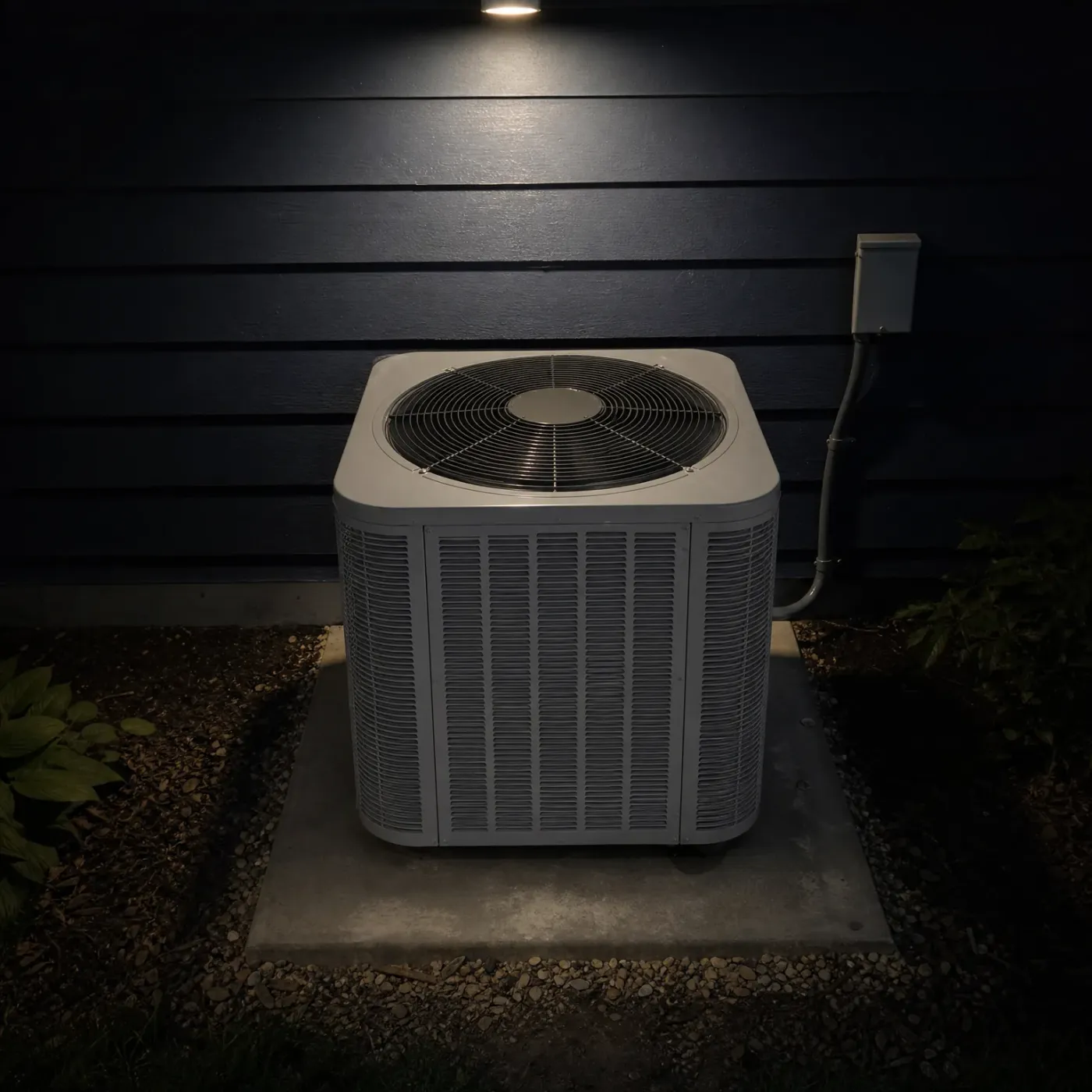
An outdoor air conditioning condenser unit on a concrete pad against a dark horizontal-sided wall at night, lit by a wall light, with conduit and an electrical disconnect box to the right and gravel and plants around the pad.

Heat pump

To heat your home here$1.88per 100,000 Btu

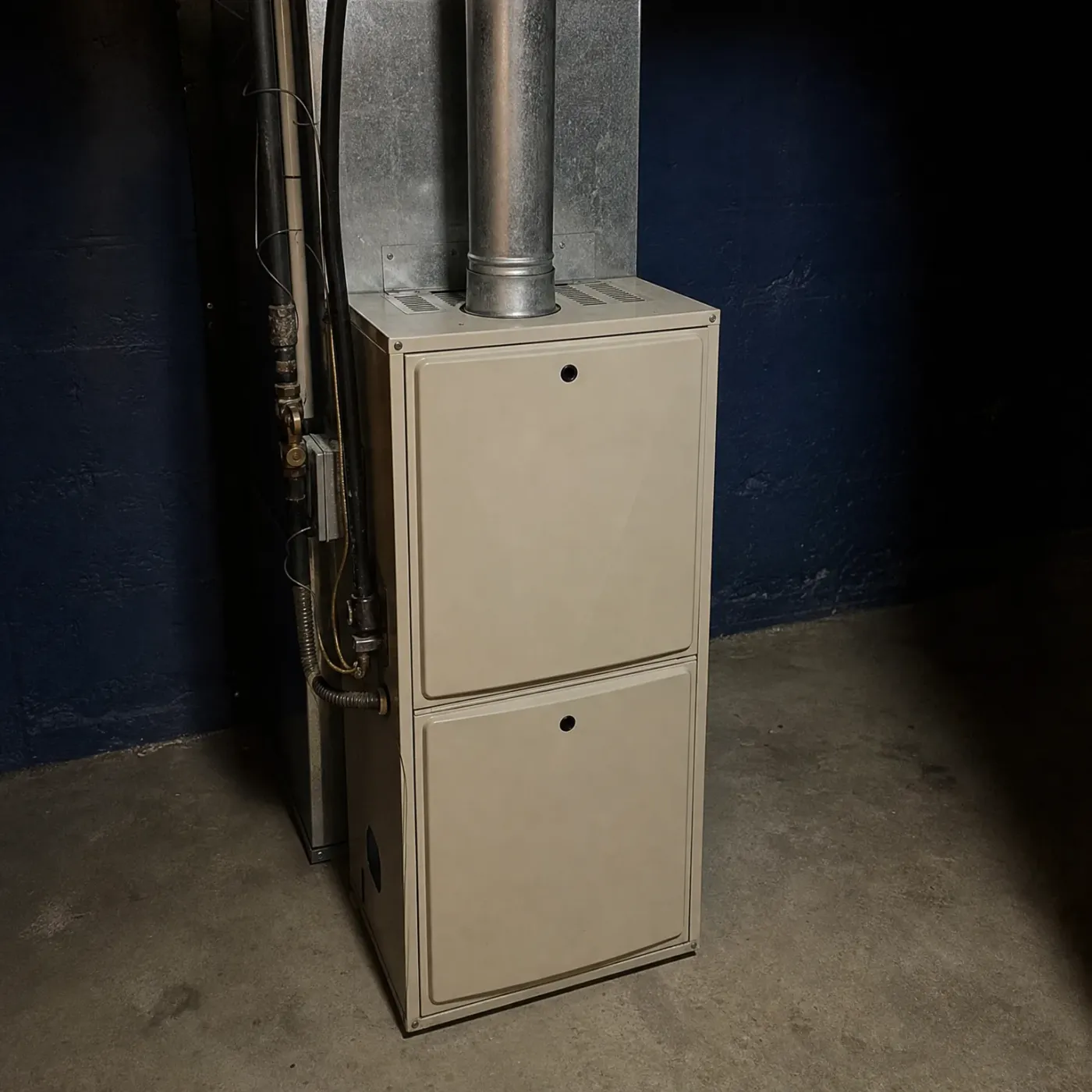
A beige gas furnace with two access panels stands on a concrete floor against a dark blue wall, with a metal flue pipe and plenum above and pipes and wiring to its left.

Furnace

To heat your home here$2.21per 100,000 Btu

At Georgia's gas and electricity prices, a heat pump makes the same heat as a gas furnace for about 15% less.

Btu stands for British thermal unit, the standard measure of heat energy.

Where does a heat pump shine?

  • Covers a long cooling season

    May through September is five months of cooling here. A heat pump handles that same stretch for heating once the weather turns, instead of sitting idle most of the year.

    A covered porch with blue-gray lap siding and ceiling, a ceiling fan, hanging and potted ferns, wicker seating, and a navy round table holding a glass of iced tea on a woven coaster, with a seated person in a rocking chair and green trees in the background.
  • No gas line, nothing burning in the house

    There's no gas line to the unit and no flame anywhere in it. Carbon monoxide isn't part of the picture.

    A kitchen with navy cabinets, white subway tile backsplash, wooden open shelves holding bowls and plants, a light speckled island with an induction cooktop, a blue kettle and mug, two wooden stools, and a window over the sink.
  • Heats and cools in one system

    One machine handles the heat in winter and the cooling in summer. There's no second system to buy or keep up.

    A living room with a cream sectional sofa holding navy and light blue cushions and a blue fringed throw, a wooden coffee table with books, a mug and a vase of green and white flowers, a navy armchair, a dark built-in bookshelf with a lamp, and an open doorway looking onto a lawn and flowering garden.

Where does a furnace shine?

  • Runs on the gas most homes here already use

    Most homes in Gwinnett County already have a gas line, since 61.2% of occupied homes here heat with utility gas. If yours is one of them, a furnace just hooks into what's already there.

    A row of wood-sided houses with covered porches and white railings along a sidewalk, with patchy snow on the ground, bare trees, and an exterior gas meter with pipes on a dark stone foundation in the foreground.
  • Proven, simple, easy to get serviced

    Parts are easy to find and most repairs are routine. Getting one fixed rarely means waiting on a specialist.

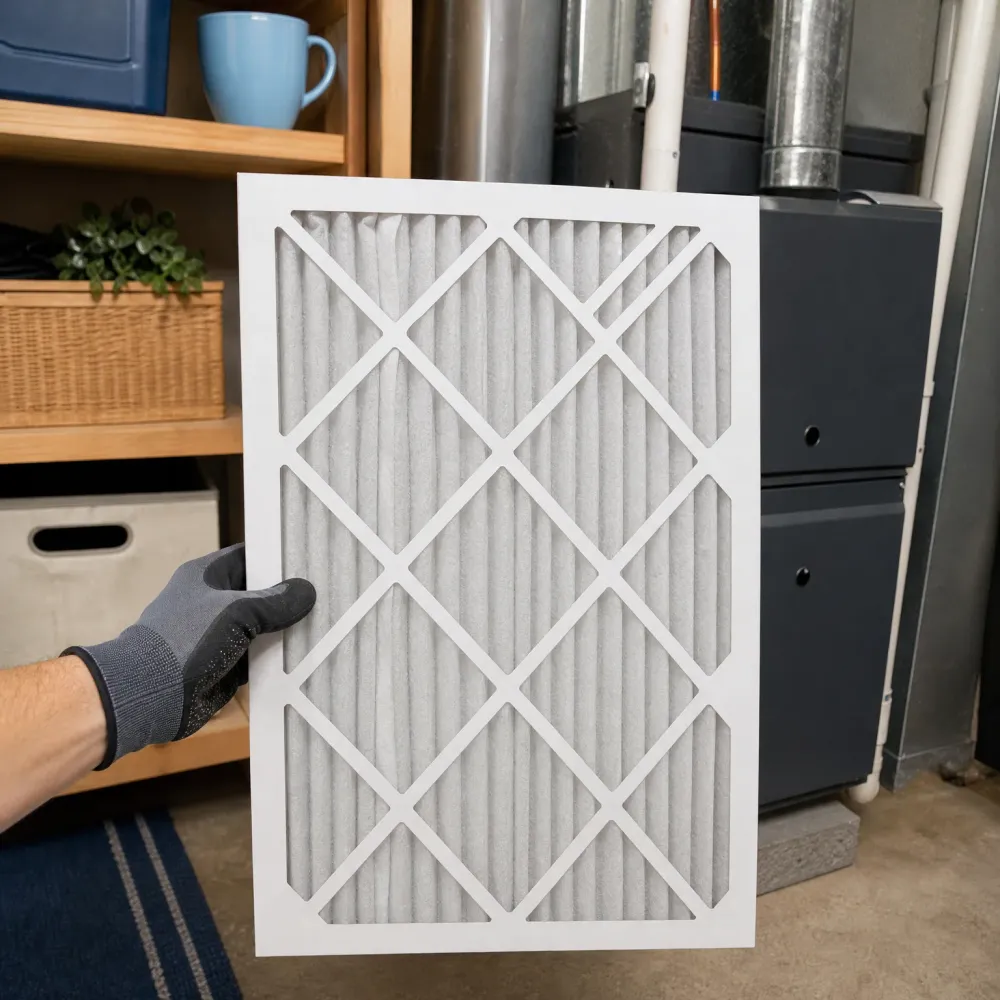
    A gloved hand holds a white pleated air filter in front of a furnace and wooden shelving holding baskets, bins, a mug and a plant.
  • Pairs with any central AC

    The ductwork that delivers heat in winter delivers cool air in summer once an AC coil is added.

    Sunlit wood floor with a metal floor vent near sheer white curtains at a window, a blue-trimmed doorway and tall potted plant at left, a blue patterned rug in the foreground, and a wooden chair draped with a blue fringed throw at right.

Will a heat pump keep up here

Your winter low averages 34°F, and that's the number that matters most in this choice. A standard heat pump starts losing ground below 40°F and often leans on backup heat below about 35°F. So on an average night here, a standard heat pump is already working below both marks.

That doesn't mean it can't heat your house. It means it's working harder than its rating suggests on most winter nights, and it needs backup heat for part of the season. About 55 nights a year here drop to freezing or below, under a third of the roughly 180 nights the heat runs. Almost none of those nights reach 0°F. A two-winter field test of cold-climate heat pumps found backup heat covered only a small share of the output between 0°F and 35°F, and running on backup alone was rare even above 0°F. So the nights that worry people most are the ones backup heat handles least.

If you want a heat pump built for this, look for the ENERGY STAR Cold Climate mark. It has to make at least 1.75 units of heat per unit of electricity at 5°F and hold onto 70 percent of its 47°F capacity at that temperature, verified by outside testing, not the manufacturer's own numbers. A standard heat pump isn't built to that standard. For Gwinnett County winters, that distinction is the one worth paying attention to.
A single-story red brick house with blue shutters, a blue front door under a white pedimented portico, and a dark shingled roof, fronted by pink and white flowering shrubs, a mown lawn, and a brick walkway, with a flowering white tree at left.

What this means for your AC and your bill

Run the two fuel prices and a heat pump costs less to make the same heat: $1.88 against $2.21 per 100,000 Btu, about 15 percent less. That gap holds for a heat pump at the federal minimum rating, with nothing added for backup heat on the coldest nights, so it's the lower bound on the heat pump's real cost here, not the ceiling.

Heating runs about six months a year here, November through April. Cooling runs about five, May through September, with around 40 days a year hitting 90°F or higher. A gas furnace only does one of those jobs. A heat pump does both, which means one system instead of two, and no gas furnace sitting idle the other six months of the year.

Most homes in the county already lean one way or the other. Utility gas heats about three in five homes here, electricity a little over one in three. If your house already has a gas line and a furnace, pairing it with central AC is the simpler path and the equipment is familiar to any contractor in the area. If you're starting over or replacing both the furnace and the AC at once, a cold-climate heat pump covers the whole year on one system, costs less to run by the numbers above, and only asks for backup heat on the fewer nights it actually needs it.

Sources: NOAA nClimDiv · PNNL Building America guide · PNNL-37127 field study · ENERGY STAR product criteria · NOAA 1991–2020 seasonal normals · EIA SEDS 2024 · 10 CFR 430.32 · Census ACS 2020–2024

A single-story blue wood-sided cottage with a white columned front porch, metal roof, gable dormer window and light blue front door, framed by a large bare-trunked tree and fallen leaves, with a white house next door and a paved street in the foreground.

Common questions about heat pumps and furnaces

  • Can a heat pump heat a house through a Georgia winter?

    Yes, but it needs help on the coldest nights. Below about 35°F a standard heat pump's heating efficiency drops and it often needs backup heat, and the average overnight low here in December, January and February is 34°F. About 55 nights a year here fall to freezing or below, and a heat pump built to carry the cold on its own, like one with the ENERGY STAR Cold Climate mark, is built to keep making heat well past that point.

  • Will a heat pump keep my house cool enough here?

    Yes, a heat pump cools a Gwinnett County house the same way a central air conditioner does, because it is one. The afternoon high only reaches 90°F or above on about 40 days a year here, and that's the kind of heat any central AC is built to handle.

  • Can I keep my furnace and add a heat pump?

    Yes, that setup is called a dual fuel system. The heat pump carries the heat most nights here, and the furnace takes over below the temperature where the heat pump stops keeping up.

  • Is a heat pump cheaper to run than a furnace in Gwinnett County?

    Yes, a heat pump costs less to run here, $1.88 against $2.21 per 100,000 Btu of heat. Electricity and gas prices in Georgia are what set that gap, and the heat pump's side of it doesn't include backup heat on the coldest nights.