A red brick house with a white-columned porch and a row of pale clapboard cottages sit behind a trimmed hedge and lawn, under oak branches draped with Spanish moss.

Furnace Repair in Peachtree Corners, GA

Tell us about the job

Takes about a minute. No obligation.

RepairFurnace or heatingGwinnett County, GA
Step 1 of 2

What ZIP code is the job in?

The igniter wears out first

A hot surface igniter heats up and cools down every time the furnace cycles. That cycling makes it brittle over time. Eventually it cracks or stops glowing, and a furnace that tries to start but won't catch is usually telling you the igniter is done.

A dirty flame sensor reads as no flame at all

The flame sensor has to prove to the control board that gas is actually burning. Soot builds up on it over a season of use. Once that coating gets thick enough the sensor can't pick up the flame anymore, and the furnace shuts itself down even though the burner lit just fine.

6 months
November through April, your furnace is on duty
34°F
the average winter night it heats against
61%
of homes here heat with gas, so most furnaces here burn gas
5 winter storms
in ten years, the nights a failure hurts most
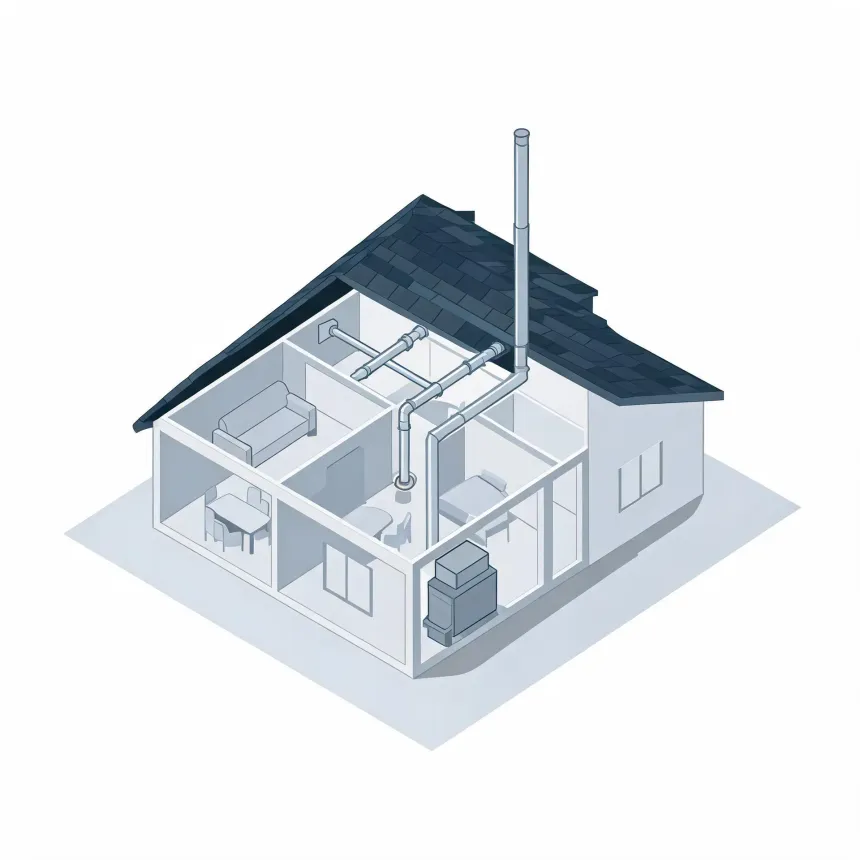
Isometric cutaway illustration of a single-story house showing interior rooms with furniture, ductwork and piping running to a tall vertical flue through the dark shingled roof, and a furnace-like appliance unit on the floor.
Your furnace works hardest from November through March.

NOAA nClimDiv, 1991–2020 normals

Half the homes in Gwinnett County were built in 1996 or later.

A furnace in a house that age has likely got years left in it, so repair is usually the call.

34 degrees at night, not well below zero. A furnace here isn't working hard to keep up.

Heat runs November through April
Winter nights average 34°F
Climate zone 3A

Not a hard life for a furnace, so repair usually makes sense

A furnace that isn't straining is usually a furnace worth fixing rather than replacing. Get the repair done and it should see you through to April without the same trouble coming back.

Find a contractor
A man seen from behind in a gray shirt and tan work pants climbs porch steps toward a blue front door, carrying a worn leather tool bag in his right hand, with a potted shrub in a blue planter beside the door.
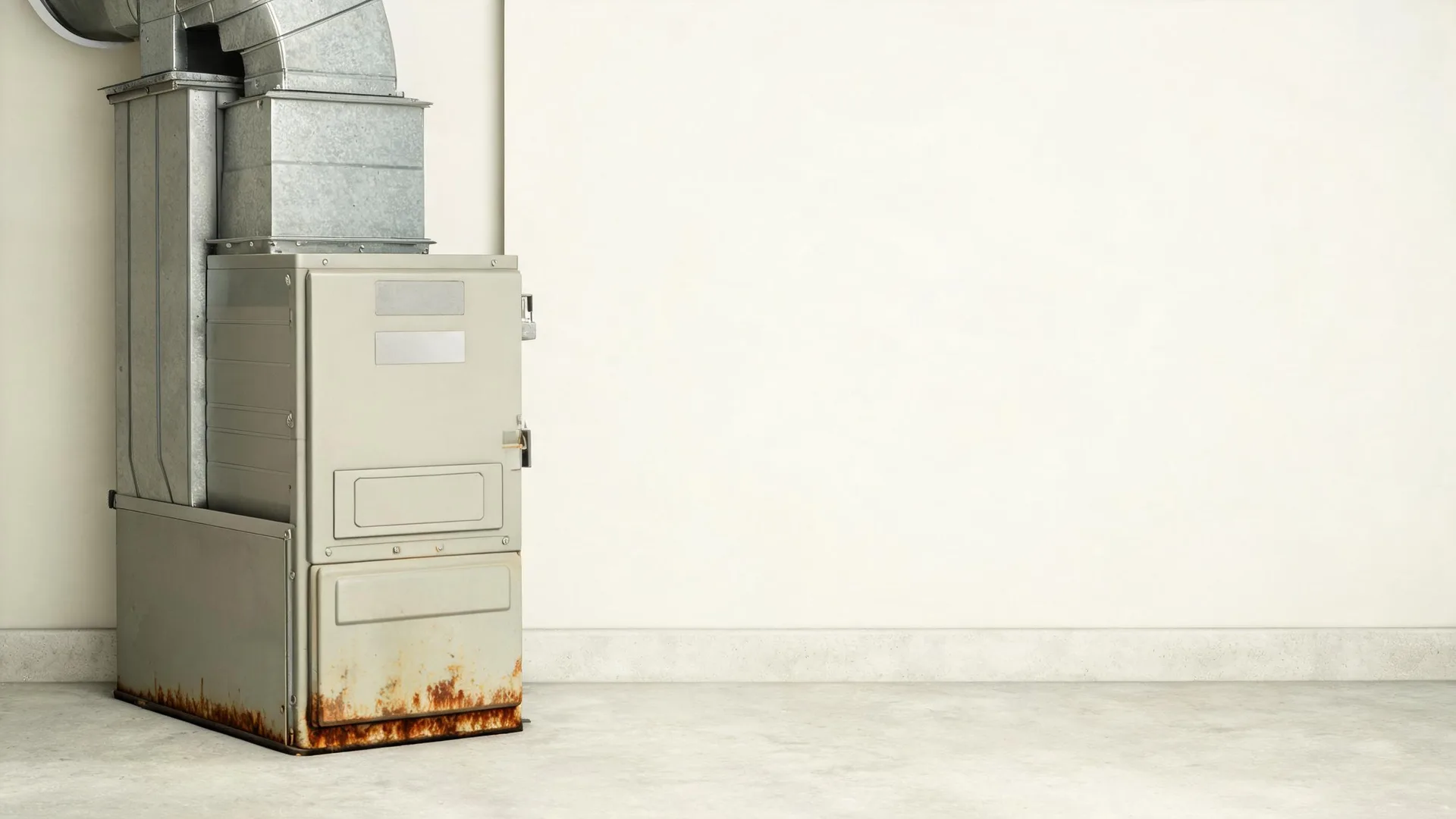
A gray gas furnace with attached ductwork and piping installed in an unfinished concrete basement.

Fix the part that's worn, not the furnace

Get the igniter or flame sensor fixed instead of pricing out a new furnace. In a house this age the rest of the system has no reason to be giving out too, so there's no case for replacing the whole unit over one worn part.

Short cycling is a sign, not a rest

A furnace that fires up, runs briefly, then shuts off and starts again isn't resting between cycles. That pattern usually means a clogged filter or blocked vent is making the furnace overheat and trip its limit switch. Left alone, the constant starting and stopping puts more wear on the igniter and blower motor than a normal heating run would.

A new noise points to a specific part

A bang at startup usually means gas is pooling before it lights, then igniting all at once instead of catching right away. A squeal points to a blower motor bearing running dry. A rattle that comes and goes with the blower is often a panel or loose part vibrating against the cabinet. Each sound tells a tech where to look before the furnace is even opened up.

An unfinished basement featuring a forced-air furnace, exposed wooden ceiling joists, bare concrete walls, and miscellaneous items including cardboard boxes and coiled cables on the floor.

A new furnace would cut about $130 a year off heating for a typical Gwinnett County home.

  • A new high-efficiency furnace$600 a year
  • An older furnace$730 a year

Estimates for a typical Gwinnett County home, compared with an older unit built to the previous federal minimum, from EIA household energy data, Georgia fuel prices and NOAA climate normals. Your home will differ.

Repair makes sense when one part has failed and the heat exchanger is sound.

Replacement makes sense when the heat exchanger is cracked or the furnace keeps needing parts.

Most furnace problems come down to one part, and most parts are worth fixing on their own. The question is whether the rest of the furnace is asking for attention too, or just the one piece that failed. A cracked heat exchanger is the one repair that usually ends in replacement, because the exchanger isn't sold separately from the furnace built around it. Everything else, the igniter, the flame sensor, the blower motor, the control board, gets replaced on its own without touching the rest of the system. A tech checks the exchanger for cracks and the blower for wear whenever a furnace comes apart for any reason, so a repair call tends to surface a bigger problem if one is actually there instead of missing it.