




Single-story houses with beige siding and a brick building set on a mown lawn behind a trimmed hedge, framed by large oak branches draped with Spanish moss.

Heat Pump Maintenance in Peachtree Corners, GA

Tell us about the job

Takes about a minute. No obligation.

Tune-up, service, or cleaningHeat PumpGwinnett County, GA
Step 1 of 2

What ZIP code is the job in?

Gwinnett County saw 185 severe weather events between 2015 and 2024, most of it damaging wind. Hail, a tornado, tropical storms, and winter ice all made the list too. Your heat pump's outdoor unit sits through whatever comes, exposed to hail and whatever branches or debris the wind carries. Nearly a third of Georgia households lost power for a day or more in 2024, and a long outage is its own problem, since the unit has to start back up and run once power is back. Worth having someone check the outdoor unit for dents, bent fins, or debris before storm season builds up.

Half the homes in Gwinnett County were built in 1996 or later.

A heat pump that age still has years ahead of it, worth protecting with a yearly check.

October through April, your heat pump works. Have it checked in October.

Cooling runs May through September
Heat runs November through April
143 damaging wind events from 2015 to 2024

A tune-up gets inside the parts of the system you never see from the thermostat. The refrigerant charge gets checked against what the unit calls for, since too little or too much makes it work harder for less heat. The contactor and capacitor get tested, since a weak capacitor is one of the most common reasons an outdoor unit hums but doesn't start. The coils get inspected for dirt and buildup, which block heat transfer even when airflow seems fine. The reversing valve gets checked too, since that's the part that lets the system switch between heating and cooling, and a stuck valve can leave you heating when you want cooling or the other way around. None of this shows up as a problem until the day it does.

Get the outdoor unit checked before storm season gets to it

Before storm season builds up, have the outdoor unit checked for dents, bent fins, and debris. Clearing that out now is easier than diagnosing a problem once the system won't start.

Find a contractor
A gray air-source heat pump mounted on a concrete pad next to a house with gray vinyl siding, surrounded by gravel and flanked by green shrubs and white hydrangea flowers.

A system this age has years to protect

A yearly check is what keeps a newer system newer. The tech catches a weak capacitor or a dirty coil while it's still a five-minute fix, not a day with no heat. Put it on the calendar on a schedule and the system you have now stays the system you have for years to come.

A quick visit checks that it runs

A short visit confirms the system turns on, blows air, and responds to the thermostat. That tells you it works today. It doesn't tell you the refrigerant charge is correct or that the capacitor is still strong enough to get through another season.
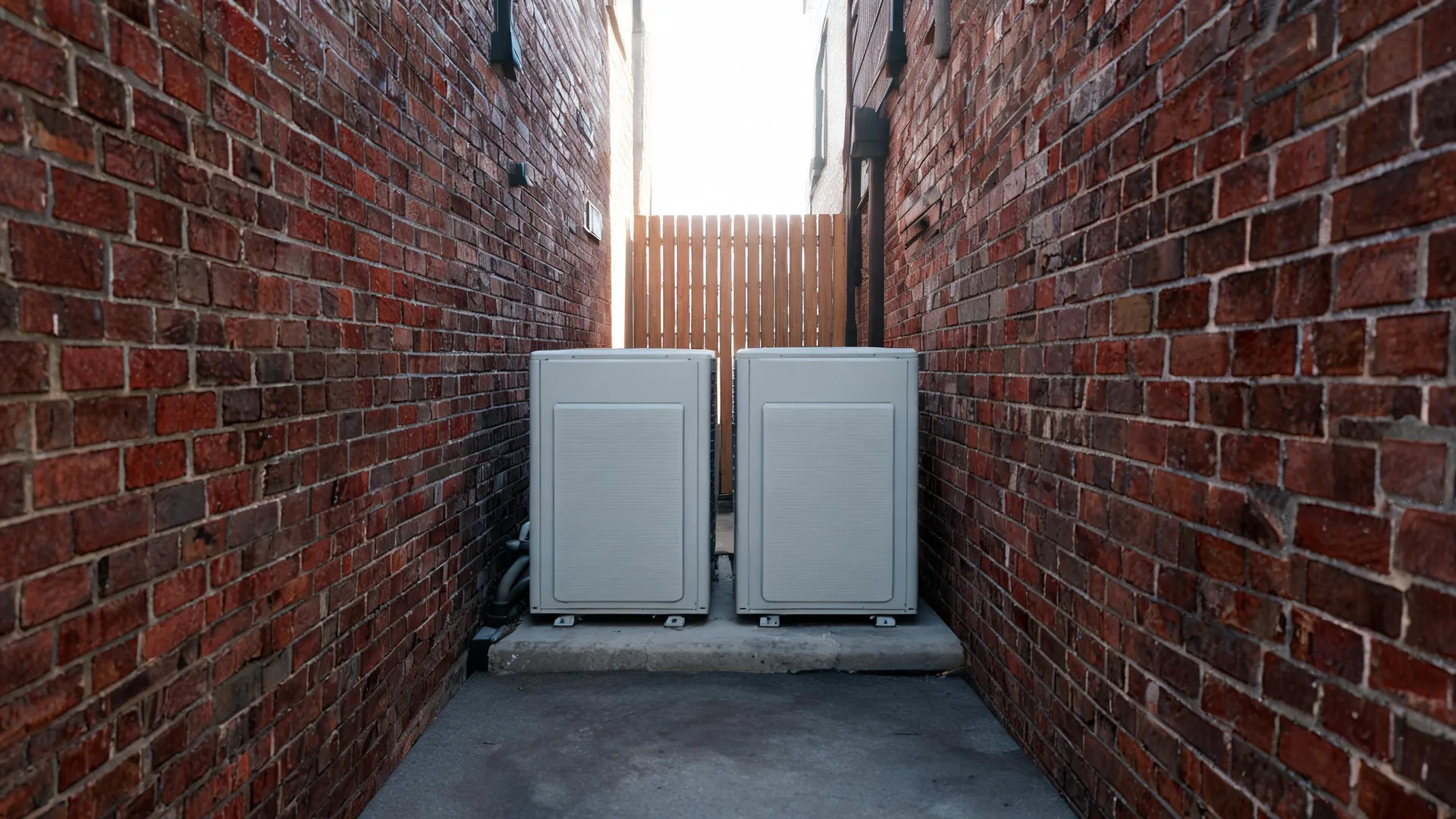
A thorough one checks that it will keep running

A full tune-up has the tech pull the panels, test electrical components under load, measure refrigerant pressures, and inspect the coils up close. Those are the parts that fail quietly, months after a quick check would have called the system fine.

The filter is the cheapest insurance the system has. A clogged one starves the indoor coil of airflow, and that coil needs steady airflow moving across it to do its job in either direction, heating or cooling. Once airflow drops, the coil can get cold enough to ice over even in mild weather, and a system fighting its own ice isn't moving heat anymore. The outdoor coil has the same job in reverse and needs the same clear airflow, which is why leaves and grass clippings packed against it cause real trouble. The condensate drain is the quiet one. It carries off the moisture the system pulls out of the air, and when it clogs, that water backs up into the cabinet instead of outside where it belongs.

A tune-up also means someone looks at what the system can't tell you by running. The defrost cycle is one of those. In cold weather a heat pump's outdoor coil collects frost, and the system has to sense that, switch into defrost, clear it, then switch back to heating. If the sensor that triggers this is off, the coil can ice over and stay iced, and the unit keeps running without doing much heating at all. A tech checks that the cycle starts and ends when it should. Belts aren't part of this, since the fan motors in these systems drive straight off the shaft and have none to wear out. What does wear is the fan motor bearings, and a tech will listen for the grinding or squealing that means one is going. Airflow gets checked at the vents too, since a duct that's come loose or a return that's blocked will choke the system no matter how good the refrigerant charge is.