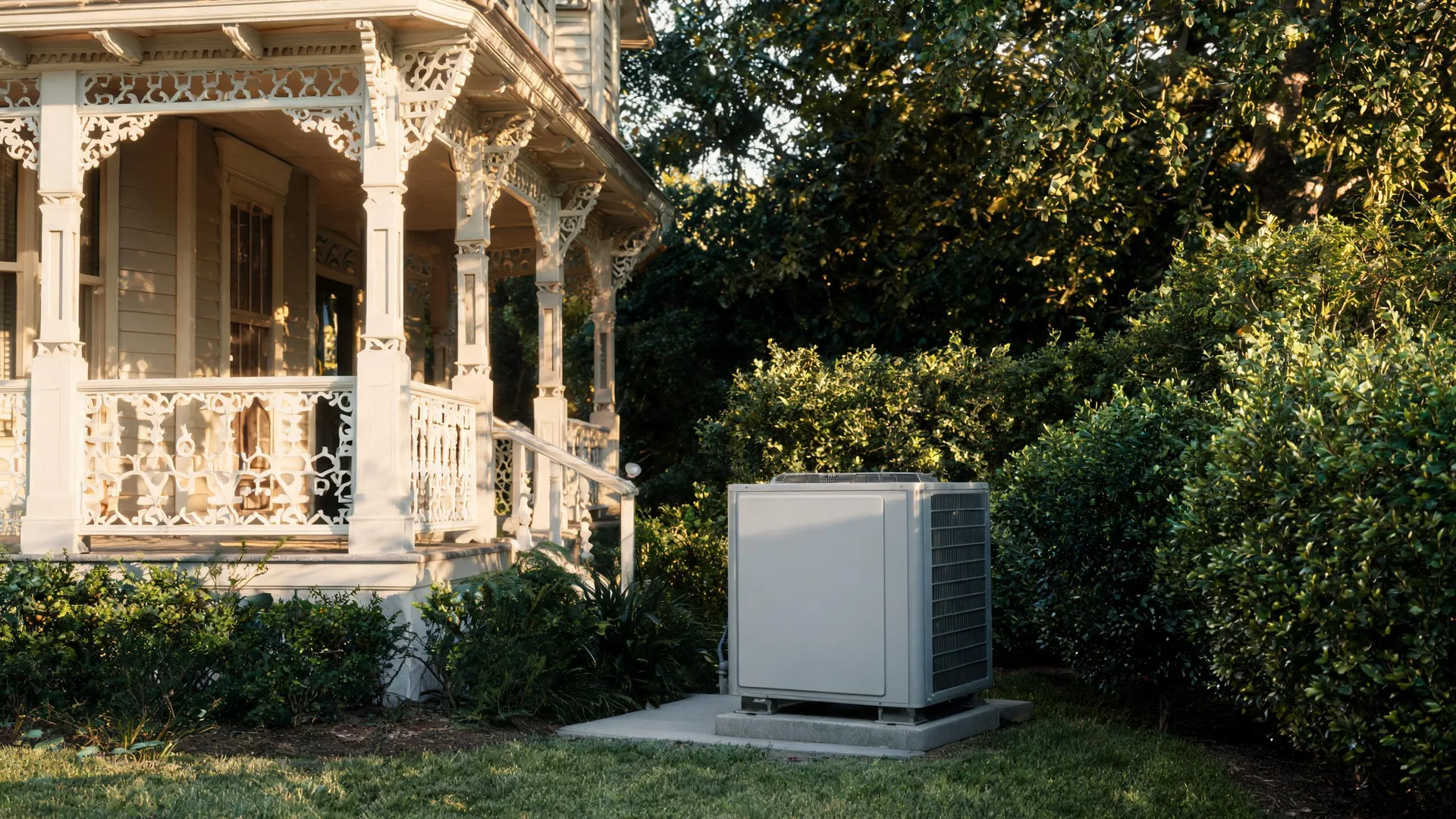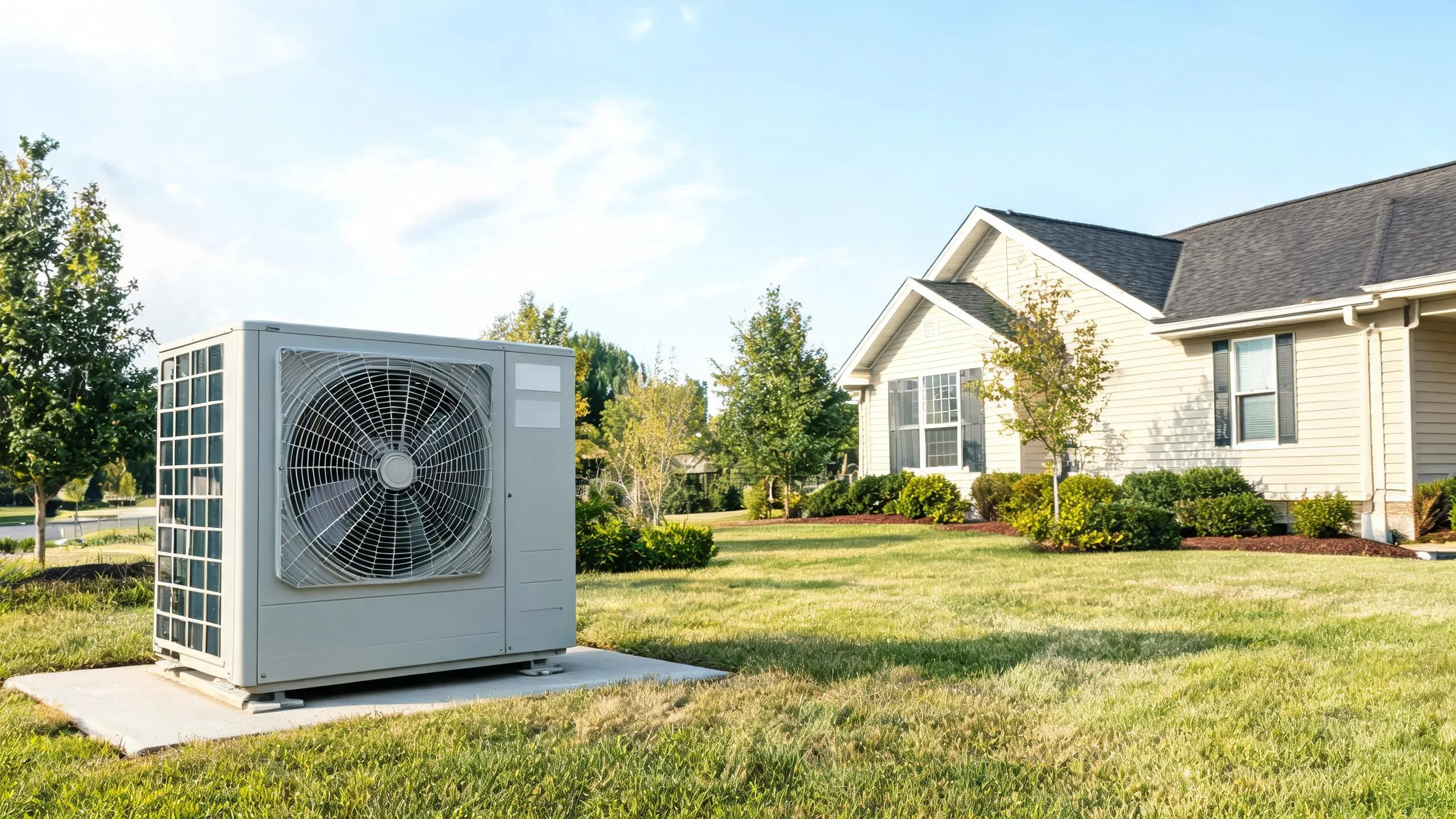
A grey heat pump outdoor unit mounted on a concrete pad in a suburban backyard, with a single-storey house visible behind it.

Heat Pump Installation in Peachtree Corners, GA

Tell us about the job

Takes about a minute. No obligation.

New system or replacementHeat PumpGwinnett County, GA
Step 1 of 2

What ZIP code is the job in?

Weather here puts systems to the test

Gwinnett County logged 185 severe weather events between 2015 and 2024, including 143 damaging wind events and 20 hail events. A heat pump's outdoor unit sits outside through all of it, taking wind and hail straight on.

Power doesn't always hold through the storm

Close to a third of Georgia households went at least a day without power in 2024. A heat pump runs on electricity for both heat and cooling, so when the power goes out, the system goes out with it until the lines are back up.

6 months
November through April, your system heats
5 months
May through September, it cools
34°F
the average winter night it heats against
87°F
the average summer afternoon it cools against
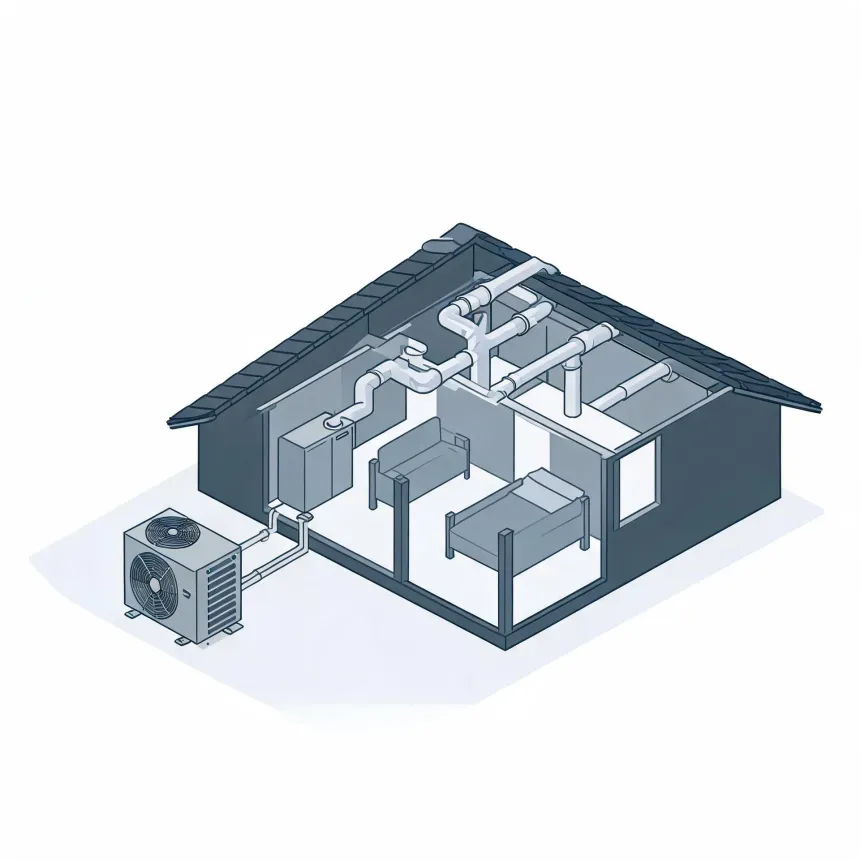
Isometric cutaway illustration of a house showing interior ductwork, an indoor air handler, and beds, with an outdoor condenser unit connected by lines outside the wall.
Your system heats November through April and cools May through September.

NOAA nClimDiv, 1991–2020 normals

November starts heat season in Gwinnett County, with lows averaging 34°F through December, January and February.

A heat pump installed in October is already proven out before the cold sets in.

Power here is cheap, so payback isn't the point

Power here costs 14.13 cents per kilowatt-hour
Climate zone 3A
Cooling runs May through September

Gwinnett County falls under climate zone 3A, and since January 2023 any new split-system heat pump sold has to clear federal minimums here: 14.3 SEER2 for cooling, 7.5 HSPF2 for heat. Central air systems installed in the Southeast face their own floor, 14.3 SEER2 under 45,000 Btu/h and 13.8 at or above it, set higher than what the rest of the country requires. That narrows what a contractor can legally install, regardless of budget. A unit that meets the national minimum but not the regional one can't go in a Gwinnett County home.

Plan for the outage before the install, not during it

Ask the contractor where the outdoor unit will sit and what will shield it from wind and hail. Ask what happens to heat and hot water if the power drops, and whether a backup plan makes sense for this house. Settling that now, as part of the install, is easier than working it out after the lines go down.

Find a contractor
A man in a cap, navy T-shirt and brown pants carries a waxed canvas tool bag up the steps toward a blue front door of a shingled house, beside a potted shrub.
A gray outdoor HVAC unit mounted on a concrete pad beside a house with gray lap siding and a stone foundation.

Sizing it right, once, before it goes in

A heat pump has to be sized to the house, not picked off a shelf. Too small and it runs flat out on the coldest and hottest days, never quite catching up to the thermostat. Too big and it short cycles, blasting the space for a few minutes, shutting off before it pulls any moisture out of the air, then kicking on again. That short cycling wears on the compressor and leaves the house feeling clammy even though the air is cold. A contractor works out the right size with a load calculation, room by room, looking at square footage, insulation, window area and orientation, not just the size of the unit being replaced. The old system might have been wrong from the start, or the house may have changed since it went in. Getting the number right at this stage is what decides whether the system runs the way it should for years, long after anyone remembers what size was on the paperwork.

The old equipment doesn't get reused

A heat pump install means the old outdoor unit, indoor coil, and air handler all come out. The refrigerant has to be recovered from the lines before anything is disconnected, since it can't legally be vented to the air. None of those old parts carry over into the new system, even if they still run. A heat pump and a straight air conditioner move refrigerant differently, so the indoor coil and the line set usually have to match the new equipment, not whatever was there before.

What's left behind matters too

If the ductwork stayed in place from the old system, it's worth having someone check it before the new unit goes in. A heat pump moves air at different temperatures and sometimes different volumes than what the ducts were sized for originally. Leaky or undersized ducts will hold back a well-matched heat pump the same way they held back whatever was running before. The pad or mounting the old outdoor unit sat on usually gets reused or replaced depending on its condition, since the new unit needs solid, level ground underneath it.

Gas heats 61.2 percent of homes in Gwinnett County, more than any other fuel. Electricity is a distant second at 36.1 percent, and oil and propane barely register. That matters for a heat pump install because most of these houses already have ductwork sized for a gas furnace, with a separate central air system handling the cooling side. A heat pump takes over both jobs through the same ducts, so the installer isn't starting from nothing, but the equipment itself is a bigger change than swapping one furnace for another. Where gas is already piped to the house, some owners keep the furnace as backup heat and let the heat pump run the rest of the year. Whether that makes sense here is worth asking the contractor directly, since it depends on how the rest of the system is set up.

Since payback isn't driving the decision, put the weight on reliability and fit instead. Ask the contractor about standing by a unit built to take wind and hail, since it sits outside year round, and about warranty support from a brand with a real local presence. A slightly higher price for sturdier equipment or a better fit for this house matters more here than squeezing out another point of efficiency. The system that's still running strong after the next bad storm is worth more than the one that shaved a few dollars off a summer bill.