






A single-story brick house with a white-columned wraparound porch and a neighboring light-colored siding house, seen across a lawn behind a trimmed hedge, under oak branches draped with Spanish moss.

Furnace Installation in Peachtree Corners, GA

Tell us about the job

Takes about a minute. No obligation.

New system or replacementFurnace or heatingGwinnett County, GA
Step 1 of 2

What ZIP code is the job in?

Once the new furnace is in, the old one comes out, and that's usually straightforward unless the gas line or vent pipe needs to change size to match the new unit. A contractor will disconnect the gas, the electrical, and the venting before pulling the old cabinet out, and will check that the flue going to the chimney or sidewall still makes sense for the new furnace, since a smaller or more efficient unit can need a different vent setup than what the old one used. If the old furnace had a standing pilot and the new one doesn't, that line gets capped off properly. The old unit itself gets hauled away and recycled. None of this touches the ductwork already running through the house, so if there's a change in airflow or duct sizing to plan for, that's a separate conversation worth having before the install, not after.

6 months
November through April, your furnace is on duty
34°F
the average winter night it heats against
61%
of homes here heat with gas, so most furnaces here burn gas
80% AFUE
the federal minimum any new unit must meet
Isometric cutaway illustration of a single-story house with a dark shingled roof, showing interior rooms with furniture and a furnace connected to ductwork and a flue pipe extending above the roof.
Your furnace works hardest from November through March.

NOAA nClimDiv, 1991–2020 normals

Furnaces in Peachtree Corners run November through April, about six months a year.

The other six months it sits unused, so the most efficient model on the lot isn't the point here.

October is the month to replace it, before it has to work

Heat runs November through April
Winter nights average 34°F
Climate zone 3A
Gas is cheap here, so get the furnace that fits, not the one with the highest ratingGeorgia gas ran $17.66 per million Btu in 2024, among the lower rates in the country

A furnace gets sized by doing a heat loss calculation on the house, not by matching the number stamped on the old unit. That calculation looks at square footage, ceiling height, window area, insulation levels, and how much outside air leaks in, then works out how much heat the house loses on the coldest day it sees. Too big and the furnace short cycles, heating the air fast and shutting off before it pulls moisture out or warms the walls and furniture, so the house feels drafty even with the thermostat satisfied. Too small and it runs constantly in the worst weather, struggling to keep up and wearing out faster for the effort. The old furnace is not a safe guide for sizing the new one anyway, since it may have been oversized from the start, or the house may have gotten new windows or insulation since. A contractor doing this calculation properly will ask about the house, not just measure the furnace closet.

Most homes here run on gas. Yours probably does too.

Gas heats 61.2% of homes in Gwinnett County, so if your old furnace ran on gas, the simplest path is putting in another one. The gas line, the vent, and the setup your house already has stay the way they are.

Find a contractor
A man in a dark T-shirt and tan work pants, seen from behind, climbs porch steps toward a blue front door while carrying a canvas tool bag filled with hand tools.
A gray high-efficiency gas furnace installed in an unfinished basement, surrounded by gas lines, a condensate drain, and sheet-metal ductwork.

The furnace that runs easy today is the one still running later

Furnaces get compared on price and on the efficiency rating, but ask what happens after the burners have fired every day for months. Ask about the heat exchanger material and how it's built, since that part takes the most thermal stress every cycle. Ask what the warranty actually covers once the first year passes, parts versus labor, and whether it depends on registering the unit after install. Ask how a modulating or multi-stage burner holds up over a long runtime compared to a single-stage one, since a furnace that only knows on and off works that part harder than one that can ease into a lower flame and hold there. Ask what maintenance the manufacturer expects, because skipping it can void the warranty even on a furnace that still seems to be running fine. A furnace that short cycles all winter is a different machine than one running longer, gentler stretches, and that difference shows up years down the road, not on the first cold morning.

The furnace itself is one line item

Cabinet size, stage count, and the blower motor all move the price, but so does everything around the furnace. A gas valve swap, a new flue liner, a plenum that needs rebuilding to seal against the new cabinet. A high-efficiency unit may need a condensate line the old furnace never had. Each of those is its own cost stacked on top of the equipment.

The hardest house to quote accurately is the one with a problem hiding in the walls

A contractor who opens the furnace closet and finds a gas line too narrow for the new unit's input rating has to solve that before the furnace goes in, not after. Same with a vent pipe that can't be shared safely with the water heater anymore. Getting a firm number means someone looked closely enough to find those things first.

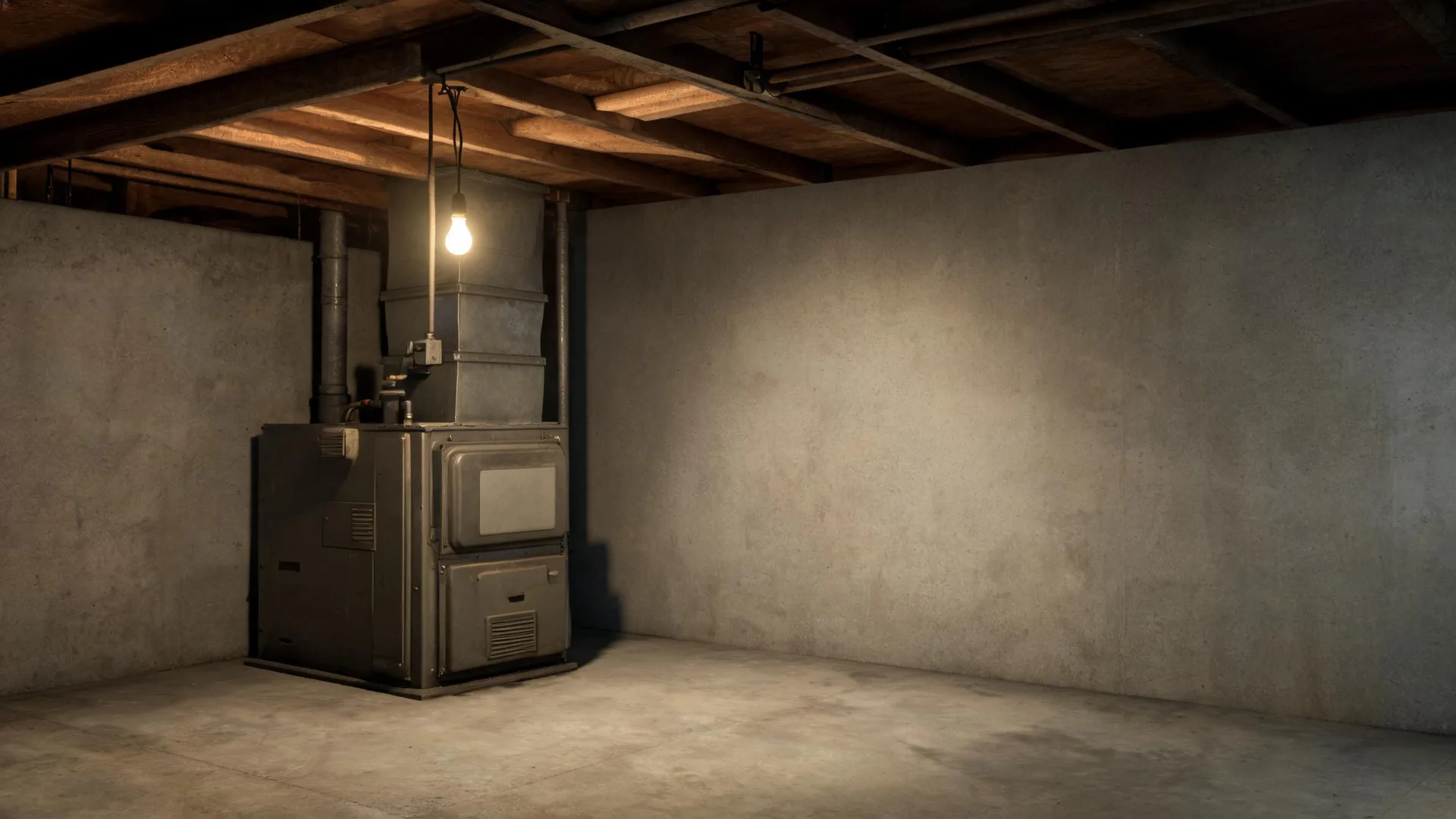
An unfinished basement featuring a grey forced-air furnace with metal ductwork, concrete block walls, exposed wooden joists, and a single hanging bare bulb.

A high-efficiency gas furnace would save about $110 a year to run in Gwinnett County compared with a gas furnace.

  • A high-efficiency gas furnace$600 a year
  • A gas furnace$710 a year

Estimates for a typical Gwinnett County home, from EIA household energy data, Georgia fuel prices and NOAA climate normals. Your home will differ.

The efficiency rating on the label tells you how much of the fuel burned turns into heat in the house versus what goes out the flue. A higher number means less fuel wasted for the same heat delivered. It says nothing about how big a furnace you need or how it will perform on the coldest night, since a well-built low-efficiency furnace heats a house just fine if it's sized right. The jump in efficiency usually comes from a second heat exchanger that pulls more heat out of the exhaust before it leaves the house, and that's also why those furnaces vent through plastic pipe instead of a metal flue, and why they produce condensate that has to drain somewhere. None of that shows up on the label itself. What the label can't tell you is how long the furnace lasts or how often it needs service, and a lower rated furnace that's maintained well can outlast a higher rated one that isn't.