


Heat pump vs furnace in Coweta County, Georgia

Find a Pro Near You

Heat pump or furnace, one form

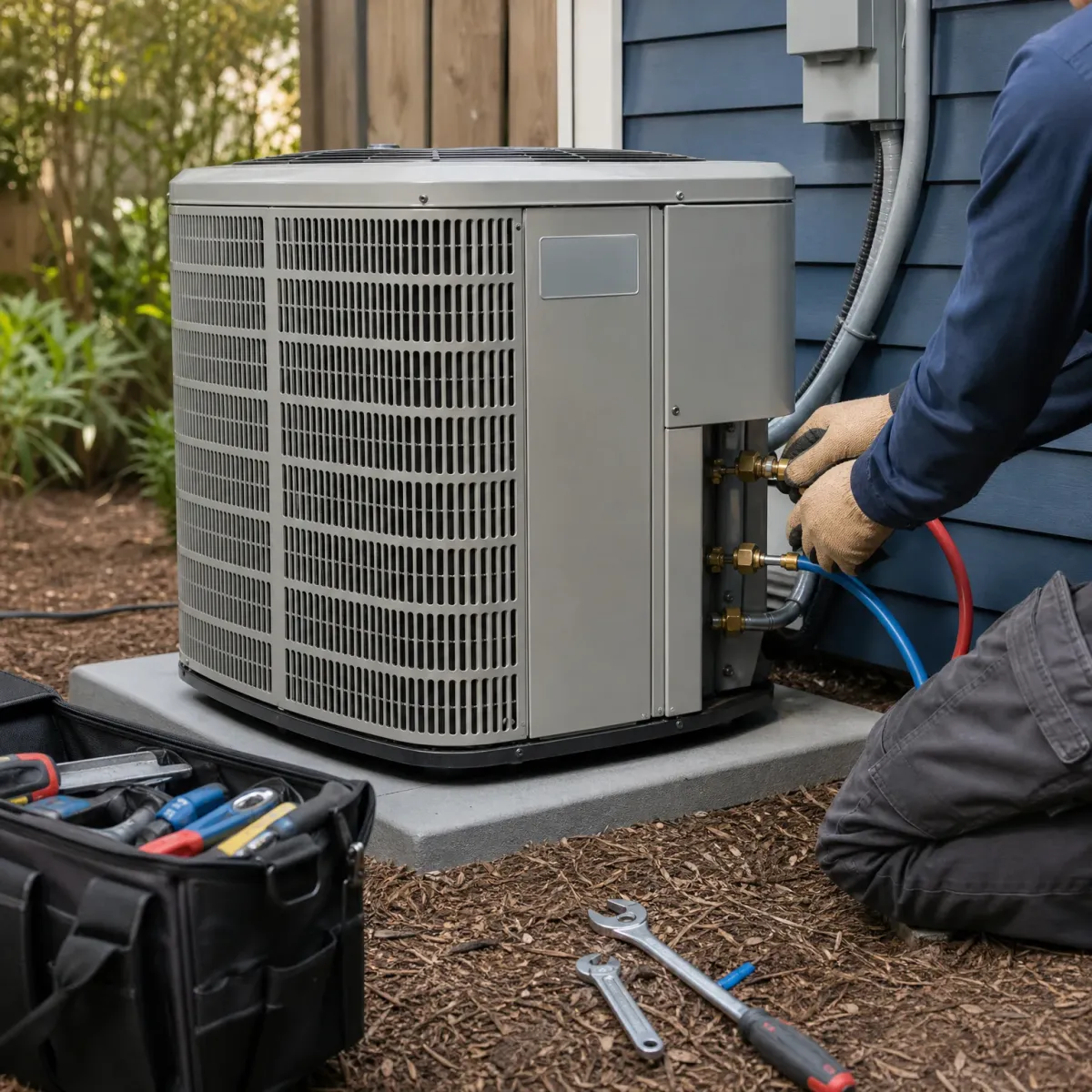
A person in a blue shirt and work gloves connects blue and red gauge hoses to the service valves of a gray outdoor air conditioning condenser unit on a concrete pad beside a blue-sided house, with an open tool bag and wrenches on the mulch in the foreground.

Tell us about the job

Takes about a minute. No obligation.

New system or replacementCoweta County, GA
Step 1 of 3

What kind of equipment?

Which costs less to run in Coweta County?

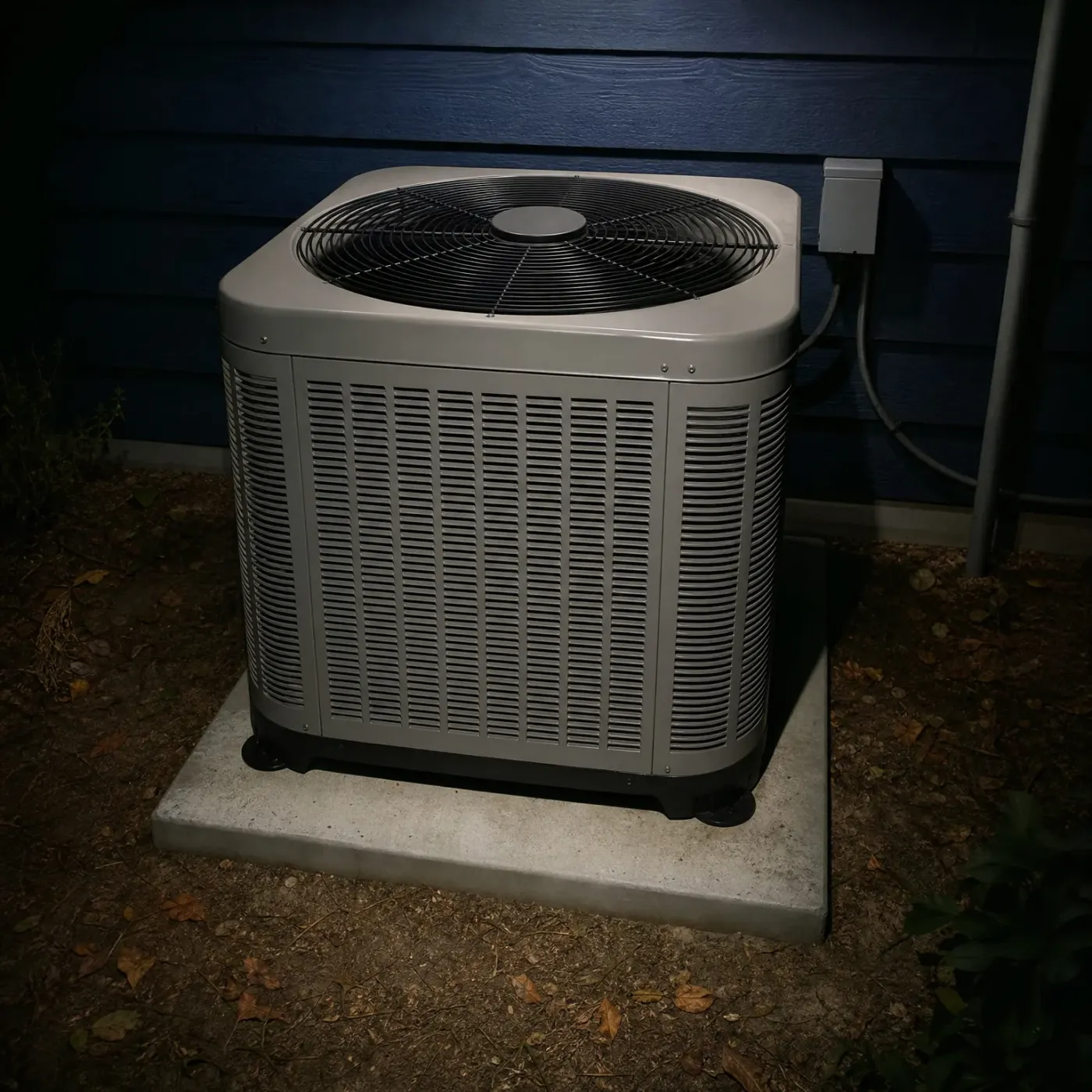
An outdoor air conditioner condenser unit on a concrete pad beside a dark blue horizontal lap-sided wall, with a disconnect box and conduit above and fallen leaves on the surrounding soil at night.

Heat pump

To heat your home here$1.88per 100,000 Btu

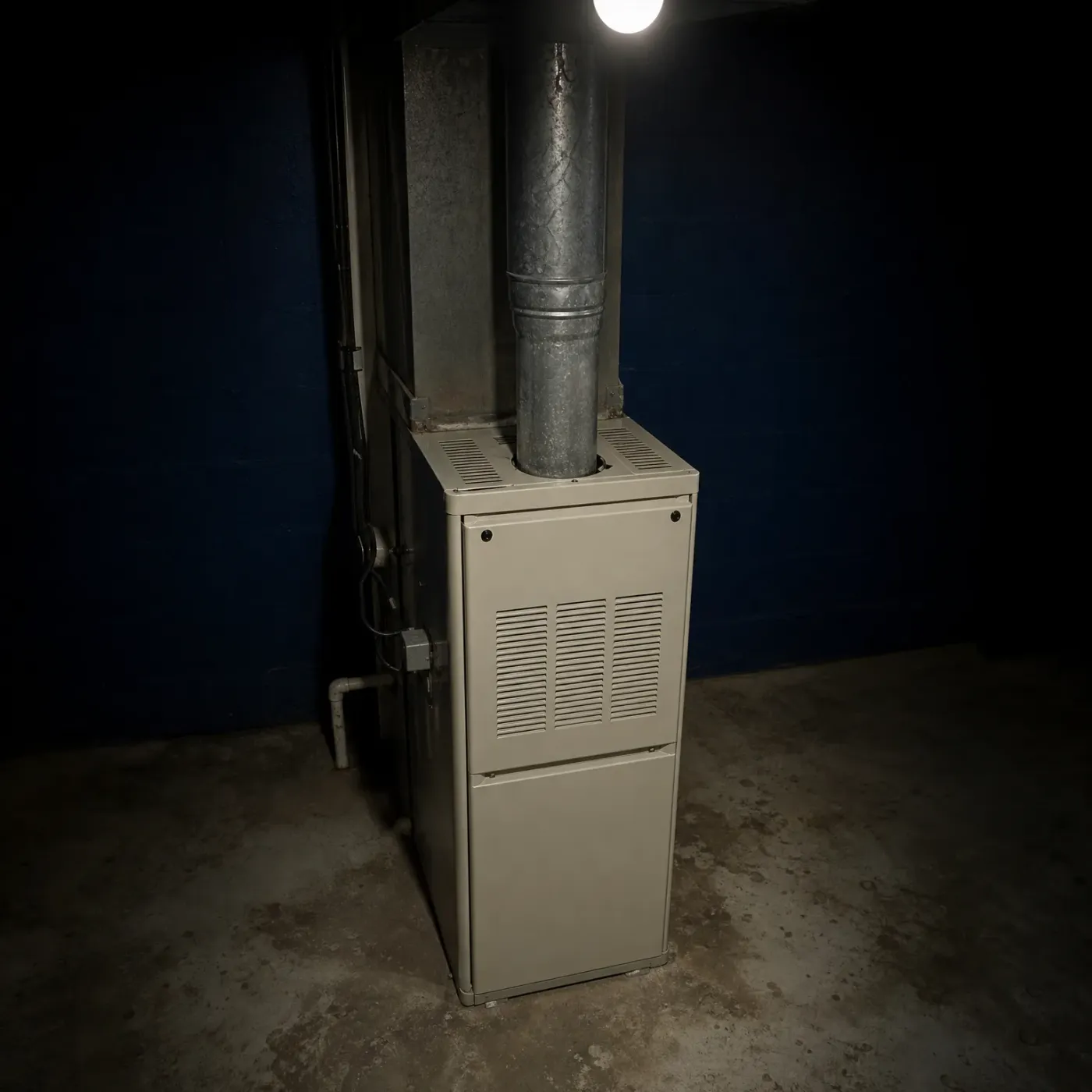
A beige residential furnace with a galvanized metal flue pipe stands on a concrete basement floor against a dark blue painted block wall, lit by a bare overhead bulb.

Furnace

To heat your home here$2.21per 100,000 Btu

At Georgia's gas and electricity prices, a heat pump makes the same heat as a gas furnace for about 15% less.

Btu stands for British thermal unit, the standard measure of heat energy.

Where does a heat pump shine?

  • Covers a long cooling season

    Cooling runs May through September here, five months of the year. A heat pump covers all of that and keeps working once the weather turns cold, instead of sitting unused most of the year like equipment built for cooling only.

    A covered wooden porch with a ceiling fan, hanging fern, potted plants, a wooden dining table and chairs on a blue patterned rug, and a glass of iced tea on a dark slatted side table beside a cushioned sofa.
  • Steady, even comfort

    A heat pump runs long and low instead of blasting on and off. Rooms hold an even temperature all day.

    A dimly lit living room with dark blue built-in bookshelves, a navy armchair with a gray throw blanket and open book, a lit table lamp and mug on a wooden side table, a window seat with a blue cushion, and a golden-colored dog sleeping on a patterned rug.
  • No gas line, nothing burning in the house

    It moves heat instead of making it from fire. That means no combustion, no flue and no gas bill for heat.

    A kitchen island with a white stone countertop holding a black induction cooktop, a light blue stovetop kettle with a wooden handle, and a ceramic jar of wooden utensils, with navy cabinets, a sink under a window, and a wicker chair in the foreground.

Where does a furnace shine?

  • Fast, strong heat on demand

    Turn the heat up and the furnace answers right away. There's no long wait for the house to catch up.

    Entryway with a dark blue door and window showing snowy trees, sheer curtain lifting above a floor vent, snow-dusted boots on a woven rug, and a wooden bench with a blue mug, folded blanket and basket.
  • Proven, simple, easy to get serviced

    The design is simple and well understood. That keeps service calls short.

    A gloved hand holds a white pleated air filter in front of a furnace and shelving in a basement utility area.
  • Pairs with any central AC

    The ductwork that delivers heat in winter delivers cool air in summer once an AC coil is added.

    A dark metal floor register set into a wood plank floor near a white baseboard and window, with a sheer white curtain, a navy door, and a blue and white rug nearby in sunlight.

What winter actually asks of a heat pump here

Winter here is mild more than it's cold. The overnight low averages 35°F across December, January and February, and heat only runs five months, November through March. That matters because a standard heat pump starts losing ground right around 35°F to 40°F. Below 40°F it puts out less heat than its rating. Below about 35°F it often needs backup heat to make up the difference. Coweta's average winter night sits right at that second mark, and every one of the roughly 60 nights a year that drop to freezing or below is past both of them.

That sounds worse than it is. Sixty nights at or below freezing is under half of the 150 nights in a typical heating season here, and almost none of them go further than that. Fewer than one night a year reaches 0°F. A heat pump in Coweta spends most of its winter above the point where it struggles, and drops below it on a minority of nights, not for weeks at a stretch.

This is also where the furnace argument runs out of season. A furnace only heats, so for the other seven months of the year it has nothing to do. A heat pump covers the same five winter months and then keeps working through the five-month cooling season that follows, May through September, including the roughly 45 days a year that hit 90°F or hotter. One machine for both jobs is the case for a heat pump here, not just the cold.
A single-story red brick house with dark gray shingled roof, navy shutters, a light blue front door under a small gabled portico, flanked by pink and white flowering shrubs, a blooming white tree, and a mown lawn.

What the cold nights cost you, and what it means for your choice

A heat pump built to the federal minimum runs about $1.88 to make 100,000 Btu of heat at Georgia's electricity prices. A furnace built to the federal minimum runs about $2.21 at Georgia's gas prices. That's about 15% cheaper to run, and it already reflects how a heat pump's output tapers off in the cold, since the rating behind that number is a seasonal one, not a best-case one. It doesn't include whatever backup heat kicks in on the coldest nights, so real winter nights where backup runs will cost more than that figure.

If you want a heat pump that holds up on the coldest nights without leaning hard on backup heat, that's what the ENERGY STAR Cold Climate rating is for. To earn it, a heat pump has to keep making real heat, at least 1.75 units of heat per unit of electricity, at 5°F, and hold onto at least 70 percent of its warm-weather capacity at that temperature. Coweta doesn't see much 5°F weather, but a heat pump built to do that only has an easier time of it here.

Either machine heats this county fine. Gas heats 42.5% of homes here and electricity heats 51.4%, so neither one is the unusual choice. What decides it is what you already have and what you want from the other seven months. If you're installing central air anyway, a heat pump gets you both for one piece of equipment, no gas line into the house, and the cheaper running cost on the facts above. If you already have gas heat and a working furnace, there's nothing here that makes replacing it the only sound move.

Sources: NOAA nClimDiv · NOAA 1991–2020 seasonal normals · Census ACS 2020–2024 · EIA SEDS 2024 · 10 CFR 430.32 · PNNL Building America guide · PNNL-37127 field study · ENERGY STAR product criteria

A single-story red brick house with a gray shingled roof, blue shutters, a light blue front door under a gabled portico, flanked by pink and white flowering shrubs, a walkway across a green lawn, and a white-blossomed tree at right.

Common questions about heat pumps and furnaces

  • Will a heat pump keep my house cool enough here?

    Yes. A heat pump is a central air conditioner for the other half of the year, running the same five months of cooling, May through September, that any central AC here would. It handles the roughly 45 days a year that hit 90°F or above the same way a standard AC does, since the outdoor unit works the same in cooling mode either way.

  • Can I keep my furnace and add a heat pump?

    Yes, and in Coweta County that pairing has a job to do. The heat pump handles the mild stretches, and the furnace takes over once it's cold enough that the heat pump's output falls short, which here starts around 40°F and gets more pronounced below 35°F. Your furnace already covers that job, so the heat pump would be doing most of the work most nights, with the furnace stepping in on the roughly 60 nights a year that drop to freezing or below.

  • What if my house doesn't have a gas line?

    Without a gas line, your choices are a heat pump, electric resistance heat, or a furnace burning propane or oil. A heat pump costs less to run than straight electric resistance heat, since it moves heat rather than generating it from electricity directly. Propane and oil furnaces also work, but both cost more per gallon than utility gas, so the running-cost edge a gas furnace has here doesn't carry over to them.

  • Is a heat pump cheaper to run than a furnace in Coweta County?

    Yes, a heat pump costs less to run here. At Georgia's average fuel prices, making 100,000 Btu of heat runs $1.88 with a heat pump against $2.21 with a gas furnace, both built to the federal minimum. That gap holds across the five months your heat runs, November through March.