





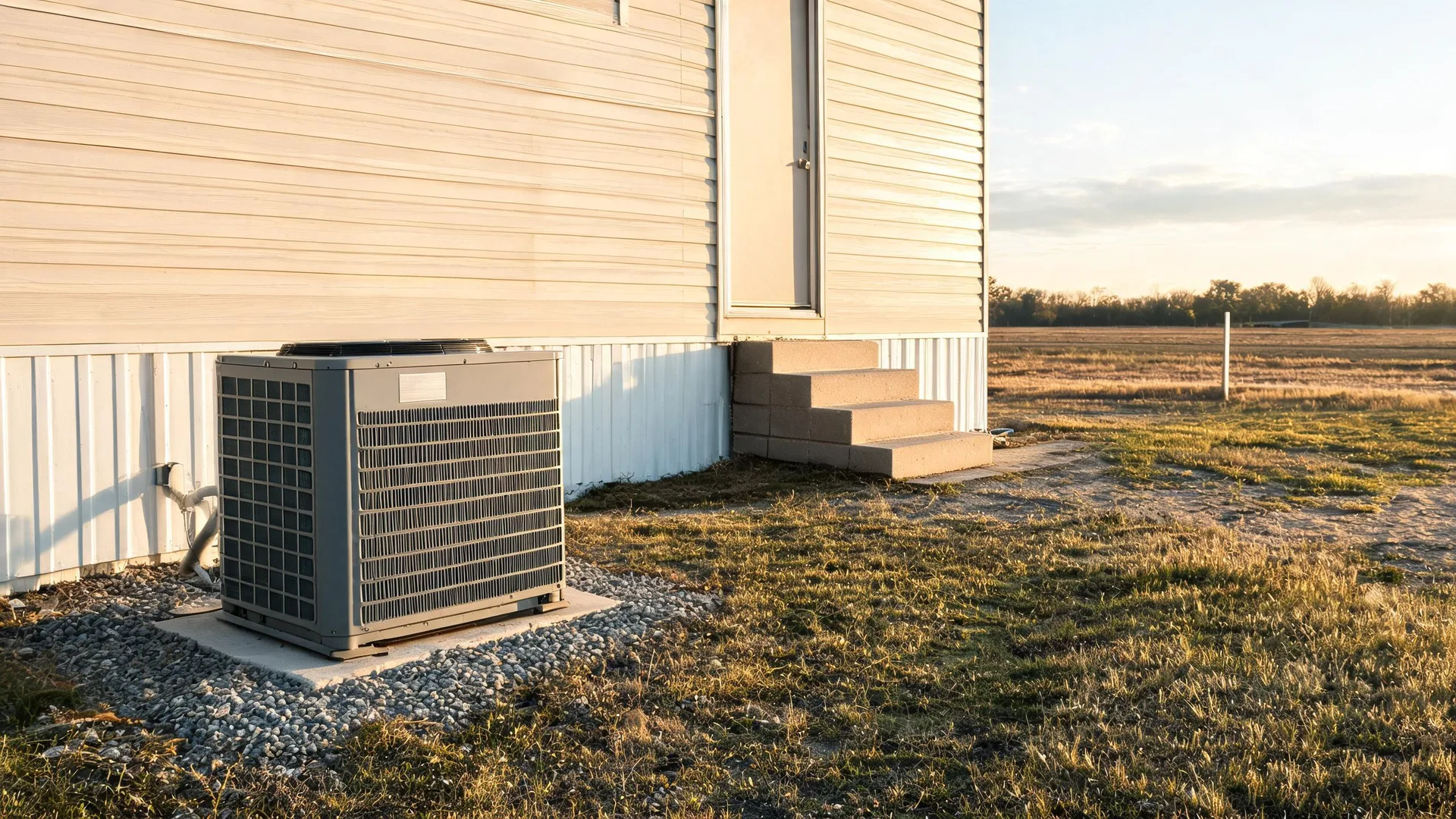
An outdoor heat pump unit mounted on a concrete pad in front of a single-story suburban house with beige siding.

Heat Pump Maintenance in Newnan, GA

Tell us about the job

Takes about a minute. No obligation.

Tune-up, service, or cleaningHeat PumpCoweta County, GA
Step 1 of 2

What ZIP code is the job in?

Coweta County saw 221 severe weather events between 2015 and 2024. Most of that was damaging wind, 174 times in that span, along with 29 hail events and 9 tornadoes. Your heat pump's outdoor unit sits outside year round, exposed to whatever comes through. Wind drives debris into the coil and fan. Hail dents the cabinet and can bend the fins enough to block airflow. A unit that looks fine from the porch can still be running on a damaged coil or a fan working harder than it should.

Heat pumps in Coweta County start working for heat in November.

Have it checked in October, before the cold sets in.

Half these systems are young enough that a yearly check is what keeps them that way

Half the homes here were built by 1999
Climate zone 3A
Power here costs 14.12 cents per kilowatt-hour
This system never gets a real breakSummers run long and muggy here, and the outdoor unit works right through them.

A yearly checkup is also the time to catch anything that storm season left behind. A tech can check the refrigerant charge, clean the coil, and make sure the fan motor is running the way it should before the system has to work hard again. If a dent from hail is blocking airflow or debris got into the cabinet after a windy day, this is when it gets found. Catching that early matters more when the system still has most of its working life ahead of it. That's the case for a lot of houses here, since half the homes in Coweta County were built in 1999 or later.

Have the outdoor unit checked before the next storm finds a problem it caused

A tech can check the outdoor unit for damage that wind and hail already caused and clear out anything that's built up before it blocks airflow. If the power goes out, that's one less thing to worry about catching up on.

Find a contractor
A dark gray heat pump unit mounted on a concrete pad next to a house with gray siding and a stone veneer wall.

It barely gets to rest, even before a storm adds to the load

Set the thermostat aside and this system still runs most hours of the day, every month of the year, because Coweta County winters are mild enough that the heat pump rarely gets to shut down and rest even then. That kind of runtime adds up on its own, storms or not. A yearly checkup is when a tech looks at the parts that wear from simple hours logged, the contactor, the capacitor, the fan bearings, and catches the ones getting close to done before they quit on a hot or cold day. Pair that with what storm season adds on top, and this is the one visit that covers both.

Refrigerant pressure doesn't show on the outside

A heat pump can keep blowing air with a charge that's lower than it should be. The gauges tell a tech what's really going on inside the lines. Low charge makes the compressor work harder and wears it down faster, long before the house feels warm or cool unevenly.
The reversing valve is easy to miss until a season turns

This is the part that switches the system between heat and cooling. It can stick or fail quietly, and the only time it shows up is when the season changes and the system can't make the switch. A tech can check it while the weather still gives it something to do either way.

A quick visit usually means a filter swap and a glance at the thermostat, done in a few minutes. A thorough one puts gauges on the lines to check refrigerant charge, not just a look at the coil. It checks amp draw on the compressor and fan motor, since a motor pulling more current than it should is wearing out even if it still spins fine. It checks the reversing valve in both directions, not just the one the season happens to be in. It clears the condensate drain so it won't back up later, and it tightens electrical connections that loosen over time from the system cycling on and off. If the tech never leaves the thermostat or never opens the cabinet, that's the short version, not the real one.

A heat pump has an outdoor unit built to shed rain, but the electrical connections inside it still loosen from vibration over years of cycling on and off. A loose connection runs hotter than it should, and heat is what burns out a contactor or a circuit board before its time. Checking those connections means pulling the panel and looking, not just listening for the fan to kick on. The same visit checks the defrost control, the part that tells the system when to switch into defrost and back out of it during cold weather. If that control is reading wrong, the outdoor coil can ice over and stay iced, and the system keeps running without putting out real heat. None of this shows up by watching the thermostat from across the room.