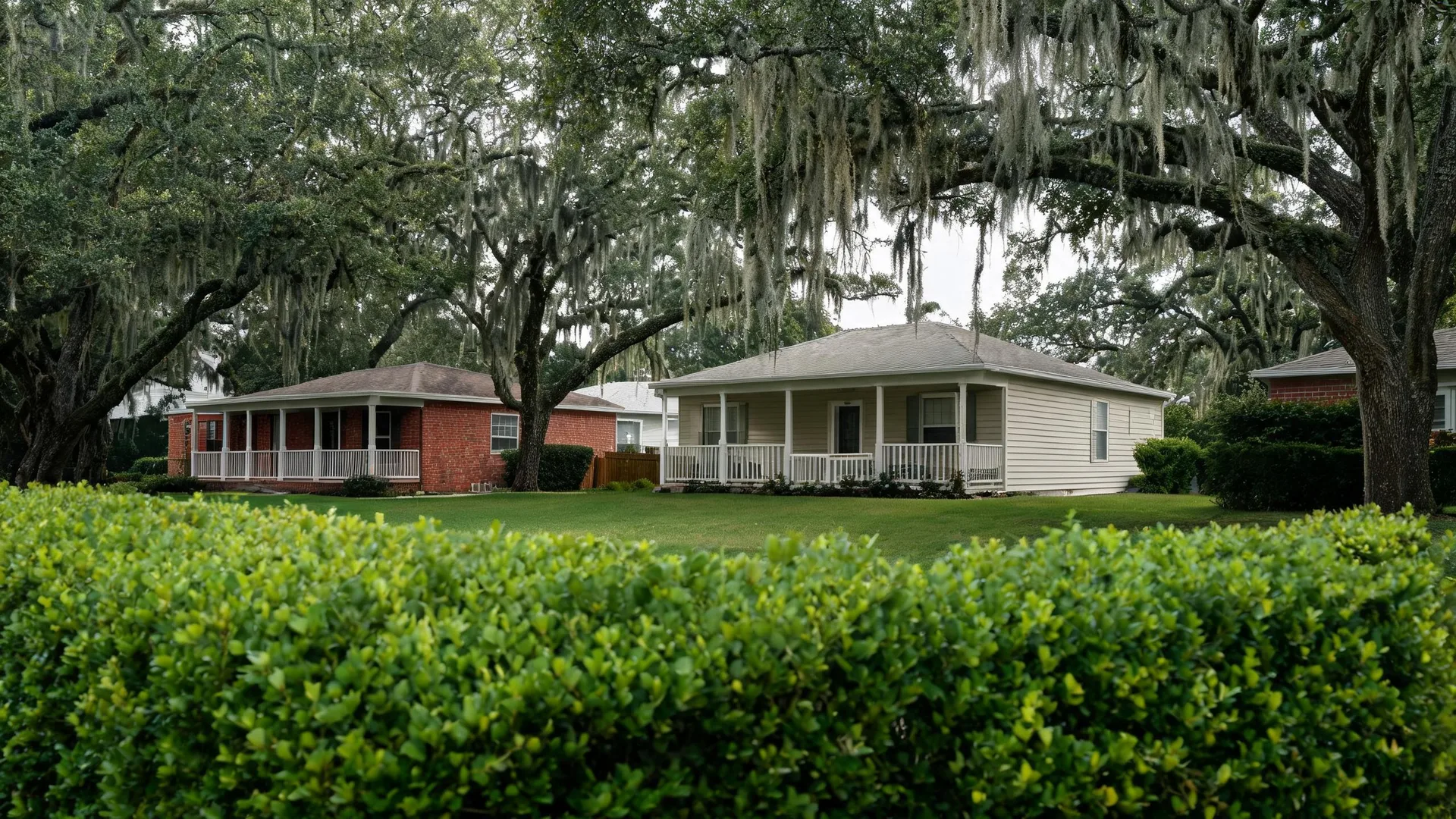





Two single-story houses, one brick and one with light siding, both with covered front porches, set behind a mowed lawn and a tall green hedge under large moss-draped oak trees.

Heat Pump Installation in Newnan, GA

Tell us about the job

Takes about a minute. No obligation.

New system or replacementHeat PumpCoweta County, GA
Step 1 of 2

What ZIP code is the job in?

Coweta County saw 221 severe weather events between 2015 and 2024. Most of that was wind, with 174 damaging wind events over the same stretch, plus 29 hail events and 9 tornadoes. Hail dents an outdoor unit's cabinet and can bend the fins on the coil. High wind throws branches and debris into it. Statewide, almost a third of Georgia households lost power for a day or more in 2024, and a heat pump does nothing for your heat or your hot water when the power is out. Where the outdoor unit sits and what backs it up both matter here.

5 months
November through March, your system heats
5 months
May through September, it cools
35°F
the average winter night it heats against
88°F
the average summer afternoon it cools against
Isometric line illustration of a cutaway single-story building showing interior rooms, ceiling ductwork, an indoor air handler, and an outdoor condenser unit connected by refrigerant lines.
Your system heats November through March and cools May through September.

NOAA nClimDiv, 1991–2020 normals

A heat pump installed in October is ready before the first cold night in November.

Replacing it ahead of the five-month heating run means the install happens on your schedule, not during a cold snap.

Cheap power means the payback math matters less than picking a unit that keeps running

Power here costs 14.12 cents per kilowatt-hour
174 damaging wind events from 2015 to 2024
29 hail events from 2015 to 2024

Electricity already heats most homes in Coweta County, just over half. Utility gas covers another 42.5%, with a small slice on bottled or LP gas. That split is why heat pumps are the common replacement here: the electric furnaces and electric resistance setups already in these homes pair with a heat pump's outdoor unit without any new gas line or venting to run. If your home is one of the gas-heated minority, a heat pump still works, but the contractor will need to look at how it ties into what's already there. For most homeowners here, swapping an aging electric system for a heat pump is a straight replacement, not a redesign.

Plan the installation around the storms this county actually gets

A new install is a chance to decide where the outdoor unit goes before it's set in concrete. Away from the roofline where ice can slide, clear of the fence line where a storm walks debris through the yard. Ask the contractor about a surge protector for the outdoor unit and what backup options exist for the times power is out for a day or more.

Find a contractor
A gray heat pump outdoor unit mounted on a concrete pad next to the stone-accented exterior wall of a house.

Running Nearly Year-Round, Against the Weather

This runs most months of the year for cooling, then switches over for the short winter stretch. There's no real season where it sits idle. The humid air adds to that load. A dew point averaging 67°F across June, July and August means the unit is pulling moisture out of the air on top of cooling it, and that's harder on a system than dry heat. On top of that, 174 damaging wind events and 29 hail events hit this county between 2015 and 2024, so the outdoor unit takes a beating from the weather as much as it answers to the thermostat. Parts wear sooner under that kind of load. A unit sized for how long and how hard this one runs holds up better than one picked on price alone.

Sizing comes from a load calculation, not the old unit's label

A contractor works out the right size by measuring the house: square footage, insulation, window area, ceiling height, how many exterior walls each room has. That calculation is what decides the size, not whatever the last system happened to be. Copying the old number carries over whatever mistake was baked into it the first time.
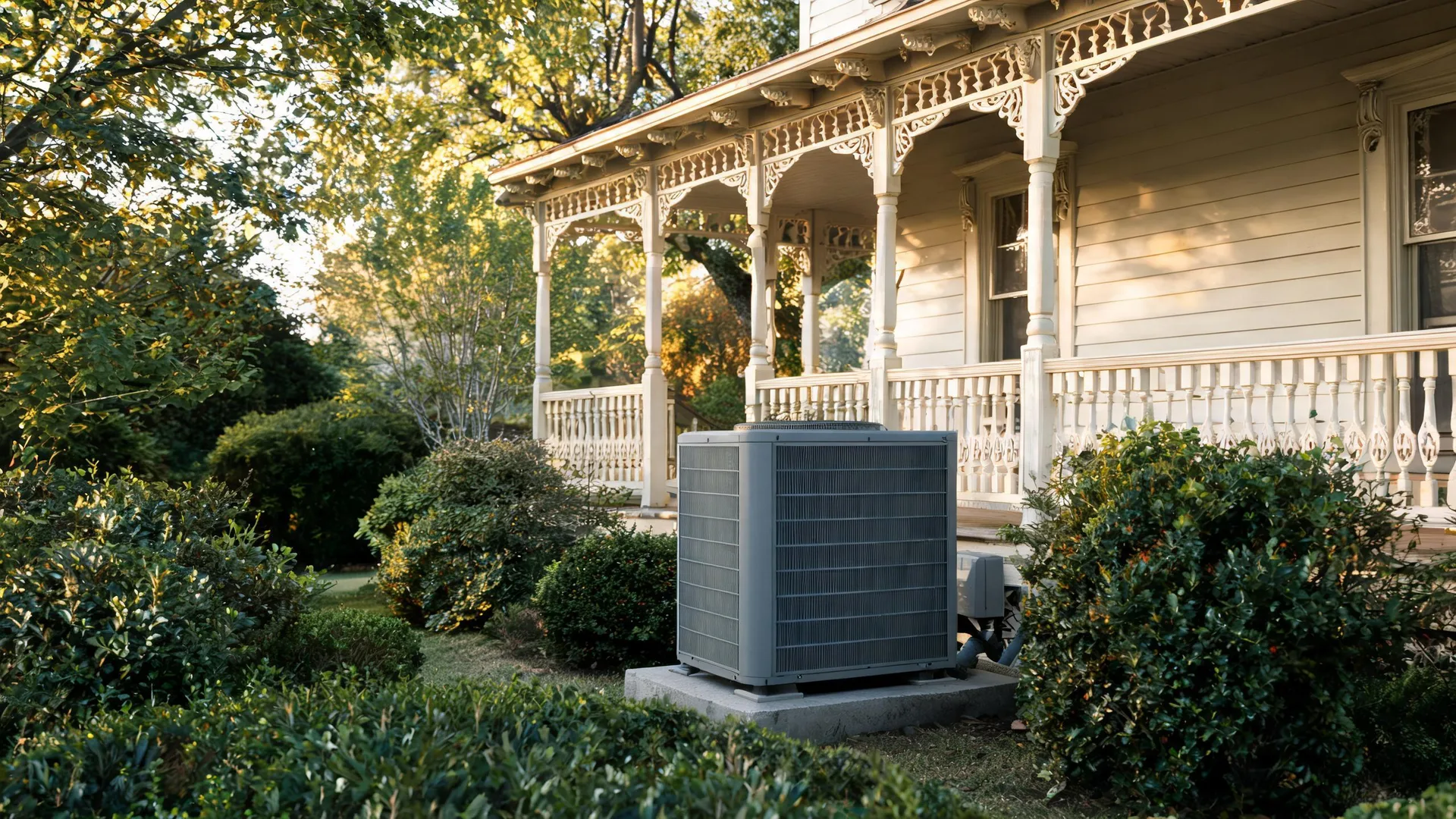
A unit sized wrong wears out chasing a temperature it can't hold

An oversized heat pump blasts the house to temperature and shuts off before it's pulled the moisture out of the air, so rooms feel clammy even when the thermostat is satisfied. It also cycles on and off more, and every start puts wear on the compressor. An undersized one never gets ahead of the load, so it runs long stretches without rest and still struggles on the hardest days.

A load calculation sets the size, but what drives the price is everything the installer has to do to get the new unit talking to the rest of the house. If the ductwork already matches what a heat pump needs, the job is mostly swapping equipment. If the ducts are undersized or leaky, they need work before the new system can move enough air, and that adds to the job. The electrical side matters too. A heat pump draws power for both heating and cooling, year round, so the breaker panel and circuit have to be able to carry that load, and older panels sometimes need upgrading first. Where the indoor and outdoor units sit, how far apart they are, and how hard the lines are to run between them all add labor before anyone turns the system on. None of that shows up on the unit's price tag, but it's most of what decides the final one.

Coweta County falls under zone 3A, a warm, humid climate zone with a long cooling season and a short winter. Any split-system heat pump installed here has to meet that zone's standard. Federal rules set the floor: units made from 2023 onward have to deliver at least 14.3 Btu of cooling for every watt-hour they draw, and at least 7.5 Btu of heat the same way. Central air systems sold in the Southeast have their own floor too, higher than what the rest of the country requires. That rules out the cheapest, least efficient equipment before a contractor ever walks the house. A unit that clears these numbers is also one built to run the long cooling stretch this county gets without falling behind.