A gray forced-air furnace with metal ductwork stands in an unfinished basement with exposed wooden joists, concrete walls, and a single hanging light bulb.

Furnace Repair in Newnan, GA

Tell us about the job

Takes about a minute. No obligation.

RepairFurnace or heatingCoweta County, GA
Step 1 of 2

What ZIP code is the job in?

Coweta County gets hit often

Coweta County recorded 221 severe weather events between 2015 and 2024, including 174 damaging wind events, 29 hail events and 9 tornadoes. Statewide, 31% of Georgia households went at least 24 hours without power in 2024.

Your furnace shares the yard with your AC

Wind and hail reach the outdoor condenser unit sitting next to your house. A bent fin or a cracked line doesn't always stop the system from running, but it can mean trouble building up for the furnace side of the system later.

5 months
November through March, your furnace is on duty
35°F
the average winter night it heats against
2 winter storms
in ten years, the nights a failure hurts most
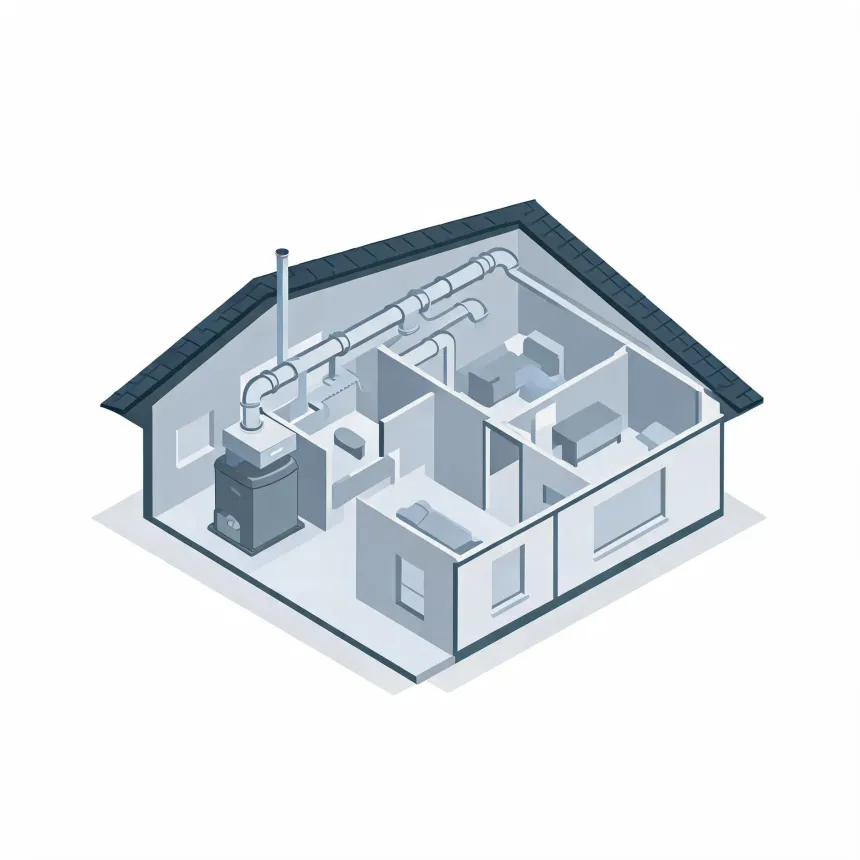
Isometric cutaway illustration of a single-story house showing interior rooms, ductwork running along the ceiling, a flue pipe through the roof, and a dark furnace unit in one corner.
Your furnace works hardest from November through March.

NOAA nClimDiv, 1991–2020 normals

Half the homes in Coweta County were built in 1999 or later.

A furnace that age still has years of work left in it, so repair is usually worth it.

Five months of work a year is not much to ask of a furnace

Heat runs November through March
Winter nights average 35°F
Climate zone 3A

Most furnace failures trace back to one of a handful of parts, not the whole system giving out. The igniter is the most common: it glows or sparks to light the burners, and it weakens with every cycle until one day it doesn't get hot enough. The flame sensor is another, a thin rod that confirms the burner lit and shuts gas off if it didn't. Dust and corrosion build up on it over time until it stops reading the flame at all, even when the burner's working fine. The blower motor wears from years of starting and stopping, and the bearings in it will eventually seize or start making noise before they go. A cracked heat exchanger is the one that matters most, since it can let combustion gases mix into the air the blower pushes through the house. None of these fail because a furnace is old. They fail because they're the parts that move, heat up, or spark every single cycle.

If the outdoor unit took a hit, get the furnace checked too

Get a furnace repair call out if the outdoor unit has visible damage from wind or hail, even if the furnace is still running fine. The two share a system, and a problem on one side doesn't always show up right away on the other.

Find a contractor
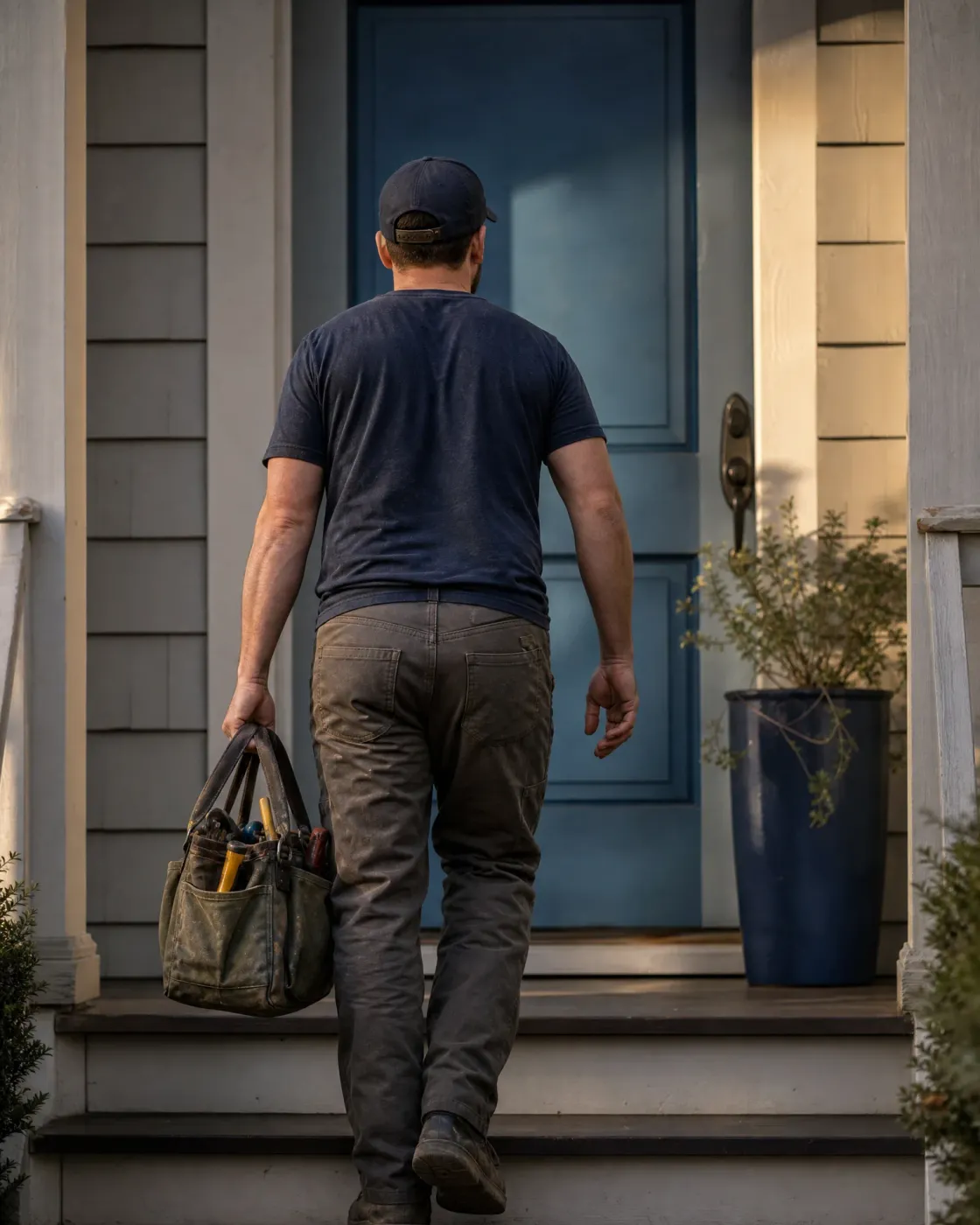
A man in a cap, dark t-shirt and work trousers carries a canvas tool bag up porch steps toward a blue front door, with a tall planter and shrub beside the entry.
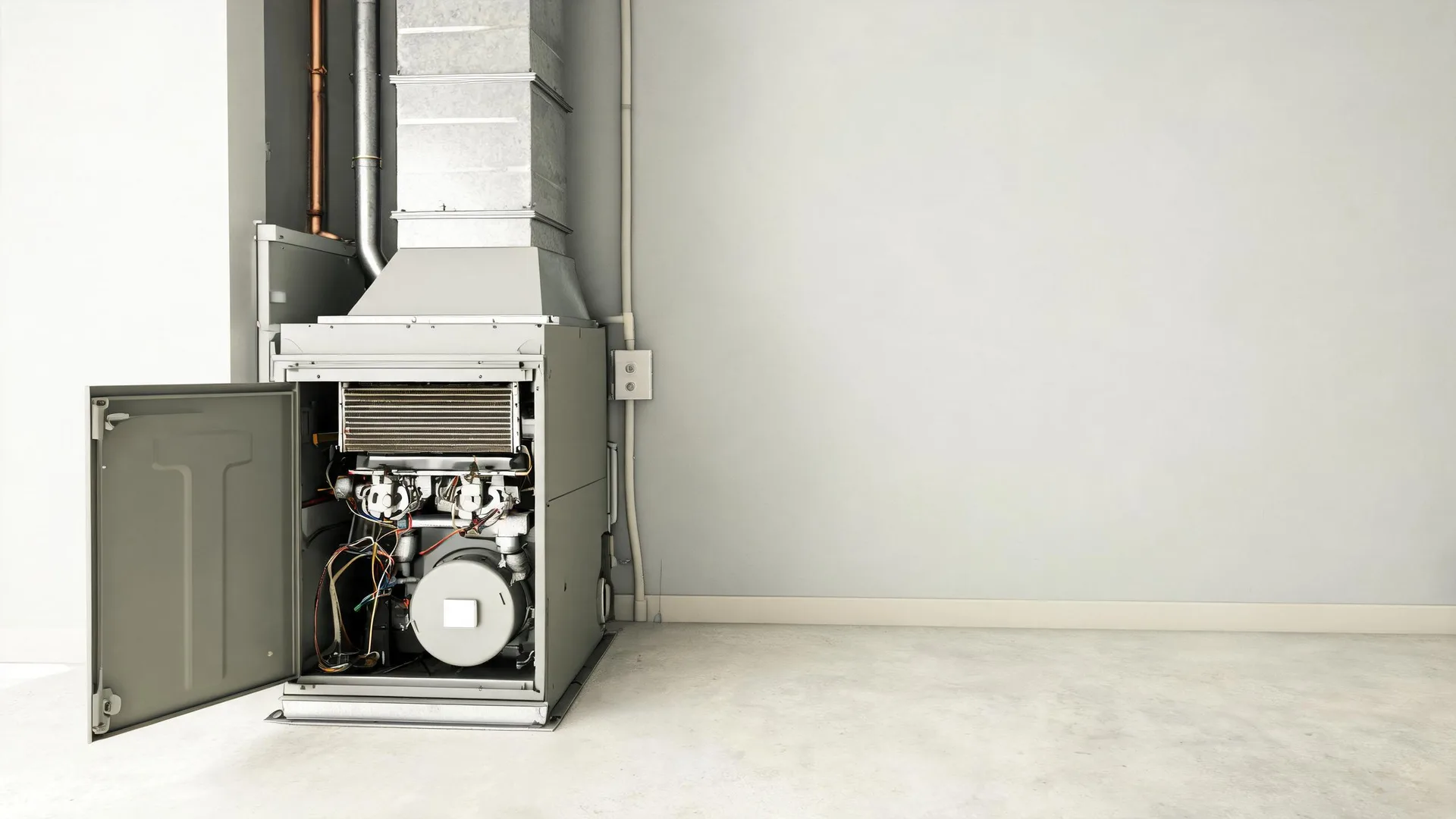
A gray residential gas furnace installed in an unfinished basement, surrounded by ductwork, a metal flue pipe, and a gas supply line.

Light use like this, fix it rather than replace it

Five months a year means a furnace repair here is usually worth calling in rather than writing off. If the furnace ran fine last winter and this year it's skipping a beat, that points to one part going bad, not a system worn out from overuse. A technician can find that part and replace it. Hold off on replacing the whole unit unless you're told the cabinet or heat exchanger itself is the problem.

The furnace usually tells you before it quits

A burner that clicks a few times before it lights, a flame that looks yellow instead of blue, a blower that kicks on and off in short bursts, these are early warnings. So is a smell of gas or something burning when the system starts up. None of these mean the furnace is done. They mean a part is wearing out and still has time to be caught before it fails outright.

Short cycling wears out the parts that are left

A furnace that shuts off before the house warms up is short cycling, usually from a cracked heat exchanger, a dirty flame sensor, or a blocked vent telling it to stop. Each shutdown is hard on the igniter and the blower motor. The longer short cycling goes on, the more parts it pulls down with it, so the fix gets bigger the longer it waits.

Before calling anyone, check the thermostat first. Make sure it's set to heat, not just fan, and that the temperature is set above room temperature. Then check the filter. A filter clogged with dust chokes off airflow, and a furnace starved for air will often shut itself down as a safety measure rather than run hot. Look at the furnace switch too, the one that looks like a light switch on or near the unit itself, since it can get bumped off without anyone noticing. Check the breaker panel while you're at it. If the furnace uses a standing pilot, see if the pilot light is actually lit. None of this fixes a cracked heat exchanger or a failed igniter, but it rules out the simple causes before a technician has to.

Half the homes here were built in 1999 or later, which puts a lot of furnaces well inside their expected working life. If a power cut knocks the system out mid-winter, that's one more reason to have it looked at rather than replaced outright. A furnace that's only a decade or two old can usually take a hit from a surge or a rough restart and keep going, as long as the part that failed gets found and swapped. Check the panel for the furnace's breaker after any outage, since a tripped breaker can look like a dead system when nothing inside is actually broken. If it trips again after you reset it, that's a reason to call, not a reason to assume the worst about the unit.