





White plantation-style houses with wraparound porches lit at night, surrounded by Spanish moss-draped live oak trees.

Heat Pump Repair in Newnan, GA

Tell us about the job

Takes about a minute. No obligation.

RepairHeat PumpCoweta County, GA
Step 1 of 2

What ZIP code is the job in?

Coweta County saw 221 severe weather events between 2015 and 2024. Most of that was damaging wind, 174 times in that span, along with 29 hail events and 9 tornadoes. The outdoor unit sits outside and takes the brunt of all of it, exposed to wind-driven debris and hail that a furnace or water heater never has to deal with. A heat pump can keep running after a storm and still have a bent coil fin or a cracked fan blade from something that blew through. If yours took a hit, it is worth having looked at even if it is still blowing air.

5 months
November through March, your system heats
5 months
May through September, it cools
35°F
the average winter night it heats against
88°F
the average summer afternoon it cools against
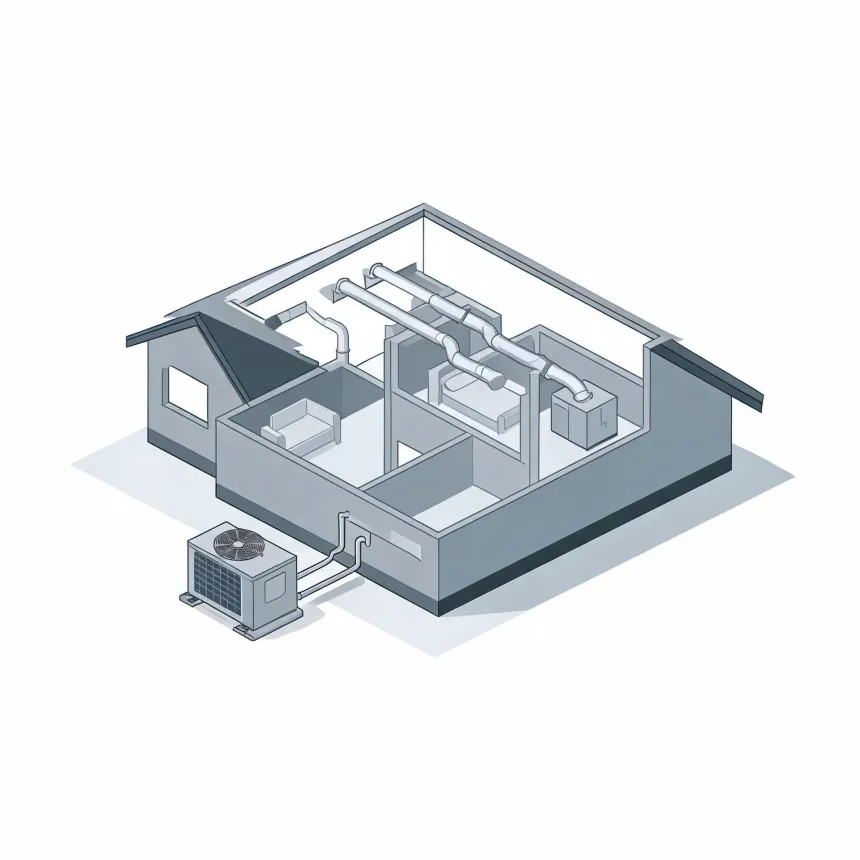
Isometric grayscale illustration of a cutaway house showing interior rooms, ceiling ductwork and an air handler, connected by lines to an outdoor condenser unit on a pad outside.
Your system heats November through March and cools May through September.

NOAA nClimDiv, 1991–2020 normals

Half the homes in Coweta County were built in 1999 or later.

A heat pump in one of these newer homes still has years of service in it, which is reason enough to repair it rather than replace it.

Your heat pump works hardest right when November and May start

Cooling runs May through September
Heat runs November through March
Climate zone 3A

Your heat pump here runs cooling for most of the year and switches to heat for the short winter, so it rarely gets a break. The air it works against is heavy too, with a summer dew point around 67 degrees, higher than most places see, which makes the system pull moisture as hard as it pulls heat out of the air. That steady load wears on parts sooner than it would somewhere milder. A capacitor or a contactor that's been working overtime shows its age earlier here, and a refrigerant leak that would take years to matter elsewhere can shut a system down faster. If something's acting up, the cause is usually the workload, not a fluke, and that's worth knowing before anyone decides what to fix.

If a storm came through, have the heat pump checked before it fails

A heat pump can keep running after a storm and still have a bent fin or a chipped blade you would not spot from the ground. Wind has hit this county 174 times and hail 29 times between 2015 and 2024. If yours was out there for any of that, have it checked now instead of waiting for it to quit.

Find a contractor
A man in a cap, gray long-sleeve shirt and tan work pants carries a worn canvas tool bag up wooden porch steps toward a blue front door, with a potted shrub to the left.
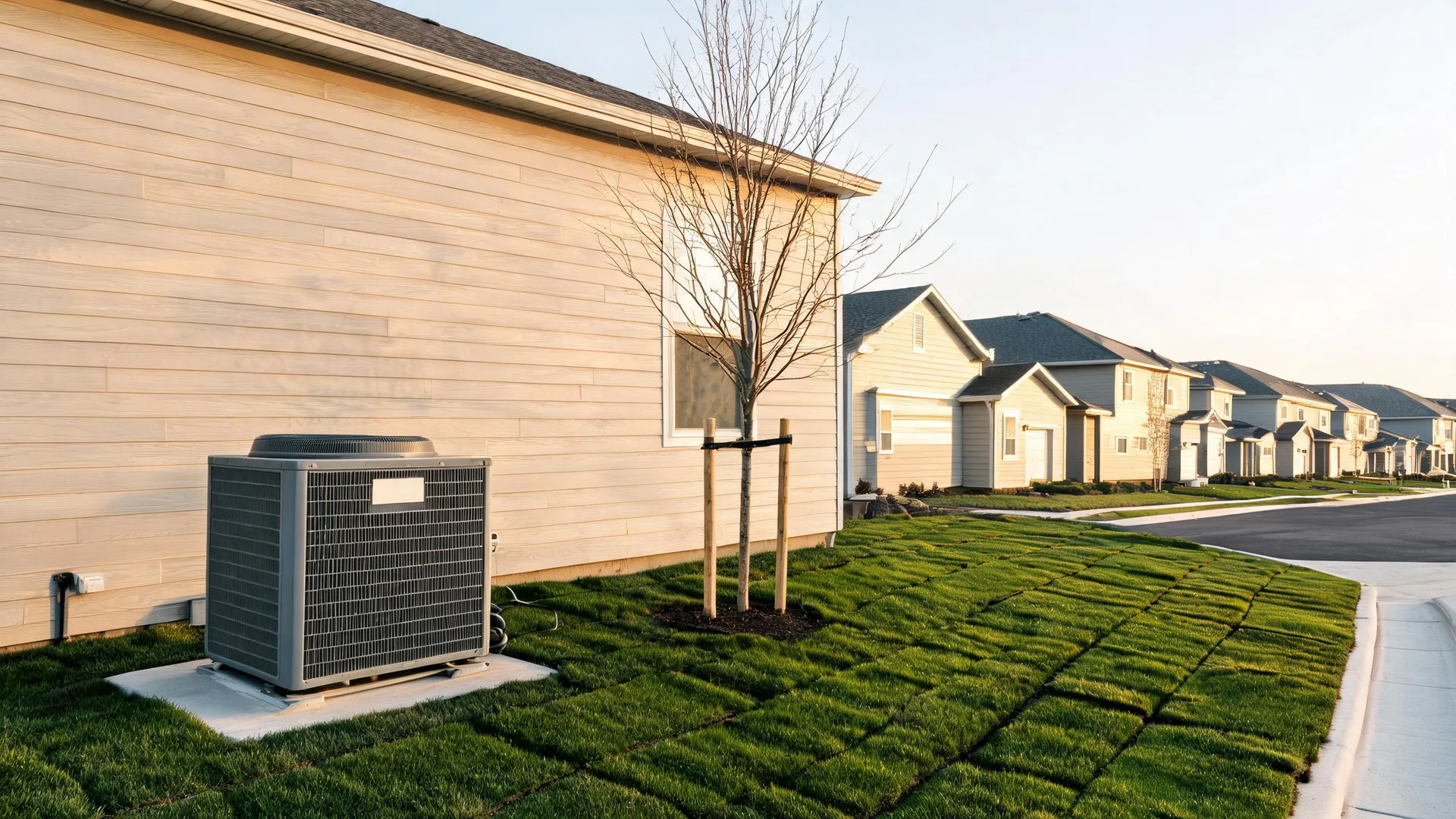
A gray air-source heat pump mounted on a concrete pad next to a house with gray vinyl siding, surrounded by gravel and flanked by green shrubs and white hydrangea flowers.

Years of running hard catch up with a heat pump

Your heat pump does not get a season off here. It runs cooling through the long warm stretch, then switches straight to heat for winter, year after year. That kind of use adds up. When a part finally gives out, it's rarely sudden. It's been wearing down call after call, year after year, until the day it quits. Get the actual cause diagnosed rather than just patching the symptom. A repair that addresses the worn part instead of the surface problem is the one that holds up to another year of this workload.

Check the obvious before you call

Look at the thermostat first. Make sure it is set to heat or cool as needed and the batteries are not dead. Check the breaker box for a tripped breaker on both the indoor air handler and the outdoor unit, since a heat pump has two. Look at the outdoor unit itself for ice covering the coil in winter, or for leaves and debris packed against it in any season. Check your air filter and swap it if it is gray or clogged. None of this requires tools, and it rules out the simplest causes before anyone comes out.
Know what tells you to shut it off

If the outdoor unit is making a grinding or screeching noise, or the indoor coil is caked in ice that will not melt after you switch to fan-only for a while, turn the system off at the thermostat and leave it off. Running a frozen coil or a failing motor longer only adds damage on top of whatever is already wrong. The same goes for a burning smell or a breaker that trips again right after you reset it. Those are signs to stop and wait for a tech, not signs to try another reset.

A heat pump usually tells you something is wrong before it quits outright. Warm air blowing when it should be cold, or the reverse, often points to the reversing valve stuck in one position. Short cycling, where it kicks on and off every few minutes instead of running a full cycle, points to a sensor problem or a unit that's lost refrigerant. Ice building up on the outdoor coil in weather that isn't cold enough to explain it usually means airflow is blocked or the system is low on charge. A hissing sound near the lines can mean a refrigerant leak, while a hard clunk or rattle when it starts or stops points to a failing motor mount or a loose part inside the cabinet. Higher bills with no change in how you run the system is often the first sign something is working harder than it should to do the same job. None of these fix themselves, and most get more expensive to repair the longer they run.

Check the data plate on the outdoor unit for a manufacture date before deciding anything. If the house was built in 1999 or later and the heat pump is original to it, that system likely still has years of service left in it even after the kind of workload summers here put on it. That's worth telling whoever comes out to diagnose it, since a part failing on a newer system is more often a straightforward repair than a sign the whole unit is done. If you don't know the install date, the data plate will tell you, and it tells a tech more than a guess about how much life is left to protect.