


Heat pump vs furnace in Troup County, Georgia

Find an Installer

Replacement quotes in Troup County

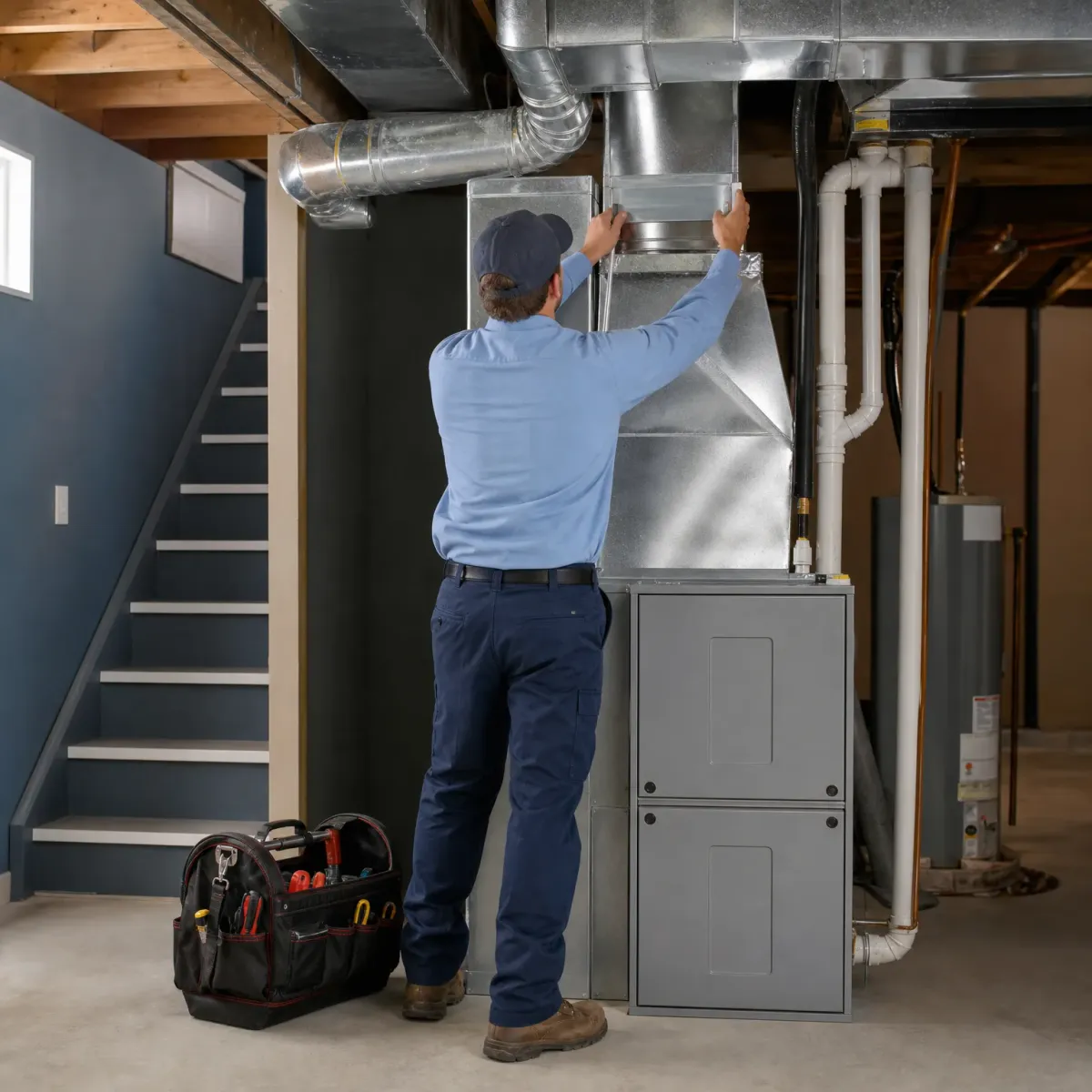
A man in a blue shirt, navy pants and cap works on sheet metal ductwork above a gray furnace in a basement, with an open tool bag on the floor and stairs to the left.

Tell us about the job

Takes about a minute. No obligation.

New system or replacementTroup County, GA
Step 1 of 3

What kind of equipment?

Which costs less to run in Troup County?

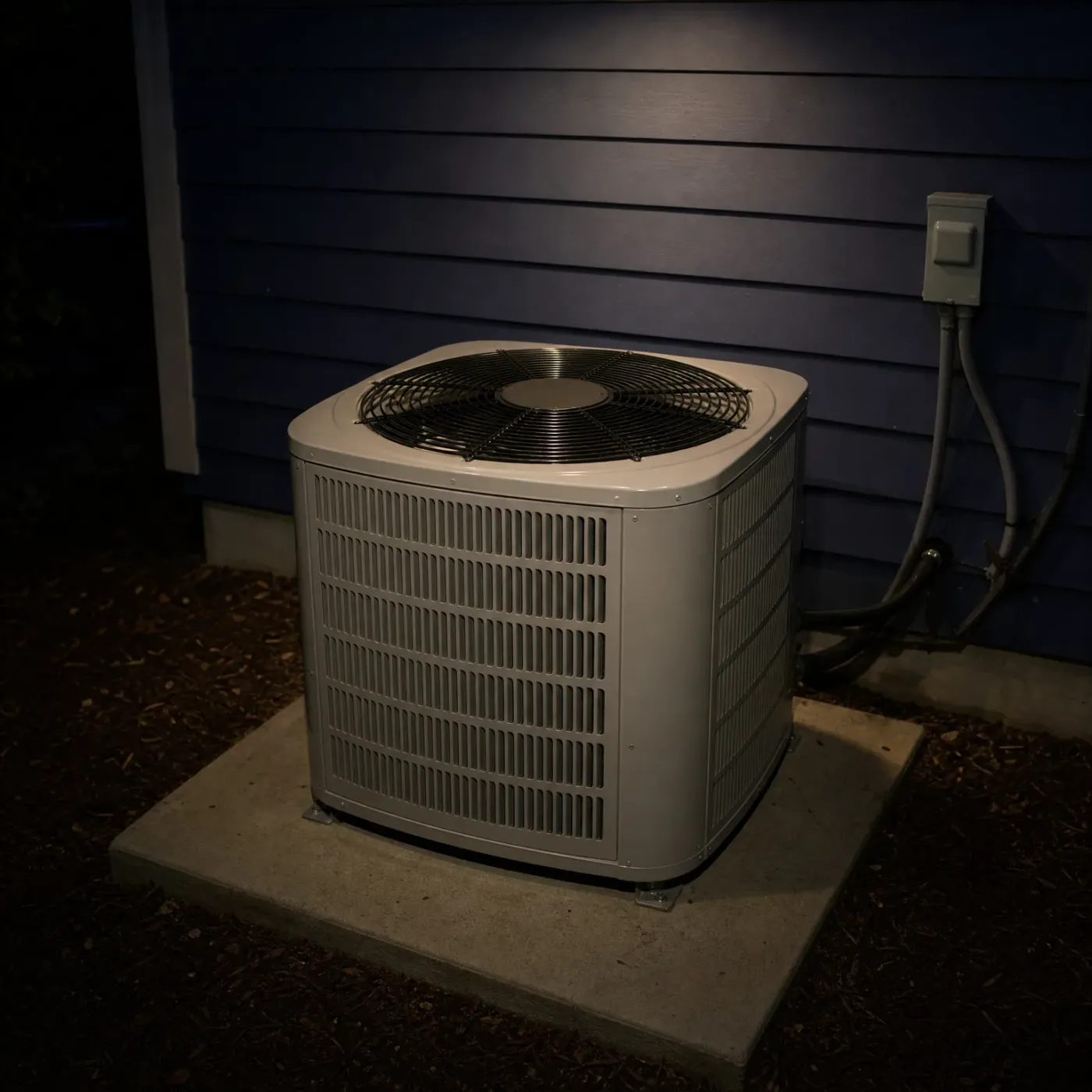
A beige outdoor condenser unit with a top fan grille sits on a concrete pad beside a dark blue horizontal-siding wall at night, with a wall-mounted disconnect box and conduit to the right.

Heat pump

To heat your home here$1.88per 100,000 Btu

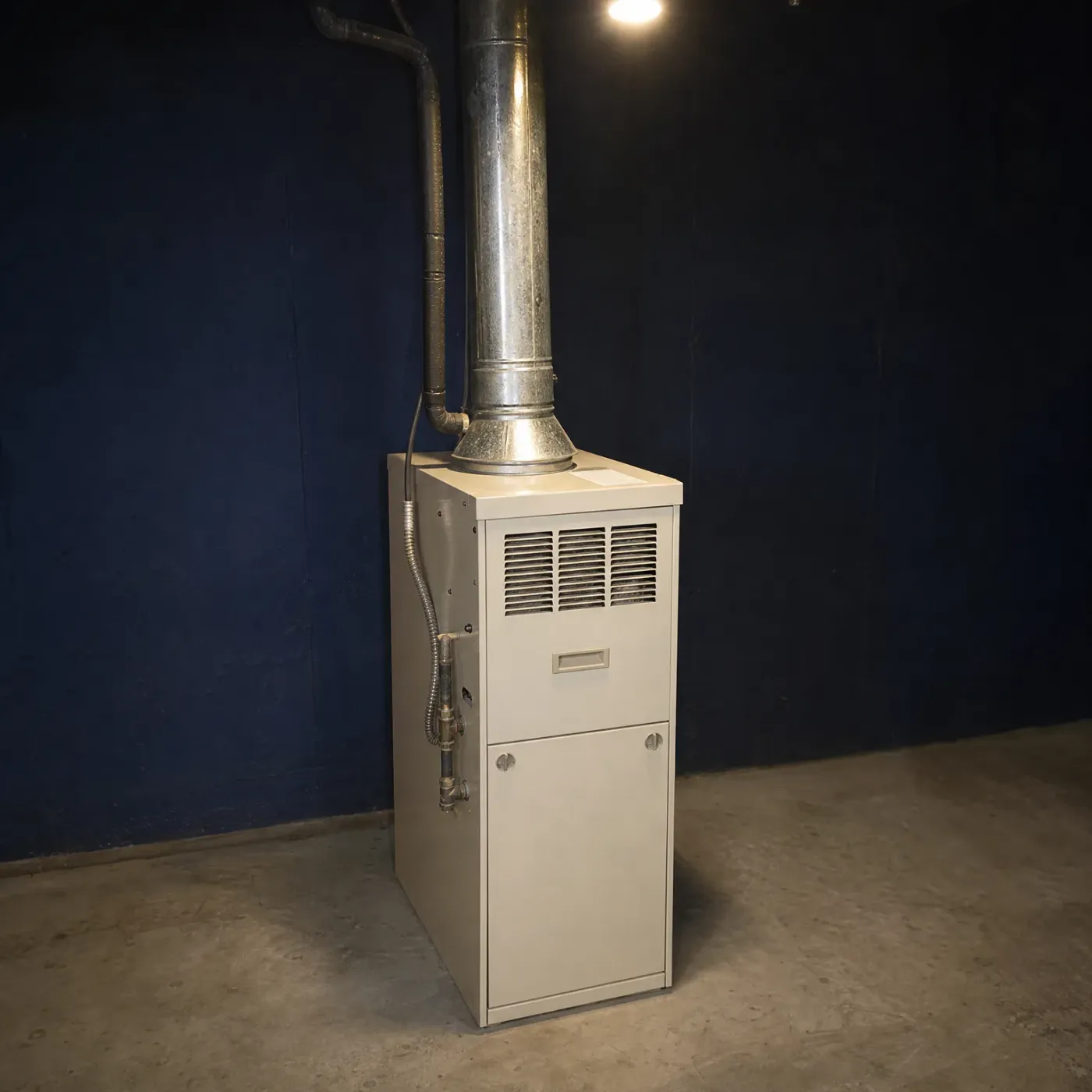
A beige residential furnace with a louvered vent panel stands against a dark blue wall on a concrete floor, with a metal flue pipe and a smaller duct rising from its top.

Furnace

To heat your home here$2.21per 100,000 Btu

At Georgia's gas and electricity prices, a heat pump makes the same heat as a gas furnace for about 15% less.

Btu stands for British thermal unit, the standard measure of heat energy.

Where does a heat pump shine?

  • Made for mild winters

    Overnight lows in Troup County average 35°F through December, January and February, rarely dropping to real cold. A heat pump pulls heat from outside air that mild without straining to keep up.

    Front porch of a dark blue clapboard house with white trim, a navy door with a windowed upper panel, a wooden rocking chair with a plaid blanket and blue pillow, brown boots by the door, and frost-covered grass and bare trees in the yard.
  • Covers a long cooling season

    You're running the AC from May through September here, so cooling is most of what this system does all year. A heat pump handles that job directly, the same unit working right through those five months.

    A covered porch with blue lap siding, a ceiling fan, a navy cushioned sofa and wicker furniture, where a glass of iced tea sits on a coaster on a weathered wooden table beside a potted plant, with a person standing at the railing looking out at green trees.
  • Steady, even comfort

    It eases up and down with the weather. There are fewer swings between too warm and too cool.

    A navy upholstered armchair with an open book and gray knit throw sits on a patterned rug beside a lit lamp and side table with a mug, while a yellow dog sleeps curled on the rug and a snowy scene is visible through a window.

Where does a furnace shine?

  • Pairs with any central AC

    Most central air systems are built around a furnace. The two share the blower, the ducts and the thermostat.

    A metal floor vent set in a wood floor near a baseboard and window with a sheer white curtain, with a wooden table holding books and a blue mug on the left and a blue sofa with a fringed throw on the right.
  • Proven, simple, easy to get serviced

    Parts are easy to find and most repairs are routine. Getting one fixed rarely means waiting on a specialist.

    A gloved hand holds a square pleated air filter in front of a gray furnace in a basement, beside a wooden shelf with storage bins and a potted plant.
  • Fast, strong heat on demand

    A furnace pushes out hot air within minutes of switching on. A cold house warms up fast.

    A mudroom with a navy cushioned bench holding a cream throw, woven storage baskets beneath, a steaming mug, coats and a plaid scarf on hooks, and snowy boots on a gray mat beside a dark blue door with a sheer curtain and a snow-covered view outside.

What winter actually asks of a heat pump here

Winter here is mild, not cold. The overnight low averages 35°F across December, January and February, and it only drops to freezing or below on about 60 nights out of the roughly 150 the heat runs. Below 0°F almost never happens, fewer than one night a year. That's the climate a heat pump has to work in, and it's a kind it handles well.

The catch is that 35°F average low sits right at the point where a standard heat pump starts to struggle. Below 40°F its output falls under its rating, and below about 35°F it often leans on backup heat to make up the difference. Every one of those 60 freezing nights falls in that zone. That doesn't mean the heat pump stops working. It means on a good number of winter nights here, it's not running at full strength on its own.

A cold-climate heat pump is built for exactly this. To earn that label it has to prove, under third-party testing, that it still makes 1.75 units of heat for every unit of electricity at 5°F, a temperature well below anything Troup County sees. Field tests of these units in occupied homes back that up: backup heat covered only a small share of the load between 0°F and 35°F, and running on backup alone was rare even above 0°F. A standard heat pump will do the job here. A cold-climate one does it with less help from backup heat on the coldest nights you actually get.

A red brick one-and-a-half-story house with dark blue shutters, a light blue front door under a columned portico, and a dormer window, fronted by a brick walkway, green lawn, pink azalea bushes, and flowering white trees.

Running cost and what each machine is for

Run the two side by side on what they cost to make heat and the heat pump wins. $1.88 per 100,000 Btu against $2.21 for a furnace, both at Georgia's average fuel prices and both machines built to the federal minimum. That's about 15% less to heat the same house, and it's the electric heat pump beating the electric furnace's main rival even though electricity costs more per unit than gas does here. The efficiency makes up the difference and then some.

That gap matters more in Troup County than it would somewhere colder, because heat is only half the year's job. Cooling runs about five months here too, May through September, with around 55 days a year hitting 90°F or hotter. A furnace has no part in any of that. It heats, and for seven months a year it sits unused while a separate air conditioner handles the heat. A heat pump is one machine doing both, which is worth more in a place where the air conditioning season is as long as the heating season.

Three out of four homes here already heat with electricity, so for most of this county a heat pump is a swap within the same fuel, not a change in how the house is set up. Gas heats about one in five homes. Where a gas line and a gas furnace are already in place, the furnace stays the simpler option to service and replace. Where the house runs on electric heat already, the heat pump costs less to run, covers the summer too, and asks nothing new of the house to do it.

Sources: NOAA nClimDiv · NOAA 1991–2020 seasonal normals · PNNL Building America guide · PNNL-37127 field study · ENERGY STAR product criteria · EIA SEDS 2024 · 10 CFR 430.32 · Census ACS 2020–2024

A covered front porch with dark blue lap siding, a light blue door, white columns and railing, two white rocking chairs with blue pillows, a ceiling fan, lantern wall lights, and potted ferns and flowers on a brown wood deck.

Common questions about heat pumps and furnaces

  • Will a heat pump keep my house cool enough here?

    Yes. A heat pump is a central air conditioner in the summer months, built to cover a cooling season that runs about five months here, May through September, the same length as the heating season. The afternoon high hits 90°F or above on about 55 days a year in Troup County, and that's ordinary territory for a heat pump's cooling side.

  • Can I keep my furnace and add a heat pump?

    Yes, that pairing is called a dual fuel system. The heat pump handles both heating and cooling most of the year, and the furnace switches on for backup once it's cold enough that the heat pump's output falls short, which here starts below about 40°F and becomes more likely below 35°F. With an overnight low averaging 35°F in December, January and February, and about 60 nights a year at or below freezing, the furnace would only be carrying a fraction of the season.

  • What if my house doesn't have a gas line?

    A heat pump is the straightforward option if there's no gas line. It heats and cools from one system, so you're not pricing out a second piece of equipment or a propane tank and its deliveries. Only 15.2% of homes here use utility gas, so most houses in Troup County already run on electricity for heat, a heat pump included.

  • Is a heat pump cheaper to run than a furnace in Troup County?

    Yes. A heat pump runs about $1.88 per 100,000 Btu of heat here against $2.21 for a gas furnace, so it costs less to make the same heat at Georgia's average fuel prices. The furnace also only heats, so it sits unused the other seven months of the year while a heat pump keeps working through the five months of cooling season.