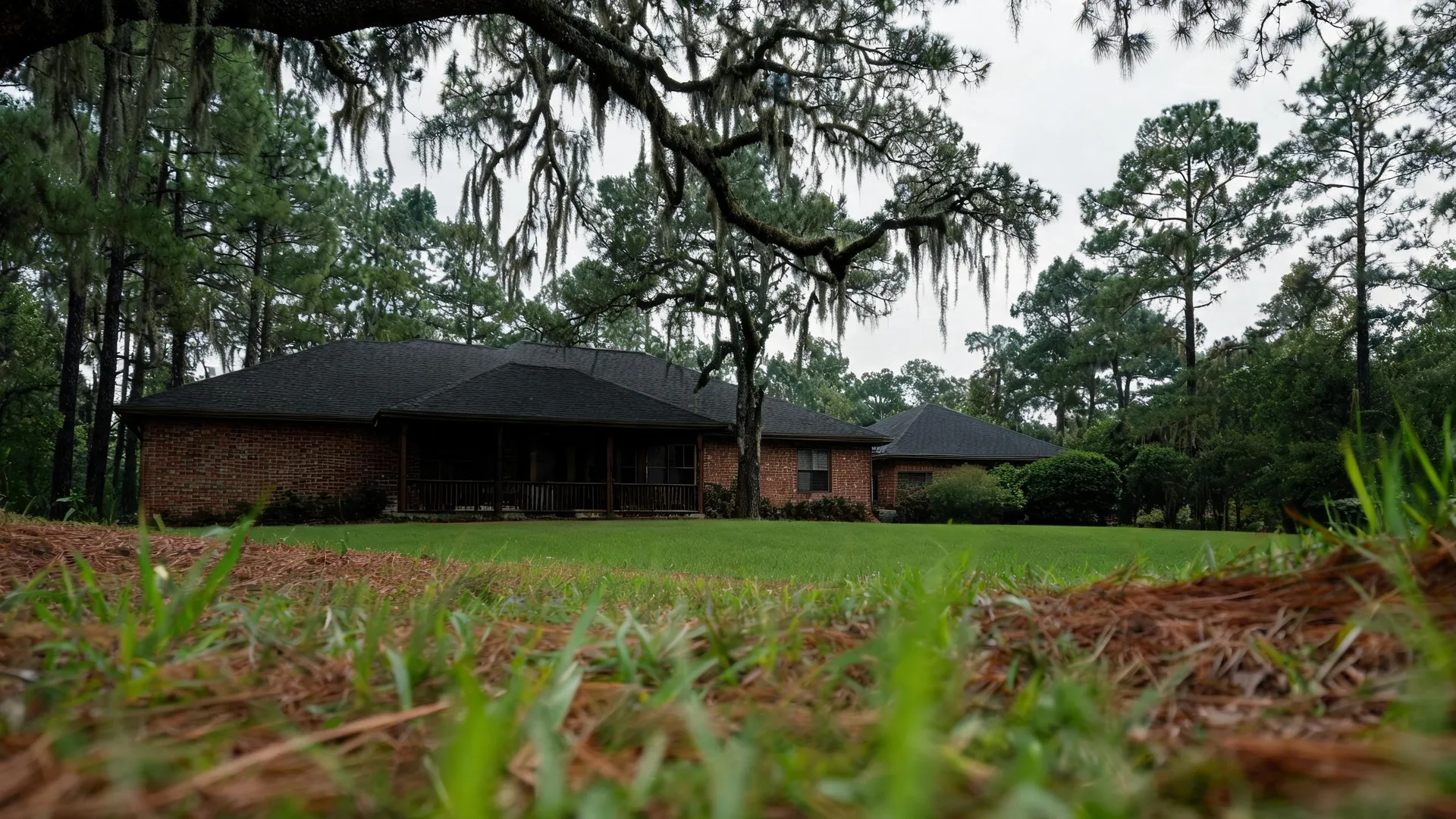






Low-angle view across a lawn and pine-needle mulch toward a single-story brick house with a dark hipped roof and covered porch, framed by pines and a moss-draped oak branch.

Furnace Repair in LaGrange, GA

Tell us about the job

Takes about a minute. No obligation.

RepairFurnace or heatingTroup County, GA
Step 1 of 2

What ZIP code is the job in?

Troup County logged 154 severe weather events between 2015 and 2024, and most of that was damaging wind, 121 times in that stretch. There were 24 hail events too, and 5 tornadoes. Wind and hail can both reach the parts of a furnace system that sit outside or depend on the power staying on. Statewide, 31% of Georgia households went at least a day without power in 2024. A furnace that ran fine before a storm came through isn't proof it still will.

5 months
November through March, your furnace is on duty
35°F
the average winter night it heats against
1 winter storms
in ten years, the nights a failure hurts most
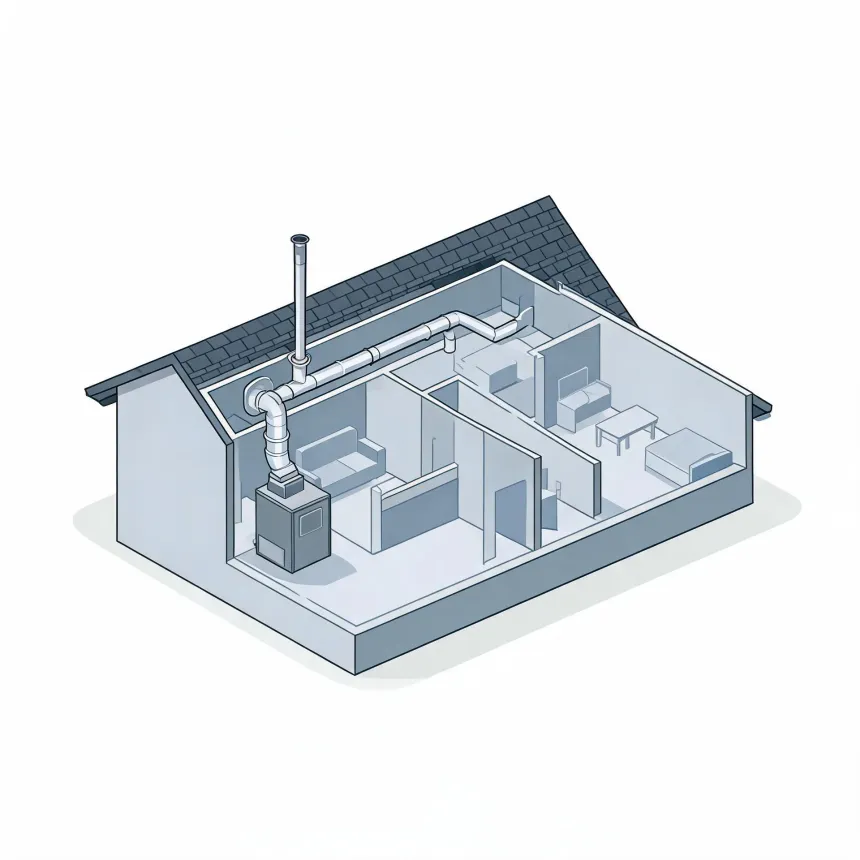
Isometric cutaway illustration of a single-story house showing interior rooms with furniture and a furnace connected to ductwork and a vertical flue pipe extending through the roof.
Your furnace works hardest from November through March.

NOAA nClimDiv, 1991–2020 normals

Furnaces here only run about five months a year, November through March.

A furnace that short on work is usually in decent shape underneath, so fixing what's wrong is often the right call.

Half the homes in Troup County were built in 1986 or later, and the furnace probably matches the house

Half the homes here were built by 1986
Climate zone 3A
Heat runs November through March
The First Cold Snap Finds the Weak PartHeat starts running in November here, and that first real demand is when a furnace already struggling tends to quit.

If your house was built in 1986 or later, the furnace most likely came with it or was swapped in on a normal replacement cycle, not forced in after storm damage. That matters for a repair call. A unit that's been maintained on a regular schedule, rather than patched together after wind or a power spike, is a better bet to fix than replace. Get the model and the service history out before the technician arrives if you can. If the furnace was already there when you bought the house, ask whoever serviced it last what shape the parts were in.

If a storm came through, get it looked at before it tells you itself

After wind or hail comes through, have the furnace system checked even if it's still running. Damage to the outdoor parts or a hit from a power interruption doesn't always show up right away.

Find a contractor
A man in a beanie, dark jacket and tan work pants climbs porch steps toward a blue front door, carrying a canvas tool bag, with a potted shrub in a blue planter beside him.
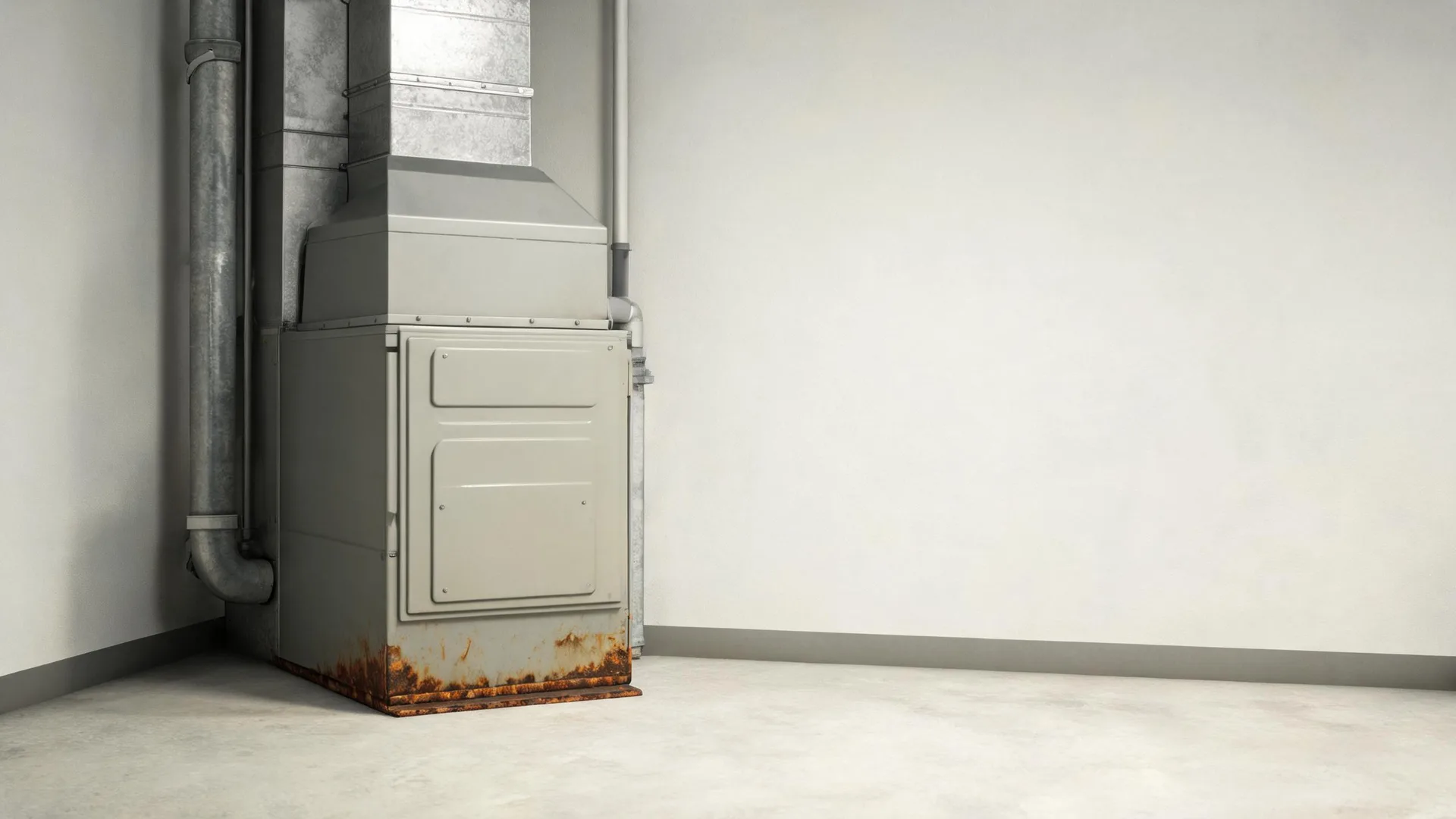
A gray residential gas furnace installed in an unfinished basement, surrounded by ductwork, a metal flue pipe, and a gas supply line.

What Actually Happens When the Panel Comes Off

A diagnostic call starts with the complaint, not the furnace. The technician asks what it's doing, when it started, and whether anything happened right before, a power blip, a burning smell, a sound. Then comes a visual check of the whole system before any panel comes off, since a cracked flue pipe or a scorched wire tells you something before you even reach for a meter. Inside the cabinet, the technician checks for a stored error code first, because the control board usually remembers what it saw even after it shuts itself down. From there it's a process of confirming each step the furnace takes to fire: power to the board, a call for heat from the thermostat, the igniter glowing or sparking, gas flowing, flame proving itself to the sensor, and air moving once it's lit. Whichever step fails is where the problem lives. A multimeter checks voltage and resistance on parts that don't show their condition by looking at them, like a flame sensor or a limit switch. The technician also pulls the filter and looks at the blower wheel, since airflow problems masquerade as a dozen other failures. None of this takes guesswork once the steps are followed in order, and it usually points to one part rather than a general sense that something's wrong.

What you can check before anyone arrives

Check that the thermostat is set to heat and the temperature is actually above room temperature. Look at the furnace switch, the one that looks like a light switch near the unit, and make sure it's on. Check the breaker it runs on. Check the filter, since one that's packed with dust can choke airflow enough to make the furnace shut itself off or blow cold air. If you have a standing pilot light, see whether it's still lit and relight it only if the manufacturer instructions posted on the unit say how.
What to leave for the technician

Don't open the burner compartment or go near the gas valve. If you smell gas, leave the house and call the gas company before anyone calls for a repair. A furnace that short cycles, trips its breaker repeatedly, or sets off a carbon monoxide alarm needs a technician before it runs again, not a homeowner working through a checklist. Write down any error code blinking on the control board. That code tells the technician where to start and can save a return visit.

A furnace fails for a handful of ordinary reasons, and most of them show up in parts that are cheap compared to the unit itself. The igniter wears out from switching on and off thousands of times and eventually stops glowing hot enough to light the gas. The flame sensor coats with a thin layer of residue over time and starts telling the control board there's no flame when there is one, so the furnace shuts itself down as a safety measure. A clogged filter starves the system of airflow, and that alone can overheat the heat exchanger and trip a limit switch that shuts the whole thing off. Blower motor bearings wear out from years of spinning and start making a grinding or squealing noise before they quit outright. Draft inducer motors fail the same way, and when they do, the furnace often won't start at all, since it needs to confirm the vent is clear before it lets gas flow. None of these failures mean the furnace is done. They mean one part did what parts eventually do, and a technician can usually replace it without touching the rest of the system.

A technician weighing repair against replacement is really asking how many other parts are likely to fail soon after this one. An igniter or a flame sensor can be swapped on its own without that question mattering much, since neither one tells you anything about the heat exchanger or the blower motor. The harder call comes when the failed part is expensive on its own, like a cracked heat exchanger or a failed control board, because then the repair bill starts to look like a down payment on a new unit anyway. Age matters less than how the furnace was treated. A furnace that's had its filter changed on schedule and its burners cleaned every so often tends to fail one part at a time, in the ordinary way, and those failures are worth fixing as they come. One that's been ignored tends to fail in clusters, where fixing the first problem just uncovers the next one a season later. A good technician will say plainly when a repair is a real fix and when it's just delaying the same decision.