





Two white Southern-style homes with wraparound porches lit by landscape lighting at night, flanked by live oak trees hung with Spanish moss.

Heat Pump Repair in LaGrange, GA

Tell us about the job

Takes about a minute. No obligation.

RepairHeat PumpTroup County, GA
Step 1 of 2

What ZIP code is the job in?

Troup County saw 154 severe weather events between 2015 and 2024. Most of that was wind, with 121 damaging wind events over that same stretch, plus 24 hail events and 5 tornadoes touching down. A heat pump's outdoor unit sits right in the yard, exposed to all of it. Wind-driven debris can bend the fins or crack the fan blade, and hail dents the cabinet and the coil underneath it. The unit can keep running after a hit like that, but running isn't the same as running right. If a storm has come through, it's worth having someone look at the outdoor unit even when it still seems to work.

5 months
November through March, your system heats
5 months
May through September, it cools
35°F
the average winter night it heats against
89°F
the average summer afternoon it cools against
Isometric illustration of a cutaway house showing interior rooms, ceiling ductwork and an air handler, connected by lines to an outdoor condenser unit on a pad beside the building.
Your system heats November through March and cools May through September.

NOAA nClimDiv, 1991–2020 normals

Half the homes in Troup County were built in 1986 or later.

A heat pump in a newer house usually hasn't hit the end of its working life, so repairing it is the right call.

A heat pump works year round here, so a weak part gets found the first cold snap in November or the first hot week in May

Cooling runs May through September
Heat runs November through March
Climate zone 3A

If your house went up in 1986 or later, the heat pump in it hasn't necessarily earned retirement. Getting a part replaced or a circuit board swapped makes more sense than replacing the whole system. A tech can check the compressor and the refrigerant charge and tell you honestly whether what's wrong is a quick fix or a sign of something older and more worn out. Ask what's actually failing before you assume the unit itself is done. A newer system with one bad part still has years in it.

If the outdoor unit took a hit, get it checked before the next one

If a storm has already come through and the outdoor unit took a hit, get it looked at before you assume it's fine. A tech can check the fins, the fan blade, and the coil for damage you can't see from the back door. That's worth doing whether the unit is struggling now or still seems to run fine.

Find a contractor
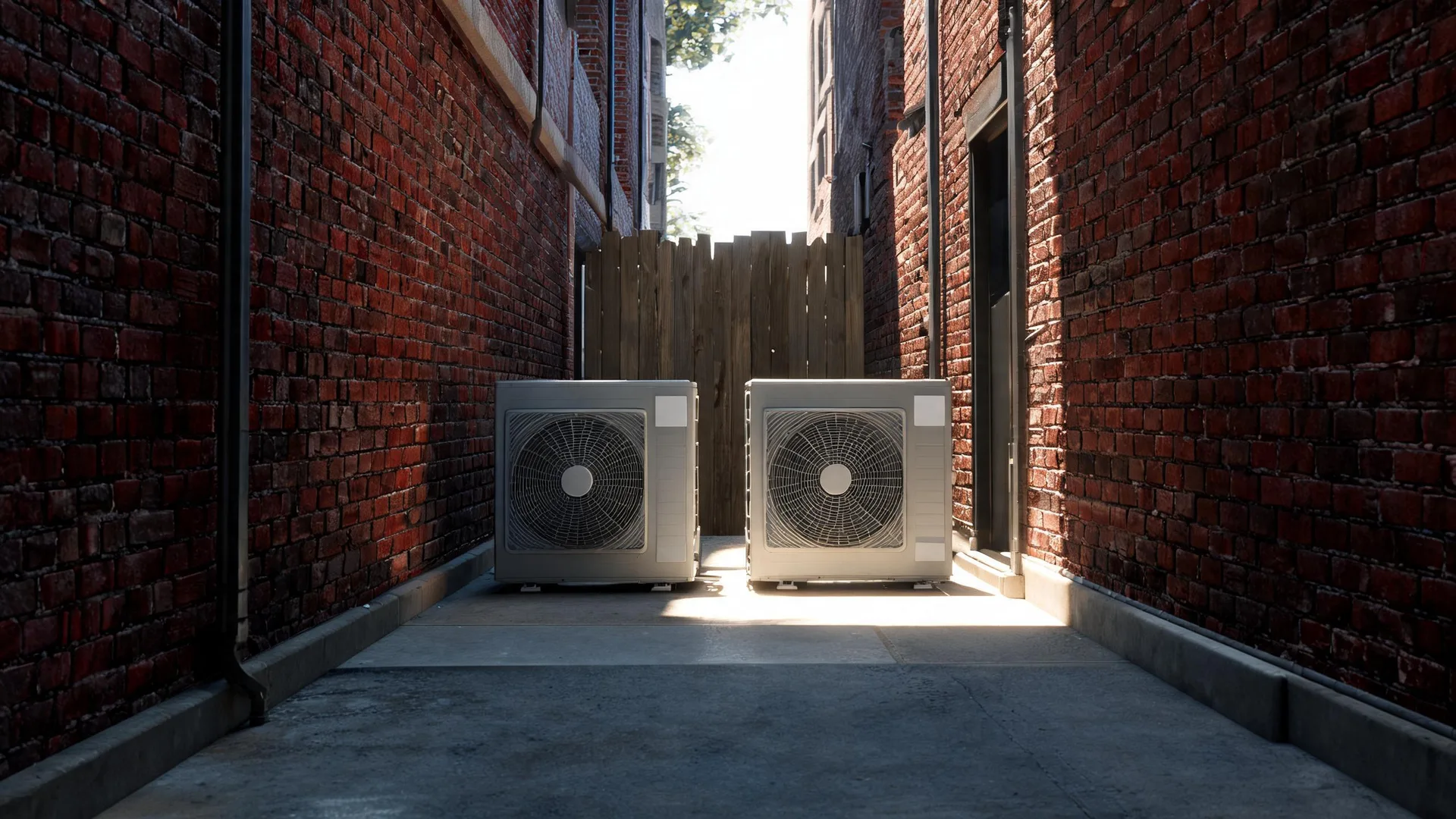
A white mini-split heat pump outdoor unit mounted on a concrete pad beside a gray-sided house, surrounded by gravel and green shrubs.

Some problems hold steady. Others get worse every time the system runs.

A heat pump that's struggling still moves heat, just not the way it should, and that gap is where damage builds. A weak capacitor makes the compressor pull harder to start every cycle, and that strain shortens its life. A dirty coil makes the system run longer to do the same job, and the extra runtime wears on everything downstream of it. Low refrigerant charge is worse than it sounds, because the compressor needs that refrigerant to cool itself. Run it low for long enough and you're not looking at a simple recharge anymore, you're looking at a compressor replacement. Ice on the outdoor coil is another one people wait out. It usually means airflow or charge is off, and running the unit with ice on it just adds strain on top of the original problem. None of this is a reason to shut the system off the moment something sounds off. It's a reason not to let a small noise or a weak cycle run for weeks before someone takes a look.

What you'll actually notice

A heat pump in trouble usually tells you before it quits outright. It might blow air that isn't warm enough in winter or cool enough in summer. It might run longer than it used to, or short cycle, kicking on and off every few minutes instead of holding a steady run. You might hear a new sound, a click that repeats, a rattle from the outdoor unit, a hum with no fan movement behind it. Sometimes it's the thermostat screen showing an error code, or one room going warm while the rest of the house stays comfortable. Any of these is the system telling you something inside it is working harder than it should.
Why it's worth a look now

A heat pump that's struggling doesn't fail all at once. The compressor is the heart of the system, and most of what goes wrong elsewhere ends up pushing it to work harder than it was built to. A failing capacitor makes it strain on every startup. A dirty coil makes it run longer for the same result. Ice on the outdoor unit means something is already off with airflow or charge. None of that fixes itself by waiting, and the longer it runs that way, the more likely a simple repair turns into a compressor replacement.

A heat pump fails for a short list of reasons, and most of them show up in one of three places. The reversing valve is one. It's what switches the system between heating and cooling, and when it sticks, the unit keeps running in the wrong mode or gets stuck between the two. The run capacitor is another. It gives the compressor and fan motors the jolt they need to start, and a weak one makes the compressor struggle on every cycle until it finally won't start at all. Then there's the defrost control, which tells the outdoor unit when to clear frost off the coil. If that board or its sensor goes bad, frost builds up unchecked and blocks airflow across the coil entirely. Bearings in the fan motor wear out too, usually announcing themselves with a grinding or squealing sound before they seize. None of these parts fail because the system is old. They fail because they've done their job thousands of times over and eventually wear through.

A repair call usually comes down to one question. Is the part that failed an isolated weak point, or a sign the compressor itself is giving out. A capacitor, a defrost board, a fan motor, those are wear parts, and swapping one out is a fair repair on a system that otherwise runs fine. The compressor is different. It's sealed, it can't be rebuilt, and if it's drawing too much current or failing to start even with a good capacitor, no amount of work around it buys much time. A tech can check compressor amp draw and refrigerant pressures directly instead of guessing from the outside. That test is what tells you whether you're looking at a repair or something bigger.