

Heat pump vs furnace in Camden County, Georgia

Find an Installer

Quotes from pros near you

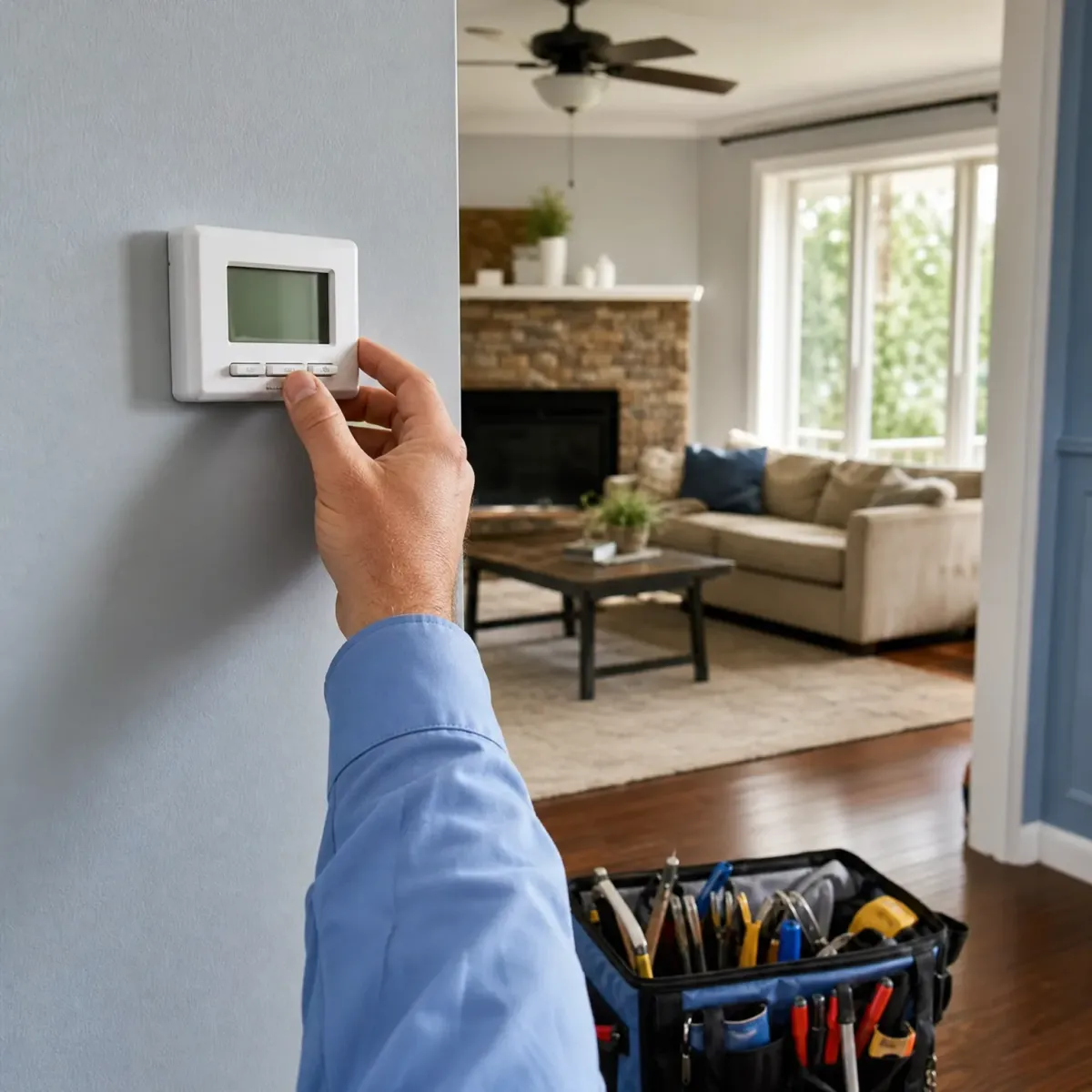
A person's arm in a blue shirt reaches up to press buttons on a white wall-mounted thermostat, with a living room containing a sofa, fireplace, ceiling fan and a tool bag in the background.

Tell us about the job

Takes about a minute. No obligation.

New system or replacementCamden County, GA
Step 1 of 3

What kind of equipment?

Which costs less to run in Camden County?

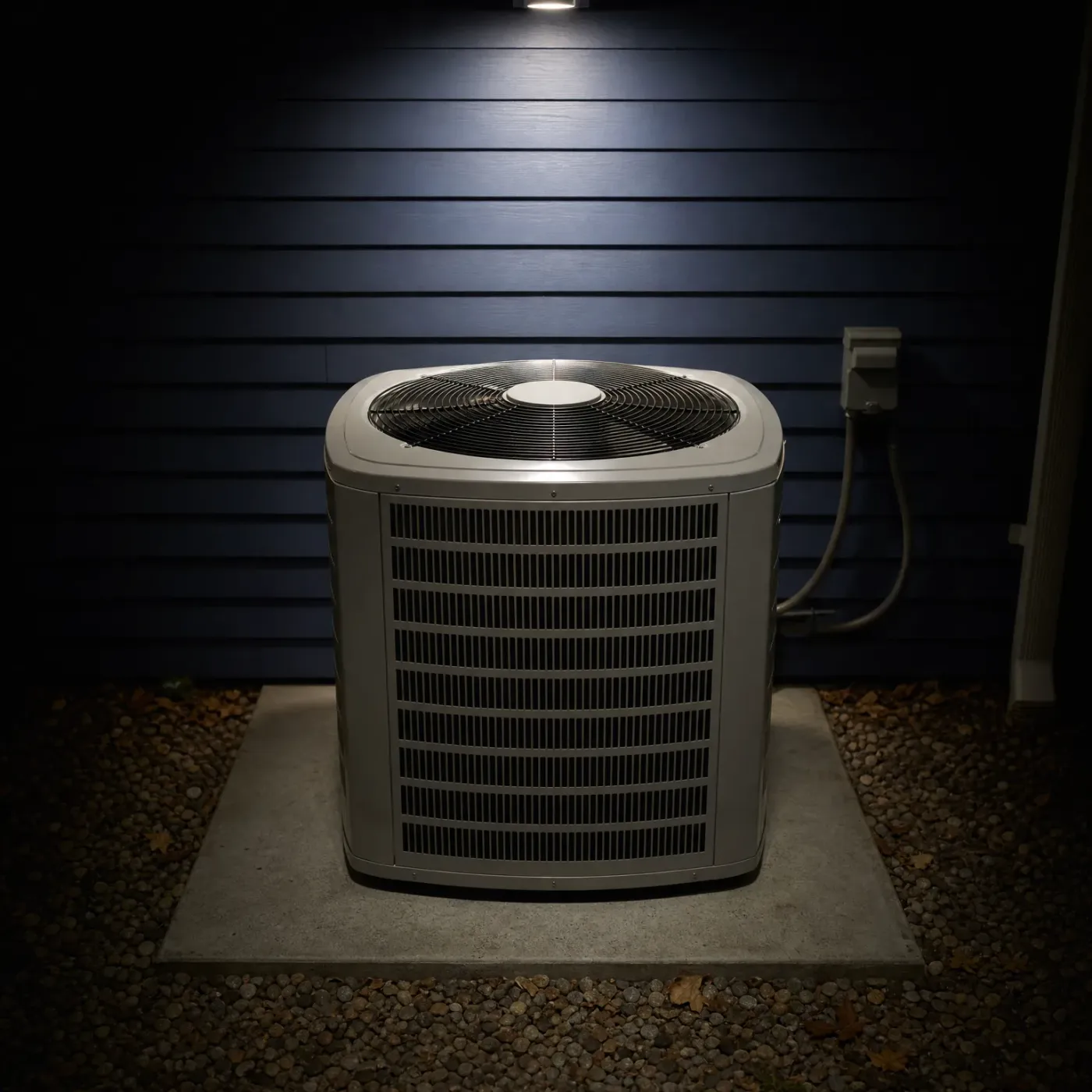
An outdoor air conditioner condenser unit on a concrete pad against a dark horizontal-siding wall at night, lit by an overhead light, with a wall-mounted disconnect box and conduit to the right and gravel with fallen leaves around the pad.

Heat pump

To heat your home here$1.88per 100,000 Btu

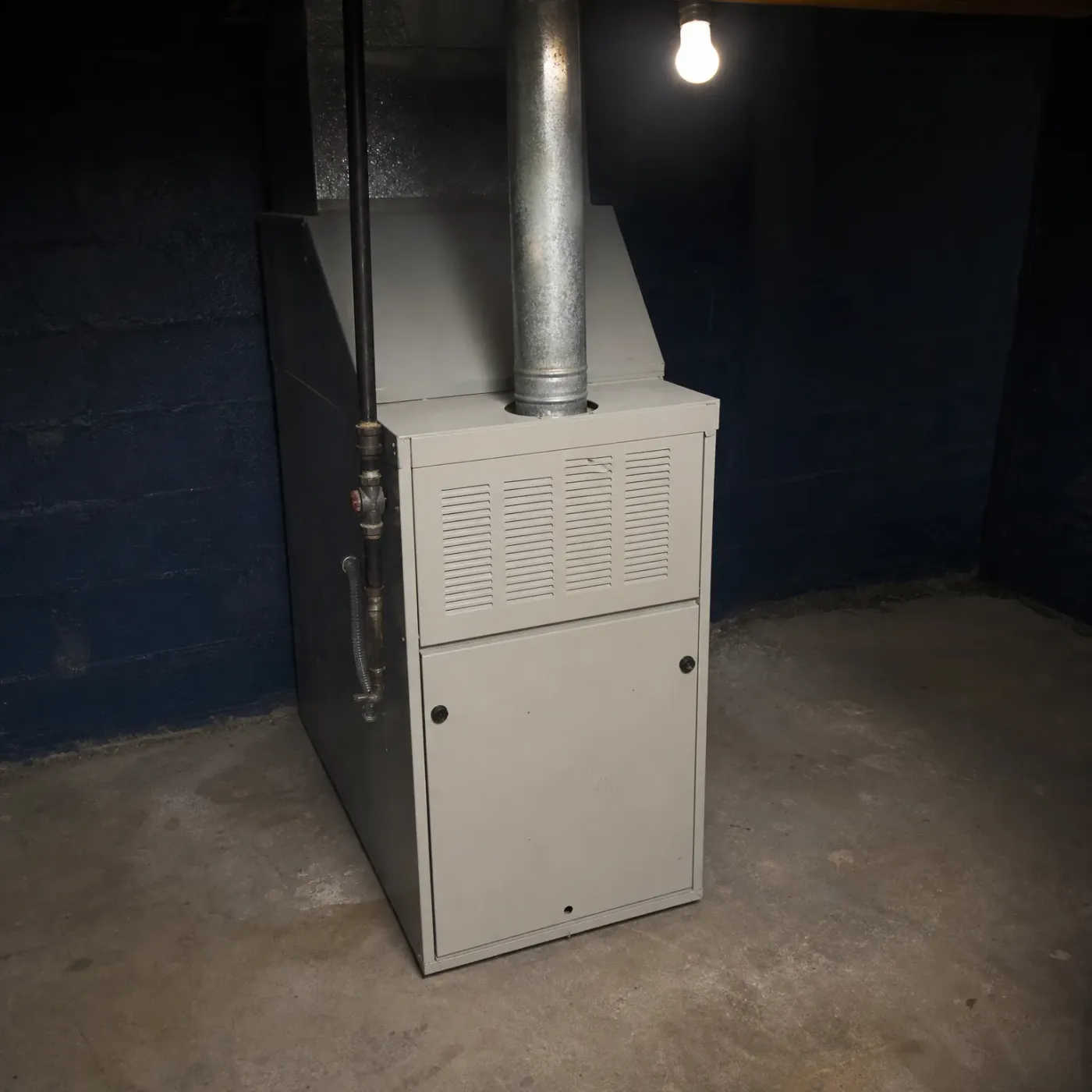
A beige residential furnace with a louvered upper panel stands on a concrete basement floor beside a dark blue painted block wall, with a galvanized metal flue pipe rising from its top and a bare lit bulb overhead.

Furnace

To heat your home here$2.21per 100,000 Btu

At Georgia's gas and electricity prices, a heat pump makes the same heat as a gas furnace for about 15% less.

Btu stands for British thermal unit, the standard measure of heat energy.

Where does a heat pump shine?

  • Made for mild winters

    Winter nights here average 43°F, which is mild enough for a heat pump to pull heat from the outside air without much strain. It won't be fighting the kind of deep cold that wears down its output.

    Front porch of a dark blue clapboard house with a light blue paneled door, white trim and railing, a wooden chair with a blanket and pillow, boots on the deck, wooden steps, dried hydrangeas and patchy snow in the yard.
  • Covers a long cooling season

    Cooling runs April through October in Camden County, seven months of the year. A heat pump is built to handle that load the whole stretch, not just a short burst of hot weather.

    A covered porch with blue-gray lap siding and ceiling, a ceiling fan, hanging and potted ferns, wicker seating, and a navy round table holding a glass of iced tea on a woven coaster, with a seated person in a rocking chair and green trees in the background.
  • No gas line, nothing burning in the house

    A heat pump runs on electricity alone. Nothing burns inside the house.

    A kitchen island with a white marble-look countertop holding a black glass cooktop, a dark kettle, a blue mug and a striped towel, with navy cabinets, a marble backsplash, a wood shelf of dishes, and a window showing evergreen trees.

Where does a furnace shine?

  • Proven, simple, easy to get serviced

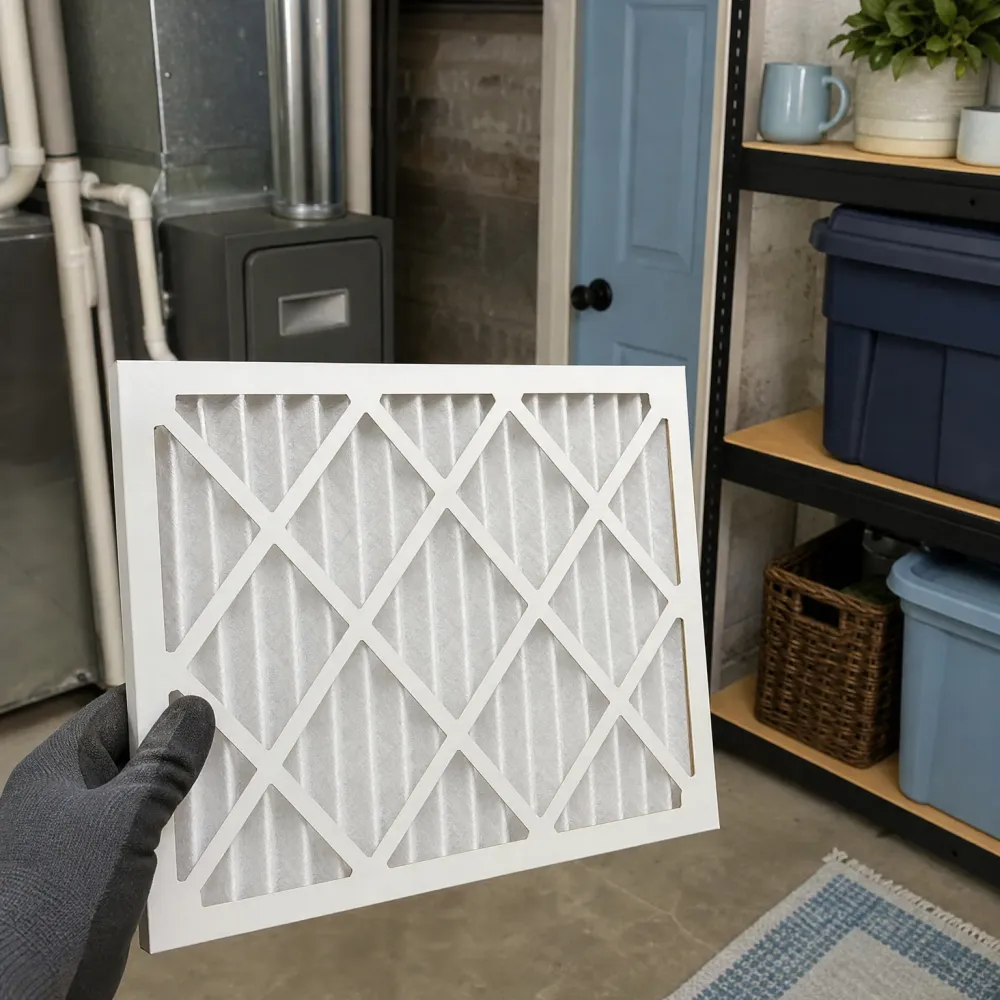
    Gas furnaces have heated homes for generations. Almost every HVAC tech knows them inside and out.

    A gloved hand holds a white pleated air filter in a basement with a furnace, pipes, a blue door, and shelving holding storage bins and potted plants.
  • Fast, strong heat on demand

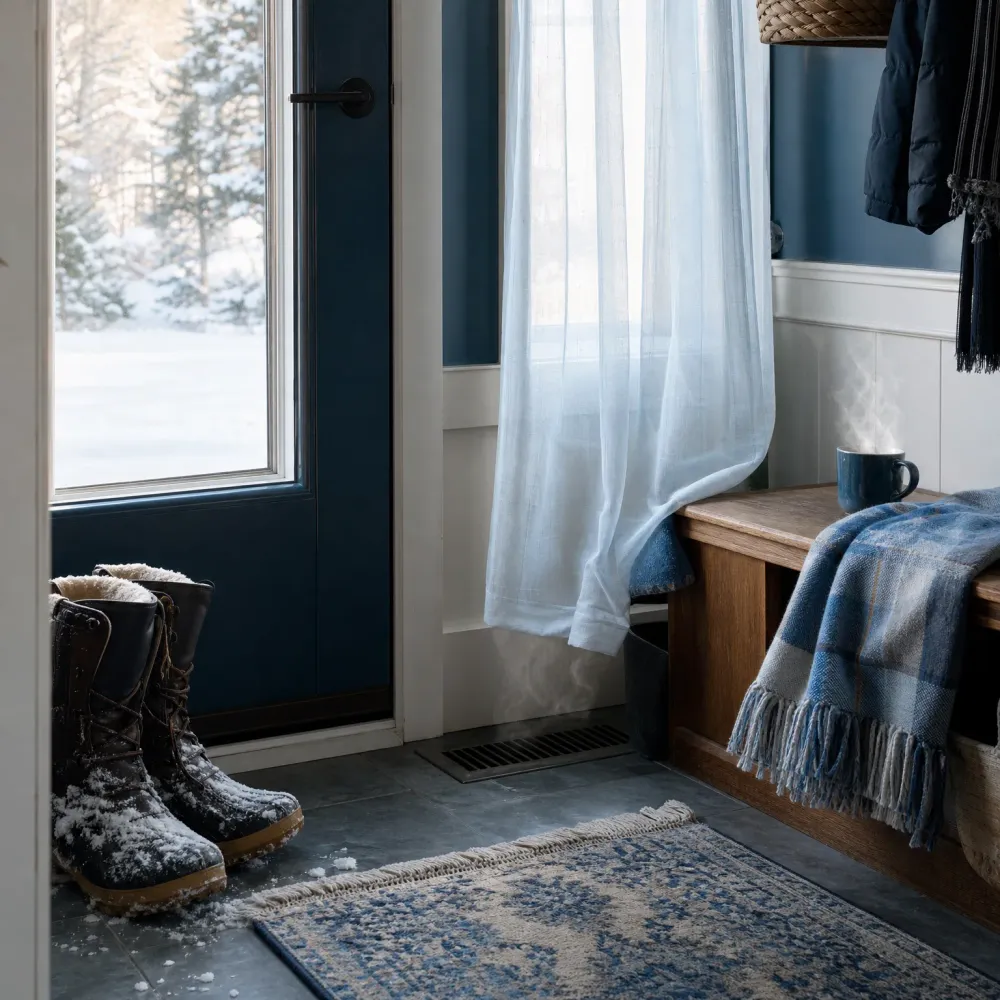
    The air coming from the vents feels genuinely hot. That's welcome on a freezing morning.

    A mudroom entry with snow-covered boots on a tiled floor, a floor vent, a wooden bench with a blue plaid throw and steaming mug, a sheer curtain, a dark blue door, and a snowy conifer landscape outside the window.
  • Pairs with any central AC

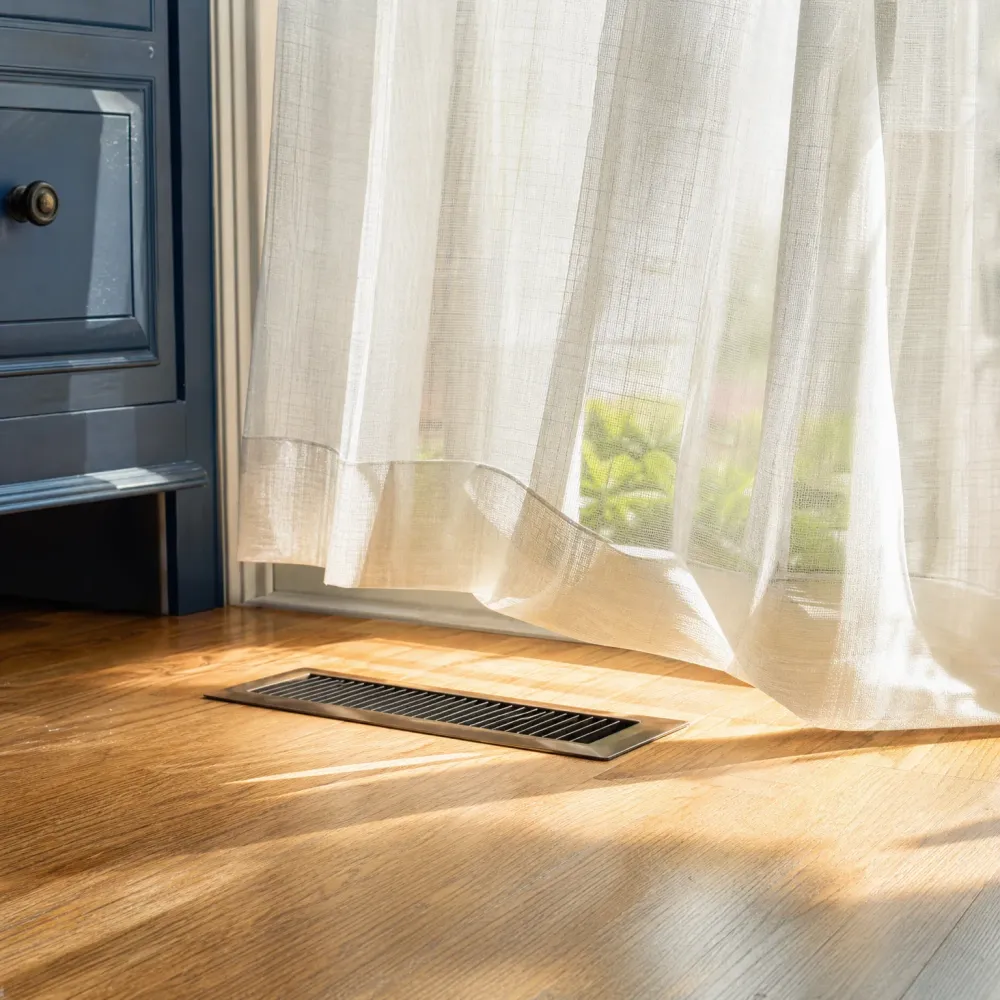
    Most central air systems are built around a furnace. The two share the blower, the ducts and the thermostat.

    A metal floor vent set in oak flooring beside a sheer white curtain and a dark blue cabinet, with sunlight casting shadows across the floor.

Why a heat pump fits this climate

Winters here are short and mild, and that's what decides this. Heat runs about five months, November through March, and the overnight low averages 43°F. A heat pump does its best work in exactly that range. It only struggles when the outdoor air gets cold enough that it has to lean on backup heat, and here that barely happens. Nights at or below freezing number about 15 a year, out of roughly 150 nights in the heating season. That's a small slice of the winter, not the winter itself.

Cooling is the longer job in this county, seven months against five, and a heat pump is also your air conditioner. A gas furnace only heats. It has nothing to do the other seven months of the year, so you're buying a second system, a central AC, to cover the season that actually runs longer here. A heat pump covers both with one machine, one thing to service, one thing that can fail.

Running cost favors the heat pump too. At Georgia's prices, a heat pump makes heat here for $1.88 per 100,000 Btu against $2.21 for a gas furnace. That's with the heat pump built to the federal minimum and nothing added for backup heat on the coldest nights, so it already accounts for the kind of cold snap Camden County gets.
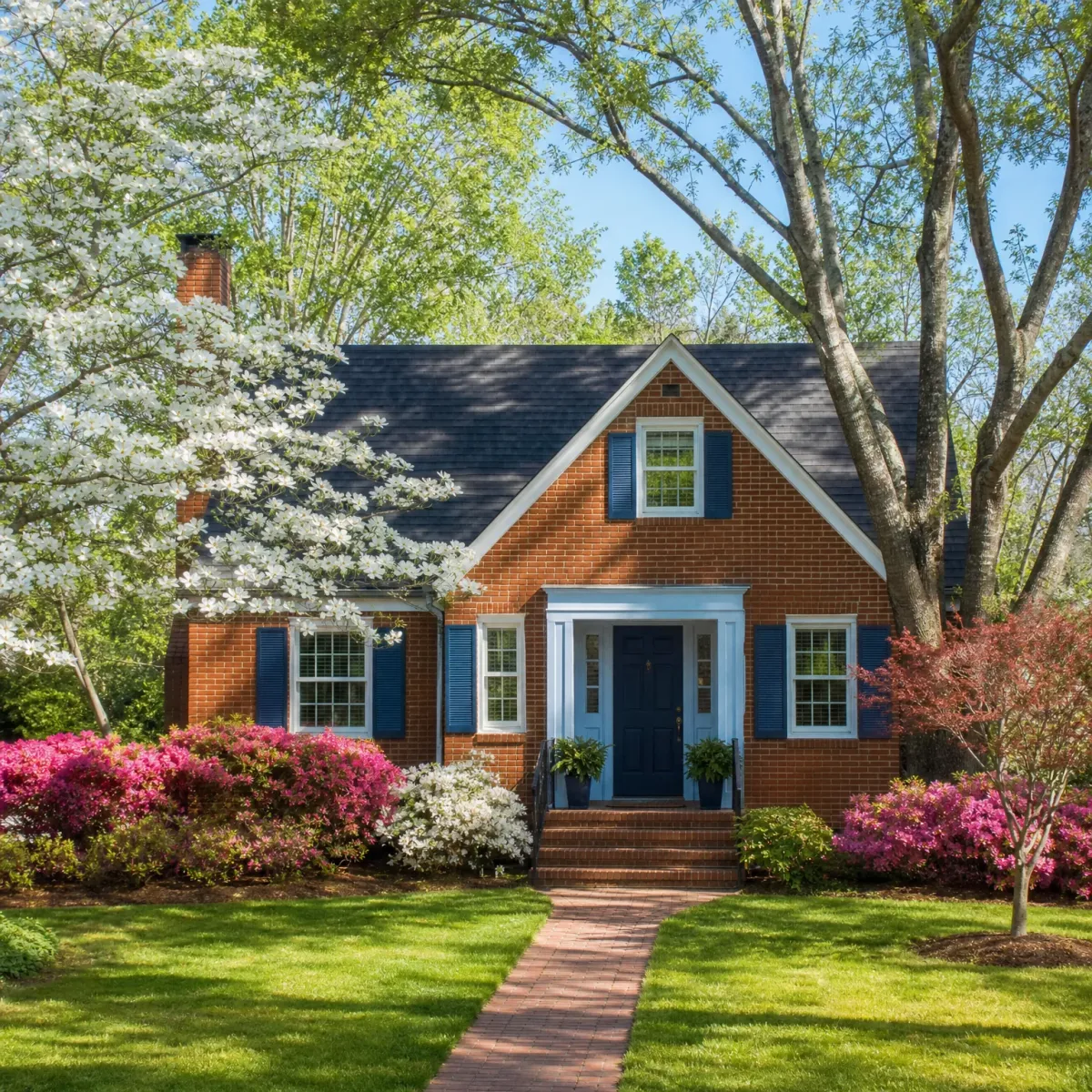
A red brick house with a dark shingled roof, blue shutters and a navy front door, fronted by a brick walkway, mown lawn, flowering pink and white azaleas and a white-blossoming tree.

Where a furnace still makes sense

Almost nobody here heats with gas. Utility gas heats 5.9% of homes in Camden County, fewer than one in ten, while electricity heats 89.8%. If your house already has a gas line and a furnace, keeping it is simple. If it doesn't, running a gas line in just to install a furnace is a harder case to make in a county where the winters don't ask much of it.

A furnace still has real advantages where it's already in place. It's a simpler machine to get serviced, since most contractors in a gas-minority area still know the equipment well, and it delivers strong, fast heat on demand regardless of how cold it gets outside. That matters more in places where winter is long and severe. Here, with lows averaging 43°F and freezing nights rare, that strength doesn't get used often.

The afternoon heat is the other half of the year to plan for. Days hit 90°F or above about 60 times a year, and a furnace does nothing about that. Whoever has a furnace here is also running a separate air conditioner for those seven cooling months, and that system's condition matters as much as the furnace's when you're deciding what to replace.

Sources: NOAA nClimDiv · NOAA 1991–2020 seasonal normals · Census ACS 2020–2024 · EIA SEDS 2024 · 10 CFR 430.32

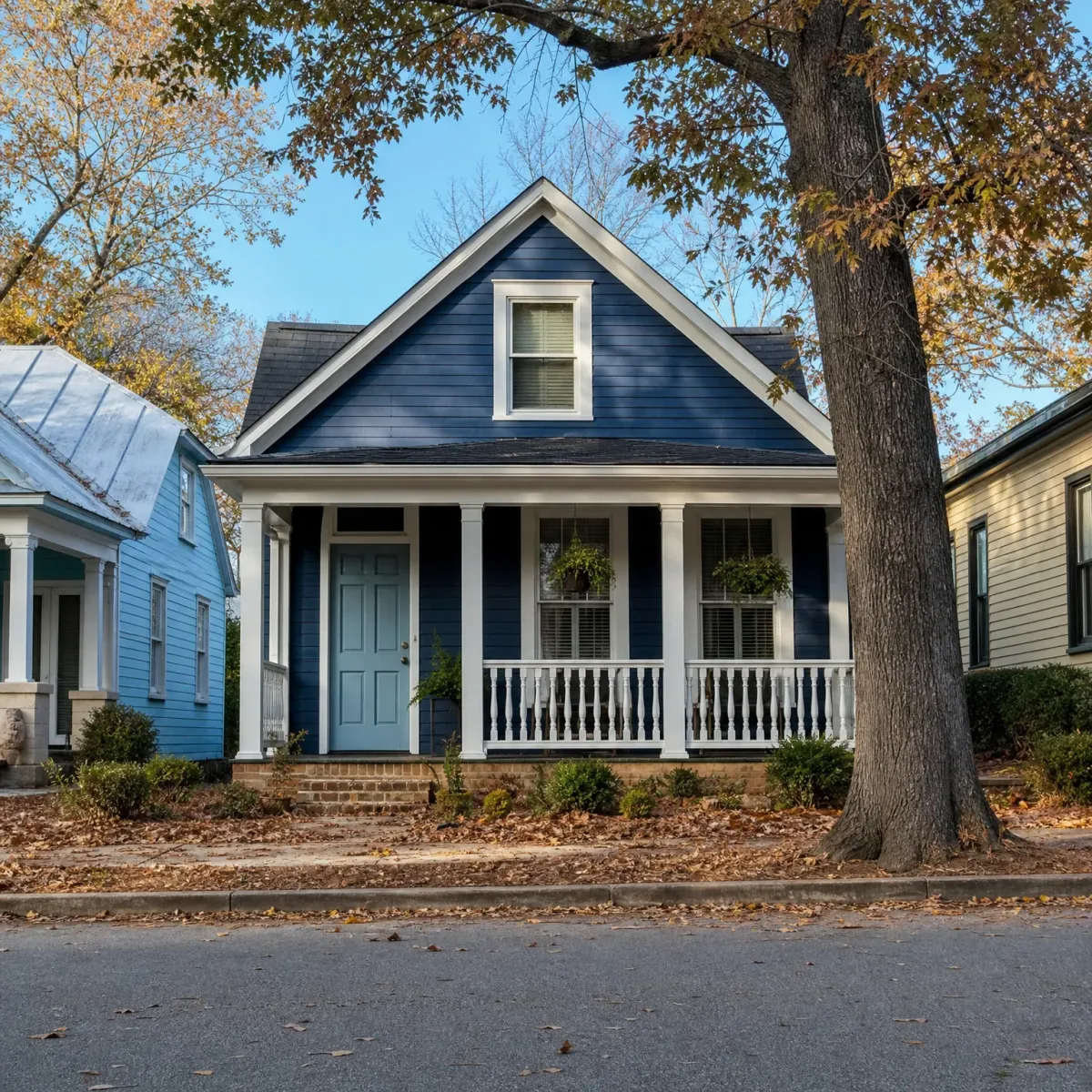
A small navy blue single-story house with a white-columned front porch, light blue front door, and gabled roof, flanked by a light blue house and a pale yellow house, with a large bare-branched tree and fallen leaves in front.

Common questions about heat pumps and furnaces

  • Will a heat pump keep my house cool enough here?

    Yes. A heat pump is a central air conditioner in the summer, the same machine running backward, so it cools the house the same way a furnace's paired AC would. Camden County hits 90°F or above on about 60 days a year, and the heat pump handles that cooling load along with the other six months of the cooling season without any separate equipment.

  • What if my house doesn't have a gas line?

    Most houses here don't have one. Electricity heats close to nine in ten homes in Camden County, and a heat pump runs on electricity alone. Propane or oil furnace heat is the other option, and both cost more at the burner than the gas a furnace on a city line would use.

  • Is a heat pump cheaper to run than a furnace in Camden County?

    Yes. A heat pump here runs about $1.88 to make 100,000 Btu of heat against $2.21 for a gas furnace, so it costs less to make the same heat. The gap comes from Georgia's electricity and gas prices, not from one machine working harder than the other.