Five months of work a year
Furnaces in Kingsland run from November through March, and that's it. Overnight lows average 43°F through December, January and February, which isn't hard on a furnace. Most winters here never ask much of the system.
Takes about a minute. No obligation.
Furnaces in Kingsland run from November through March, and that's it. Overnight lows average 43°F through December, January and February, which isn't hard on a furnace. Most winters here never ask much of the system.
A furnace that only works five months a year and never faces a hard freeze tends to have a lot of life left in it. If yours is acting up, the cause is more likely a part worn out from age or sitting unused than a system that's been run into the ground.
NOAA nClimDiv, 1991–2020 normals
Half the homes in Camden County were built in 1995 or later.
A furnace that came with a newer house usually hasn't earned a replacement yet.




Get a repair quote before you get a replacement quote. A furnace that sits idle most of the year is more likely to fail from a stuck part or a stale igniter than from wear. That kind of problem is usually a straightforward fix, not a sign the system is done. Ask the contractor what's actually failed before you talk about swapping the whole unit.
Get the furnace looked at before anyone talks replacement. If it came with the house, there's a good chance it's not old enough to have earned that conversation.
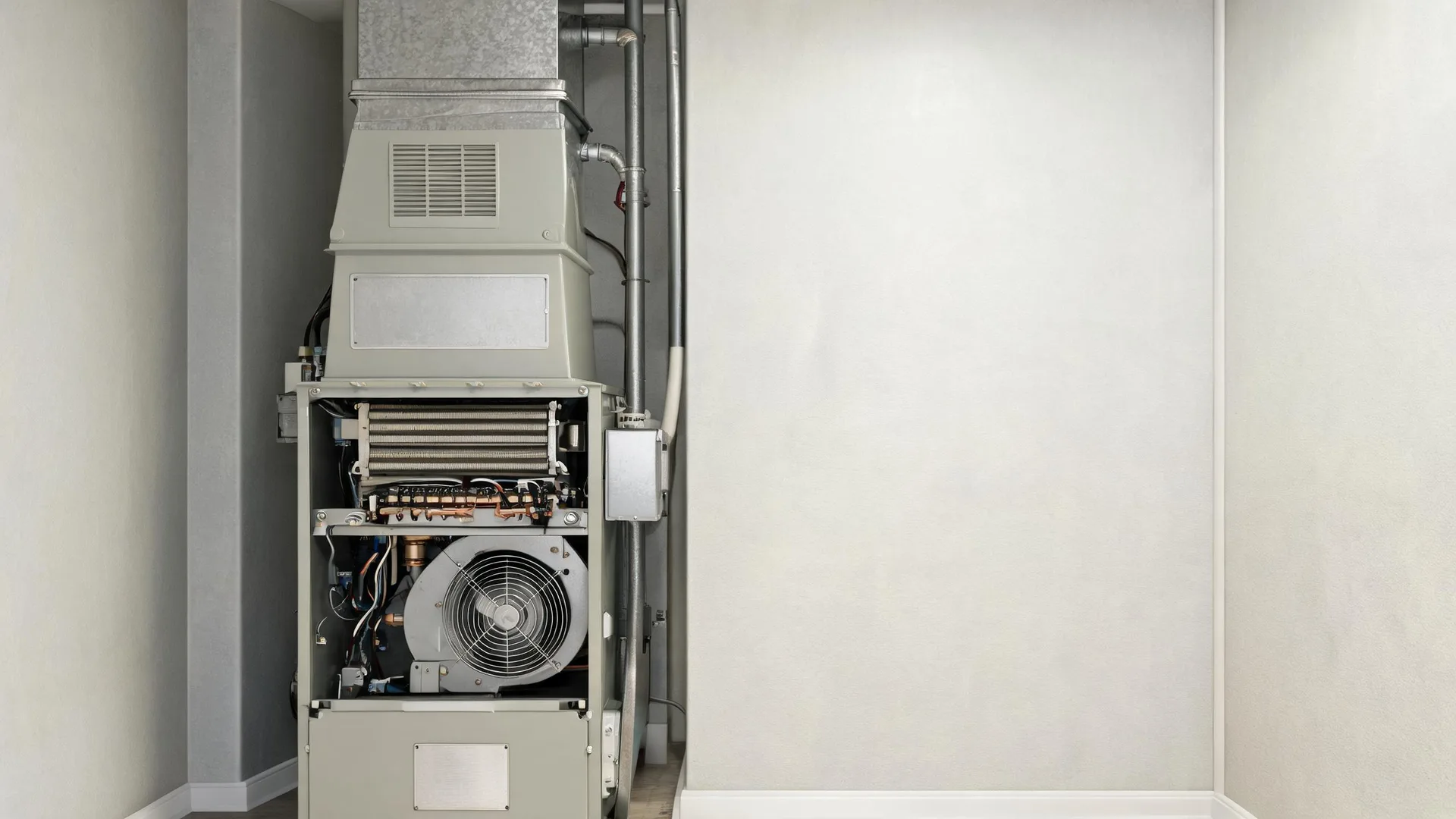
Find a contractorA furnace that mostly sits idle tells you something is wrong by how it acts, not by a warning light. Short cycling, where it fires up and shuts off again before the house warms, usually means a flame sensor that's coated with residue or a filter choked enough to trip the limit switch. A burner that won't light on the first try, or lights with a bang instead of a steady whoosh, points to an igniter losing strength or a buildup of dirt in the burner tray from months of not running. Cold air coming out of the vents isn't always the thermostat. It can mean the burners aren't lighting at all, or a blower that's lost its timing with the heat exchanger. A furnace that smells like dust the first time it kicks on is normal. That same smell after an hour of running, or a burning odor that doesn't fade, is not. Listen for a hum where there used to be a click, or a rattle that starts only once the blower spins up. None of these point to a system that's worn out. They point to a part that sat too long and needs attention now that the furnace is being asked to work again.
A dirty flame sensor just stops the burners from staying lit. Left alone, the furnace keeps trying to fire anyway, and that repeated cycling is what wears out an igniter or stresses the limit switch. A part that was a simple fix becomes a bigger one.
Running a furnace with a cracked heat exchanger pushes exhaust into the air the blower is pushing through the house. That risk doesn't pause while you wait for a convenient time to call. This is the one failure where shutting the system off and waiting for a tech matters more than staying warm.
A few things are worth checking before anyone comes out. Start with the thermostat. Make sure it's set to heat, not just fan, and that the setting is above room temperature. Next, look at the filter. One clogged with dust blocks airflow, and a furnace that can't breathe will trip a safety switch and shut itself down rather than overheat. Check the breaker, and look for a switch near the unit itself that looks like a light switch. That's a power cutoff, and it gets bumped off by accident more often than people expect. If the furnace runs on gas, confirm the valve on the line is turned to open. None of this fixes a cracked heat exchanger or a failing igniter, but it rules out the causes that take a minute to check.
A tech starts by asking what the furnace was doing before they touch anything. Short cycling, no heat at all, a smell, a strange noise. Each points somewhere different, so that first answer shapes the whole visit. Then they run it through a full cycle, from ignition to shutoff, because some failures only show themselves at one point in that sequence. They pull the burner tray and look for soot or corrosion. They check the flame sensor for buildup and test the igniter directly rather than just eyeing it. Airflow gets checked too, since a clogged filter or a weak blower can look exactly like an ignition problem from the thermostat's side. The heat exchanger gets inspected last, often with a camera, because that part doesn't get a guess. By the end, a good tech can name the part that failed and say why, not hand over a list of things it might be.