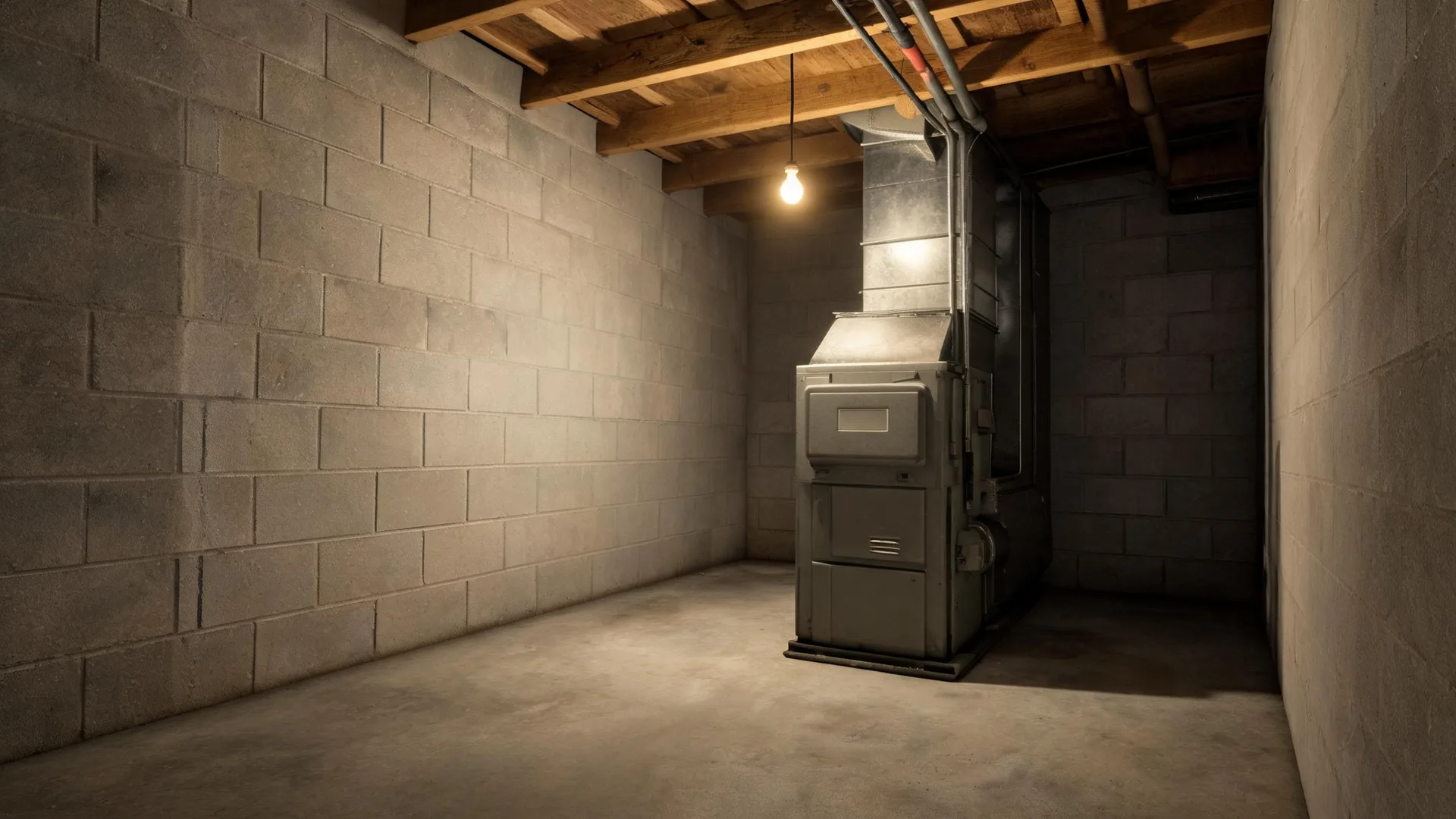
An empty unfinished basement containing a forced-air furnace with overhead ductwork, exposed ceiling joists, and a single hanging light bulb.

Furnace Installation in Kingsland, GA

Tell us about the job

Takes about a minute. No obligation.

New system or replacementFurnace or heatingCamden County, GA
Step 1 of 2

What ZIP code is the job in?

Wind and storms are the regular risk here

Camden County logged 83 severe weather events between 2015 and 2024, most of them damaging wind. A furnace install here should figure in what sits outside and nearby, including anything that could come loose in a blow.

Plan for the power to go out

Nearly a third of Georgia households were without power for a day or more in 2024. A furnace needs electricity to run even if it burns gas, for the blower and the ignition. Worth asking your contractor what keeps the house warm if the power's out for a while.

5 months
November through March, your furnace is on duty
43°F
the average winter night it heats against
80% AFUE
the federal minimum any new unit must meet
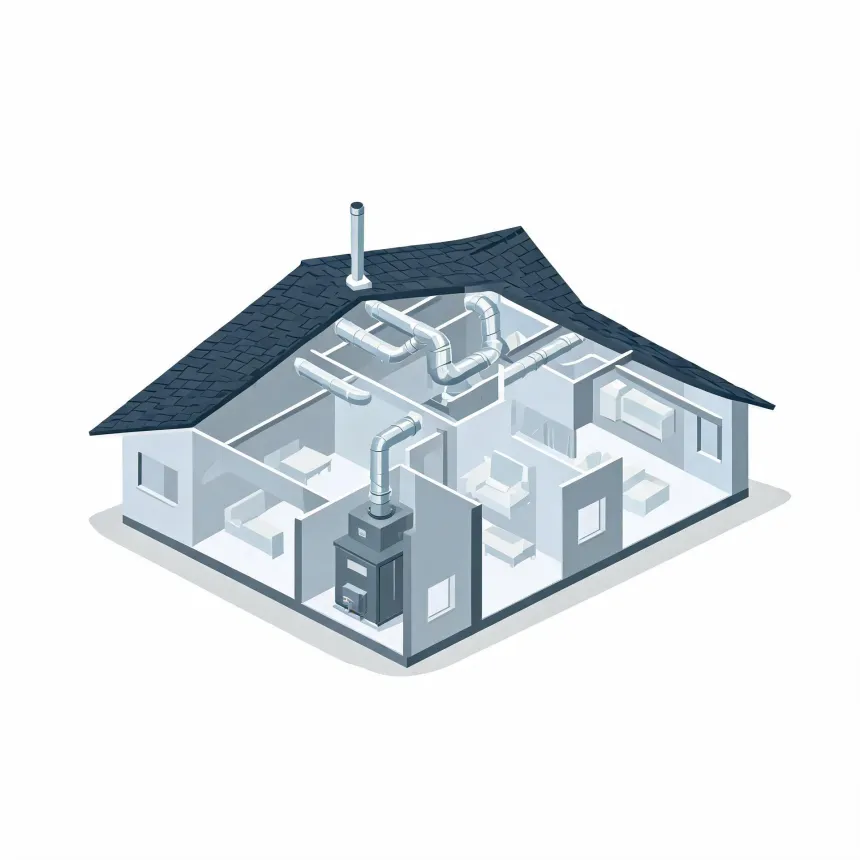
Isometric cutaway illustration of a single-story house showing interior rooms with furniture, a metal ductwork network, and a furnace unit connected to a vertical flue through the dark shingled roof.
Your furnace works hardest from December through February.

NOAA nClimDiv, 1991–2020 normals

Electricity heats 89.8% of homes in Camden County, almost everything else combined.

A furnace here is most likely getting swapped for another electric furnace or heat pump, not a switch to gas.

Get it done in October, before heat season starts in November

Heat runs November through March
Winter nights average 43°F
Climate zone 2A
Kingsland furnaces don't work hardHeat runs five months here, November through March, with nights averaging 43°F.

Electricity in Georgia ran $41.27 per million Btu in 2024. That's cheap next to a lot of the country, and it changes the math on which furnace makes sense here. A high-efficiency model costs more up front, and with power this cheap it takes longer for the lower running cost to make up the difference. That doesn't mean skip it, it means the payback math works differently here than somewhere with expensive power. What matters more is picking a furnace sized right for your house and built to keep running through what Camden County throws at it.

Any furnace installed here has to meet a federal efficiency floor

Furnaces sold here have to hit 80 percent AFUE at minimum. That minimum jumps to 95 percent for units built starting in December 2028. Whatever goes in now has to clear the floor that applies on the day it's made.

Find a contractor
A gray residential gas furnace installed in an unfinished basement, surrounded by ductwork, a metal flue pipe, and a gas supply line.

What comes out tells the installer what to check before anything new goes in

The furnace coming out doesn't just disappear. It gets disconnected from the gas line, the ductwork, and the electrical, then hauled out, and a tech worth hiring will look at what it's leaving behind. Scorch marks around the burner compartment, rust at the bottom of the heat exchanger, a blower wheel caked in dust, these tell a story about how the old unit ran and sometimes why it's being replaced. If the heat exchanger cracked, that's the reason right there. If it didn't, the ductwork and vent piping it was hooked to are about to carry a different load, and whoever pulls the old furnace should be checking whether that ductwork was ever right to begin with, not just reusing it because it's already there.

Size comes from a room by room count, not the old furnace's label

A contractor works out a furnace size by going through the house. How much exterior wall each room has, what the windows are, how the attic and insulation hold heat all factor in. This is called a load calculation. Matching the new unit to whatever's being pulled out just repeats whatever mistake is already there.

Too big is its own problem, not a safety margin

An oversized furnace blasts the house up to temperature and shuts off, over and over, instead of running a long steady cycle. That short cycling wears the ignition system faster and leaves rooms far from the thermostat colder than the rest of the house. Bigger is not a cushion. It's a different way to run badly.

Ask what the furnace is paired with. A furnace alone only tells part of the story, since the coil in the attic or closet, the ductwork, and the thermostat all have to match it or the new unit won't run the way the spec sheet promises. Ask about the warranty on the heat exchanger specifically, not just the general parts coverage, since that's the part that's expensive to replace and the one most likely to fail early if it's wrong for the house. Ask how they're venting it. A furnace needs intake and exhaust piping sized and routed correctly, and that's often where a rushed install cuts corners. Ask what happens to the old ductwork, because if nobody's checked it for leaks or crushed runs, a new furnace will still be pushing air through the same bad path. And ask to see the load calculation itself, not just the number it produced. A contractor who can walk you through how they got there is one who did the work instead of guessing.

The old furnace comes out first, and that's when a contractor can see things a sales visit never showed, like a cracked heat exchanger or ductwork that was never sized right to begin with. Setting the new furnace means leveling it and securing it to the stand or platform before anything gets connected. Then comes the gas line, the ductwork, the venting, and the electrical for the blower and controls, each checked before it's buttoned up. The gas line gets a leak check. The vent pipe gets tested for proper draft, since a furnace that can't exhaust correctly will shut itself off or worse, backdraft into the house. Once it's running, a tech checks the temperature rise across the furnace against what the manufacturer specifies, and adjusts gas pressure or airflow until it lands in range. That reading matters more than watching the flame for a minute and calling it done. The thermostat gets wired and set last, after everything else is confirmed working. A good install ends with the panels back on, the area cleaned up, and someone walking you through what the thermostat does and what the filter schedule looks like.