



What winter here actually asks of a heat pump
Winter in Newton County is mild, not cold. The overnight low averages 35°F across December, January and February, and the thermometer only reaches 0°F or below less than one night a year. A heat pump struggles in deep cold. This county rarely sees deep cold.
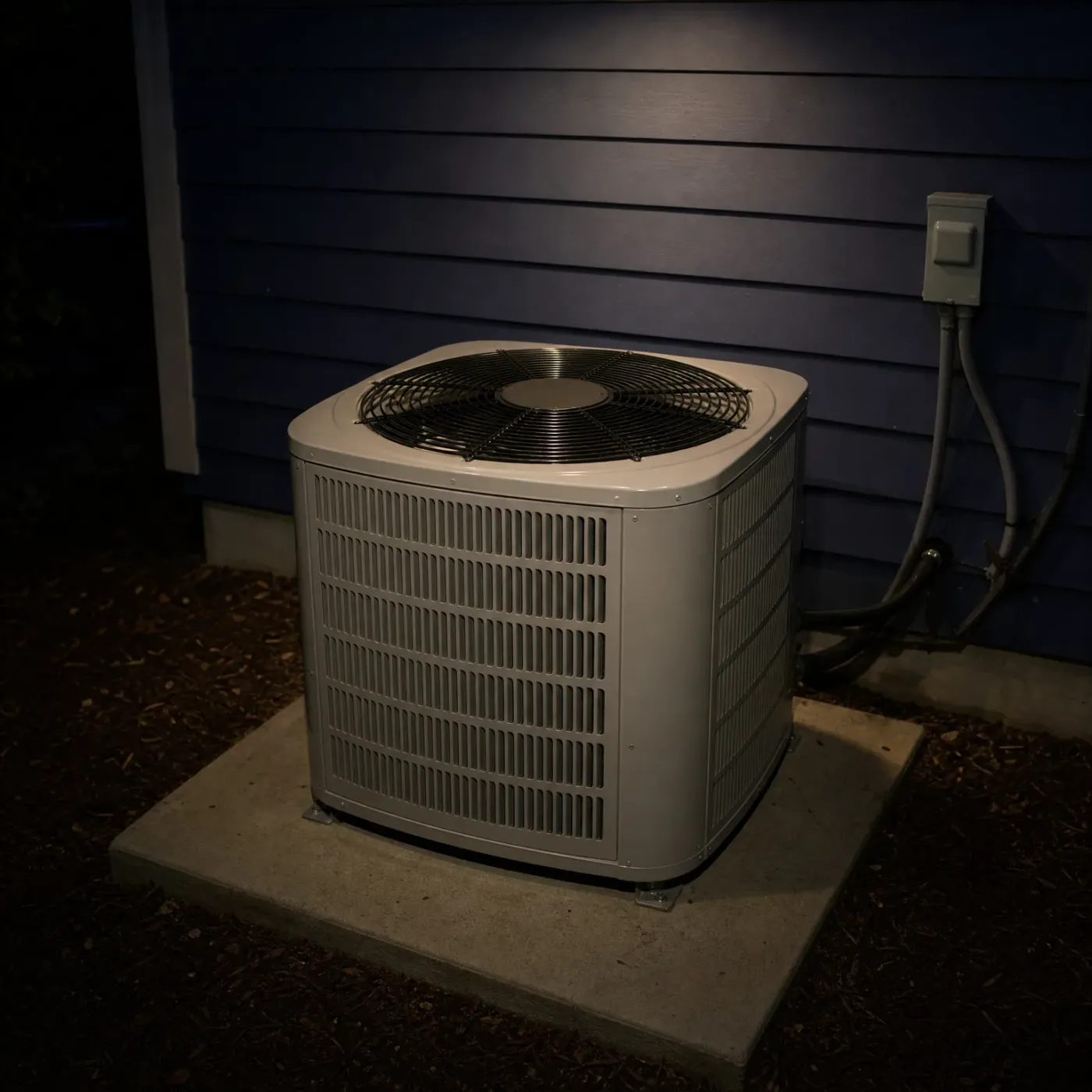
A standard heat pump's output drops once it's below 40°F outside, and it often needs backup heat once it's below about 35°F. That 35°F mark is this county's average winter night. So on a typical night here, a heat pump is working right at the edge where it starts to lean on backup, not deep past it.
About 65 nights a year fall to freezing or below, and that's under half of the roughly 150 nights heat runs here. The rest stay above freezing, where a heat pump holds its rated output and doesn't need help. Of those 65 cold nights, almost none reach 0°F. So the backup heat built into a heat pump here is covering mild dips, not real cold snaps.
That matters because the backup heat in a heat pump is usually electric resistance heat, and it costs more to run than the heat pump itself. A two-winter field test of cold-climate heat pumps in occupied homes found backup heat supplied only a small share of the total heat, and running on backup alone was rare even at 0°F. Newton County doesn't get to 0°F. So a heat pump here would lean on backup less than that test did, not more.