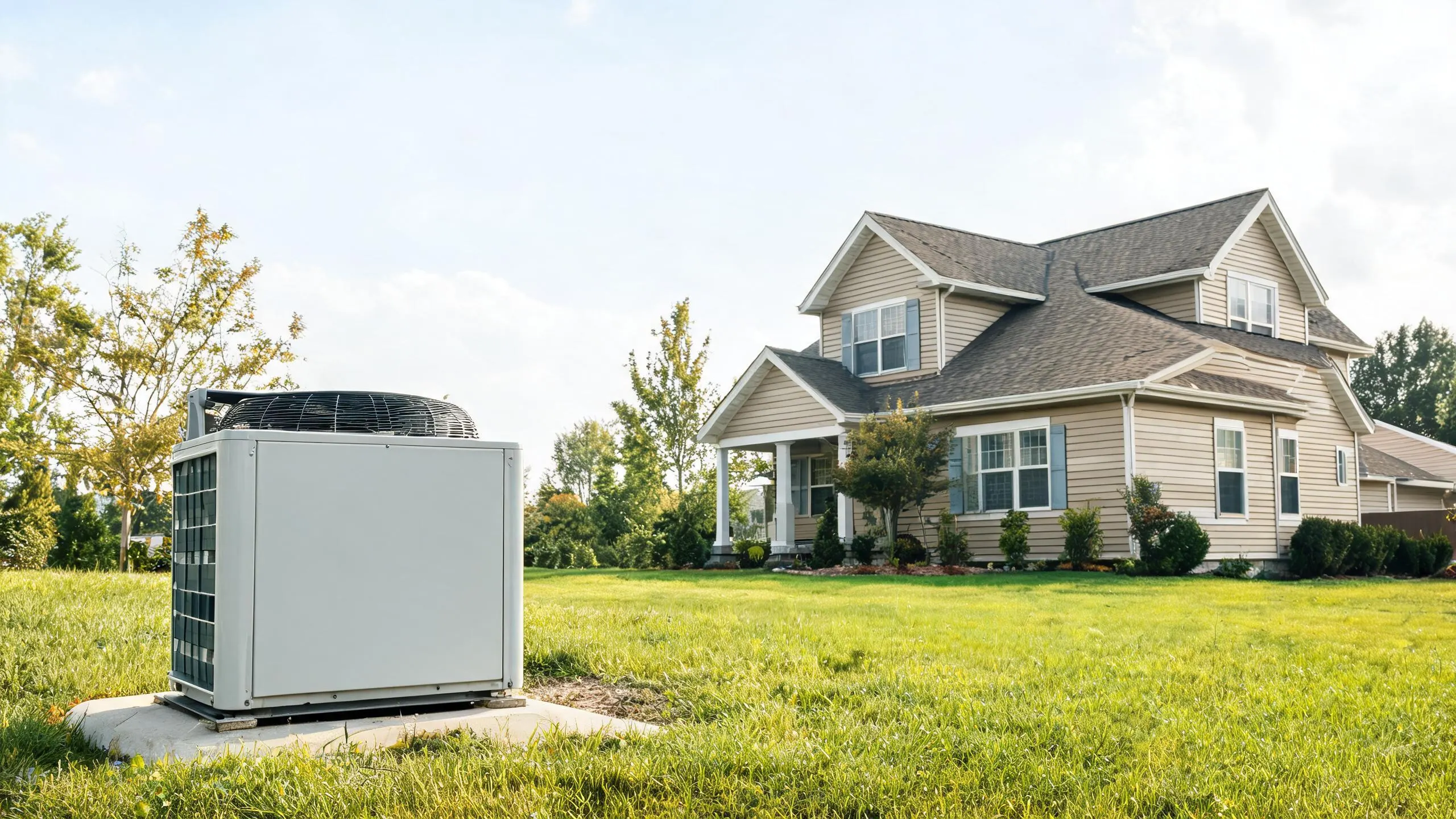





An outdoor HVAC condenser unit on a concrete pad in front of a two-story suburban house.

Heat Pump Repair in Covington, GA

Tell us about the job

Takes about a minute. No obligation.

RepairHeat PumpNewton County, GA
Step 1 of 2

What ZIP code is the job in?

Half the homes in Newton County were built in 1999 or later. If that includes yours, your heat pump is probably well short of the end of its working life. A repair now is just keeping a system running through the years it was built for, not patching up something on its way out. Whatever's gone wrong, a newer unit is a good candidate to fix rather than replace.

5 months
November through March, your system heats
5 months
May through September, it cools
35°F
the average winter night it heats against
89°F
the average summer afternoon it cools against
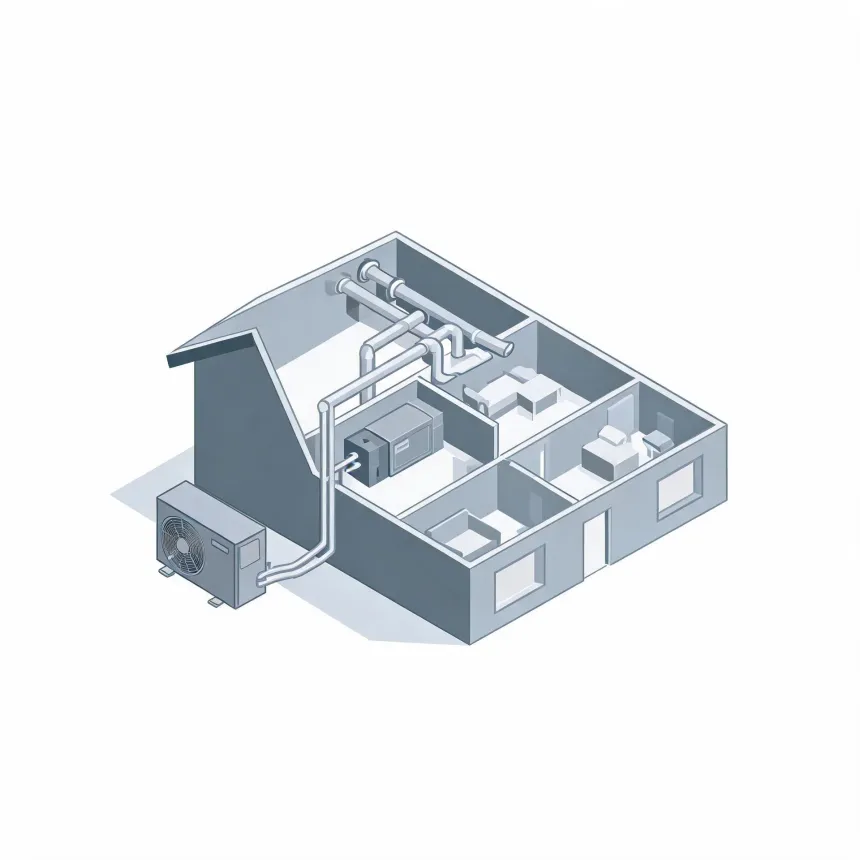
Isometric grayscale illustration of a cutaway house showing interior rooms, ducted air handler and duct runs, connected by pipes to an outdoor condenser unit beside the building.
Your system heats November through March and cools May through September.

NOAA nClimDiv, 1991–2020 normals

Winters in Covington stay mild and short, so your heat pump isn't fighting the cold for long stretches.

Less strain year after year means a repair now is usually fixing a system in decent shape, not a tired one.

Heat pump trouble here tends to show up in November and May

Cooling runs May through September
Heat runs November through March
Power costs 14.08 cents a kWh statewide

Fix it, don't retire it

A system that age has no business getting replaced over one bad part. Get the repair done and keep using it.

Find a contractor
A man in a cap, dark t-shirt and work trousers carries a canvas tool bag up porch steps toward a blue front door, with a tall planter and shrub beside the entry.
A gray heat pump outdoor unit mounted on a concrete pad next to the stone-accented exterior wall of a house.

What to check before the call

Before anyone comes out, there are a few things worth a look. Check the thermostat is set to heat or cool as needed and the batteries aren't dead. Check the filter. A clogged one starves the system of airflow and can shut it down on its own. Walk outside and look at the outdoor unit. Anything stacked against it, a trash can, a grill, overgrown shrubs, blocks the airflow it needs to work at all. Check the circuit breaker if the system won't start, since a tripped breaker looks like a dead system but takes seconds to fix. If you see ice built up on the outdoor unit, don't chip at it. Turn the system off and let it thaw, since ice almost always points to a problem underneath worth having looked at. None of this tells you what's actually wrong, but it rules out the easy stuff before anyone has to take the cabinet apart.

What gets checked first

A tech starts outside, with gauges on the refrigerant lines and an eye on the reversing valve, since that's the part that lets a heat pump switch between heating and cooling. Inside, they'll check the air handler, the coil and the static pressure in the ducts. Most of what's wrong shows up in that sequence before the cabinet ever comes apart.
Why the diagnosis comes before the fix

A heat pump can show the same symptom, weak heat, short cycling, ice that won't clear, for a handful of different reasons. A failing capacitor and a low refrigerant charge can look alike from the thermostat. Naming the actual cause first means the repair fixes the thing that's wrong instead of the thing that's easiest to replace.

Most of the time a heat pump tells you something's wrong before it quits outright. Weak airflow at the vents is one of the first signs, air moving but not feeling warm or cool enough to matter. A unit that short cycles, running briefly and shutting off before the house catches up, is working against something rather than doing the job. Hissing or clicking from the outdoor unit that wasn't there before is worth paying attention to, same with a reversing valve that hesitates when the system switches between heat and cool. Ice on the outdoor coil that doesn't clear on its own is never normal, even in the shoulder seasons. None of these point to the same repair, but any one of them is reason enough to have someone look before it turns into a bigger failure.

A repair decision usually comes down to what broke, not how old the system is. A capacitor, a contactor, a blower motor. These fail on their own and fixing one doesn't tell you anything about the rest of the system. The compressor is different. It's the one part expensive enough and central enough that a failure there is worth a harder look, since the rest of the unit is built around it. A refrigerant leak sits in between. Found once and sealed, it's a repair. A coil that keeps leaking after it's been fixed is telling you something about its condition, not just reporting bad luck. The honest way to think about it is whether the failure is a part doing what parts eventually do, or the system breaking down in more than one place at once.