






Two illuminated white Southern-style houses with wraparound porches and staircases, framed by a Spanish moss-draped tree on a quiet street at night.

Furnace Repair in Covington, GA

Tell us about the job

Takes about a minute. No obligation.

RepairFurnace or heatingNewton County, GA
Step 1 of 2

What ZIP code is the job in?

Half the houses in Newton County were built in 1999 or later. That puts a lot of furnaces in this area well inside their working life, not past it. A furnace acting up in a house that age is usually looking at a worn part, not a system on its way out. Mobile homes make up a small share of the housing stock here, 3.3 percent, so most of what gets serviced sits in a standard house with a standard duct system. Worth finding out what year your place was built, if you don't already know. That tells you more about what's ahead for this furnace than its symptoms alone.

5 months
November through March, your furnace is on duty
35°F
the average winter night it heats against
1 winter storms
in ten years, the nights a failure hurts most
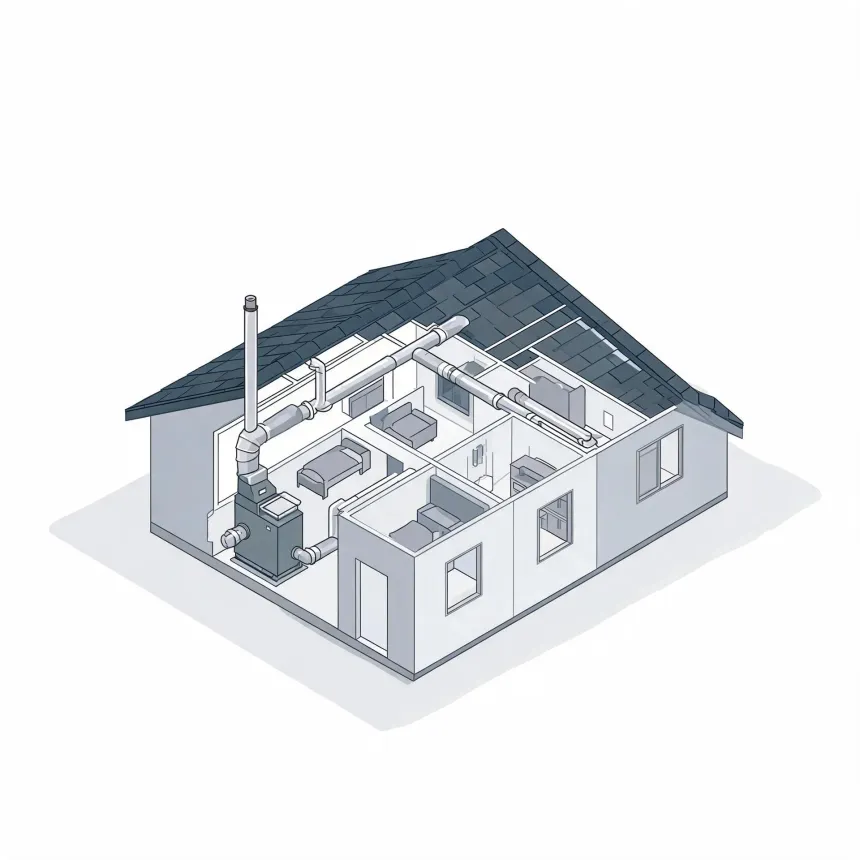
Isometric cutaway illustration of a single-story house showing interior rooms with furniture, ceiling ductwork, a furnace unit with a tall flue pipe, and a dark shingled roof.
Your furnace works hardest from November through March.

NOAA nClimDiv, 1991–2020 normals

A furnace that short cycles is usually fighting a dirty flame sensor or a clogged filter, not failing outright.

Clean that part or swap the filter and most of these furnaces run fine again.

Five months of work a year is not much to ask of a furnace

Heat runs November through March
Winter nights average 35°F
Climate zone 3A
November is when it finds out what's weakHeat stays off here from October through most of the year, then starts cold in November.

Most furnace failures trace back to a handful of parts that wear out on a schedule. The igniter glows hot every time the furnace starts, and that cycle of heating and cooling eventually cracks it. The flame sensor sits in the burner path and collects a film of carbon over time until it can't tell the control board the flame is lit, so the furnace shuts itself down as a safety step. The blower motor runs the longest of any part in the system, and its bearings are what give out first. A clogged filter strains that motor and can ice up the coil if there's one in the cabinet, so changing it on schedule protects more than air quality. Failures like these show up as short cycling, a furnace that won't ignite, or one that runs but never kicks on the blower. None of them mean the furnace is done. They mean a part did what parts do, and got replaced.

Find out the year, then fix the part

If your furnace went in when the house was built, check what year that was. In a county where half the homes were built in 1999 or later, there's a good chance that furnace still has plenty of working life left in it. That's a reason to get the part fixed, not to start pricing a replacement.

Find a contractor
A man in a navy long-sleeve shirt and tan work pants, seen from behind, carries a canvas tool bag up light-colored porch steps toward a blue front door.
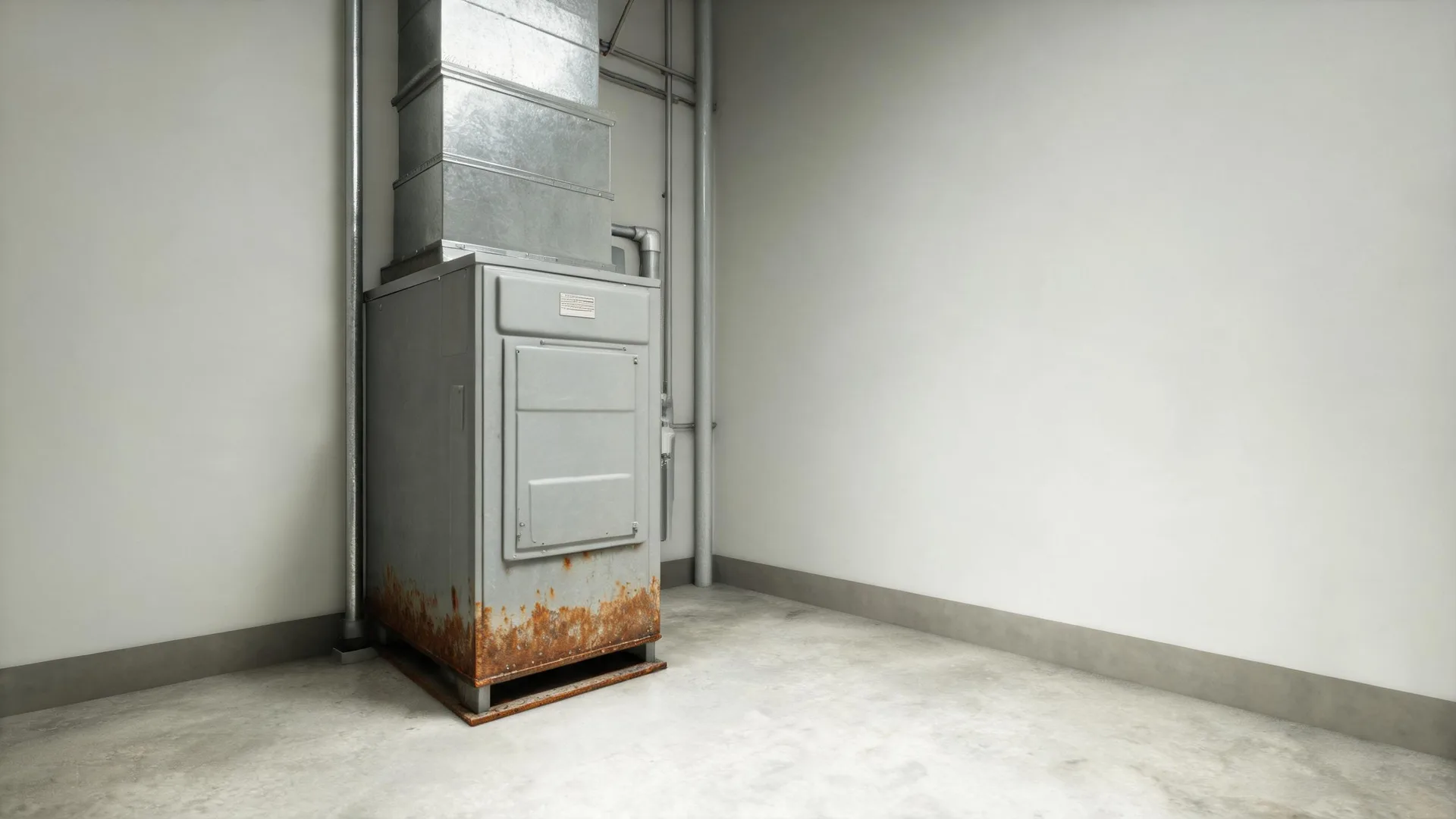
A gray gas furnace with attached ductwork and piping installed in an unfinished concrete basement.

Five months a year, and the rest of the time it rests

Five months of run time a year adds up to a furnace that spends most of its life sitting idle. That's not nothing, it means less wear on the igniter, the blower bearings, the whole system, by the time something finally acts up. A repair call on a furnace with that kind of history is usually fixing a part that wore out on its own schedule, not catching up on years of hard use. Worth getting the actual problem looked at before weighing anything bigger.

What you can check yourself

Look at the filter first. Pull it out and hold it to the light. If you can't see through it, swap it. Check that the thermostat is set to heat and the temperature is actually above room temperature. Check the furnace switch, the one that looks like a light switch near the unit, and make sure it's on. If the furnace has a standing pilot, see if the pilot light is lit. If it uses an igniter instead, you won't be able to check that part yourself.
What to leave alone

Don't open the burner compartment or go near the flame sensor with anything. That part has to be cleaned a certain way and touching it wrong can bend it. Don't reset the furnace more than once if it shuts off again right away. A furnace that trips its limit switch or won't stay lit after one reset is telling you something is wrong downstream, and running it over and over looking for a fix can do more damage than the original problem.

A furnace that's struggling usually asks for less run time, not more. Take a cracked heat exchanger. A furnace can often still run with one, but every cycle pushes exhaust gases closer to the air it's blowing into the house, and the crack itself only spreads under the heating and cooling. A blower motor with worn bearings will keep turning for a while, loud and hot, until the bearing seizes and takes the motor with it. Even something as simple as a dirty flame sensor can turn into a bigger problem if the furnace keeps trying to relight against a flame it can't detect, cycling the igniter more times than it was built for. The pattern holds across most of these failures. A part that's struggling and gets shut off stays a cheap fix. The same part pushed through a few more cycles can take the blower, the control board, or the heat exchanger down with it.

A diagnostic visit starts before any panel comes off. A tech wants to know what the furnace was doing right before it quit, whether it tripped once or keeps tripping, whether there's a smell or a sound that came with it. Then the cover comes off and the tech watches it try to run, because a furnace usually fails in a way you can see if you catch it mid cycle. That might mean watching the igniter glow and checking it pulls enough current, or watching the flame sensor's reading while the burner is lit. A tech will pull the filter and look at the coil behind it, since a clogged filter can hide a second problem. Most of this is testing one part at a time until the one that's lying shows itself, not guesswork.