





Is a high-efficiency furnace worth it in Covington, GA

One request ends the search for a furnace installer.

Let a pro reach out

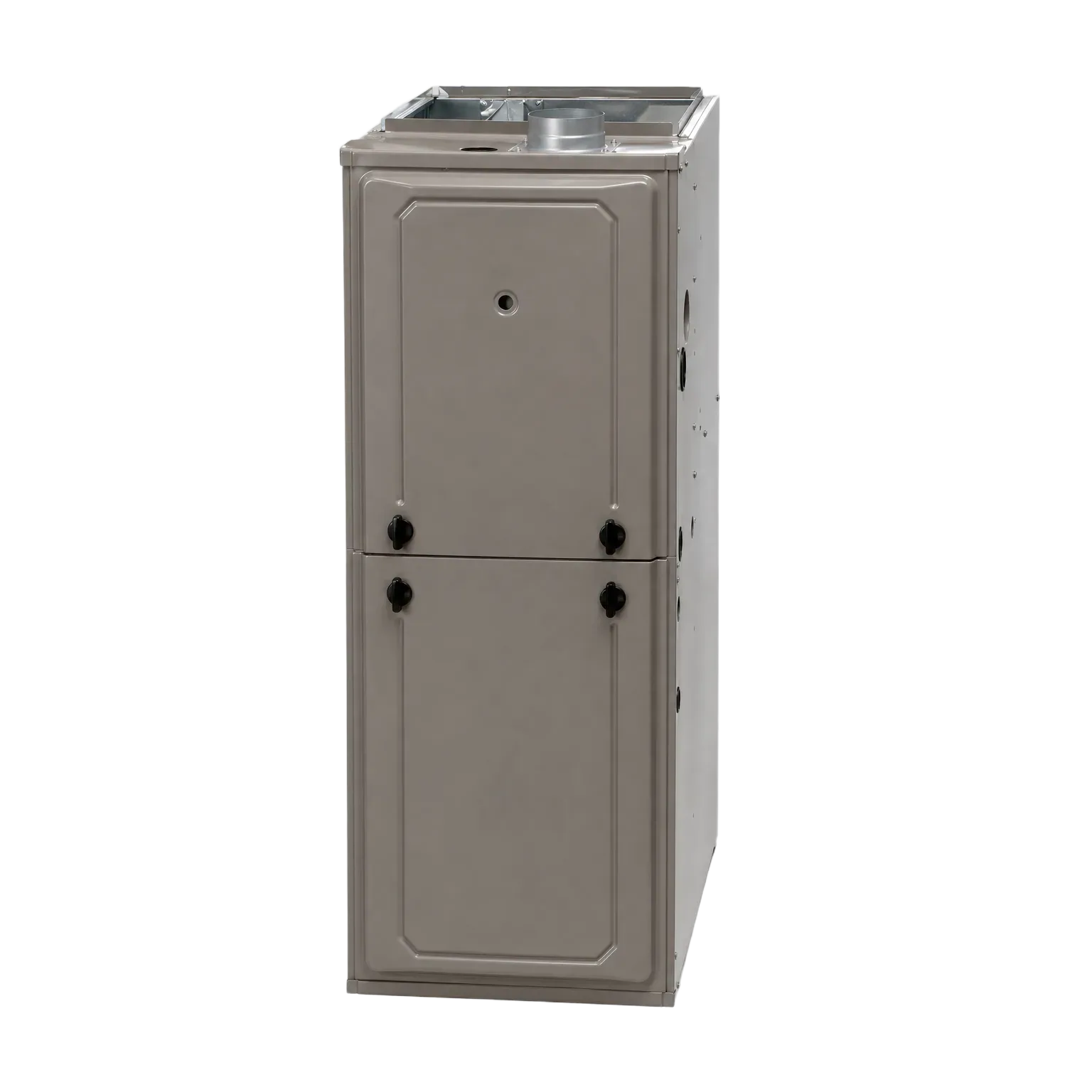
Most homes in and around Covington heat with electricity, and that changes the math on a high-efficiency gas furnace. The big savings those furnaces offer come from burning less gas, so if your house doesn't run on gas heat now, switching to get one usually isn't worth the cost. If your home already has a gas furnace, a high-efficiency model still makes sense here. Winters in Newton County get cold enough that a furnace runs for months at a stretch, and a more efficient unit burns less fuel over that stretch than an older one does. It also tends to hold up better and run more evenly through a full winter. Whether it pencils out for you depends on what you're heating with today and how old your current furnace is. A contractor who can look at your setup is the fastest way to get a straight answer.

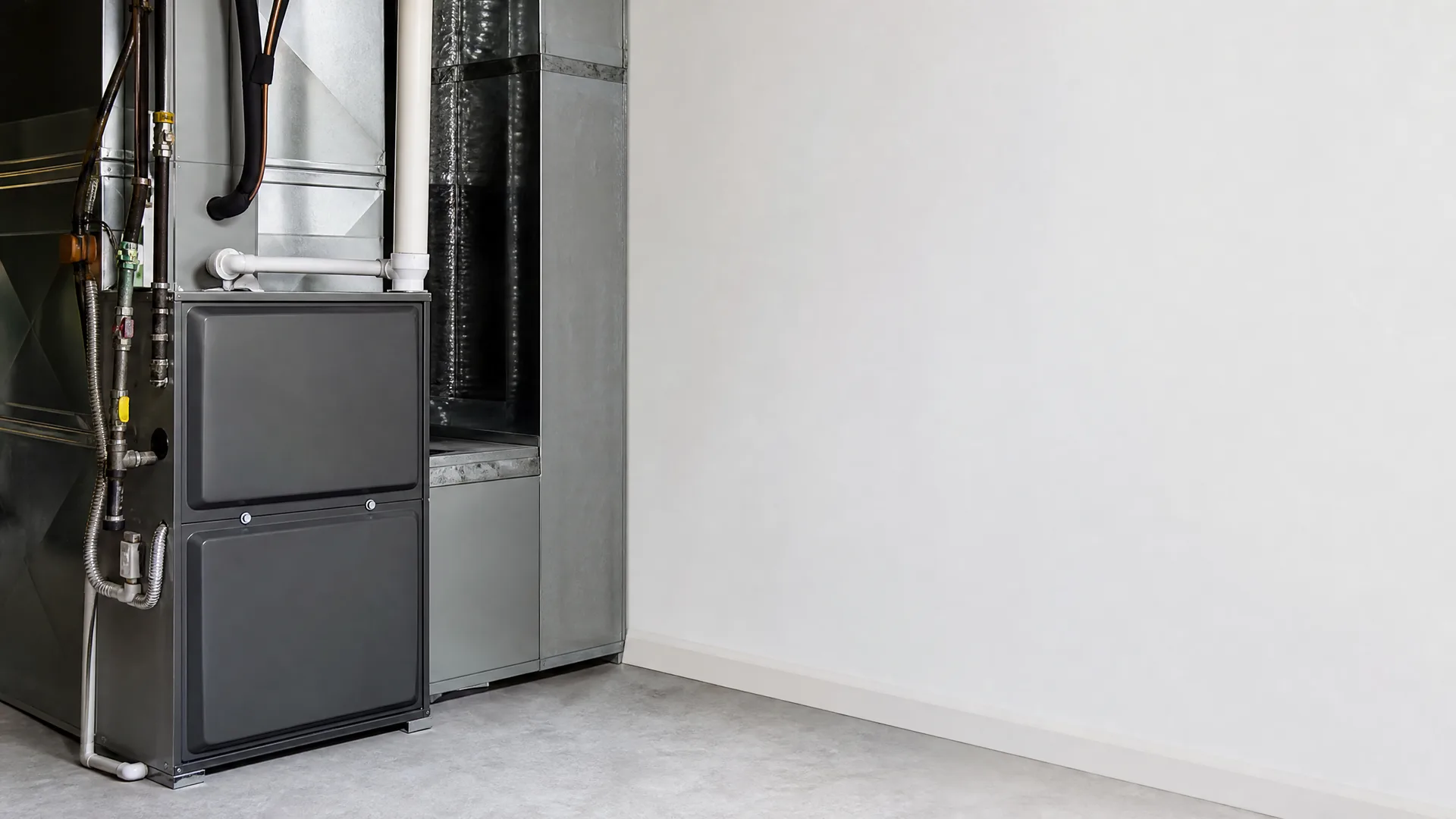
A dark gray furnace unit with connected ductwork, pipes and flexible hoses stands in the corner of an empty room with bare white walls and a concrete floor.

Where the gas math works

If your house already heats with gas, a high-efficiency furnace burns less of it to make the same heat. Standard furnaces vent a good share of that heat straight out the flue. A high-efficiency model pulls more of it out of the exhaust before it leaves, which is why they need a drain line for the condensation that forms. That difference shows up as less gas burned over a cold winter in Newton County.

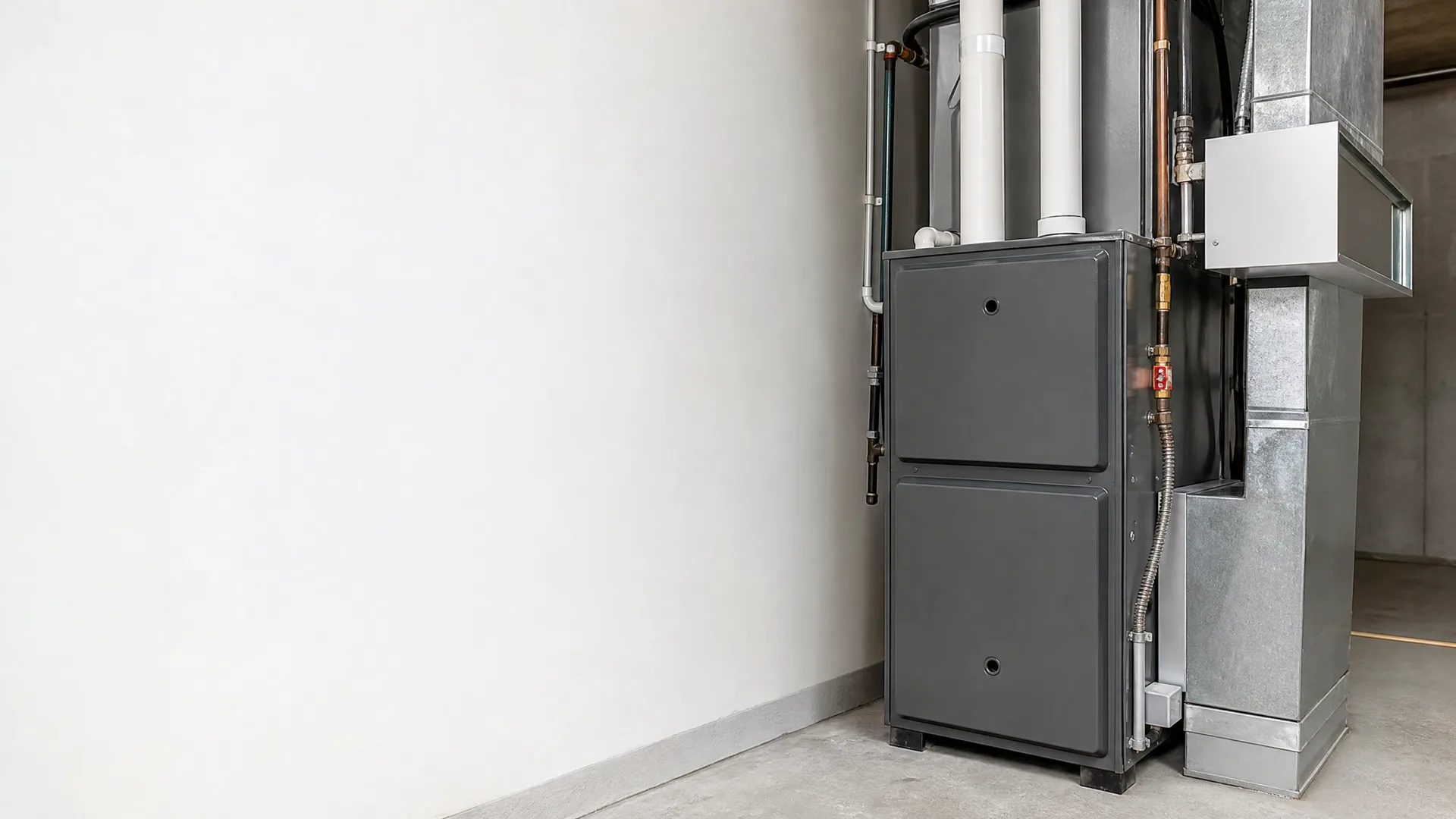
A gray high-efficiency furnace stands against a plain white wall in a concrete-floored utility room, connected to white PVC vent pipes, copper gas lines, and sheet-metal ductwork.

What electric heat changes

An electric furnace or heat pump doesn't burn fuel, so there's no flue gas to capture more heat from in the first place. The efficiency ratings that make gas furnaces worth comparing don't apply the same way here. For an electric system, the condition of the coils, the airflow through the ducts and the thermostat settings matter more to your winter bill than any gas furnace efficiency rating ever would.

Why does Covington's furnace even need to work this hard?

  • Winter nights average 35°F

    Overnight lows near 35°F mean your furnace is fighting a real gap between outside and your thermostat setting, not just taking the chill off.

  • Heat runs November through March

    Five months of heat a year, November through March, adds up to a long stretch where your system runs every night without a break.

  • 64.7% of homes heat with electricity

    Just under two in three homes here heat with electricity, which is why what a furnace is fueled by matters more than the furnace's efficiency number.

NOAA nClimDiv 1991-2020 · ACS 2020-2024

How a high-efficiency furnace actually runs

  • A two-stage or modulating gas furnace burns at a low flame most of the time and only ramps up on the coldest nights.
  • A single-stage furnace fires at full output every cycle, which is why rooms near the vents heat faster than rooms at the end of the duct run.
  • High-efficiency furnaces use a second heat exchanger to pull more heat from the exhaust before it leaves through the PVC vent pipe.
  • That second exchanger cools the exhaust enough to form condensate, so these furnaces need a drain line and a condensate pump where gravity won't carry it away.
  • A variable-speed blower motor adjusts its airflow to match the flame stage, which keeps the air moving steadier instead of blasting on and cutting off.
  • The ignition is a hot surface igniter, not a standing pilot, so the furnace lights only when the thermostat calls for heat.

Inside a standard single-stage furnace, the gas valve is either open all the way or closed. Every cycle fires at full output, heats the house, then shuts off completely, which is why the room next to the thermostat feels fine while the back bedroom stays cold until the next cycle catches up. A two-stage or modulating furnace doesn't work that way. It runs a low flame most of the time, and only steps up to full fire when the temperature outside drops enough to need it, so on a mild December day it might never hit full output at all. That low, steady flame pairs with a second heat exchanger, the part that actually earns the efficiency rating. Instead of letting hot exhaust gas go straight up the flue, the furnace routes it through a second pass that pulls out more heat before venting it through PVC pipe instead of a metal flue. Pulling that much heat out of the exhaust cools it enough to condense, so the furnace needs somewhere for that water to go: a drain line, and a condensate pump if the furnace sits somewhere gravity can't drain to a floor drain on its own. The blower matches this same logic. A variable-speed motor ramps up and down with the flame stage instead of switching between full blast and off. And when the thermostat does call for heat, a hot surface igniter glows and lights the burners directly. There's no standing pilot flame burning in between cycles.

A gray high-efficiency furnace with two PVC vent pipes stands in an unfinished basement beside sheet-metal ductwork, a framed and plastic-covered wall, and a bare concrete wall with vertical pipes.
A high-efficiency furnace tied into PVC flue pipe pays back its cost through the gas line, one cycle at a time.
A gray furnace cabinet in a basement, connected to galvanized sheet-metal ductwork and white PVC pipes, against a concrete wall with exposed metal piping and insulation overhead.
A furnace still sitting on its pallet hasn't earned anything yet, and won't, until it's running on the gas your house actually uses.
A man in a navy sweater reclines in a leather armchair with his eyes closed and a slight smile, beside a side table with a mug and folded newspaper, in a room with a bookshelf and a sunlit window.
A bearded man in a navy robe over a gray shirt reclines with closed eyes in a brown leather armchair, with a houseplant, folded newspaper on a wooden table, and a bookshelf behind him.
A bearded man in a navy sweater reclines with closed eyes in a leather armchair beside a table holding a folded newspaper and a green mug, with a dresser, potted plants, a lamp and framed artwork behind him.
A man in a dark green sweatshirt reclines with his eyes closed and a slight smile in a brown leather armchair, with a window, table lamp, mug and newspaper beside him.

Stop chasing a furnace pro

Explain the job once and skip repeating it on every call.

Asking costs nothing, and the choice to hire stays yours.

If gas heat is already in your house

A high-efficiency furnace earns its keep through your gas bill, month after month, as long as gas is what you're burning. If your house already has a gas line run to the furnace, this is the one where the upgrade shows up in January and February, when the furnace is running most. You'll notice it less as a feeling and more as a smaller number on the statement. The vent pipe changes too, from metal flue to PVC, which is a sign the furnace is pulling more heat out of the exhaust instead of sending it outside.


If your house runs on electric heat

If your house heats with electricity now, a gas furnace means a gas line that may not be there, plus the furnace itself. None of that pays you back the way it does in a house already set up for gas. Your heat pump or electric furnace doesn't have the same flue losses a gas furnace does, so the efficiency argument that works next door doesn't carry over to your house. Before deciding anything, it's worth having someone look at what you already have and what it would take to change it.

A gray metal furnace with two white PVC vent pipes stands on a concrete floor beside galvanized sheet-metal ductwork in a basement or utility space with wood framing.
Before you get your furnace installation
A gray furnace cabinet in a basement with sheet-metal ductwork, white PVC vent pipes, and black gas piping against a concrete wall and wood-framed partition on a bare concrete floor.
After you get your furnace installation

A standard furnace sends its exhaust up a metal flue while it's still hot. A high-efficiency furnace doesn't let that heat go to waste. It runs the exhaust through a second heat exchanger first, pulling out more of the heat before the gas leaves the house. That second pass cools the exhaust so much that the water vapor in it turns to liquid, and that liquid has to go somewhere. It drains out through a PVC line, usually into a condensate pump or a nearby drain. Because the exhaust is cool by the time it leaves, the furnace vents through PVC pipe out a sidewall instead of a metal flue through the roof. An inducer motor handles the front end of this, pulling air in and pushing flue gas out before the burners light, checking for safe airflow every time the furnace cycles on. All of this means more parts than a standard furnace has: a second heat exchanger, a condensate line, sometimes a pump. None of it is a problem as long as it's installed and vented the way the furnace is built to run.

How a condensing furnace actually works

  • A condensing furnace runs a second heat exchanger made of stainless steel or plastic, built to handle the acidic condensate the first one can't.
  • That second pass cools the exhaust low enough to turn its water vapor to liquid, which is the condensate you'll see draining from a PVC line near the unit.
  • Because the exhaust ends up cool instead of hot, a condensing furnace vents through PVC pipe out a sidewall, not up a metal flue through the roof.
  • An inducer motor pulls combustion air in and flue gas out before the burners ever light, so the system checks for safe airflow on every single cycle.
  • The condensate has to drain somewhere, so the installation includes a drain line and often a small pump if the furnace sits where gravity won't take it away.
  • Two heat exchangers and a condensate system mean more parts that can fail than a standard furnace has, which is why installation and venting have to be done right the first time.
An older man with gray hair and a navy knit sweater sits in an armchair with his eyes closed, near a bright window with potted green plants.
A woman in a grey knit sweater leans back with closed eyes in an armchair beside a window, with a ceramic mug on a round wooden side table and a yellow-leaved tree outside.
A beige high-efficiency furnace stands on a concrete basement floor beside sheet-metal ductwork, with white PVC vent pipes and a gas line running along an insulated wood-framed wall.

Running clean

This is what a high-efficiency furnace looks like doing its job: PVC intake and exhaust pipes instead of a metal flue, a condensate line to carry off the water it pulls out of the exhaust. If your furnace already looks like this, it's already earning back what it cost through your gas bill.

An older metal furnace with a louvered front panel stands against a concrete basement wall, connected to sheet-metal ductwork and a flue pipe, with copper and steel pipes running alongside.

Running old

A furnace like this one has put in years of work, and it shows in the dust on the cabinet and the wear on the vents. It's a standard, single-stage unit with no condensing coil and no PVC venting. It heats the house, but it isn't pulling extra heat out of the exhaust before that exhaust leaves.

What's actually different inside a high-efficiency furnace?

You keep hearing "two-stage" and "condensing" thrown around, but nobody explains what those words mean once the furnace is actually bolted into your utility closet. You're not looking for a sales pitch, you want to know what part is doing something different in there, and why that difference is the reason the thing costs more to install in the first place.

It burns gas in two passes instead of one

A standard furnace has one heat exchanger. Gas burns, heat passes through it once, and whatever warmth is left in the exhaust goes out the flue. A high-efficiency furnace adds a second heat exchanger after the first, usually stainless steel or plastic, built to pull more heat out of that same exhaust before it leaves the house. Cooling the exhaust that far turns part of it to water, so the furnace also needs a condensate line to drain it off, and PVC pipe instead of a metal flue to carry it out. That second pass is the whole difference. It's also why installing one takes more than swapping a box, since the venting and drain have to be run new.

  1. Gas burns in the primary heat exchanger first

  2. Exhaust still holds heat, so a blower pushes it into the second exchanger

  3. That second pass cools the exhaust enough to condense its water vapor

  4. Condensate drains out through PVC pipe instead of a metal flue

Winter nights average 35°F

35°F is where your thermostat setting has to make up real ground, not just knock off a chill. On a night that cold, a furnace tied to an electric resistance system runs long to hold 68 inside, which is what drives the bill up through December, January and February.

NOAA nClimDiv 1991-2020

A wooden table with a closed laptop, a ceramic mug of dark coffee, and a glass vase of eucalyptus stems beside a window, with a dark green kitchen cabinet, wooden counter, potted herb, cutting boards and bowl blurred in the background.

So is it worth it in Covington

It comes down to what's already feeding your furnace. Gas heat and a high-efficiency model, and the furnace earns its keep through the gas bill. Electric heat, and a condensing furnace doesn't have the fuel to save you money on, no matter how well it's built.

If you've read this far, you already know which one you are. What's left is getting someone qualified to look at your setup and confirm it, instead of spending an afternoon calling around Newton County, explaining your situation to three different companies, and trying to compare quotes that aren't even for the same equipment. That part of this doesn't have to be yours to carry.

Interior corner of a living room with a beige upholstered armchair holding a textured pillow and throw, a eucalyptus arrangement in a ceramic vase on a wooden table in the foreground, a blurred glass-front cabinet behind, and a potted plant on a sunlit window sill.
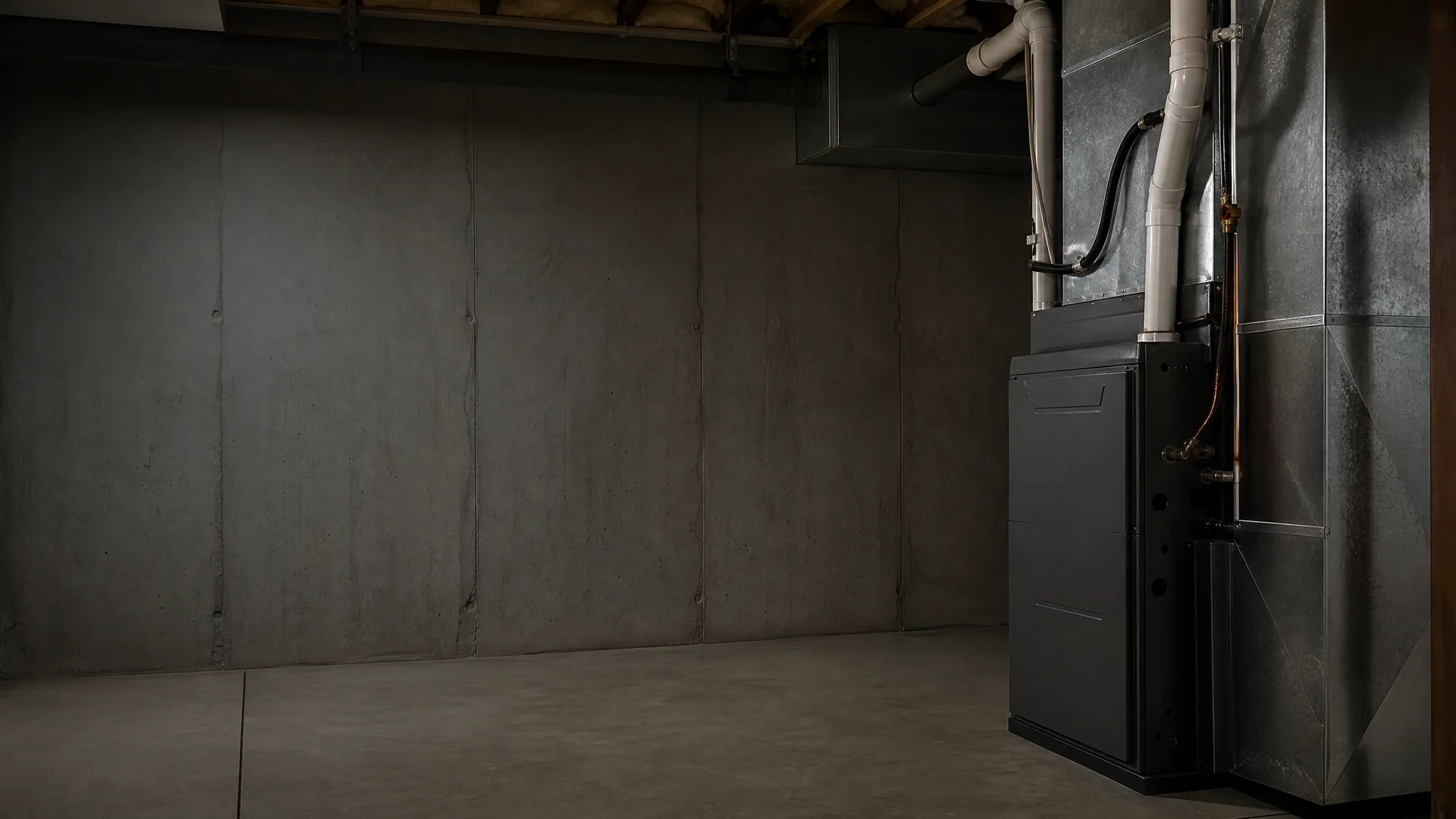
A dark basement with bare concrete walls and floor, with a furnace, ductwork, and PVC vent pipes along the right side.

Send one request and you're done looking

Skip searching for a furnace pro and answer a few questions instead.

New system or replacementFurnace or heatingNewton County, GA
Step 1 of 2

What ZIP code is the job in?