Two single-story houses, one of red brick with a white-columned porch and one with pale siding, sit behind a mown lawn and a trimmed hedge, beneath large moss-draped oak trees.

Heat Pump Installation in Covington, GA

Tell us about the job

Takes about a minute. No obligation.

New system or replacementHeat PumpNewton County, GA
Step 1 of 2

What ZIP code is the job in?

Most homes here run on electricity

Electricity heats close to two-thirds of the homes in Newton County, and another slice run on propane. A heat pump replacing an electric furnace or electric resistance setup is not a stretch for the wiring already in place.

What that means for this install

The electrical panel and the wiring already built for electric heat make a heat pump a straightforward swap for most homes here. Gas heats about three in ten homes in the county, and for those the switch means adding electric capacity that was not there for heat before.

5 months
November through March, your system heats
5 months
May through September, it cools
35°F
the average winter night it heats against
89°F
the average summer afternoon it cools against
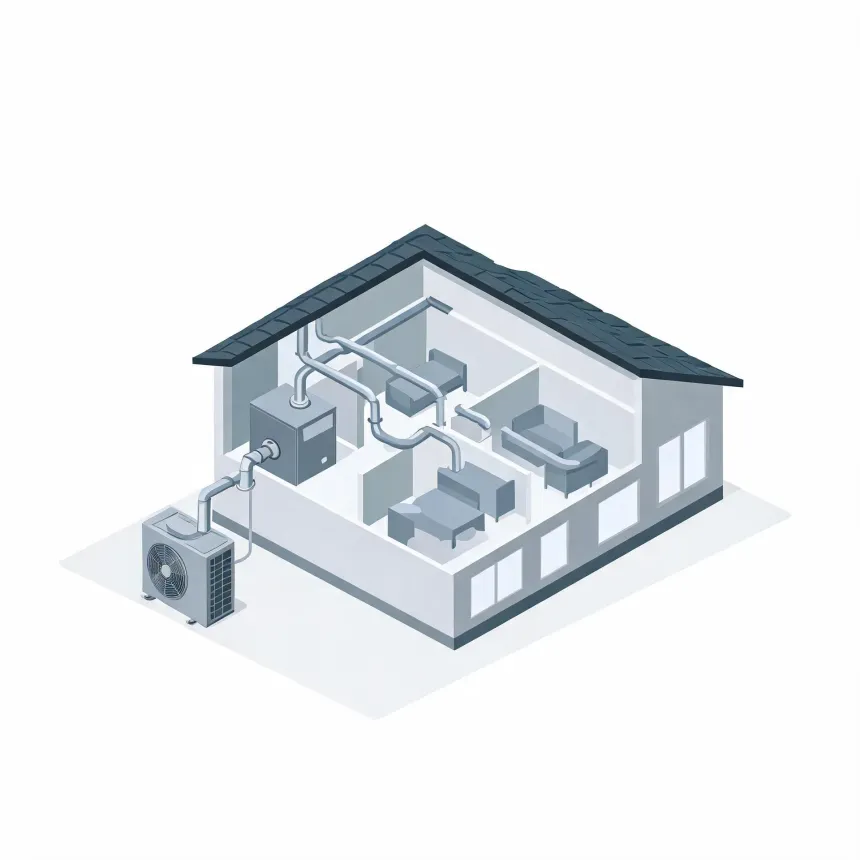
Isometric cutaway illustration of a single-story house showing an indoor air handler, branching ductwork through rooms with furniture, and an outdoor condenser unit connected by a line outside the wall.
Your system heats November through March and cools May through September.

NOAA nClimDiv, 1991–2020 normals

Georgia households paid 14.08 cents per kilowatt-hour in 2024, below the national average.

A heat pump here still cuts the power bill, but a pricier high-efficiency model takes longer to earn back the difference.

Five months of heat, five of cooling, and a heat pump covers both

Cooling runs May through September
Heat runs November through March
Power costs 14.08 cents a kWh statewide
A mild climate on this heat pumpNewton County winters are short, and summers are long and humid. Zone 3A, no extreme cold to fight.

A standard heat pump, sized to the house and installed correctly, holds up fine here. Newton County sees its share of damaging wind and the occasional tornado, and an outdoor unit built to normal specs is already rated to take wind loads like that. None of what hits this county points to a bigger or pricier system. The bigger question is what happens when the power drops, since close to a third of Georgia households went a full day or more without power last year. A heat pump does nothing for you while the grid is down. That's worth a word with the contractor about backup, but it has nothing to do with the size or tier of the unit itself.

Any heat pump installed here has to clear 14.3 SEER2

That's the federal minimum for heat pumps built from 2023 on, and Newton County's central air has to meet it too. A federal tax credit is available on qualifying equipment. A contractor can walk through which models clear the bar and qualify.

Find a contractor
A man in a dark cap, dark shirt and tan pants, seen from behind, carries a canvas tool bag up concrete steps toward a blue front door, with a potted green plant in a blue planter beside the entry.
A gray air-source heat pump mounted on a concrete pad next to a house with gray vinyl siding, surrounded by gravel and flanked by green shrubs and white hydrangea flowers.

Light duty, most of the year

No stretch of deep cold here, so the compressor never has to work at its hardest for long. Short mild winters and a long warm season mean a standard heat pump, sized right for the house, is doing most of its work in easy conditions. A contractor can confirm the model clears the federal minimum. Paying more for a higher tier past that buys efficiency this climate won't call on much.

What comes out of the house

If the old system had a furnace or air handler and a separate outdoor condenser, both get disconnected and hauled off. The existing ductwork usually stays in place and gets reused, so the job is swapping the equipment at each end of the ducts rather than touching what runs through the walls and attic.

What happens with the gas line

A heat pump installed in place of a gas furnace does not need the gas line, but that line does not have to disappear. A plumber can cap it off safely, which is standard practice whether the house keeps a gas water heater or stove running on the same line or not.

Comparing heat pumps comes down to a few straight questions, not a stack of brochures. Ask for the heat load calculation, not just a tonnage number, since contractors eyeballing the same house can land on different sizes and only one of them did the math. Ask what the manufacturer's warranty actually covers and whether it requires registration within a set window, because missing that paperwork can void coverage you thought you had. Ask about the sound rating of the outdoor unit if it sits near a bedroom window or a fence line close to a neighbor. Ask what happens to the existing ductwork, whether it gets tested for leaks or just hooked up as is. And ask who comes back if something feels off after the first season, not just who shows up on install day.

Install day starts with the old equipment coming out, the furnace or air handler inside and the condenser outside. The new outdoor unit gets set on its pad and leveled, since a unit sitting crooked wears its compressor unevenly over time. Indoors, the air handler or coil ties into the existing ductwork, and a tech checks those duct connections for leaks while everything is still open. The line set running between the indoor and outdoor units gets connected, pressure tested, and evacuated to pull out moisture and air before any refrigerant goes in, because trapped moisture corrodes a system from the inside. Once it's charged, a tech runs the system in both heating and cooling, checks the temperature coming off the vents, and confirms the thermostat is actually talking to the unit. A clean install gets checked before anyone calls it finished, not after it breaks down the first time.