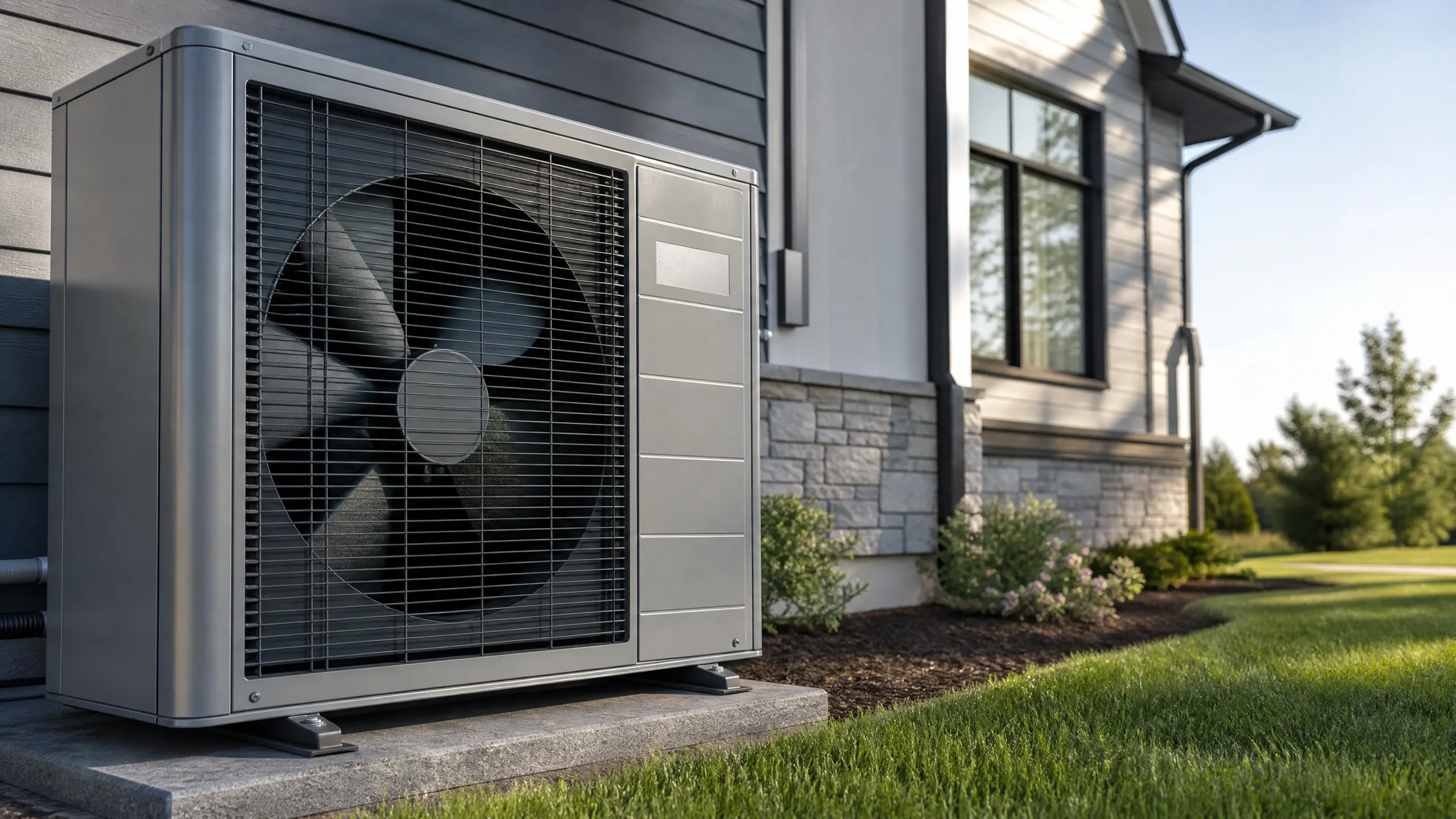
A grey heat pump outdoor unit mounted on a concrete pad against the exterior wall of a house with grey siding and stone veneer.

Heat Pump Maintenance in Covington, GA

Tell us about the job

Takes about a minute. No obligation.

Tune-up, service, or cleaningHeat PumpNewton County, GA
Step 1 of 2

What ZIP code is the job in?

This heat pump runs double duty

A heat pump in Covington heats the house all winter and cools it all summer, with the dew point averaging 68°F through June, July and August. That's heavy air for the system to pull moisture out of. It's steady work, not a strain, but it's work in both directions.


One check a year covers it

A heat pump that runs year round still only needs a tune-up once a year. The right time is before it has to carry the heaviest load, so a technician can catch a weak part while it's still a small fix.

Heat pumps in Newton County start running heat in November and keep at it through March.

October is the month to get this one checked, before that stretch begins.

Weather here doesn't change the schedule

54 severe weather events from 2015 to 2024
31% of homes statewide lost power a day or more in 2024
39 damaging wind events from 2015 to 2024

Half the homes in Newton County were built in 1999 or later. If yours is one of them, the heat pump is likely still well within its working life. That's worth something, but it's not a reason to skip the yearly check. A newer system still has a capacitor that weakens, a coil that collects dirt, refrigerant that can run low. Catching those early is how a system stays reliable for the long run instead of needing a repair call during the first real cold snap.

Keep a newer system working the way it should

A newer system still needs its yearly look before it works hardest. Get the heat pump checked now, so a weak capacitor or a low charge gets caught while it's a small fix.

Find a contractor
A man in a gray t-shirt and brown work pants carries a canvas tool bag up porch steps toward a blue front door of a house with gray siding.
A gray outdoor HVAC unit mounted on a concrete pad beside a house with gray lap siding and a stone foundation.

What a real tune-up actually covers

A quick visit means someone glances at the outdoor unit, checks that air is moving, and leaves. A thorough one means the panels come off. The technician checks refrigerant charge against what the system calls for, not just whether it's blowing cold or warm. The reversing valve gets tested both directions, since that's the part that lets a heat pump switch between heating and cooling, and a sticking valve won't always show itself right away. The coils get inspected and cleaned if they're dirty, because a coated coil makes the whole system work harder to move heat. Electrical connections get tightened, since a loose one is what eventually burns out a contactor or a capacitor. The condensate drain gets checked so it isn't clogged somewhere a quick look wouldn't catch. And the technician checks the defrost cycle, the part that clears frost off the outdoor coil in cold weather, because a defrost board that isn't cycling right will waste the whole system's effort. None of this takes a special tool to ask about. If a technician is in and out in a few minutes without opening the unit up, that's the short version, not the real one.

What's wearing down before it fails outright

A capacitor loses its charge slowly, years before it gives out and leaves the outdoor unit humming without starting. Refrigerant seeps out through a fitting so slowly the system still runs, just not at the charge it needs. None of this trips a breaker or throws an error. The system just drifts a little further from right, and a homeowner has no way to see that from the thermostat.

What's inside the cabinet, not on the readout

A thermostat tells you the temperature was reached, not how hard the system worked to get there. Inside the cabinet, a technician can see things the readout can't show: a reversing valve that hesitates before switching over, a drain line close to clogging, a coil coated enough to make the system push harder for the same result. Those show up with the panels off, not from across the room.

A heat pump that never gets looked at doesn't fail all at once. It drifts. A capacitor weakens and the outdoor fan starts hesitating before it finally won't start at all. A low refrigerant charge makes the compressor run longer to move the same heat, and longer runtimes wear the parts around it faster. Dirt on the outdoor coil does the same thing from a different angle, making the system push harder for a result it used to reach easily. None of this trips a breaker or throws a code. The system just costs more to run every month until something finally gives, usually on the day it's working hardest.

A tune-up on a heat pump is really two inspections in one, because the same system handles both jobs a furnace and an air conditioner would split between them. The technician checks refrigerant charge, since too little makes the compressor work longer for the same heat and too much can be just as hard on it. Electrical connections get tightened, because vibration loosens them over time and a loose connection is what eventually takes out a contactor. The outdoor coil gets inspected, since a coil coated with dirt or buildup can't move heat the way a clean one does, in either direction. And because this system reverses itself to switch between heating and cooling, the reversing valve gets tested both ways, not just checked at rest. Skip any one of these and the system still runs. It just runs worse, a little more each season, until the part that was never checked is the one that quits.