





A row of single-story houses with porches behind a manicured lawn and trimmed hedges, framed by large oak trees draped with Spanish moss.

Furnace Installation in Covington, GA

Tell us about the job

Takes about a minute. No obligation.

New system or replacementFurnace or heatingNewton County, GA
Step 1 of 2

What ZIP code is the job in?

Most homes in Newton County heat with electricity, close to two out of three. Gas furnaces still have a place here too, since utility gas heats about three in ten homes. If your house already runs on electric heat, a straight swap keeps things simple, and the installer can match the new unit to what's already there. If yours is one of the gas-heated homes, that's common enough here that parts and service for it are easy to find. Either way, the fuel your house already uses is usually the one worth sticking with.

5 months
November through March, your furnace is on duty
35°F
the average winter night it heats against
80% AFUE
the federal minimum any new unit must meet
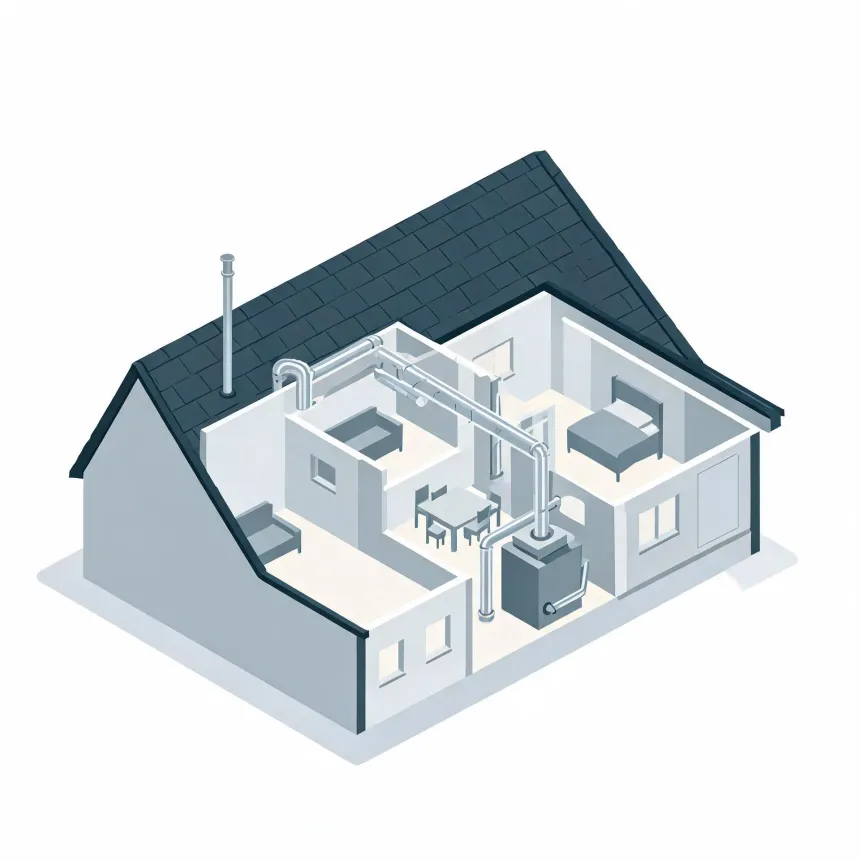
Isometric cutaway illustration of a single-story house with a dark shingled roof, showing interior rooms with furniture and a ducted furnace unit connected to metal ductwork and a roof flue.
Your furnace works hardest from November through March.

NOAA nClimDiv, 1991–2020 normals

Furnaces in Newton County switch on in November.

October is the month to get a new one installed, before the cold puts it to the test.

Five months of winter is not a hard season to heat for

Heat runs November through March
Winter nights average 35°F
Climate zone 3A
A furnace sized right costs less to run all winterElectricity in Georgia ran $41.27 per million Btu last year, and the right size is what keeps that bill honest.

The size of the furnace matters more than anything else on the invoice. A unit sized to the house runs long, steady cycles that actually warm the place evenly. One that's too big for the space fires up, blasts hot air, and shuts off again before it's done the job, which wears out its parts faster and leaves cold spots behind. Getting that size right takes a load calculation, not a guess based on the old unit. Venting is the other big factor. A high-efficiency furnace vents through PVC pipe and needs a condensate line, so if the old furnace vented through a metal flue, some of that ductwork and venting has to change to make the new one work safely. The ductwork itself matters too. If it was sized for the old furnace, it may need adjusting to handle the new unit's airflow without strain.

The storms here don't call for a bigger furnace, just the right size

Newton County has seen its share of severe weather, including damaging wind, hail and a few tornadoes. None of that changes what a furnace here needs to be. A standard size, properly matched to the house, heats it through winter same as it would anywhere else. There's no reason to size up or pay for more than that.

Find a contractor
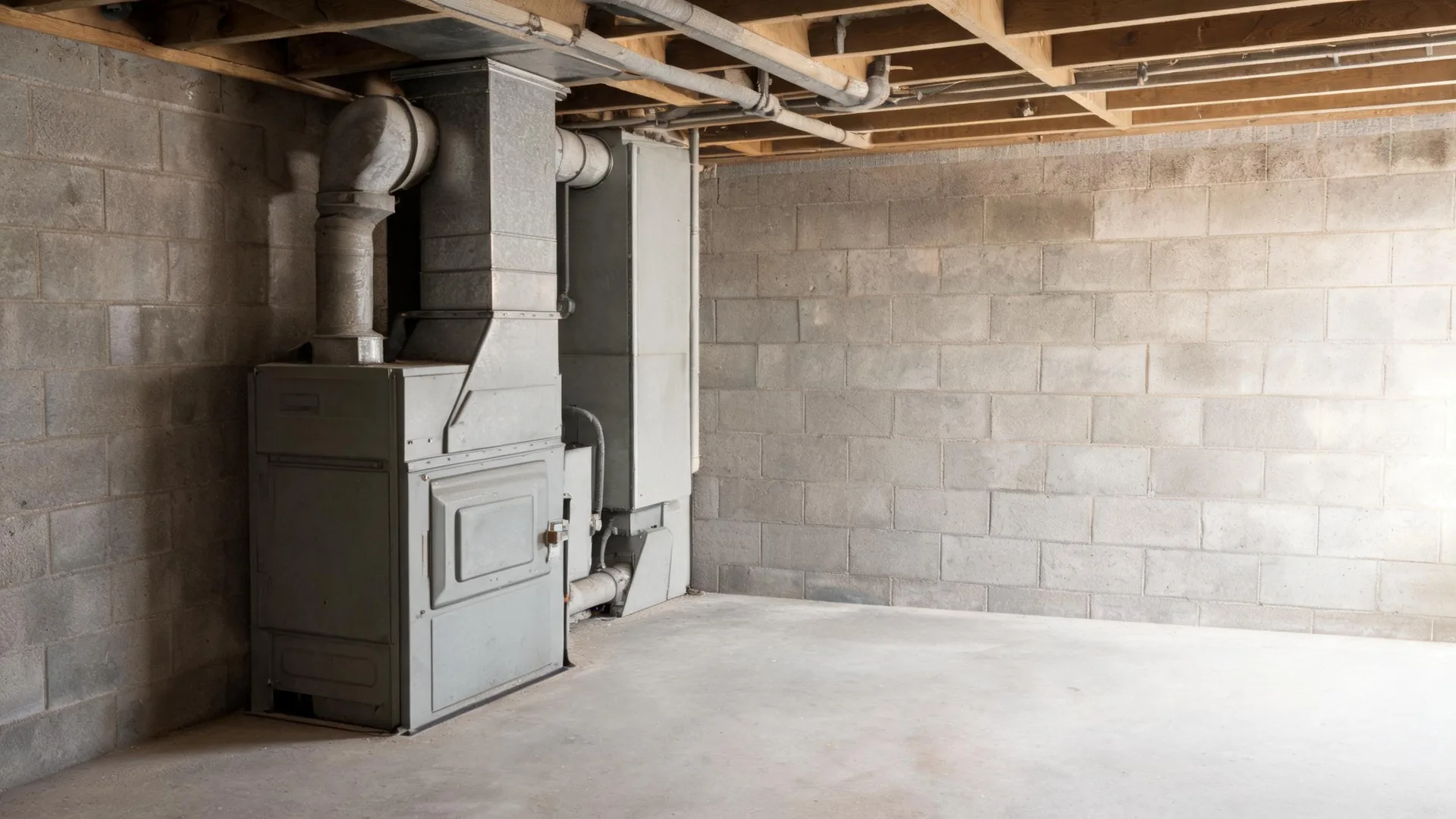
A gray high-efficiency gas furnace installed in an unfinished basement, surrounded by gas lines, a condensate drain, and sheet-metal ductwork.

The size comes from the house, not the old box

A load calculation looks at the walls, the windows, the ceiling height, how the house faces the sun, and works out how much heat gets lost on the coldest day. That number sets the size, not square footage and not what the old furnace happened to be. Houses built differently need different sized furnaces even when they take up the same footprint. Oversize it and the furnace short cycles, heating the air near the thermostat and shutting off before the far rooms catch up. Undersize it and it runs constantly without ever quite getting there. Either way the parts wear against a job they weren't matched to.

The rating tells you what the furnace does with the gas it burns

An efficiency rating on a furnace is a measure of how much of the fuel it burns turns into heat in the house versus how much goes out the vent. A higher rated furnace pulls more heat out of the same flame before letting the exhaust go. It has nothing to do with how big a space it can heat or how fast it heats it, that's sizing, a separate question entirely.
A higher number changes the installation, not just the bill

A furnace with a higher efficiency rating cools its exhaust enough that it can't vent through a metal flue anymore, it needs PVC pipe and a condensate drain to carry off the moisture left in the exhaust. That changes what the installer has to run and where it can go. Comparing furnaces on the rating alone misses that the higher rated unit may ask more of the install itself.

When you're getting quotes, ask what's included besides the furnace itself. One bid might cover a load calculation and duct adjustments, another might just swap the box and call it done. Ask what happens to the venting, especially if you're moving to a higher efficiency unit, since that's new pipe and a drain line, not just a different furnace bolted into the old spot. Ask how they're sizing it, and don't accept 'same as what's there' as the answer. The old one might have been wrong from the start. Ask about the warranty on parts versus labor too, since those often run different lengths and come from different places, the manufacturer and the installer.

Installation day starts with the old furnace coming out, along with any venting or ductwork that doesn't fit the new one. If the venting is changing from metal flue to PVC, that pipe gets run to an exterior wall, and a condensate drain gets added nearby since the new furnace needs somewhere for that moisture to go. The new unit gets set, connected to the gas line, the ductwork, and the vent, then wired to the thermostat. Once it's in, a tech checks the gas pressure, confirms the flame looks right, and runs the system through a full cycle to make sure it's pulling air where it should and shutting off the way it's supposed to. The last step is combustion testing, checking what's actually coming out the vent, not just whether the furnace turns on. A furnace that lights doesn't mean it's installed right.