



Heat pump vs furnace in Carroll County, Georgia

Get Quotes on Both

See real numbers before you choose

A person's arm in a navy sleeve reaches to adjust a round white wall-mounted thermostat above a light switch, with an open tool bag below and a living room with a sofa in the background.

Tell us about the job

Takes about a minute. No obligation.

New system or replacementCarroll County, GA
Step 1 of 3

What kind of equipment?

Which costs less to run in Carroll County?

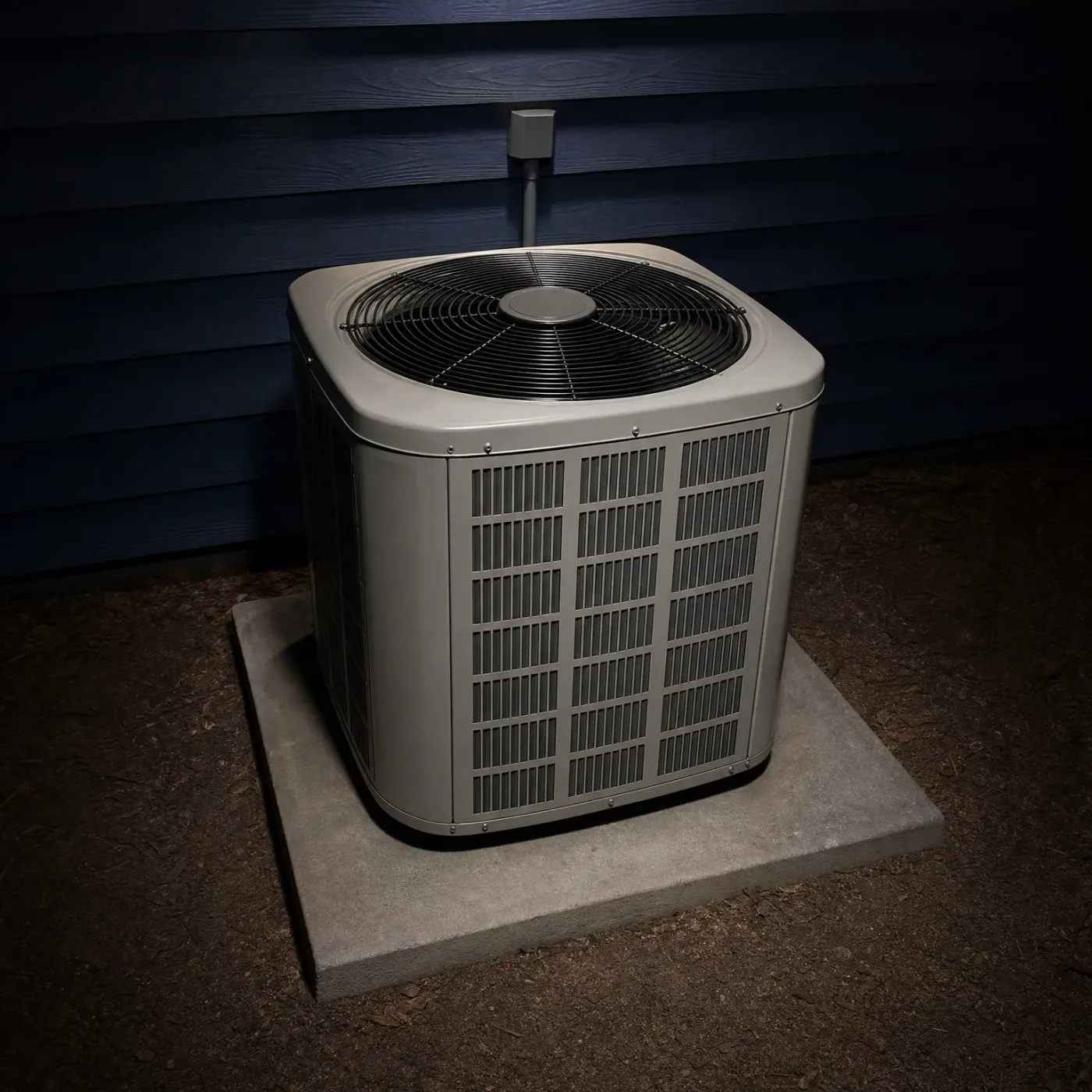
A gray outdoor condenser unit with a top-mounted fan grille sits on a concrete pad beside a dark blue horizontal lap-sided wall, with a refrigerant line and small disconnect box on the wall above.

Heat pump

To heat your home here$1.88per 100,000 Btu

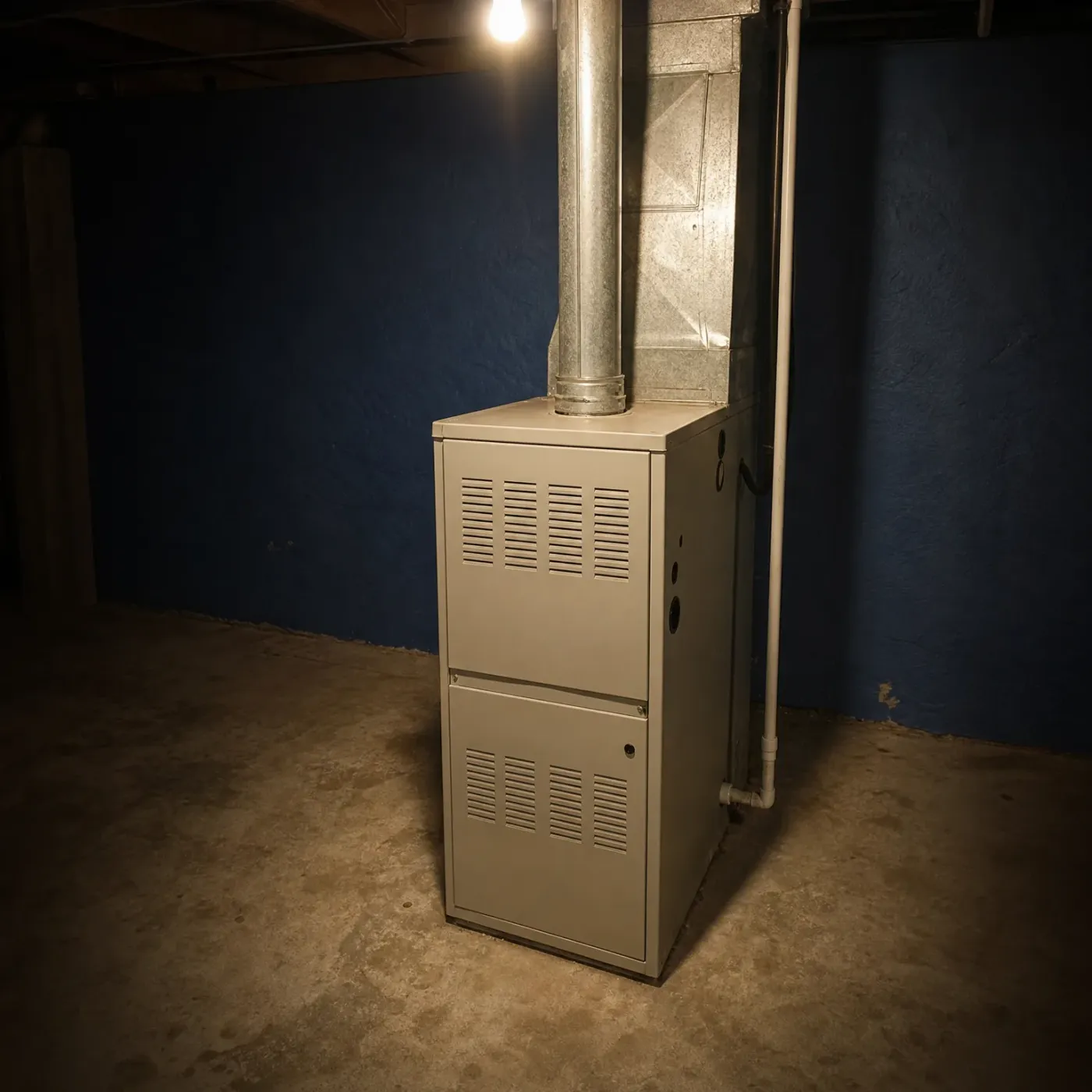
A beige furnace with louvered panels stands on a concrete basement floor against a blue painted wall, with a galvanized metal flue pipe and ductwork above and a white pipe running down the wall.

Furnace

To heat your home here$2.21per 100,000 Btu

At Georgia's gas and electricity prices, a heat pump makes the same heat as a gas furnace for about 15% less.

Btu stands for British thermal unit, the standard measure of heat energy.

Where does a heat pump shine?

  • Covers a long cooling season

    Cooling runs May through September here. A heat pump handles that whole stretch and then switches over to heat your home once the weather turns, all from one system.

    A covered porch with blue lap siding, a ceiling fan, string lights, a hanging dark wood swing, potted ferns, Adirondack chairs, and a glass of iced tea on a round wooden table in the foreground.
  • Heats and cools in one system

    Winter and summer are covered by the same outdoor unit. That's one machine to service instead of two.

    A living room with a beige sectional sofa, navy throw and pillows, a wooden coffee table holding a woven tray and plant, dark built-in shelving, and a large window with navy curtains overlooking a green garden.
  • No gas line, nothing burning in the house

    There's no gas line to the unit and no flame anywhere in it. Carbon monoxide isn't part of the picture.

    Kitchen with navy blue cabinets, light speckled stone countertops, white subway tile backsplash, stainless range hood and wall oven, a kettle on a cooktop, hydrangeas in a glass jar, a bowl of lemons, and wooden stools at an island.

Where does a furnace shine?

  • Fast, strong heat on demand

    The air coming from the vents feels genuinely hot. That's welcome on a freezing morning.

    Entryway with a dark blue door and window showing snowy trees, sheer curtain lifting above a floor vent, snow-dusted boots on a woven rug, and a wooden bench with a blue mug, folded blanket and basket.
  • Proven, simple, easy to get serviced

    Parts are easy to find and most repairs are routine. Getting one fixed rarely means waiting on a specialist.

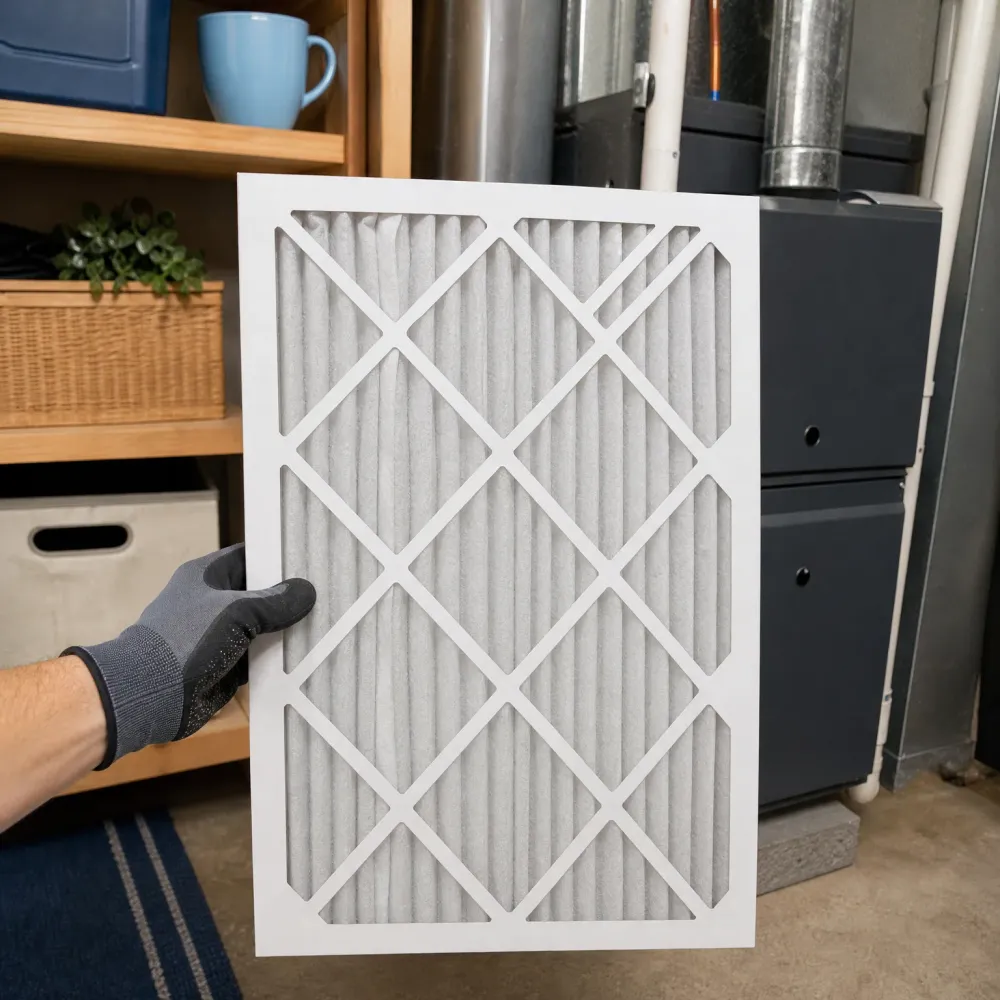
    A gloved hand holds a white pleated air filter in front of a furnace and wooden shelving holding baskets, bins, a mug and a plant.
  • Pairs with any central AC

    The ductwork that delivers heat in winter delivers cool air in summer once an AC coil is added.

    A dark metal floor register set into a wood plank floor near a white baseboard and window, with a sheer white curtain, a navy door, and a blue and white rug nearby in sunlight.

What winter here actually asks of a heat pump

Your winter low here averages 34°F, and that one number decides most of this. A standard heat pump starts losing ground below 40°F and often leans on backup heat below about 35°F. Both marks sit above our average low, not below it. So on a typical winter night here, a standard heat pump is already working below its best range.

That doesn't mean it can't keep your house warm. It means it's working harder than its rating suggests most nights the heat is on, and leaning on backup heat for some part of them. About 65 nights a year here drop to freezing or below, under a third of the roughly 210 nights your heat runs from October through April. Those are the nights backup heat is most likely to kick in. Almost none of them get anywhere near 0°F, fewer than one night a year, so this is backup heat covering the cold snaps of a mild county, not the deep cold of a harsh one.

If you want a heat pump to do more of that work on its own, look for the ENERGY STAR Cold Climate label. To earn it, a heat pump has to hold onto most of its heating capacity and still produce real heat at 5°F, verified by outside testing, not just the manufacturer's word. Field tests of these cold-climate units back that up: even in occupied homes through two winters, backup heat covered only a small share of the heat needed between 0°F and 35°F, and the units rarely ran on backup alone above 0°F. In a county where your coldest nights rarely get near 0°F to begin with, a cold-climate model gives you a wide margin most winters won't test.
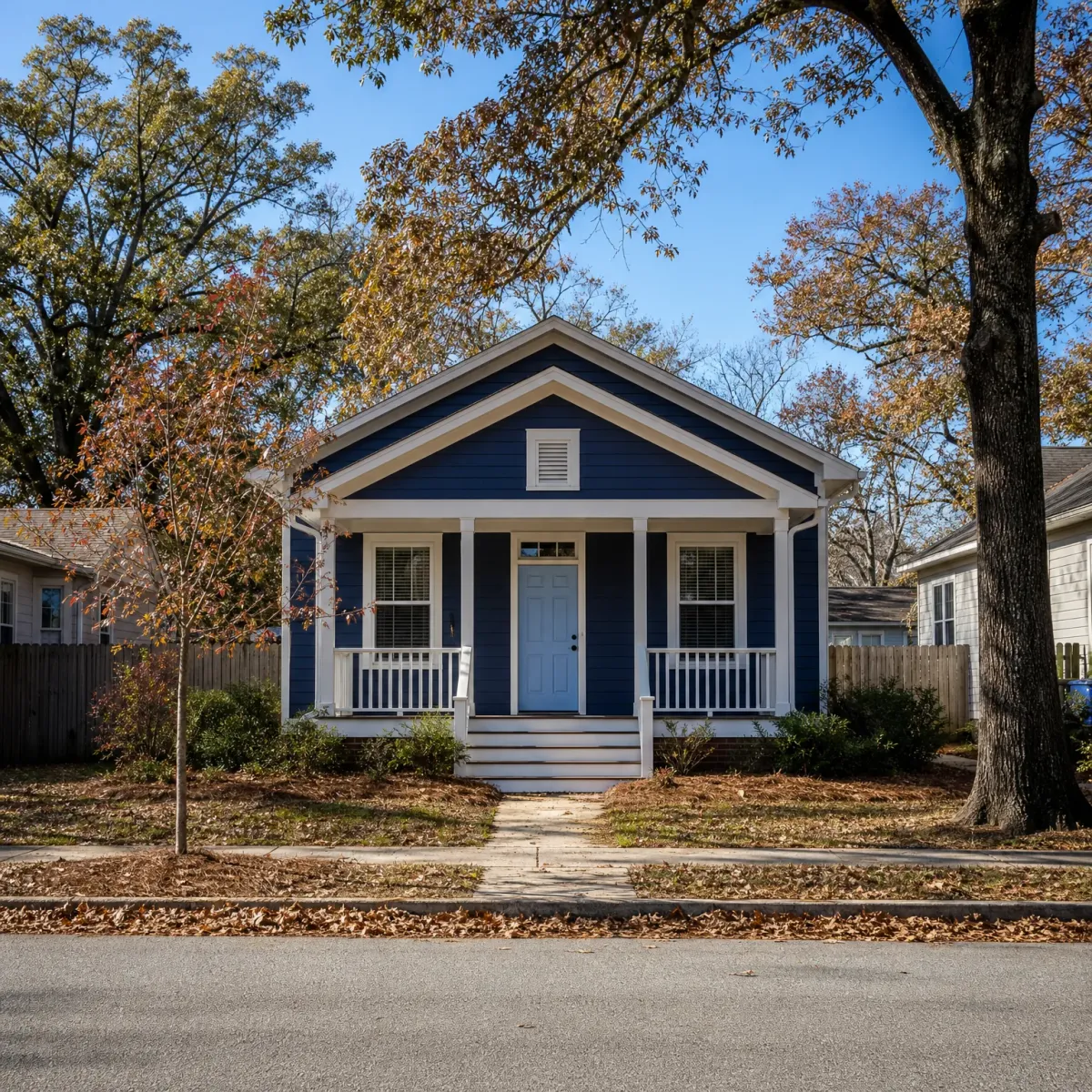
A small navy-blue single-story house with a white-columned front porch, light blue front door, and gabled roof, set behind a leaf-covered lawn with bare and autumn-colored trees under a clear blue sky.

What it costs you and what it does the rest of the year

Run the two machines on Georgia's own prices and the heat pump comes out ahead: $1.88 to make 100,000 Btu of heat against $2.21 for a gas furnace, about 15% less. That number already assumes a heat pump built to the federal minimum, nothing fancier, and it doesn't add anything for the backup heat some nights here will call for. A furnace burning propane instead of utility gas costs more still, since propane runs $32.44 per million Btu against $17.66 for natural gas, and propane heats about one home in ten here.

A furnace only heats. For the five months a year your cooling runs here, May through September, it sits unused while a separate AC does the work. A heat pump is both machines in one. Those 35 days a year that reach 90°F or hotter are the same system that keeps you warm in January.

Utility gas heats about one in four homes in this county, a bit below the state's 37.4%, and electricity already heats three in five. If a gas line already runs to your house, a furnace is simple to install, simple to get serviced, and pairs with whatever AC you already run. If it doesn't, bringing in gas just for a furnace is a cost a heat pump skips entirely, since it runs on the power already wired to your house.

Sources: NOAA nClimDiv · NOAA 1991–2020 seasonal normals · Census ACS 2020–2024 · EIA SEDS 2024 · 10 CFR 430.32 · PNNL Building America guide · PNNL-37127 field study · ENERGY STAR product criteria

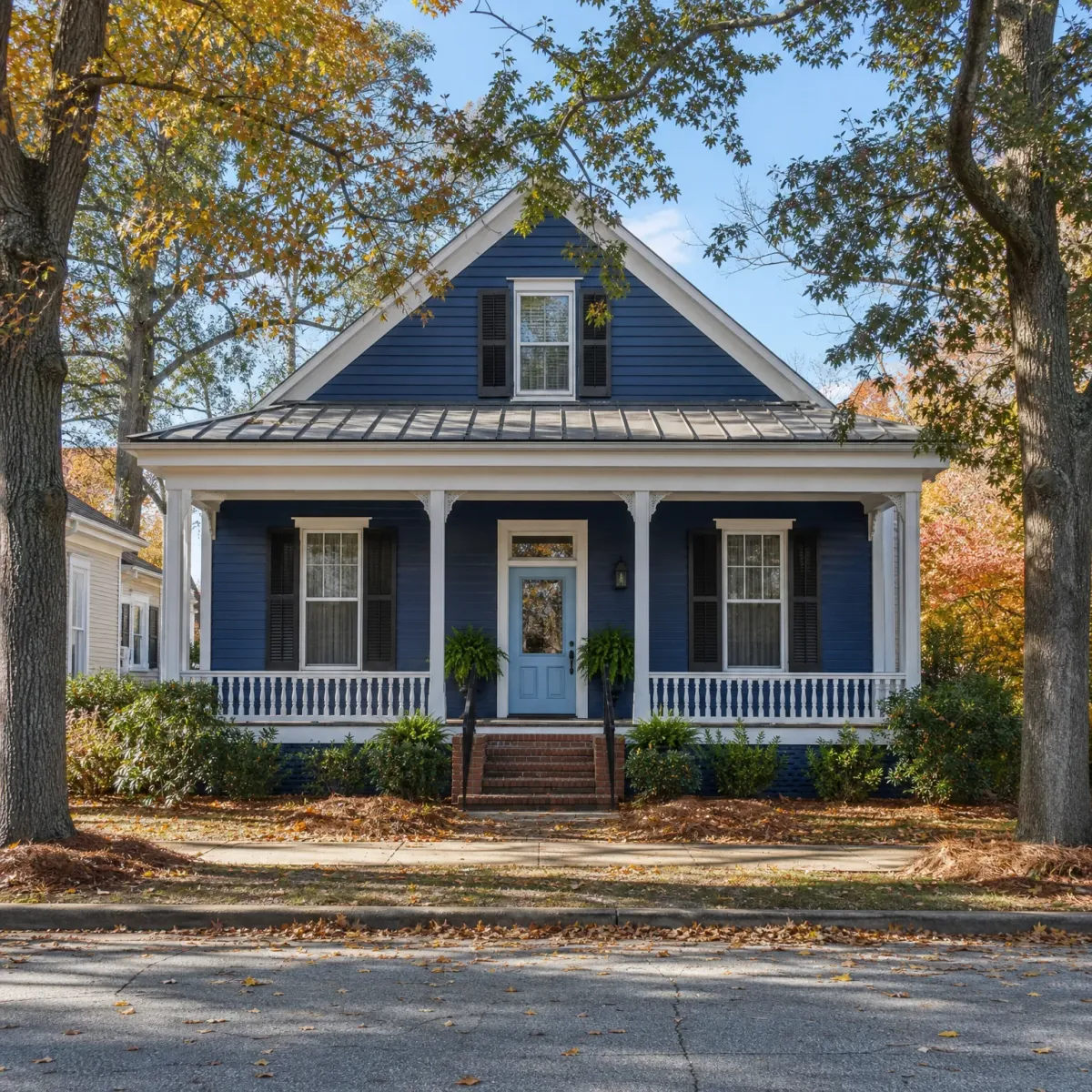
A navy blue single-story house with white trim, a covered front porch with turned balusters, black shutters, a light blue front door, and brick steps, framed by large trees with yellow autumn leaves and fallen leaves on the lawn and street.

Common questions about heat pumps and furnaces

  • Can I keep my furnace and add a heat pump?

    Yes, that pairing is common and it's called a dual fuel system. The heat pump carries the heating load most of the winter, since the overnight low here only hits freezing about 65 nights a year, and the furnace kicks in on the handful of nights it gets cold enough that a heat pump loses its edge. The furnace also still pairs with central AC in the months you're not heating.

  • What if my house doesn't have a gas line?

    A heat pump is the one built for that. It runs on electricity alone, so there's no gas line to add and nothing burning in the house. The other options without a gas line, electric resistance heat or a furnace burning oil or propane, either cost more to run or need their own fuel tank and deliveries.

  • What if my house heats with oil or propane?

    Propane heats about one in ten homes here, and it costs more than electricity per unit of heat delivered, $32.44 per million Btu against $41.27, but a heat pump moves heat rather than burning fuel to make it, which is why it still comes out cheaper to run at $1.88 per 100,000 Btu. Switching to a heat pump means no more propane deliveries or tank to maintain. The same goes for oil heat, which isn't common here but runs on the same logic.

  • Is a heat pump cheaper to run than a furnace in Carroll County?

    Yes. A heat pump here runs $1.88 per 100,000 Btu of heat against $2.21 for a gas furnace, at Georgia's average fuel prices. That's with both machines built to the federal minimum, and the heat pump's number doesn't add anything for backup heat on the coldest nights.