





A gray forced-air furnace with metal ductwork stands in an unfinished basement with exposed wooden joists, concrete walls, and a single hanging light bulb.

Furnace Repair in Carrollton, GA

Tell us about the job

Takes about a minute. No obligation.

RepairFurnace or heatingCarroll County, GA
Step 1 of 2

What ZIP code is the job in?

Half the homes in Carroll County were built in 1991 or later. If yours is one of them, your furnace is probably newer too, especially if it's the original unit. A furnace from a house that age still has real working life in it, and most problems at that stage are worth fixing rather than walking away from. That changes the math on a repair call. A cracked heat exchanger or a dead blower motor on a much older unit is one thing. The same failure on a furnace with a decade or two of life left in it is usually just a repair.

7 months
October through April, your furnace is on duty
34°F
the average winter night it heats against
2 winter storms
in ten years, the nights a failure hurts most
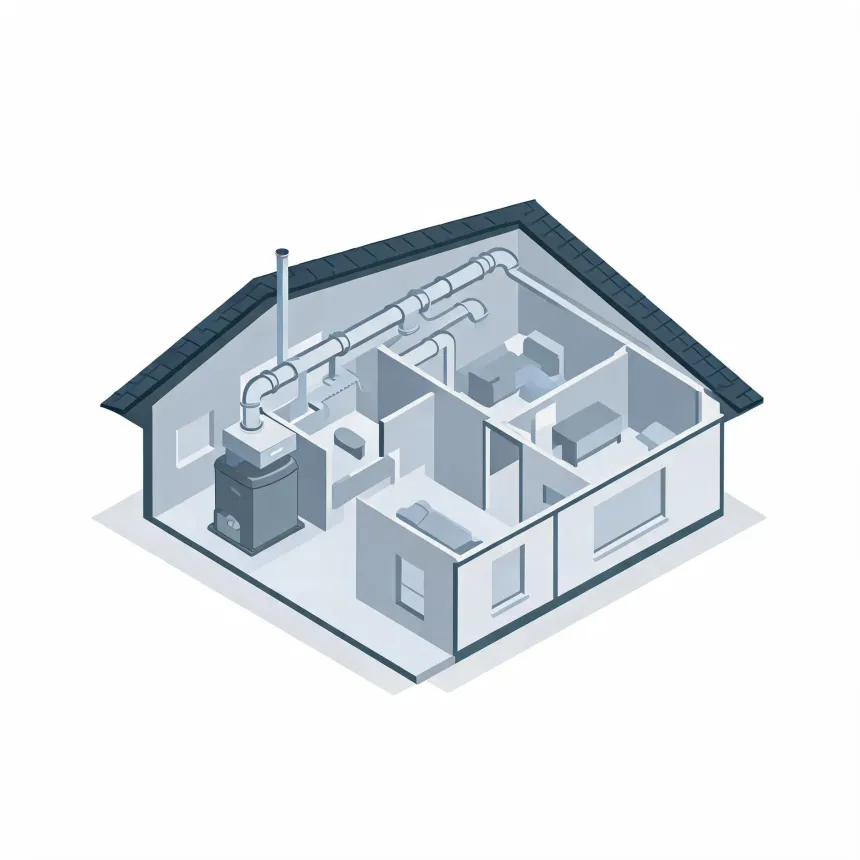
Isometric cutaway illustration of a single-story house showing interior rooms, ductwork running along the ceiling, a flue pipe through the roof, and a dark furnace unit in one corner.
Your furnace works hardest from November through March.

NOAA nClimDiv, 1991–2020 normals

Your furnace only has to run about seven months a year here, October through April.

The rest of the year it sits idle, so a furnace here builds up less wear than one running most of the year.

Carroll County sees a lot of severe weather. Check the outdoor unit after a bad storm, even if it's still running.

102 severe weather events from 2015 to 2024
31% of homes statewide lost power a day or more in 2024
87 damaging wind events from 2015 to 2024
Furnace trouble shows up fast in OctoberCarroll County furnaces sit idle most of the year, so the first cold snap is when a weak part gives out.

If your furnace shares a system with central air, the outdoor condenser sits outside through every storm that comes through. Carroll County has had 87 damaging wind events and 7 hail events between 2015 and 2024. Wind throws branches and debris into that unit, and hail dents the fins. None of that touches the furnace itself, but a bent or clogged condenser can throw off how the whole system runs, heat included on some setups. After a bad storm, walk out and look at it. Dented fins, a cracked fan blade, debris packed into the coil, any of that is worth a call even if the furnace still fires up and heats the house fine.

Your Furnace Has Had It Easier Than Most. That's a Good Reason to Fix It.

A furnace that only runs seven months out of the year doesn't take the beating one does in a place that leans on it most of the year. Less run time means less wear, and most problems that show up are something worth fixing rather than replacing. Get it looked at and get the heat back.

Find a contractor
A man in a cap, dark t-shirt and work trousers carries a canvas tool bag up porch steps toward a blue front door, with a tall planter and shrub beside the entry.
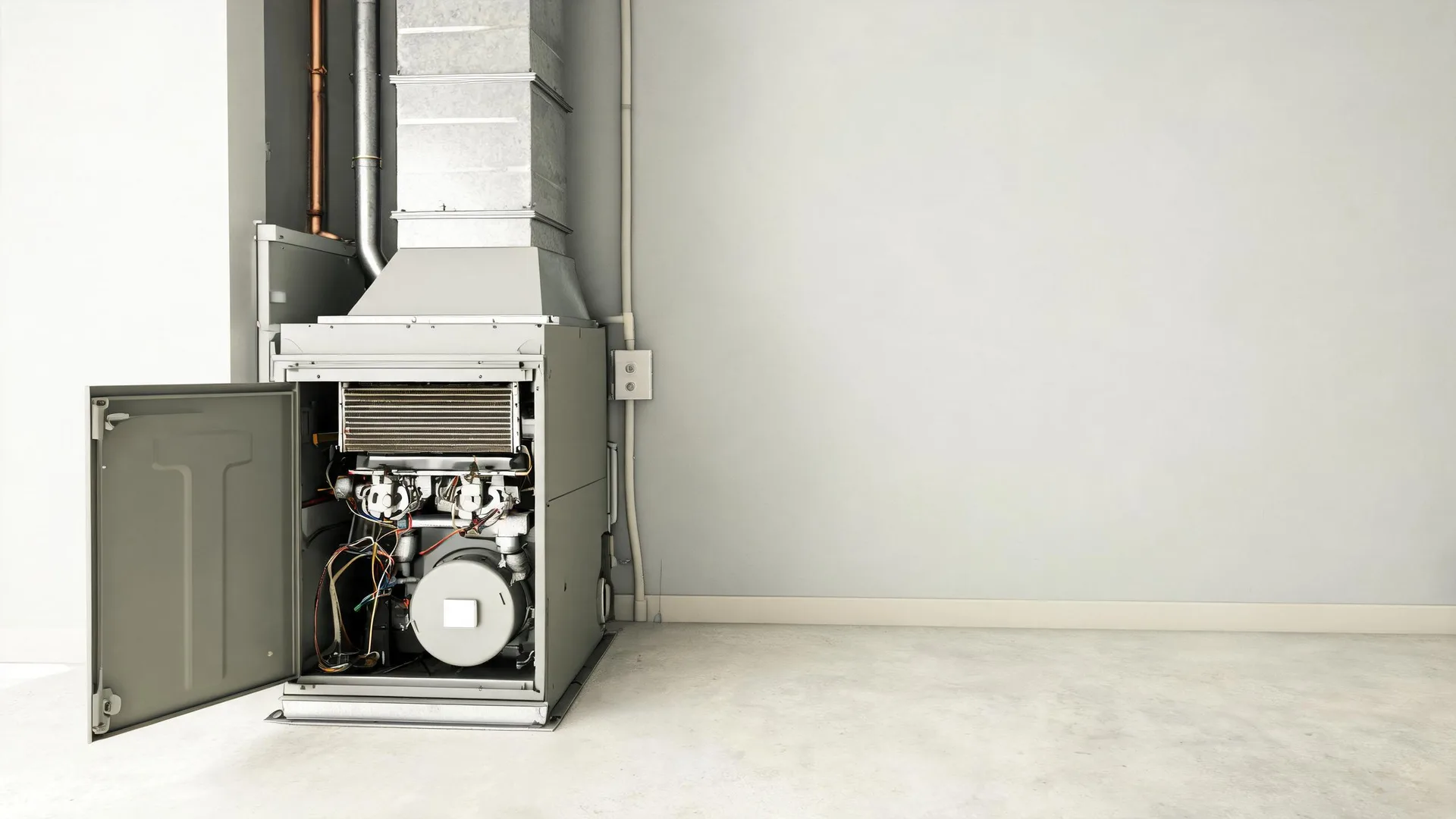
A gray residential gas furnace installed in an unfinished basement, surrounded by ductwork, a metal flue pipe, and a gas supply line.

A Young Furnace With an Easy Schedule

Look at the clip across a full year and the pattern is obvious: long stretches where this furnace does nothing at all. A system built in 1991 or later has most of its working life still ahead of it, and all that idle time only stretches that life further out. Put the two together and a repair now is money spent on a furnace that's going to be around for a while, not one on its way out the door.

What you can check safely

Start at the thermostat. Make sure it's set to heat and the set temperature is above room temperature, and swap the batteries if it uses them. Go to the furnace and check the power switch, it looks like a light switch on or near the unit, and make sure it hasn't been bumped off. Check the breaker at your electrical panel too. If you have a standing pilot, look for the small flame through the viewing window and follow the relight instructions printed on the unit if it's gone out. Pull the filter and hold it up to a light. If you can't see light through it, replace it. A clogged filter starves the system of airflow and can shut it down on its own.
What to leave alone

Don't open the main burner compartment or touch the gas valve. Don't try to relight an electronic ignition system, there's no pilot to light and poking at it can make things worse. If you smell gas, don't flip any switches or light anything, leave the house and call the gas company from outside. If the furnace trips the breaker more than once, stop resetting it and call someone, that's usually a short or a failing motor and resetting it again won't fix it. A furnace that smells like it's burning dust for a few minutes after months of not running is normal. One that keeps smelling off, smells like smoke, or smells like rotten eggs is not.

Short cycling is one of the first things people notice, the furnace kicks on, runs for a minute or two, then shuts off before the house warms up. That usually points to a dirty flame sensor or a clogged filter choking off airflow. A furnace that runs constantly without ever reaching the set temperature is often a different problem, sometimes a thermostat issue, sometimes a blower that can't push enough air. Listen for a boom or bang at startup, that's delayed ignition, gas building up before it lights, and it's hard on the heat exchanger over time. A clicking sound that repeats without the burners ever catching usually means the igniter is failing or the flame sensor isn't reading a flame. Weak, lukewarm air out of the vents when the burners are clearly running points to a heat exchanger or blower problem rather than a thermostat setting. Any of these is worth a call, the longer a furnace runs while misfiring, the more it tends to wear on the parts around the one that's actually failing.

A diagnostic visit starts before any panel comes off. A tech will ask when the trouble started, what it sounds or smells like, and whether it's constant or comes and goes. Then they check the easy stuff first, power, thermostat settings, the filter, before opening up the unit. Inside, they're checking the flame sensor and igniter, watching the burners light, and tracing the sequence from thermostat call to blower kicking on. They'll pull the cover on the blower compartment and look at the motor and wheel, and check the heat exchanger for cracks or scorch marks since that's a safety issue, not just a performance one. Gas pressure gets checked too, since too much or too little affects how clean the burners fire. Most of this is done with the furnace running, because a part can look fine sitting still and still be the one causing the problem.