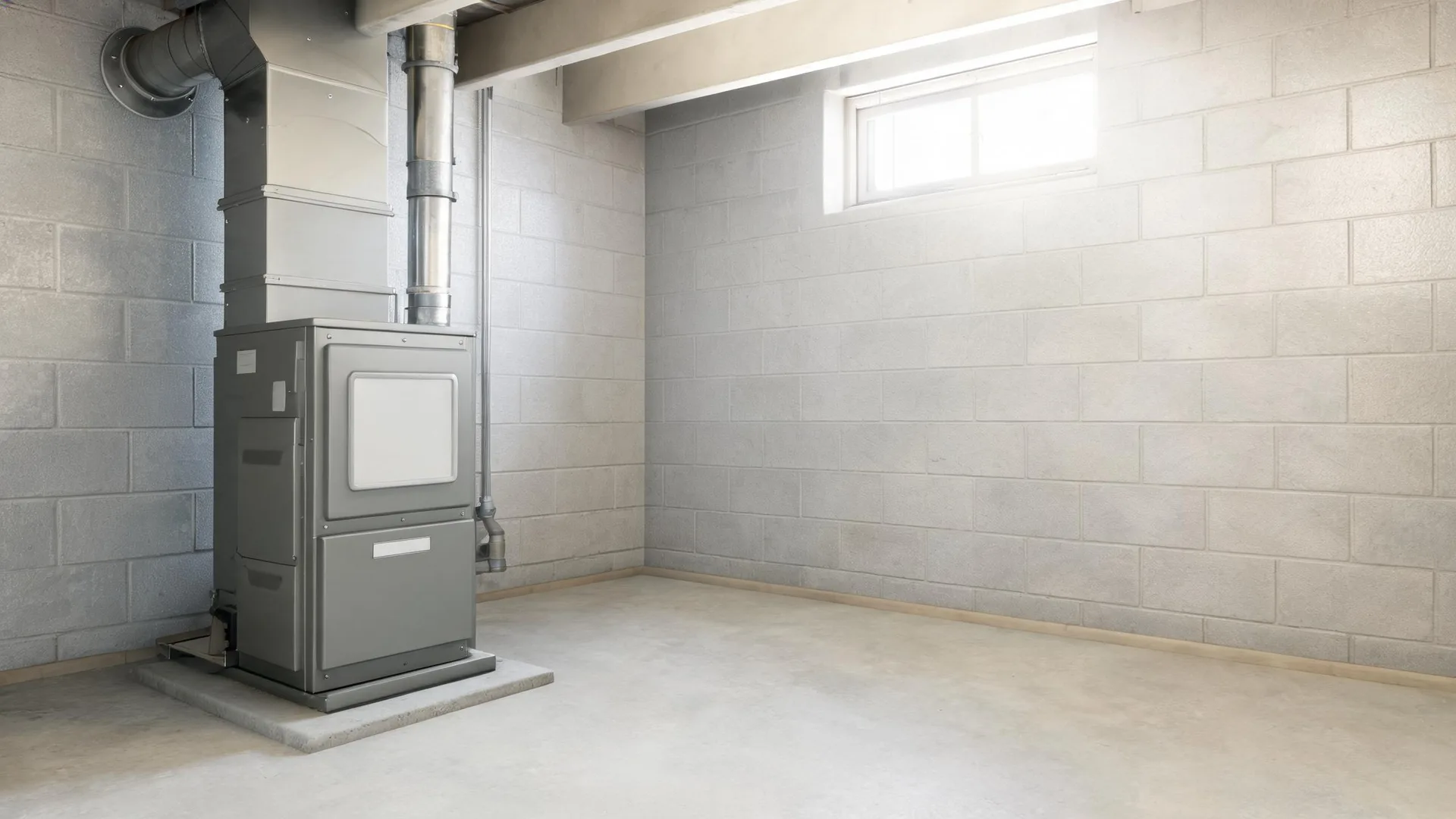
An unfinished basement interior showing a gray furnace unit beneath a bare incandescent bulb, surrounded by exposed joists, concrete walls, cardboard boxes, and utility pipes.

Furnace Installation in Carrollton, GA

Tell us about the job

Takes about a minute. No obligation.

New system or replacementFurnace or heatingCarroll County, GA
Step 1 of 2

What ZIP code is the job in?

Weather here does real damage

Carroll County logged 102 severe weather events between 2015 and 2024, 87 of them damaging wind. Three tornadoes touched down in that stretch, along with hail, tropical storms and winter ice. A new furnace here is going into a county that gets hit this often.

Outages come with the storms

Nearly a third of Georgia households were without power for 24 hours or more at some point in 2024. When the power goes out, an electric furnace stops, and so does the water heater. That's worth planning for before the install, not after the lights go out.

7 months
October through April, your furnace is on duty
34°F
the average winter night it heats against
80% AFUE
the federal minimum any new unit must meet
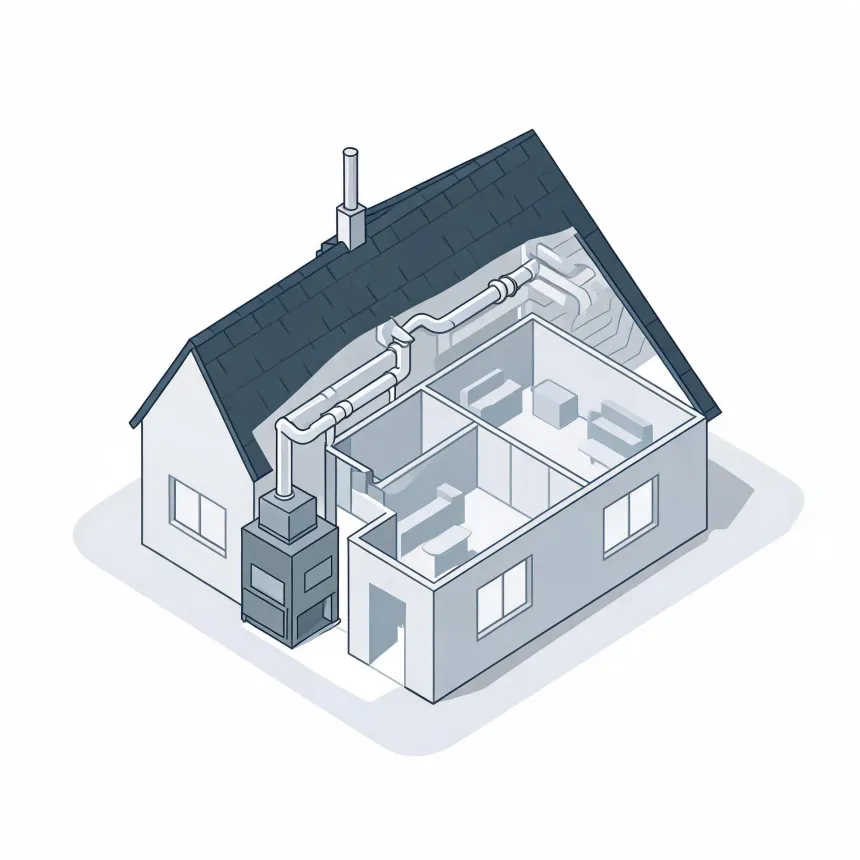
Isometric line illustration of a cutaway single-story house with a dark shingled roof, showing interior rooms and ductwork connected to a gray furnace unit with a flue pipe.
Your furnace works hardest from November through March.

NOAA nClimDiv, 1991–2020 normals

Furnaces in Carroll County only run about seven months a year.

A furnace that isn't working hard all year doesn't need to be the top-end model to hold up.

Heat starts in October. Get the new furnace in before then.

Heat runs October through April
Climate zone 3A
Winter nights average 34°F

Electricity heats 58 percent of homes in Carroll County, more than gas and propane combined. If your old furnace ran on electricity, an electric furnace is almost always the straightforward swap, since the wiring and breaker setup are already there for it. Gas is next at 27.3 percent, and propane heats another 11.9 percent, mostly in homes without a gas line nearby. Swapping within the same fuel keeps the job simpler and avoids running new gas or power lines through the house. Given the outages this county sees, it's worth asking what happens to that furnace, electric or gas, when the power drops.

Plan for the power to go out, because here it will

This is the point to ask about it, not after a storm takes the power out. Ask what the new furnace needs to run if the power drops, and whether a transfer switch or backup power makes sense for this house. Ask where the outdoor equipment will sit and what protects it from wind and hail. Settling that now, while the install is being planned, is easier than working it out later.

Find a contractor
A man in a cap, gray T-shirt and tan work pants climbs porch steps toward a blue front door, carrying a canvas tool bag in his right hand, with a potted shrub in a blue planter beside the door.
A gray residential gas furnace installed in an unfinished basement, connected to sheet-metal ductwork and PVC pipes.

Seven months a year, then it waits

Seven months of work a year is a light schedule for a furnace. The rest of the year it sits idle, which means less wear on the heat exchanger and the blower motor over its life. That's one more reason not to pay extra for a top-tier unit here. Put that money instead toward a transfer switch or backup power, since the furnace that matters most is the one still running when the grid goes down.

The rating measures fuel use, not power draw

The AFUE number on the label tells you how much of the fuel burned turns into heat in the house, with the rest going out the flue. It says nothing about the electricity the blower, the control board or the igniter need to run. A furnace with a high AFUE can still need a steady supply of power to move that heat through the ducts.

A high rating doesn't buy you a backup plan

Chasing a higher AFUE number mostly shows up as a smaller fuel bill over the life of the furnace. It doesn't change what happens the moment power drops, since the blower motor, igniter and control board all stop no matter how efficient the burner is rated. A plan for outages has to come from something other than the rating on the label.

The old furnace does not get reused once the new one goes in. A technician disconnects the gas line or the electrical circuit feeding it, depending on what it ran on, and caps or secures that connection before anything is pulled out. The ductwork and venting get checked at that point too, since a new furnace sometimes needs a different vent size or a different return setup than what the old one used. The heat exchanger and blower assembly get hauled out as one unit in most cases, since by the time a furnace is replaced those parts are usually too worn to be worth saving. Metal content in the cabinet and coil means most of it gets recycled rather than landfilled. None of this changes what the new furnace needs to run. The old one is gone either way, and the question that matters now is what keeps the new one working when it has to.

Carroll County sits in zone 3A under the 2021 energy code, a warm zone with a long cooling season and a short winter. Any gas furnace going in now has to turn at least 80.0 percent of its fuel into heat, the minimum set for units built from November 2015 on. That floor isn't about picking a premium furnace, it's the baseline every furnace sold today already has to clear. Starting December 18, 2028, the minimum rises to 95.0 percent, so a furnace built after that date has to hit a higher mark than one built today. For now, an 80 percent unit is legal to install and meets the standard this zone requires.