


Can a heat pump keep up on the cold nights here
Winter here is mild, and that is the whole case for a heat pump. The heat runs five months, November through March, and the overnight low over those months averages 35°F. About 55 nights a year dip to freezing or below, under half the nights in the heating season, and almost none of them see single digits. Fewer than one night a year hits 0°F.
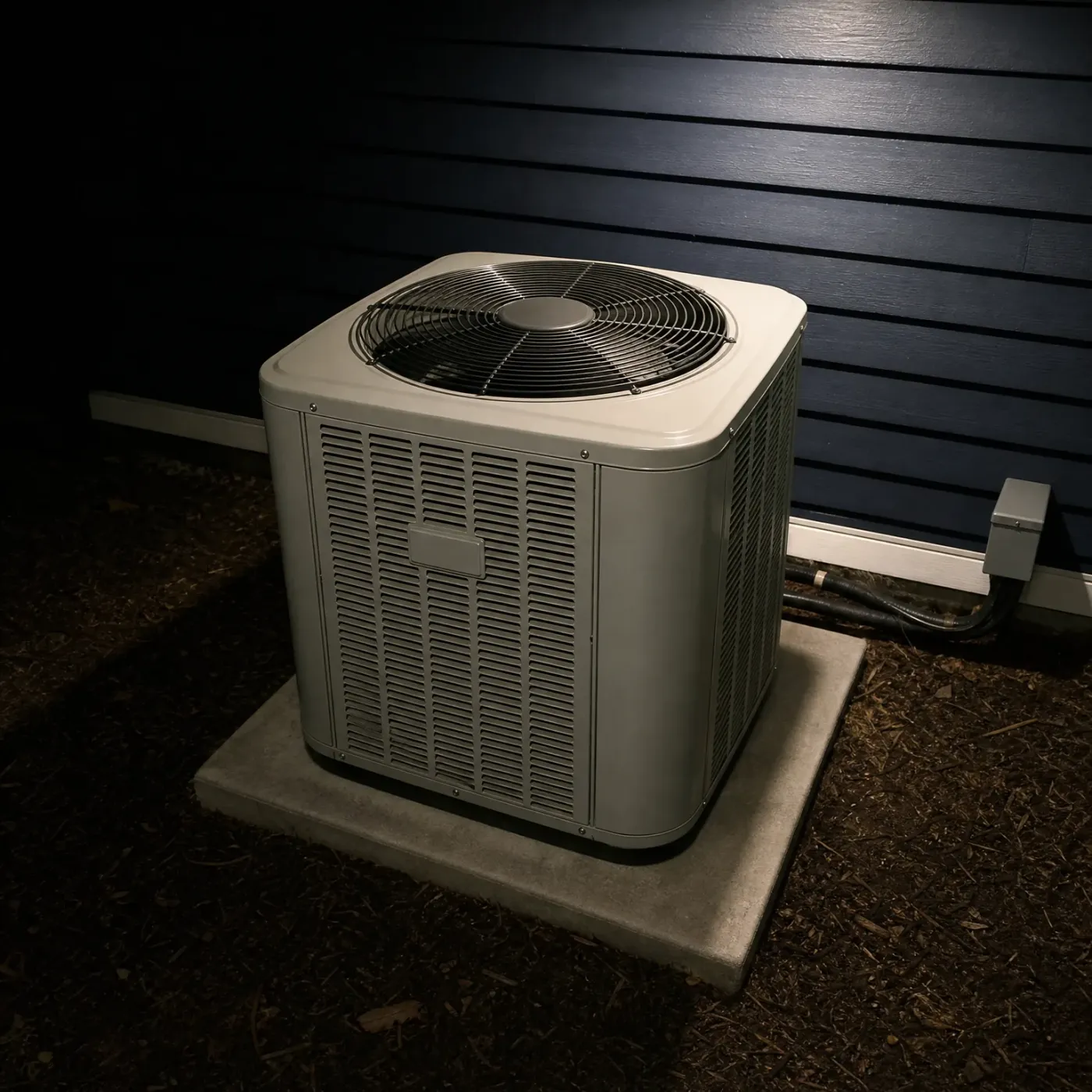
That matters because a standard heat pump has two weak points, both of which show up in this climate. Below 40°F it starts putting out less heat than its rating. Below about 35°F it often leans on backup heat to make up the difference. Clarke County's average winter low sits right at that second mark, and every one of the roughly 55 freezing nights is colder than both. So on a good number of winter nights, a standard heat pump here will call on its backup heat.
That is not the same as saying it will leave you cold. Field testing on cold-climate heat pumps found backup heat covered only a small share of total heat between 0°F and 35°F, and the unit ran on backup alone only rarely, and that was above 0°F, a temperature this county almost never sees. A heat pump built to the ENERGY STAR Cold Climate spec has to hold onto most of its capacity at 5°F and still produce more heat than electricity put in. Clarke County's cold snaps are short and shallow compared to what that spec is tested against.