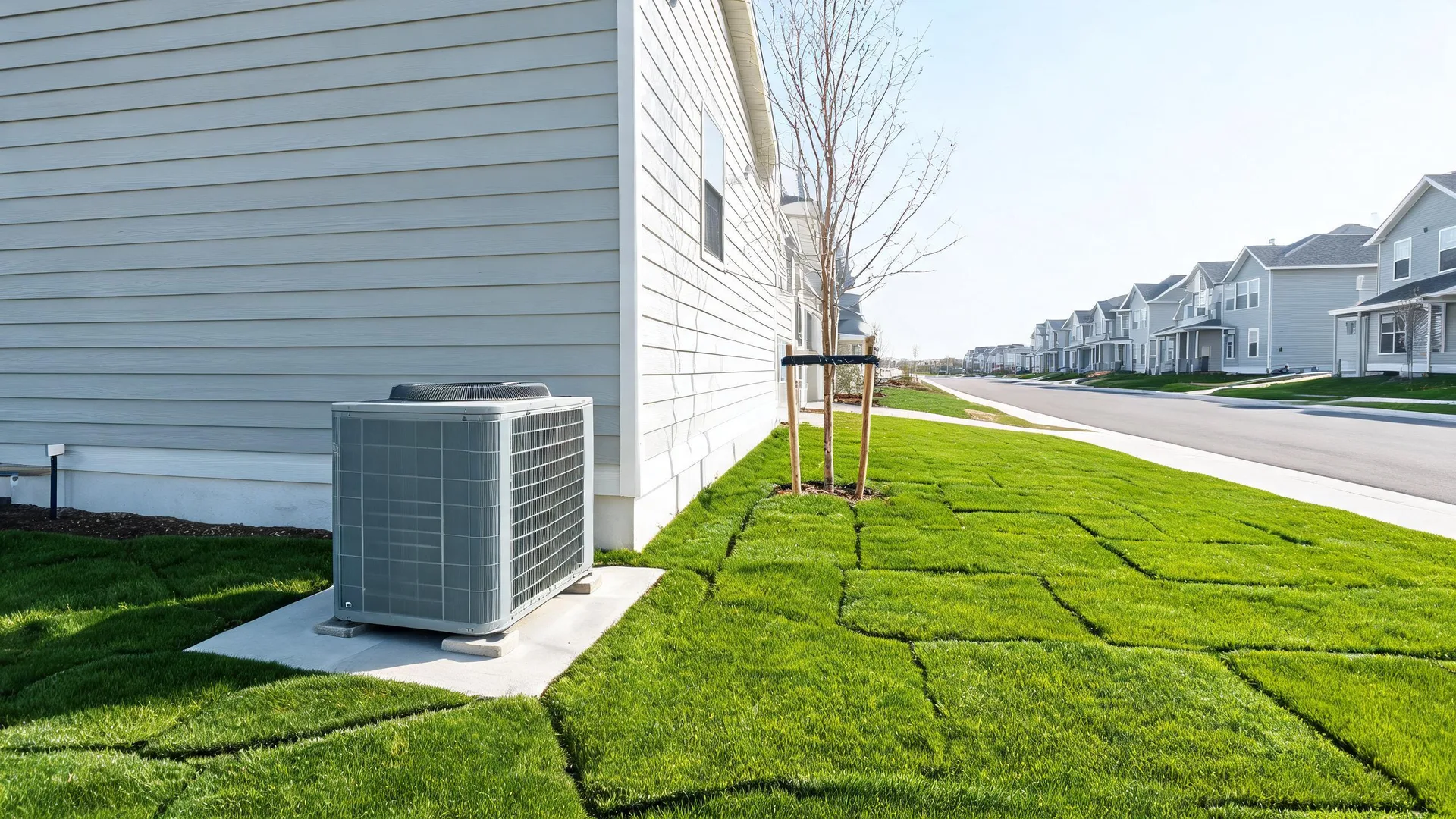
Most homes here already run on electricity
Electricity heats 68.3 percent of homes in Clarke County. A heat pump fits that setup without asking for a gas line or a new fuel source.

Takes about a minute. No obligation.
Electricity heats 68.3 percent of homes in Clarke County. A heat pump fits that setup without asking for a gas line or a new fuel source.
A contractor can plan around the wiring and ductwork already in place for electric heat, rather than converting a system built for gas.
NOAA nClimDiv, 1991–2020 normals
Heat here runs November through March.
April puts a new heat pump in place before cooling starts in May, and October does the same before heat starts in November.




Any heat pump installed in Clarke County has to meet 14.3 SEER2 for cooling and 7.5 HSPF2 for heating. That's the federal minimum, but the Southeast holds central air systems to a higher bar than the rest of the country, since the region runs hot for so much of the year. Those numbers are the floor, not the ceiling. A contractor sizing your system for Athens winters and summers may land above the minimum anyway, since the unit runs more months here than it would further north. A federal tax credit is available for qualifying heat pumps, which can offset some of the cost of meeting or beating these standards.
Electricity here runs 14.08 cents per kilowatt-hour, cheaper than most of the country. That changes the math on which heat pump to pick. A high-efficiency model still costs more up front, and with power this cheap it takes longer to earn that back. Picking one that fits your home and holds up through Athens winters and summers matters more than chasing the highest efficiency number on the sticker.
Find a contractor
Your heat pump runs most of the year here, but it's rarely straining. Mild winters and the wind events that hit this county more than cold ever does mean the job is steady, not hard. That's the case for picking a system built to last rather than one chasing the highest number on the sticker. A straightforward, well-sized unit will hold up fine through years of this kind of duty.
A contractor has to work out how much heat your home loses and gains before picking equipment. That calculation sets the size of the compressor and the air handler, and the ductwork has to move enough air to match. Get the size wrong and you pay for it either way, a unit too big cycles on and off and wears out its parts faster, one too small runs constantly and still can't keep up.
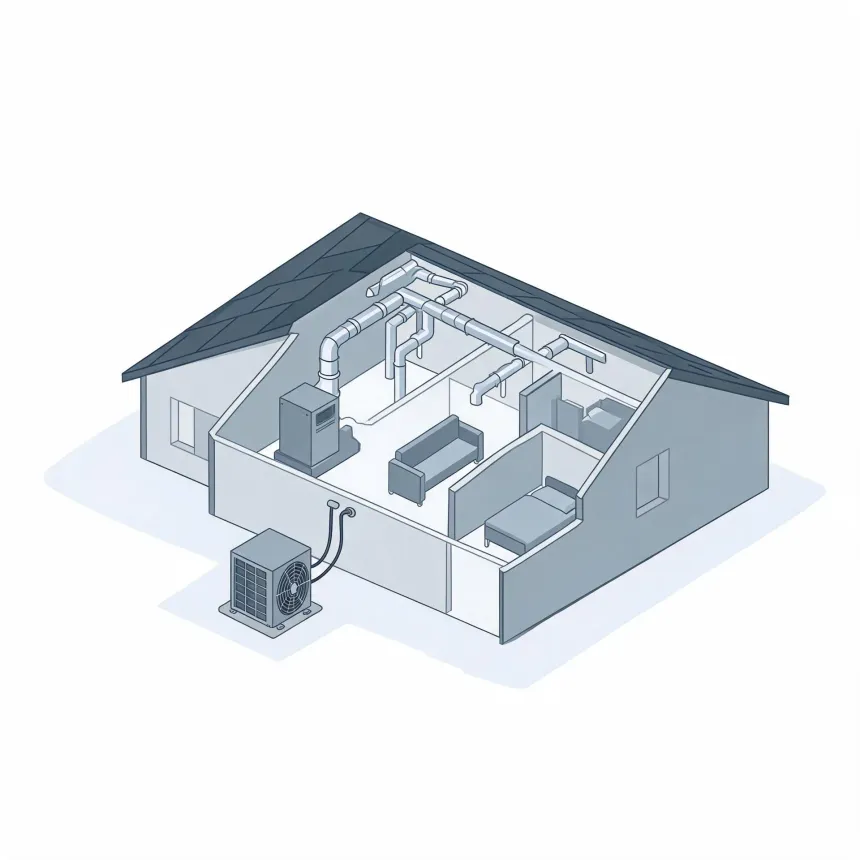
If the ductwork, electrical panel and line set can carry what the new system needs, installation is mostly swapping equipment. If the panel needs more capacity, or the ducts are leaky or undersized for the airflow a heat pump requires, that work gets added to the job before the new system ever turns on.
Sizing a heat pump starts with a load calculation, not a look at the old unit's label. A contractor measures the square footage, the windows, the insulation, and the orientation of the house to work out how much heat it loses in winter and gains in summer. That number, not the size of whatever is being replaced, is what the new equipment has to match. Old systems were sometimes oversized to begin with, so matching the last unit just repeats the mistake. The load calculation also sets the airflow the ductwork needs to carry, which is why a contractor checks the ducts before quoting equipment rather than after.
Installation day starts before anyone touches the old equipment. The crew confirms the load calculation and the equipment match, then shuts down power to the existing system and recovers the refrigerant from it, since that can't just be vented. The old unit comes out, indoor and outdoor, and any ductwork or electrical changes identified ahead of time get done before the new equipment goes in. The new outdoor unit gets set on a pad or bracket, the indoor air handler or coil gets connected to the ductwork, and the line set linking them gets run, flushed and checked for leaks. Once the refrigerant charge is set and the electrical connections are tested, the system runs through a full cycle in both heating and cooling before the crew leaves, checking temperatures at the vents and making sure the thermostat is talking to the unit correctly.