Two illuminated white Southern-style houses with wraparound porches and staircases, framed by a Spanish moss-draped tree on a quiet street at night.

Furnace Installation in Athens, GA

Tell us about the job

Takes about a minute. No obligation.

New system or replacementFurnace or heatingClarke County, GA
Step 1 of 2

What ZIP code is the job in?

Most homes here run on electric heat

Electricity heats 68.3% of occupied homes in Clarke County. Gas reaches 29.0%, and propane accounts for the rest. If your house already has gas line or ductwork for a gas furnace, that's less common here than electric heat.


What this means for your install

A straight swap, electric for electric or gas for gas, is usually the simplest job because the fuel line and venting are already in place. Switching fuel types means the contractor has to check whether a gas line or proper venting exists before anything else.

5 months
November through March, your furnace is on duty
35°F
the average winter night it heats against
80% AFUE
the federal minimum any new unit must meet
Isometric cutaway illustration of a single-story house showing interior rooms with furniture, a furnace unit with connected ductwork and a tall vertical flue pipe extending above the dark shingled roof.
Your furnace works hardest from November through March.

NOAA nClimDiv, 1991–2020 normals

Electricity in Georgia ran $41.27 per million Btu in 2024.

A standard furnace sized right for your house is what keeps that cost in line, nothing fancier needed.

Five months of heat, mild nights, nothing extreme to size for

Heat runs November through March
Winter nights average 35°F
Climate zone 3A
Get it in before NovemberHeat season runs November through March here. October is the month to have it done.

Any furnace installed here now has to hit 80 percent AFUE, the federal floor for non-weatherized gas furnaces manufactured from November 19, 2015 on. Clarke County sits in zone 3A, a warm, humid climate with a short mild winter, and nothing about the code here pushes you toward a higher-efficiency unit than that. A stricter standard takes effect down the road, tied to the furnace's manufacture date rather than when you buy or install it. Worth asking your contractor which standard the unit they're quoting was built under.

Standard size, standard efficiency, no reason to size up

A standard furnace sized for the house is what this county calls for. Clarke County saw 48 damaging wind events and 10 hail events over the past ten years, but almost nothing in the way of deep cold, just one winter storm in that same stretch. None of that points you toward a bigger or higher-efficiency unit than your house actually needs. Size it for the square footage, not for the weather.

Find a contractor
A man in a cap, gray long-sleeve shirt and tan work pants carries a worn canvas tool bag up wooden porch steps toward a blue front door, with a potted shrub to the left.
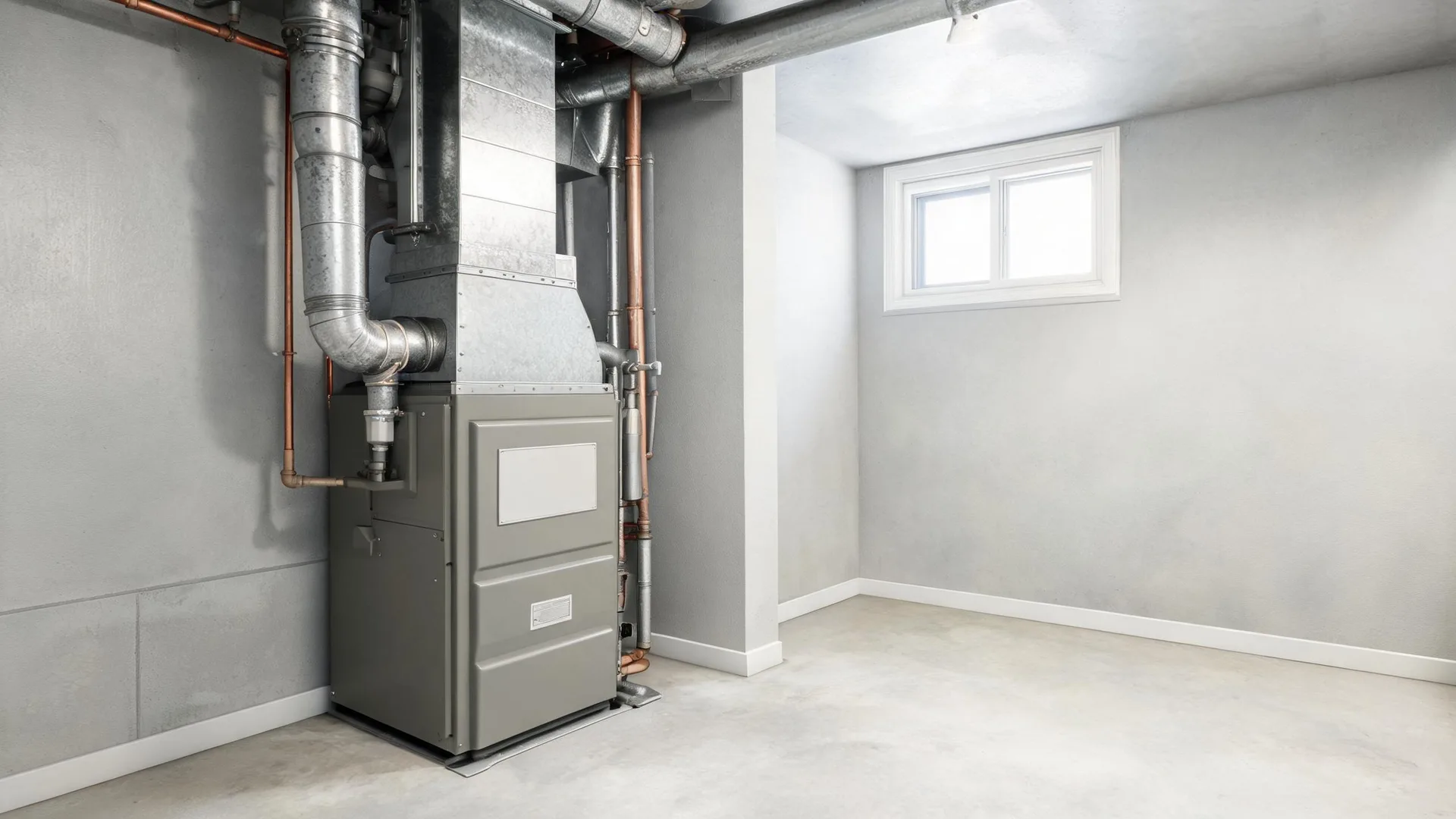
A gray residential gas furnace installed in an unfinished basement, connected to sheet-metal ductwork and PVC pipes.

A light enough load that standard holds up

Five months of work a year, and nights that only average 35°F, nothing near what a furnace in a colder state has to push against. A unit sized to the house will cycle on, hold the room, and shut off without strain. When you're comparing quotes, that's the case for sticking with a standard model rather than paying more for a higher tier of furnace built for weather Clarke County doesn't get.

The size of the furnace, not the brand, sets the price

A furnace has to match the house, square footage, duct layout, how the rooms are arranged. Too big and it short-cycles, heating the air fast then shutting off before the house actually warms through. Too small and it runs constantly and still falls short. A contractor sizes it with a load calculation, not a guess off the old unit, and that number drives which model fits.

What's already there changes the job

Swapping a furnace for the same type in the same spot is the plainest version of this job, the vent, the gas line or electrical, the ductwork, all stay put. Move the unit to a new spot, resize the ducts, or add venting that wasn't there before, and the labor grows even though the furnace itself might cost the same. Ask what the contractor found when they looked at what's already in place, not just what they're quoting for the unit.

A load calculation looks at the whole house, not just the square footage number. The contractor measures or pulls the dimensions of every room, checks window area and orientation, counts exterior doors, and looks at how much of the building's surface touches outside air versus an attic or another conditioned room. Insulation levels factor in too, since a well-insulated wall loses heat slower than a thin one, and that changes how hard the furnace has to work to hold a room at temperature. All of that gets run through a standard formula that spits out a Btu number, and that number, not the size of the furnace being replaced, is what the new unit gets matched to. Skipping this step and just buying the same tonnage as before carries the old mistake forward if the last one was ever sized wrong to begin with.

Installation day starts with the old furnace coming out, and venting or gas line work if the spot or fuel type is changing, so plan for the house to go without heat for part of the day. The contractor runs gas line, electrical, and a vent or flue to the new unit, then sets the furnace and connects it to the existing ductwork. Everything gets tested before anyone leaves. Gas pressure gets checked against the manufacturer's spec, airflow gets measured at the supply vents, and the system runs through a full cycle so it fires, heats, and shuts off the way it should. A combustion analyzer checks the exhaust on a gas unit, confirming it burns clean and vents properly instead of spilling exhaust back into the house. The contractor should walk through the thermostat settings and point out the filter location before leaving, since that's the one piece of upkeep that falls to the homeowner. A straight swap in the same spot usually wraps in a day. Moving the unit, resizing ductwork, or adding venting that wasn't there before stretches the job longer, since each of those is its own task layered on top of the install.