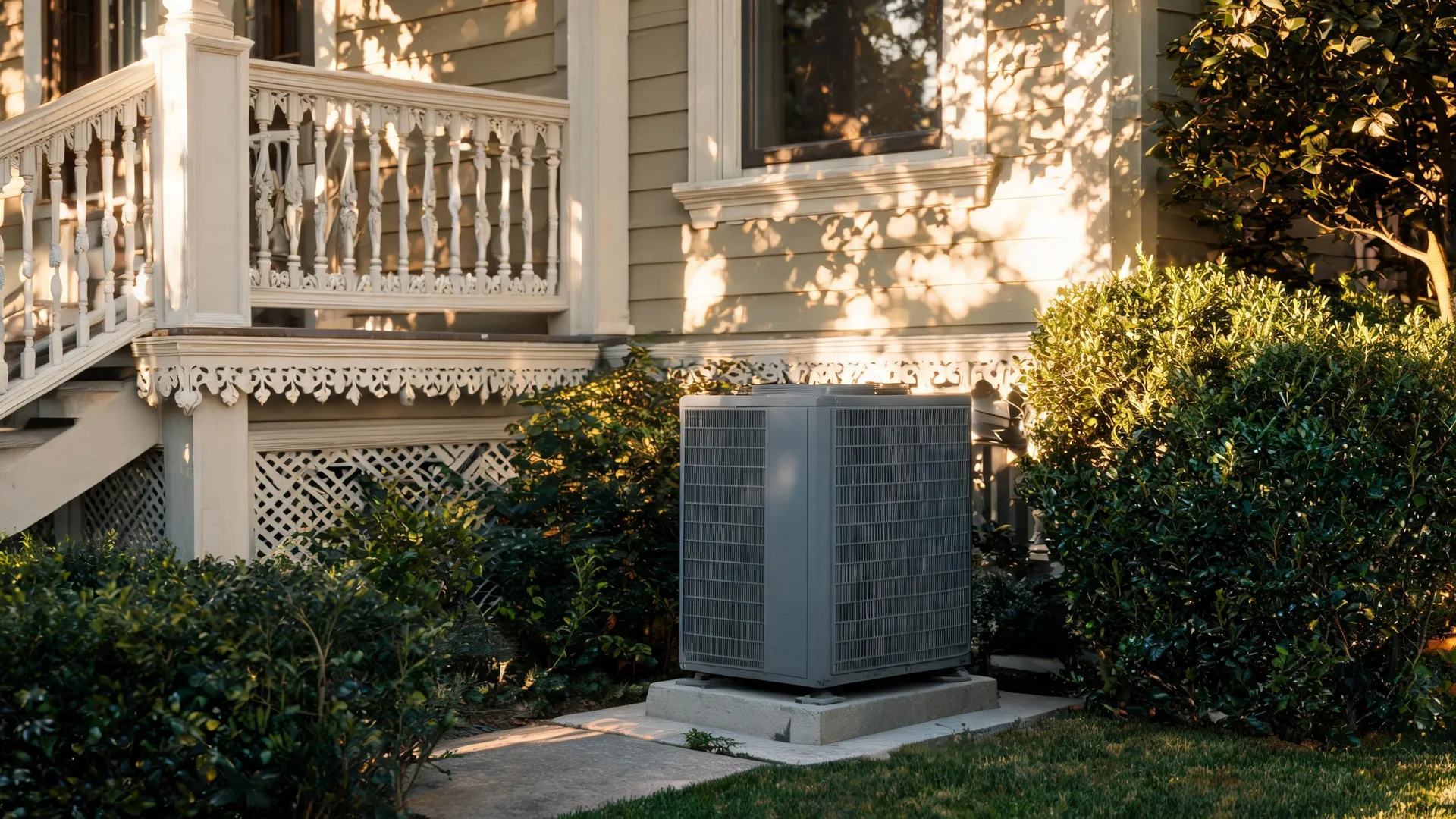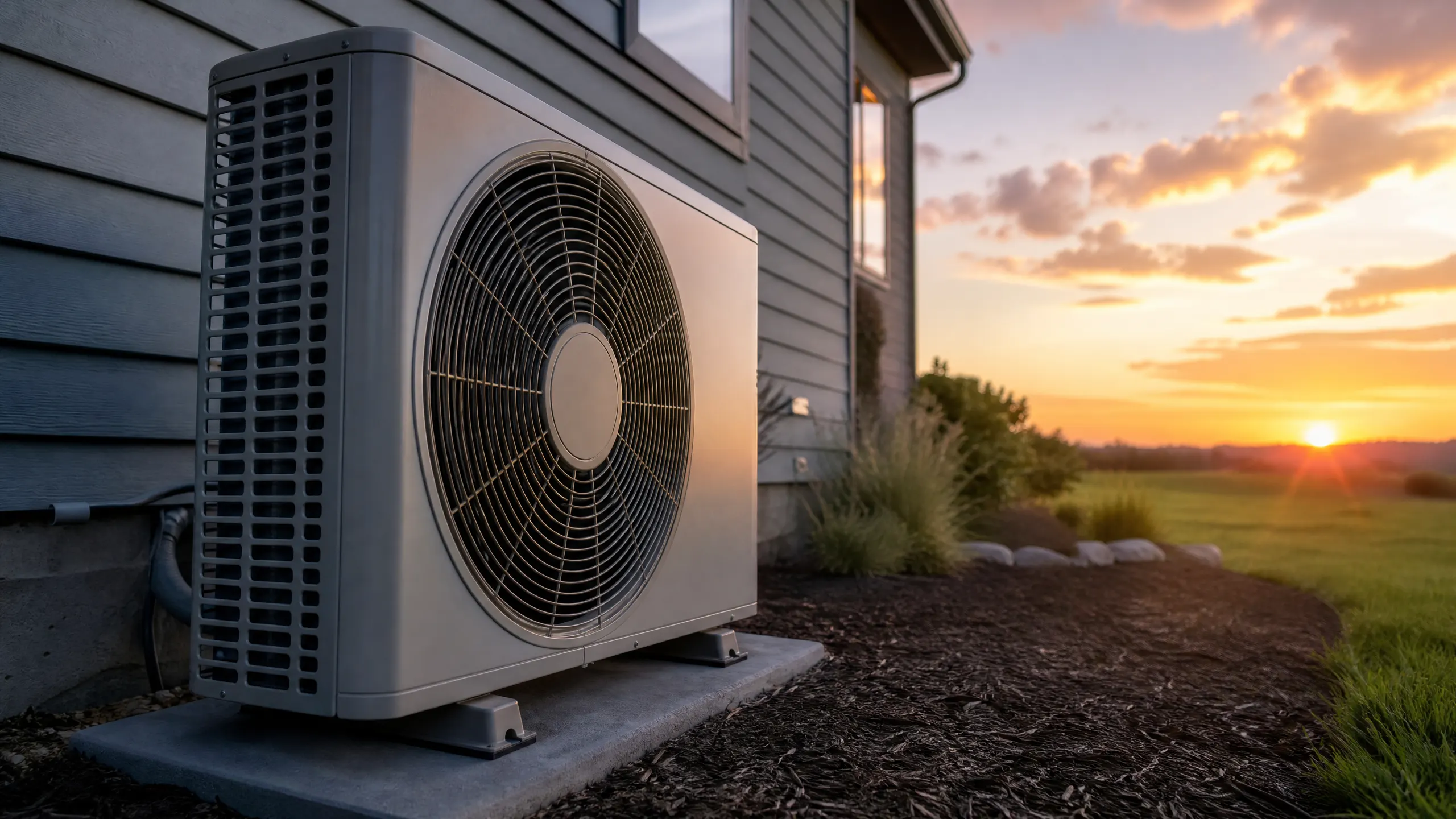
A grey residential air-conditioning condenser unit mounted on a concrete pad beside a house, photographed at sunset.

Heat Pump Repair in Warner Robins, GA

Tell us about the job

Takes about a minute. No obligation.

RepairHeat PumpHouston County, GA
Step 1 of 2

What ZIP code is the job in?

A refrigerant leak forces the compressor to strain

When a heat pump runs low on refrigerant, the compressor has to work harder to move the heat the house needs. That extra strain shows up as heat inside the compressor itself, and heat is what wears the windings and bearings down. A leak that goes unfixed can turn a simple repair into a full compressor replacement.


Frost on the outdoor coil spreads if it's ignored

The outdoor coil needs open airflow to pull heat from the air outside. Once frost starts building on it, that airflow gets blocked, and the system can't shed the ice on its own. A unit icing over needs a technician before the next cycle starts, not after it's had time to get worse.

5 months
November through March, your system heats
5 months
May through September, it cools
38°F
the average winter night it heats against
91°F
the average summer afternoon it cools against
Isometric cutaway illustration of a single-story house showing interior rooms with furniture, an attic duct system connected to an indoor air handler, and an outdoor condenser unit linked by lines along the exterior wall.
Your system heats November through March and cools May through September.

NOAA nClimDiv, 1991–2020 normals

Half the houses in Houston County were built in 1994 or later.

A heat pump that age is usually worth repairing, not replacing.

November is when a weak heat pump shows it

Cooling runs May through September
Heat runs November through March
115 damaging wind events from 2015 to 2024

Houston County took damaging wind 115 times between 2015 and 2024. That's a heat pump getting knocked around on top of everything else it already handles here. Wind that strong can throw the outdoor unit off level or drive debris into the coil, and either one adds strain to a system that's already working to keep up with the heat and cold. A unit under that kind of pressure doesn't always quit outright. More often it just runs longer than it used to, or stops holding the temperature you set it to. That's worth a proper diagnosis, not a guess.

Storms here are hard on outdoor units

Houston County had 10 hail events between 2015 and 2024, plus tornadoes and high wind on top of that. Hail dents coil fins, and flying debris can get past the fan guard without stopping the unit outright. If your heat pump took a hit and still runs, that's not proof it's fine. A technician can check the coil and the fan before a small dent turns into a refrigerant leak or a seized motor.

Find a contractor
A man in a cap, long-sleeved shirt and work pants carries a canvas tool bag up porch steps toward a dark blue front door, beside a blue ceramic planter.
A dark gray heat pump unit mounted on a concrete pad next to a house with gray siding and a stone veneer wall.

Most failures have been building for a while before you notice

Most heat pump failures trace back to a handful of parts, and they rarely fail without some warning. The capacitor weakens slowly, so the motor it feeds struggles to start before it quits altogether. A contactor's contacts pit and burn with every cycle until the connection gets too weak to carry current. Refrigerant doesn't wear out, so if a system runs low, it's leaking somewhere, usually at a fitting or a coil joint, and it'll keep running low until that's found and sealed. The reversing valve is the part unique to a heat pump, and when it sticks, the system gets stuck heating when you want cooling or the other way around. None of these fail because a unit is old. They fail because something was already marginal and finally gave out.

It won't switch into defrost right

A heat pump in heating mode should reverse itself every so often to melt off the frost that naturally builds on the outdoor coil. If you notice the outdoor unit caked in ice for hours with no sign of steam or water running off, the reversing valve or the defrost control isn't doing its job. Left alone, that ice just keeps building until airflow stops almost completely.

The air coming out feels wrong for the setting

In heating mode the air from the vents should feel warm, not room temperature or cool. A system that runs constantly but never quite gets there is usually short on refrigerant or struggling with a failing compressor. Don't wait for the house to feel uncomfortable before calling someone. By the time you notice it by hand, the system has usually been underperforming for a while.

Before calling anyone, check the thermostat first. Make sure it's set to heat, not cool, and that the set temperature is actually above room temperature. Then look at the outdoor unit. Clear away leaves, mulch or anything piled against it, since the coil needs open air on all sides to work. Check the air filter too. A clogged filter chokes airflow on the indoor side and can make the whole system struggle even when nothing is actually broken. If the outdoor unit is caked in ice and you can safely reach the breaker panel, note whether the system has been running nonstop. That detail helps a technician narrow down the problem before they even get there.

A diagnostic visit starts outside at the unit itself. A technician checks refrigerant pressure first, because that reading points toward or away from most other problems. They'll check the temperature of the air going in against the air coming out, which shows whether the system is actually moving heat the way it should. Electrical readings come next. The capacitor, the contactor, the windings in the compressor each get tested on their own instead of guessed at. None of this takes long, but skipping a step means a repair based on a guess instead of a reading. A tech who tells you what's wrong before testing anything is still guessing, just out loud.