


Heat pump vs furnace in Houston County, Georgia

Get My Quote

Pros who install both

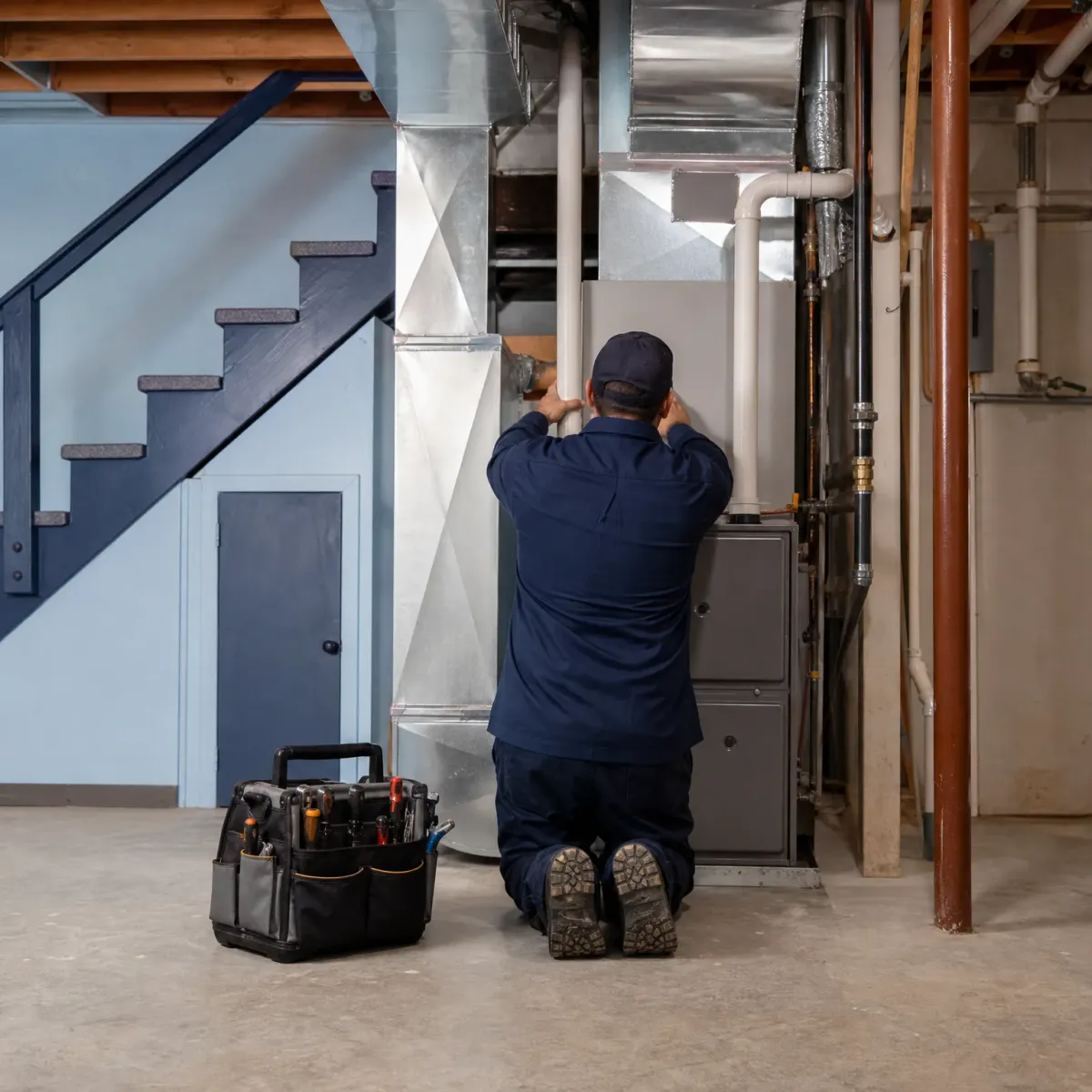
A person in dark blue work clothes and cap kneels in a basement facing a furnace and metal ductwork, with an open tool bag on the floor beside them and a painted staircase in the background.

Tell us about the job

Takes about a minute. No obligation.

New system or replacementHouston County, GA
Step 1 of 3

What kind of equipment?

Which costs less to run in Houston County?

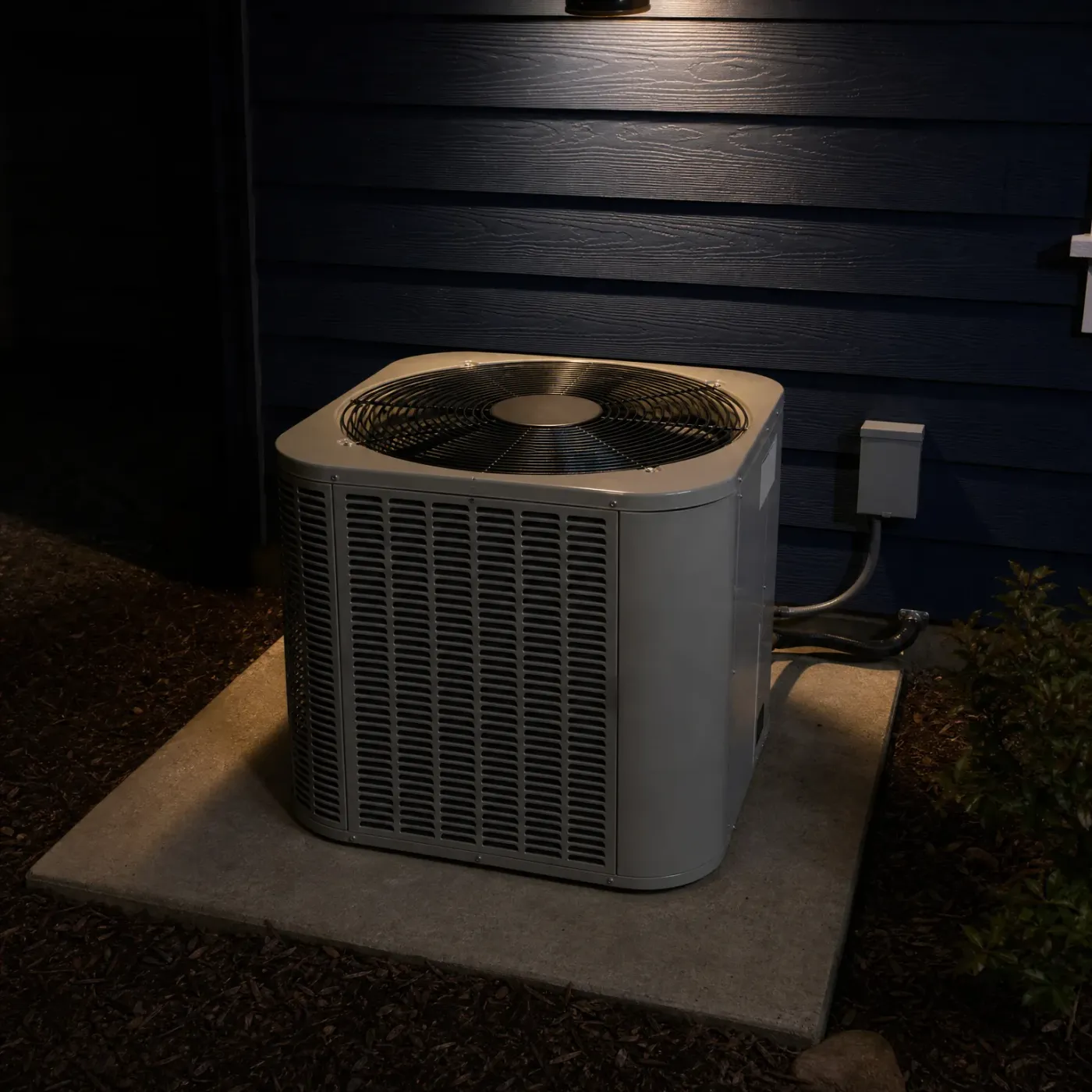
An outdoor air conditioning condenser unit on a concrete pad beside a dark blue lap-sided wall at night, with a nearby electrical disconnect box, refrigerant lines, mulch and a shrub.

Heat pump

To heat your home here$1.88per 100,000 Btu

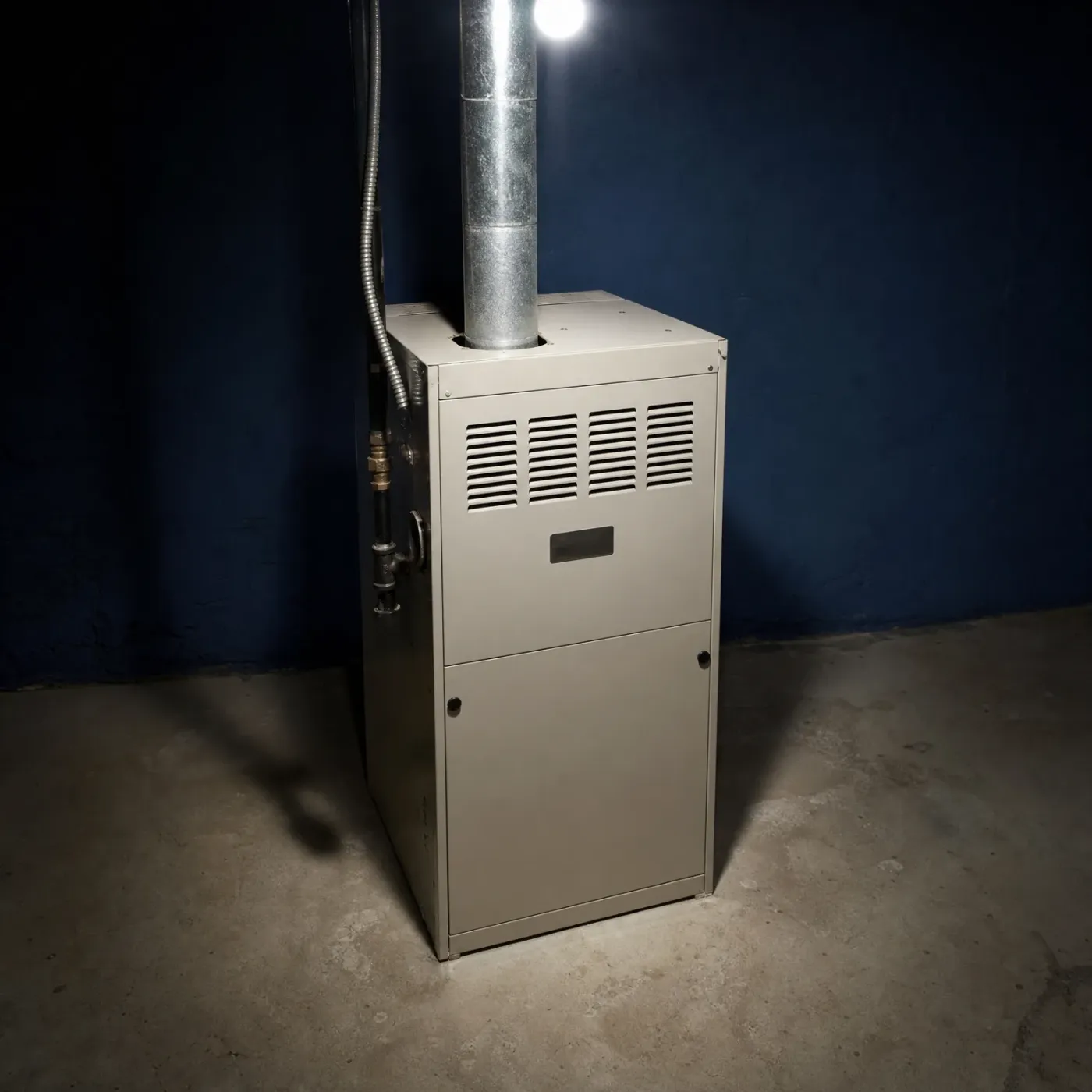
A beige sheet-metal furnace with a vented upper panel and metal flue pipe stands on a concrete floor against a dark blue wall, with gas piping and flexible conduit running along its left side.

Furnace

To heat your home here$2.21per 100,000 Btu

At Georgia's gas and electricity prices, a heat pump makes the same heat as a gas furnace for about 15% less.

Btu stands for British thermal unit, the standard measure of heat energy.

Where does a heat pump shine?

  • Made for mild winters

    Winter nights here average 38°F, which is well within the range a heat pump handles on its own. It won't be straining against deep cold most mornings, just steady, moderate chill.

    A navy blue clapboard house with a white-railed porch, light blue front door, wooden steps, boots and a doormat, a crate of evergreen branches with a plaid blanket, and potted dried plants, with patchy snow on the ground.
  • Covers a long cooling season

    Cooling runs May through September here, so the system you pick is doing most of its work in that mode. A heat pump handles that cooling load the same way an air conditioner does, so it's built for exactly what your summers ask of it.

    A covered porch with a ceiling fan, wicker seating with blue cushions, a round wooden table holding a glass of iced tea and a potted fern, and a person seated in a chair facing trees and a lawn beyond the railing.
  • Heats and cools in one system

    A heat pump runs the same way all year. It pulls heat into the house in winter and pushes it out in summer.

    A living room with a beige sofa holding navy, blue and striped cushions and a grey fringed throw, a wooden coffee table with books and a mug, a vase of white flowers, and a large dark-framed window looking onto a green garden with trees and a wooden fence.

Where does a furnace shine?

  • Pairs with any central AC

    Most central air systems are built around a furnace. The two share the blower, the ducts and the thermostat.

    A dark metal floor vent set in hardwood flooring near a window with a billowing sheer white curtain, beside a blue wall, wooden cabinet with a potted plant, woven basket, and a patterned rug.
  • Proven, simple, easy to get serviced

    Parts are easy to find and most repairs are routine. Getting one fixed rarely means waiting on a specialist.

    A gloved hand holds a large white pleated air filter in front of a dark furnace, beside wooden shelves holding a storage bin, folded clothes, and a wicker basket.
  • Fast, strong heat on demand

    Turn the heat up and the furnace answers right away. There's no long wait for the house to catch up.

    Entryway with a navy door with a window showing snowy trees, snow-dusted winter boots on a wood floor beside a jute rug, a floor vent under a sheer-curtained window, and a navy bench with a wood top holding a steaming mug and a blanket, with coats hanging above.

What each one costs you to run here

A heat pump costs less to run in Houston County. The figures above work out to $1.88 per 100,000 Btu for a heat pump against $2.21 for a gas furnace, both at the federal minimum efficiency. That gap comes from Georgia's fuel prices, electricity at $41.27 per million Btu against natural gas at $17.66, and the heat pump still comes out ahead because it moves heat instead of burning fuel to make it.

Winters here are mild enough that this holds up. The overnight low averages 38°F across December, January and February, and only about 40 nights a year drop to freezing or below, under a third of the 150 or so nights the heat runs. A heat pump loses capacity as the temperature drops, but a county where most nights stay above freezing is the kind of place it was built for.

Almost nine in ten homes here already heat with electricity, 86.5 percent, against 11.2 percent on utility gas, close to the reverse of Georgia's statewide mix. That's worth checking against your own house. A heat pump runs on the same electric service most homes here already have. A furnace needs gas piped in, and if your house isn't already set up for it, that's a cost the heat pump's number doesn't carry.
Front porch of a dark navy clapboard house with a light blue front door and shutters, a wooden hanging swing, hanging ferns, concrete steps with painted brick piers, and leafy shrubs in front.

What the rest of the year looks like

Heating runs about five months here, November through March. Cooling runs about five months too, May through September, with the afternoon high reaching 90°F or above on about 80 days a year. The two seasons are close to even, which matters because a furnace only does one of them.

A furnace heats and nothing else. For the other seven months, including the stretch where it hits 90 or above eighty days running, it sits idle while a separate air conditioner carries the house. A heat pump is already that air conditioner. It runs the cooling season and the heating season on the same equipment, which is worth more here than in a place where one season is short and the other dominates.

Where the two seasons are this close to equal, one machine covering both is doing real work year round, not just filling in for a few weeks on either end.

Sources: EIA SEDS 2024 · 10 CFR 430.32 · NOAA nClimDiv · NOAA 1991–2020 seasonal normals · Census ACS 2020–2024

A two-story light blue house with white columns, double front porches and black shutters, flanked by pink-flowering crape myrtles and tall pine trees, seen from a street.

Common questions about heat pumps and furnaces

  • Will a heat pump keep my house cool enough here?

    Yes. A heat pump is an air conditioner in the summer, running the same cycle in reverse, so it cools your house the same way a central AC would. Houston County sees afternoon highs of 90°F or more on about 80 days a year, and a heat pump sized for your house is built to handle that.

  • Can I keep my furnace and add a heat pump?

    Yes, that pairing is called a dual fuel system. The heat pump handles the heating on most nights, since Houston County's overnight low only falls to 32°F or below about 40 nights a year, and the furnace kicks in on the coldest nights when a furnace's stronger heat is worth more than the heat pump's lower running cost.

  • What if my house doesn't have a gas line?

    A heat pump is the one built for that. It runs on electricity alone, so there is no gas line to run and no propane tank to keep filled. It also covers your summer cooling, which a furnace never does.

  • Is a heat pump cheaper to run than a furnace in Houston County?

    Yes, at today's prices. A heat pump runs about $1.88 per 100,000 Btu of heat here against $2.21 for a furnace, because Georgia's electricity price works out cheaper per Btu of heat than its gas price once each machine's efficiency is counted. That is about 15% less to make the same heat.