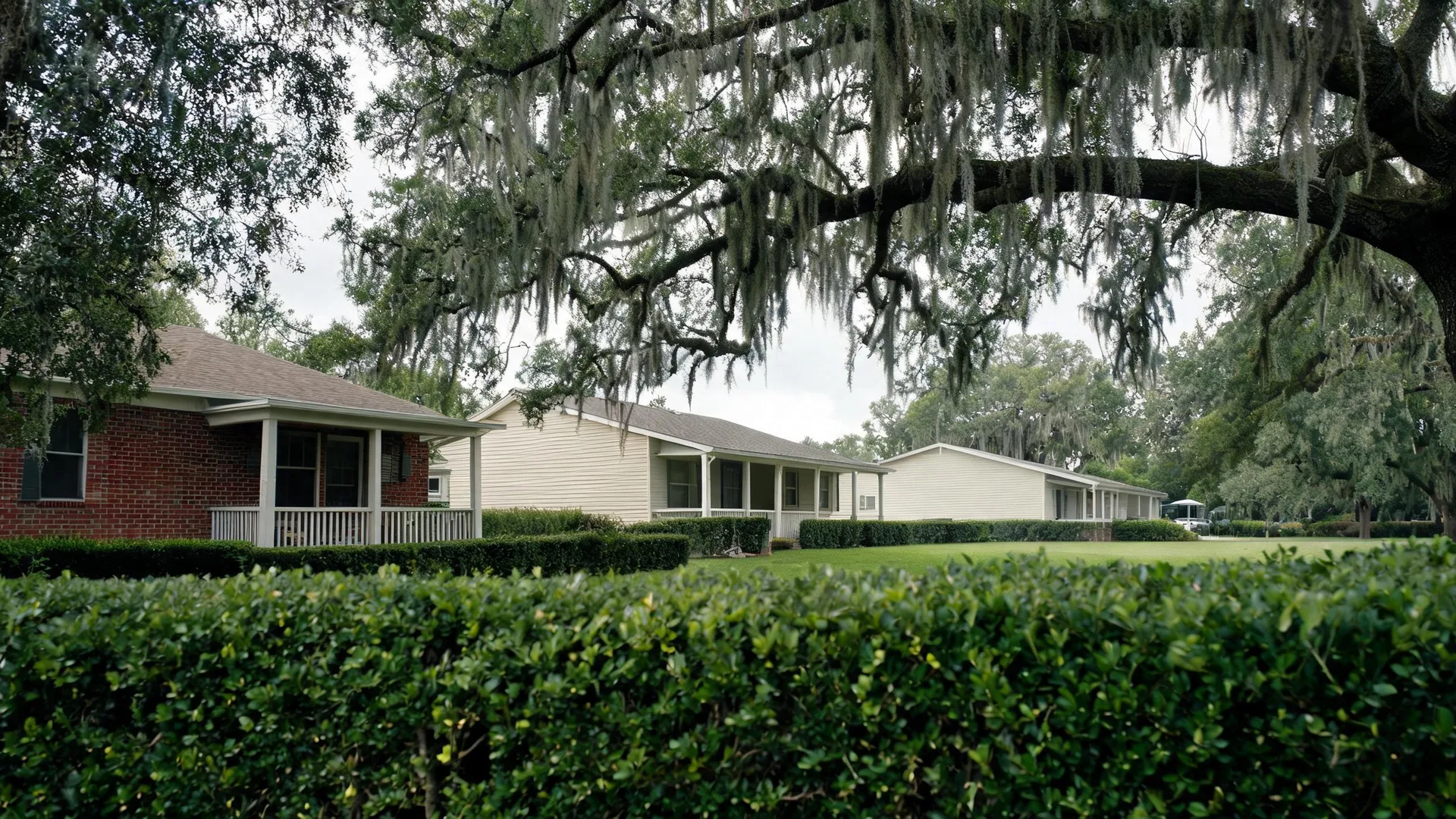






Single-story buildings with pale siding and one brick section with a covered porch stand behind a trimmed hedge and lawn, under a large moss-draped oak branch.

Heat Pump Installation in Warner Robins, GA

Tell us about the job

Takes about a minute. No obligation.

New system or replacementHeat PumpHouston County, GA
Step 1 of 2

What ZIP code is the job in?

Houston County recorded 137 severe weather events between 2015 and 2024, including damaging wind, hail, and a handful of tornadoes. An outdoor heat pump unit sits outside through all of it, so where it goes and what shields it matters at installation, not after the fact. Power is the other side of the same problem. A heat pump runs on electricity for heat as well as cooling, and close to a third of Georgia households were without power for a day or more in 2024. Worth asking the contractor about placement that keeps the unit out of the worst of the wind, and what backup makes sense if the power goes out.

5 months
November through March, your system heats
5 months
May through September, it cools
38°F
the average winter night it heats against
91°F
the average summer afternoon it cools against
Isometric grey-toned illustration of a cutaway house showing interior rooms, ceiling ductwork and an air handler, connected by lines to an outdoor condenser unit beside the building.
Your system heats November through March and cools May through September.

NOAA nClimDiv, 1991–2020 normals

Georgia electricity ran 14.08 cents a kilowatt-hour in 2024, cheaper than a lot of the country.

A heat pump still has to earn its keep on reliability here, since low rates mean the priciest, most efficient model takes longer to pay for itself.

Almost every home here already runs on electricity

86.5% of homes heat with electricity
115 damaging wind events from 2015 to 2024
Power costs 14.08 cents a kWh statewide
Get it in before NovemberHeat pumps here run heat from November through March, cooling from May through September

Wind is the most frequent threat to an outdoor unit here, but hail and tornadoes are the ones that take it out fast rather than just wearing on it. A fence line, a wall, or dense shrubs can blunt wind-blown debris before it reaches the coils. Hail and a direct tornado hit are harder to plan around, which is where a protective cage or a mounting spot away from the open yard starts to matter. None of it stops a direct hit, but it's the difference between a bent fin and a unit that's down for good. Worth asking the contractor where they'd place it and whether a cage makes sense for this yard.

A new system here has to clear a higher bar, and there's a credit for it

Zone 3A's warm, humid climate means any heat pump installed here has to hit 14.3 SEER2 for cooling and 7.5 HSPF2 for heating at minimum, and an air conditioner below 45,000 Btu/h has to clear that same 14.3 SEER2 mark. That rules out whatever doesn't meet the region's bar before it even gets to your house. A federal tax credit is available on top of that for equipment that qualifies. Worth working through with a contractor now, while you're deciding what goes in.

Find a contractor
A gray air-source heat pump mounted on a concrete pad next to a house with gray vinyl siding, surrounded by gravel and flanked by green shrubs and white hydrangea flowers.

Size it to the house, not the sale

Ask for a load calculation on the house itself, not a rule of thumb based on square footage alone. That number sets the tonnage, and it's what decides whether the unit short cycles or runs flat out on the days it's working hardest. The spec sheet assumes a certain number of hours a year. A unit sitting outside through wind this often and running heat or cooling most months logs more than that. Sizing it to the house is what keeps it from wearing out its parts chasing a job it wasn't built for.

Ask about the sound rating

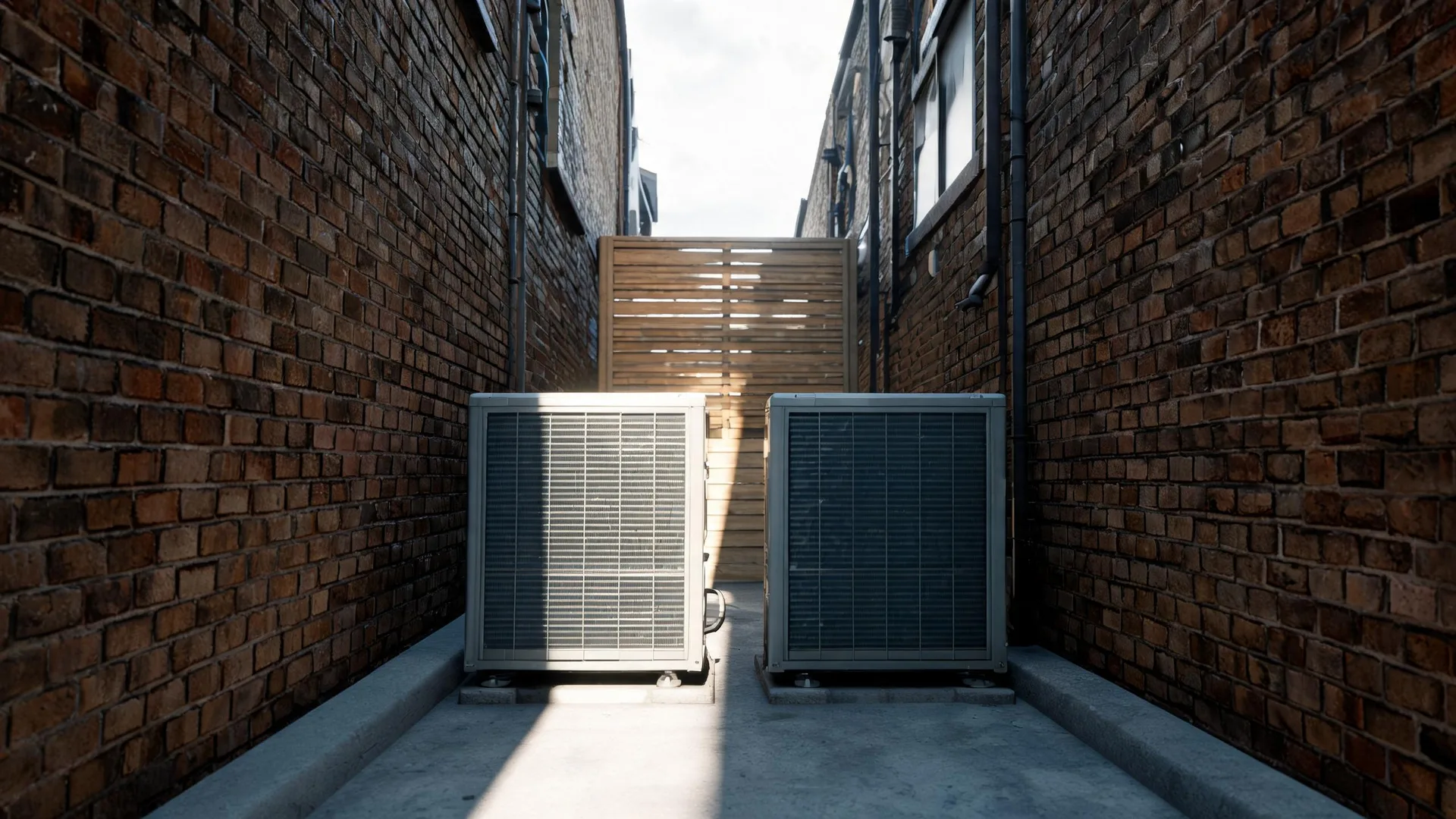
A heat pump runs outside near a window or a patio, and it runs more hours than a straight air conditioner because it handles heat as well as cooling. Units with the same output can land at different sound levels. Ask what the rated sound output is and where the contractor plans to place the unit, since distance from windows and bedrooms matters as much as the rating itself.
Ask what happens below freezing

A heat pump pulls heat from the outside air, and that gets harder as the air gets colder. Some systems lean on backup electric heat strips once the outdoor temperature drops far enough, and that backup heat costs more to run than the heat pump itself. Ask what temperature triggers the switch and how it's controlled, since that answer decides how the system runs on the coldest days, not just the mild ones.

Installed cost comes down to how much equipment and labor the job actually calls for. A straight swap, same spot, same line set, same electrical, costs less than a job where the old unit sits in the wrong place or the house needs a bigger breaker and new wiring to run it. Ductwork matters just as much as the unit itself. Leaky or undersized ducts choke a heat pump no matter how good the equipment is, and bringing them up to spec before the new system goes in adds to the job but keeps the equipment from working against itself for years after. The line set run matters too, since a longer distance between the outdoor unit and the air handler takes more refrigerant and more labor to set right. Efficiency rating plays into it as well. A higher-rated unit costs more up front than one that just clears the minimum, and that difference is worth weighing against what the house actually needs. None of this is guesswork a contractor should wave off. Ask for the load calculation and a line-item quote, not just a number for the whole job, so you can see what's driving the price.

The old equipment does not just get unplugged and hauled off. A contractor has to recover the refrigerant from the lines before anything is disconnected, since it cannot legally be vented into the air. That takes a recovery machine and some time, not just a wrench. Once the refrigerant is out, the old outdoor unit, the indoor coil, and sometimes the air handler come out as a set, especially if the new system uses a different refrigerant or a different line size than the old one. If the ductwork is staying, the old equipment gets disconnected from it cleanly so the new unit seats properly in its place. Whatever is left gets scrapped, since the materials in it have value even though the unit itself is done.