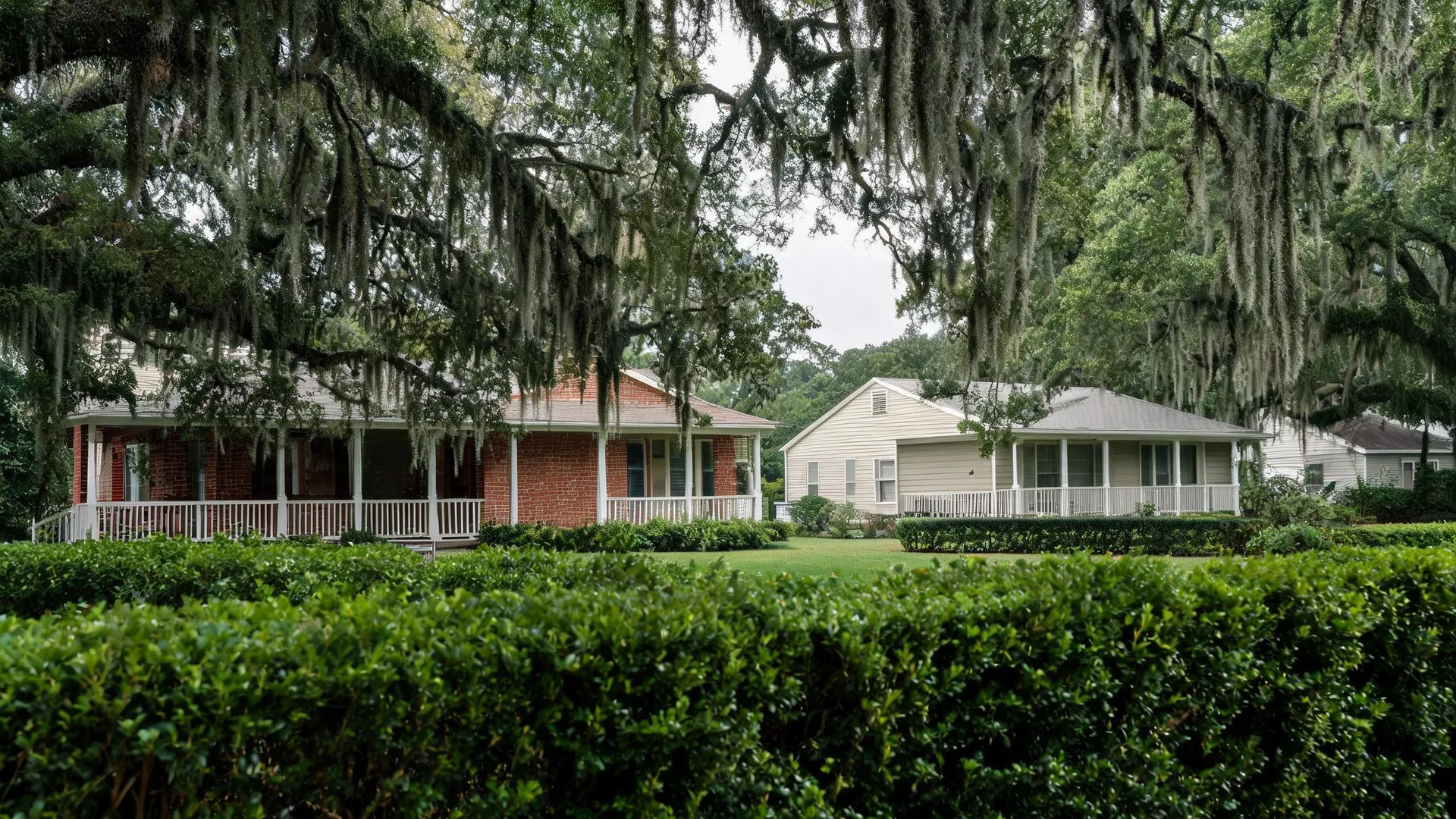



A single-story brick house with a white-columned wraparound porch and a neighboring light-colored siding house, seen across a lawn behind a trimmed hedge, under oak branches draped with Spanish moss.

Furnace Repair in Warner Robins, GA

Tell us about the job

Takes about a minute. No obligation.

RepairFurnace or heatingHouston County, GA
Step 1 of 2

What ZIP code is the job in?

Houston County has had 137 severe weather events between 2015 and 2024, including damaging wind, hail, and tornadoes. Any one of those can reach the outdoor unit that feeds your furnace. A bent coil or a cracked cabinet does not always stop the furnace from lighting and running. Georgia also sees long outages. Nearly a third of households in the state went at least a day without power in 2024. A furnace that sat through one of those cold spells without power does not always come back running the way it did before.

5 months
November through March, your furnace is on duty
38°F
the average winter night it heats against
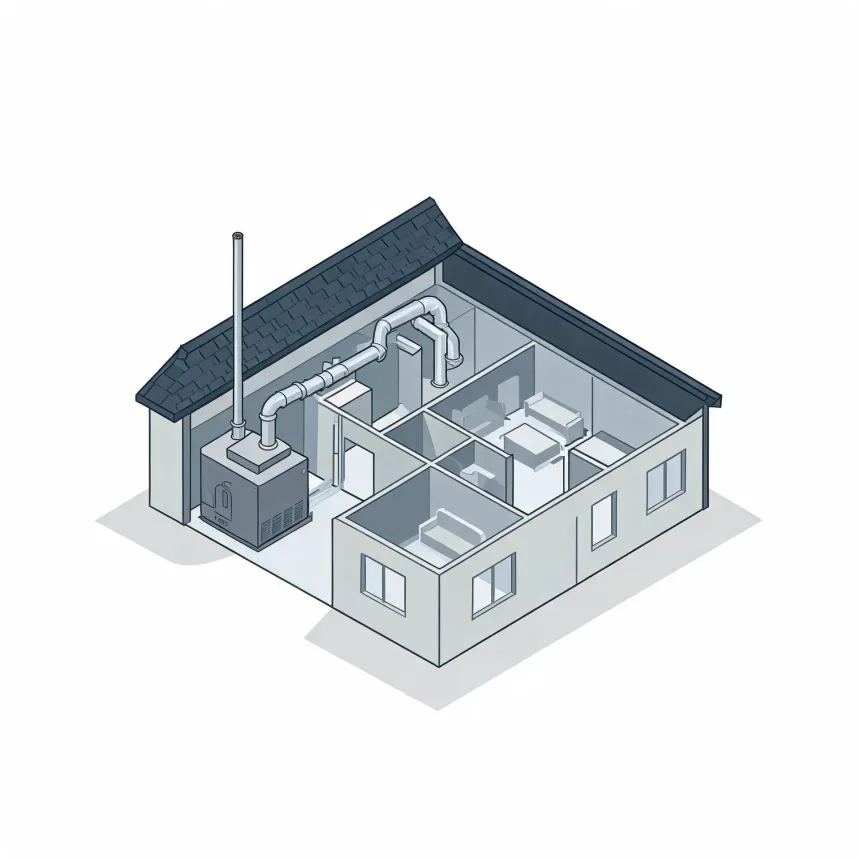
Isometric grayscale illustration of a cutaway single-story house showing interior rooms with furniture, plus an exterior furnace unit with a tall flue pipe and ducting running into the attic space.
Your furnace works hardest from November through February.

NOAA nClimDiv, 1991–2020 normals

A furnace that short cycles, turning on and off before the house warms up, has a problem with airflow or the flame sensor.

Short cycling wears on the igniter and blower motor, so the longer it runs that way, the bigger the repair gets.

Get your furnace checked in OctoberHeat runs November through March here, and problems show up fast once it starts.

If a storm came through recently, walk outside and look at the unit before you decide the furnace is fine. Check for bent fins on the coil, a cracked cabinet, or debris caught inside the housing. Hail and wind do not always stop a furnace from lighting, so it can run for weeks before the damage shows up as a bigger problem. The same goes for a furnace that sat through a power cut. If yours was down for a day or more this past winter, have it looked at before the next cold stretch, not after it fails on the coldest night.

A newer home usually means a furnace worth repairing

Half the houses in Houston County were built in 1994 or later. If yours is one of them, the furnace likely has years left in it, and a repair now is probably worth doing. Get it fixed before the next cold stretch instead of replacing it.

Find a contractor
A man in a dark T-shirt and tan work pants, seen from behind, climbs porch steps toward a blue front door while carrying a canvas tool bag filled with hand tools.
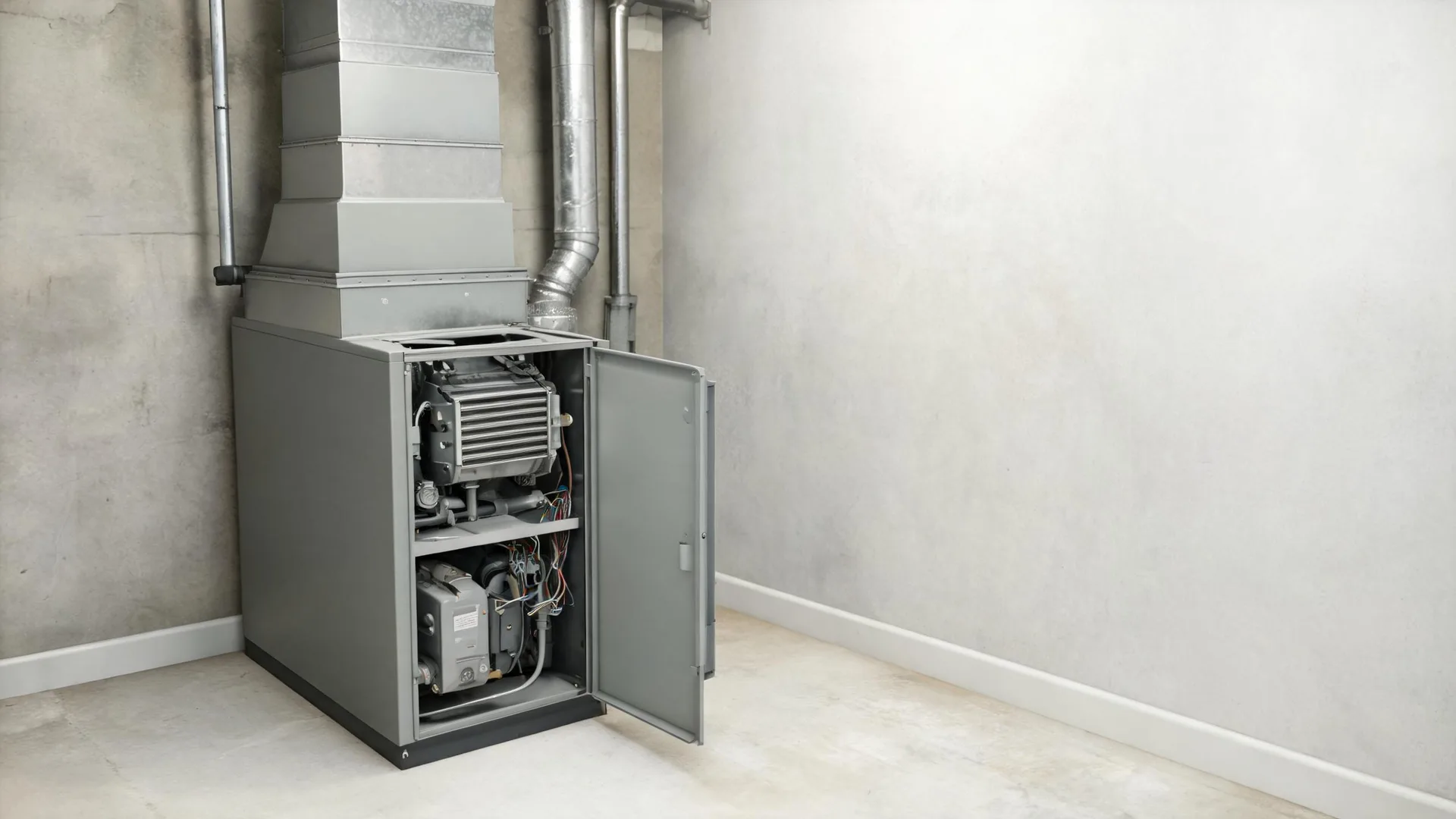
A gray residential gas furnace installed in an unfinished basement, surrounded by ductwork, a metal flue pipe, and a gas supply line.

Five months of work, not year-round

Furnace here works about five months a year, November through March. That's a short season compared to what a furnace runs in colder states, and it shows in how these machines hold up. The overnight low only averages 38°F through December, January and February, so the furnace isn't fighting single-digit nights the way one further north would. Less strain year over year means a furnace here is more likely to still be sound underneath whatever's gone wrong. If yours quit or started acting up, that's usually something specific worth fixing, not a machine worn out from the work.

A cracked heat exchanger gets worse every time it fires

A small crack lets flue gas mix with the air the blower pushes through the house. Heat makes metal expand, so the crack opens wider on every cycle and closes up again when the furnace shuts off. Run it long enough on a cracked exchanger and the leak stops being small.
A dirty flame sensor turns into a dead ignition system

A sensor coated in residue reads a weak flame as no flame, so the gas valve shuts and the burner tries again. Each failed attempt still pulls current through the igniter. Igniters are built for a limited number of cycles, and a furnace that keeps retrying burns through that count a lot faster than one that lights and stays lit.

Before you call anyone, check the thermostat batteries and the setting itself. A thermostat reading wrong or set to the wrong mode will make a furnace look dead when it isn't. Next, go to the furnace and look for a light near the control board. Most furnaces flash a code through that light when something's wrong, and the pattern tells you roughly what it caught. Check the air filter while you're there. A filter packed with dust chokes airflow, and some furnaces will shut themselves off rather than run that way. Last, find the switch that looks like a light switch near the furnace or on it. That's the power switch, and it gets bumped off by accident more often than people expect.

A repair is worth doing when the problem is one part acting up and the rest of the furnace is sound. A new igniter, a new flame sensor, a new blower motor, none of that tells you the furnace itself is failing, only that one piece wore out the way parts do. Replacement starts to make more sense when the heat exchanger is the problem. That part isn't sold on its own the way an igniter is, and swapping it is close enough to the cost of a new furnace that most people choose new. Age matters less than what's actually broken. A furnace that's been running fine for years and suddenly won't light has a specific cause, and specific causes get fixed. A furnace that's needed a repair every season for a few years running is telling you something different, even if each individual fix was small and cheap on its own. Ask what failed before you ask how old it is.