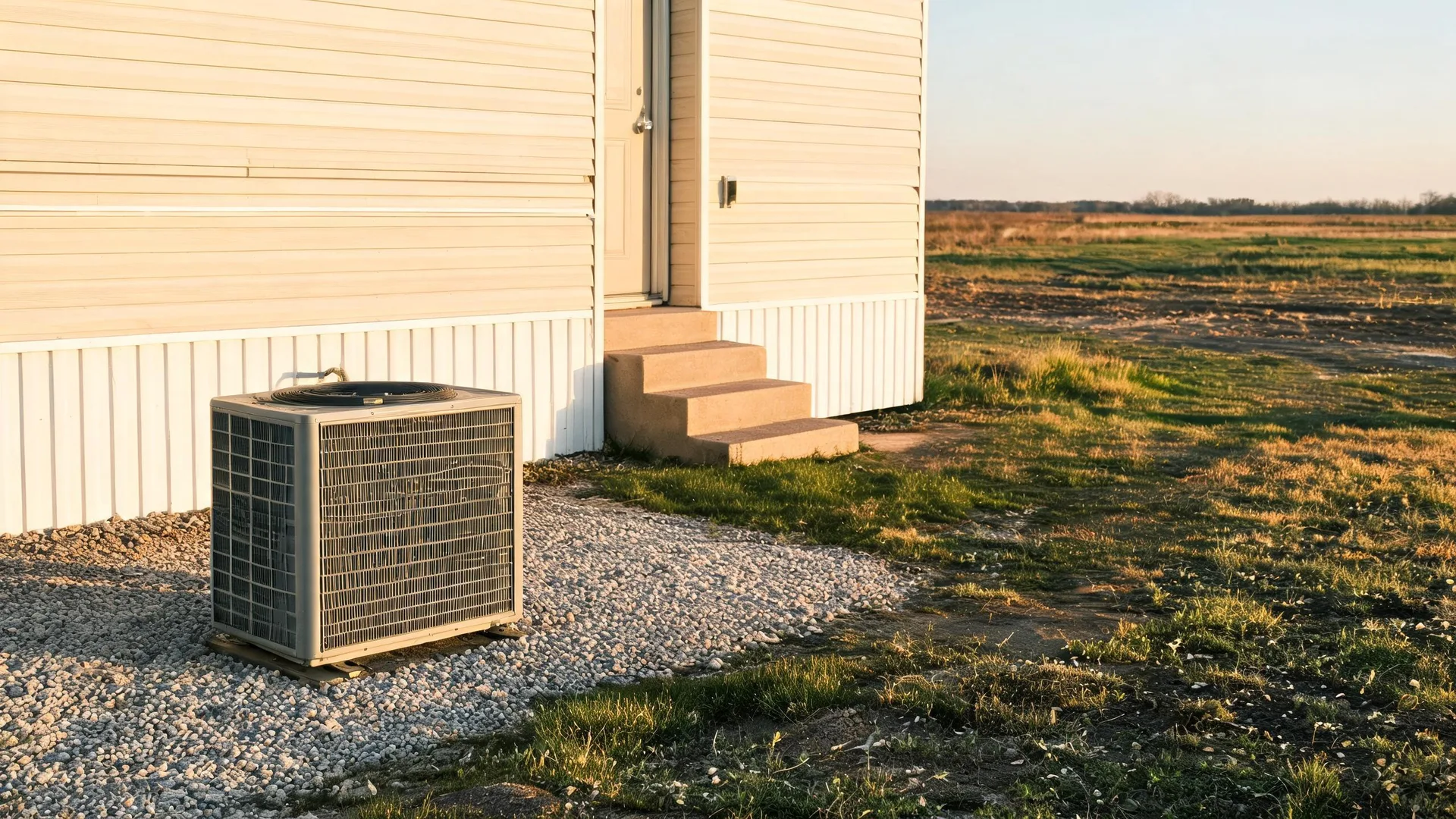
A grey residential air-conditioning condenser unit mounted on a concrete pad beside a house, photographed at sunset.

Heat Pump Repair in Savannah, GA

Tell us about the job

Takes about a minute. No obligation.

RepairHeat PumpChatham County, GA
Step 1 of 2

What ZIP code is the job in?

Chatham County gets hit a lot

Chatham County logged 343 severe weather events between 2015 and 2024. Most of that was damaging wind, with hail and a handful of tornadoes mixed in. A heat pump's outdoor unit sits right in the path of all of it, out in the open, all year.


What that means for your unit

Hail dents the cabinet and can bend the fins around the coil. Wind-blown debris gets pulled into the same spot. A heat pump can keep running after that kind of hit, so don't judge it by whether it still starts.

5 months
November through March, your system heats
6 months
May through October, it cools
42°F
the average winter night it heats against
91°F
the average summer afternoon it cools against
Isometric grayscale illustration of a cutaway house showing interior rooms, ceiling ductwork and an air handler, connected by lines to an outdoor condenser unit on a pad outside.
Your system heats November through March and cools May through October.

NOAA nClimDiv, 1991–2020 normals

Half the homes in Chatham County were built in 1986 or later.

A heat pump that came with a newer house still has working life in it, so a repair usually makes more sense than a replacement.

If your heat pump came with the house, get it looked at before you write it off

Half the homes here were built by 1986
246 damaging wind events from 2015 to 2024
Power costs 14.08 cents a kWh statewide

A heat pump switches jobs in October, going from cooling to heat before November gets here. If a part was already weak after running cooling since May, that switch is what finally tests it. The same thing happens in reverse come April, after months of sitting on heat. If yours started acting up right at the turn of the season rather than in the middle of one, that timing tells a contractor something about where to look.

If your outdoor unit took a hit, get it looked at before you rule out repair

Get the outdoor unit checked after any storm that brought wind or hail through, even if the heat pump is still running. A dented cabinet or bent fins won't always stop it from starting, but it can still mean trouble underneath.

Find a contractor
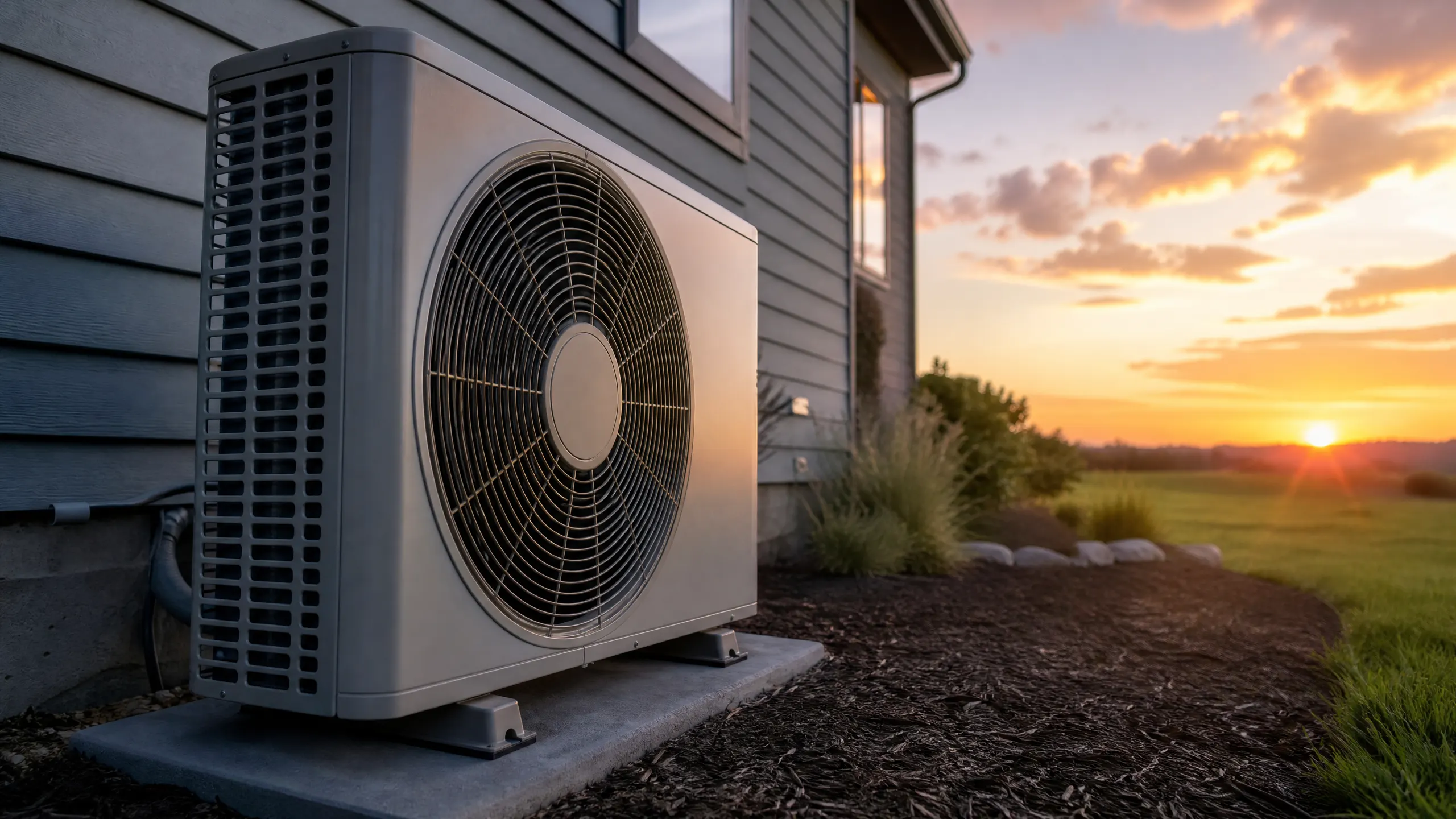
A residential heat pump outdoor unit mounted on a concrete pad next to a house with gray vinyl siding.

Out in the wind, year-round

Chatham County took damaging wind 246 times between 2015 and 2024, and the outdoor unit sits outside for all of it. That's wind on the cabinet and fins year-round, not just during the worst storm anyone remembers. A heat pump built for this has to shrug that off and keep switching between heat and cooling on schedule. When a part is already borderline, that's the kind of load that finds it.

The reversing valve is the part unique to this machine

A heat pump has one part a straight air conditioner doesn't have. The reversing valve is what switches it between heat and cooling. When it sticks, the system keeps running but stops switching modes, or it starts short cycling as it hunts for the right one. That's a different repair than a failed capacitor or a low charge. It only shows up on equipment that has to do both jobs.

A failing part doesn't always mean a dead stop

A weak run capacitor lets the outdoor fan or compressor struggle to start instead of failing outright. A low refrigerant charge shows up as weak heating or cooling long before the system quits. A failing defrost control leaves frost built up on the outdoor coil instead of clearing it on schedule. Any of these can run for a while before they finally give out. That's why acting up now is worth a look even if the unit still turns on.

A heat pump that's struggling still moves heat, just not the way it should, and that's what makes it easy to put off. A low charge makes the compressor work harder to do the same job. Run it that way for weeks and the compressor is the part that wears out, not the line that's actually leaking. Frost left on the outdoor coil because the defrost control isn't cycling does something similar. It blocks airflow across the coil, and the compressor strains to keep up behind it. A reversing valve that's starting to stick can go the same way, from occasionally slow to switch over to stuck in one mode for good. None of this fixes itself by running. The longer it runs like that, the more the strain lands on a part that started out fine.

A diagnostic visit starts outside at the unit itself, checking the cabinet, the fins, the fan. From there a contractor hooks up gauges to check the refrigerant charge, since that number says a lot about what's going on inside. They'll check the capacitor, watch how the compressor starts, and run the system through both modes to see if the reversing valve switches clean. If the outdoor coil has frost on it, they'll check whether the defrost control is cycling on schedule or not cycling at all. Each of these gets checked whether or not it looks like the obvious problem, because the thing that's failing isn't always the thing making noise. By the end they can tell you which part is actually at fault, not just which one is acting up.