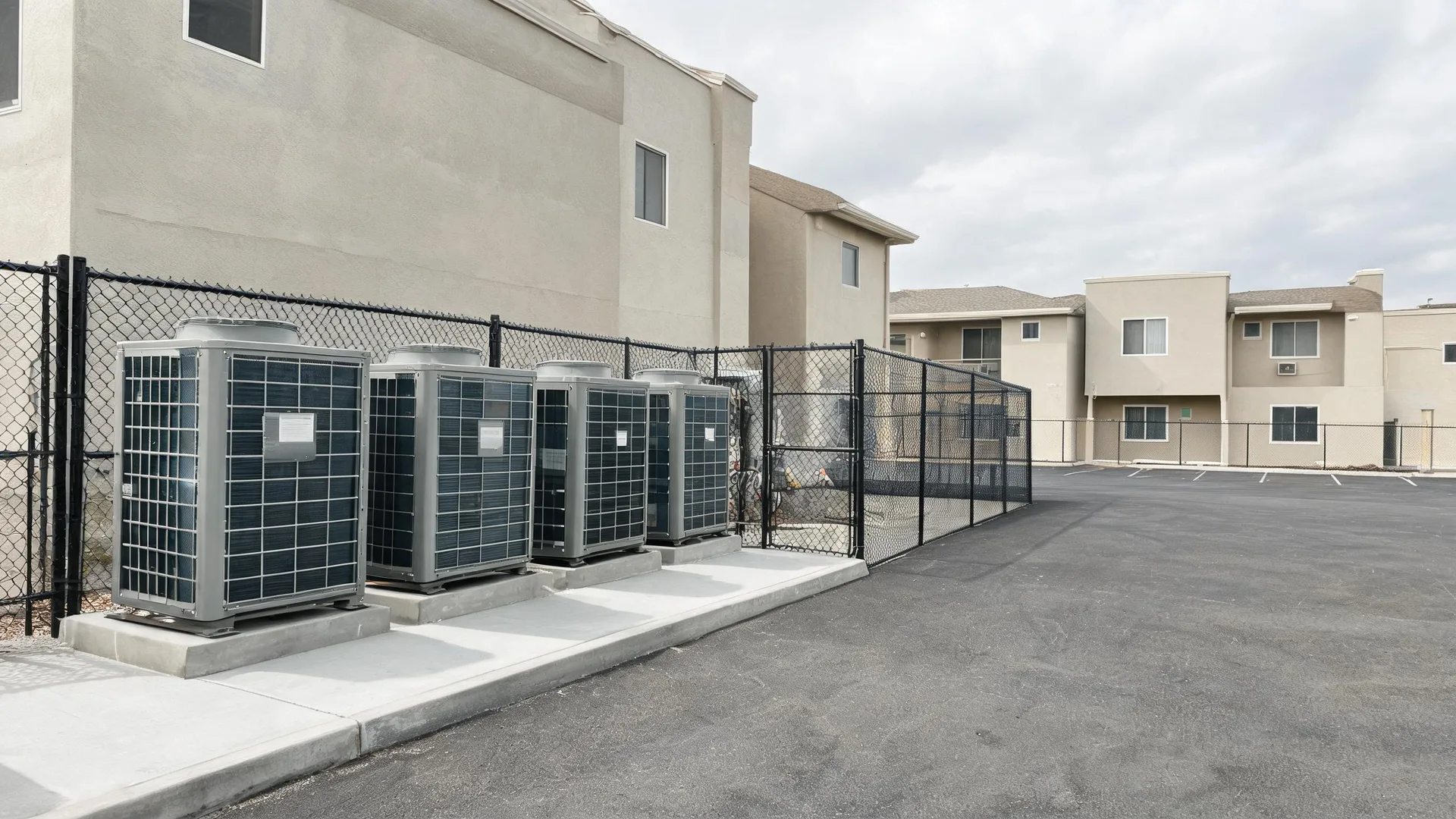
An outdoor HVAC condensing unit on a concrete pad next to a beige single-story house with a dark shingle roof.

Heat Pump Repair in Hinesville, GA

Tell us about the job

Takes about a minute. No obligation.

RepairHeat PumpLiberty County, GA
Step 1 of 2

What ZIP code is the job in?

The tech checks both modes, not just the one acting up

A heat pump that's struggling to heat might still cool fine, or the other way around. The tech runs the system in heating and in cooling, checks the reversing valve, and reads the refrigerant charge and pressures to see where things actually break down instead of guessing from one symptom.

What the visit tells you is whether to repair or move on

Once the tech finds the failed part, whether it's the reversing valve, the defrost control board, a contactor, or a weak run capacitor, you'll know what it takes to fix it and whether the unit is worth putting money into. That's the answer you're actually paying for.

5 months
November through March, your system heats
6 months
May through October, it cools
41°F
the average winter night it heats against
91°F
the average summer afternoon it cools against
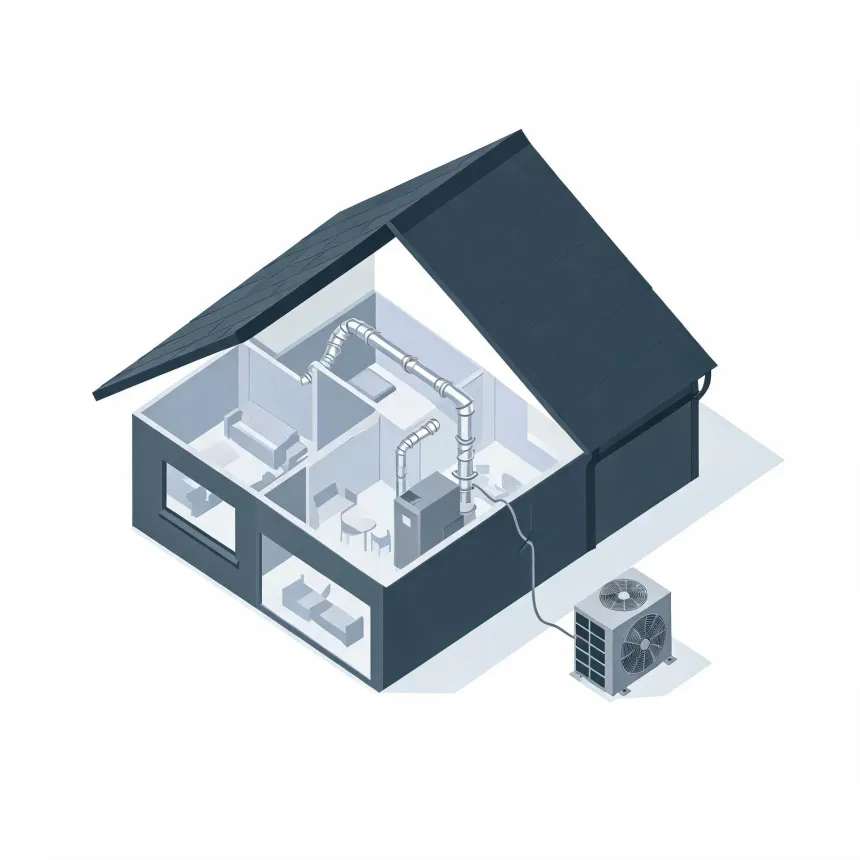
Isometric illustration of a cutaway house showing interior rooms with furniture, a furnace and ductwork, connected by a line to an outdoor condenser unit on the ground outside.
Your system heats November through March and cools May through October.

NOAA nClimDiv, 1991–2020 normals

Heat pumps here go into heating mode in November and stay on it through March.

A weak part that made it through cooling often fails in that first cold snap, so a heat pump acting up now is worth having checked before the next one.

Half the homes in Liberty County were built in 1994 or later

Half the homes here were built by 1994
Power costs 14.08 cents a kWh statewide
Climate zone 2A

Liberty County saw 128 severe weather events between 2015 and 2024, most of it wind. The outdoor unit sits outside for all of it, taking debris in the wind and hail on the coil and fan blades. A bent fin or a cracked blade does not always stop the unit from running, so it can keep working for weeks after a storm and fail once it has to carry the heating load. If a heat pump acting up now went through a storm this year, have the outdoor unit checked for damage, not just the part that's failing.

A newer system is usually worth repairing

If your heat pump came with a house built in 1994 or later, it's likely still within its working life. Get the failed part diagnosed before you consider replacing the unit.

Find a contractor
A white mini-split heat pump outdoor unit mounted on a concrete pad beside a gray-sided house, surrounded by gravel and green shrubs.

It runs year round, so something is always closer to wearing out

A heat pump runs every day of the year, not just in the hottest or coldest stretch, because it handles both jobs. That reversing valve switches back and forth more than almost any other part in the system, and it's usually the first thing to stick or fail. Short cycling is often the first sign something's wrong, the unit kicking on and off in a few minutes instead of running a full cycle. Ice building up on the outdoor coil and not clearing during defrost is another. So is air that's blowing but not warm, or not cold, even though the unit sounds like it's working. None of these mean the whole system is done. They mean a part has worn out from doing its job for years without a break, and it's time to find out which one.

Capacitors and contactors wear out from cycling

Every start-up puts a load on the run capacitor, and every cycle wears the contactor's contacts a little more. Over years of switching on and off, the capacitor loses its ability to hold a charge and the contactor's points pit and burn. A weak capacitor shows up as the outdoor fan or compressor struggling to start, or the unit humming without starting at all.

Low refrigerant means a leak, not just a top-off

A heat pump doesn't use up refrigerant. If the charge is low, it's because refrigerant is escaping somewhere in the line set or coil, usually at a joint or a worn spot in the copper. Adding refrigerant without finding and sealing the leak just means the same problem comes back, often within the same season.

Running a heat pump with a bad part rarely keeps things stable. It usually speeds up what comes next. A struggling run capacitor forces the compressor to pull harder on every start, and that extra draw heats the windings more than they're built for. A reversing valve that's starting to stick gets asked to switch again every cycle, and each switch is a chance it jams for good instead of just being slow. Ice that isn't clearing in defrost keeps building, and a coil that stays iced over blocks airflow until the compressor is working against a system that can't breathe. None of these fix themselves by running longer. The part either gets found and replaced, or it takes something bigger down with it.

Once the failed part is found, the question is whether the rest of the unit is worth building on. A compressor that's still sound and a cabinet that isn't rusted through are worth putting a new part into, even a costly one like a reversing valve. What changes the math is a compressor that's starting to draw too hard, or a coil that's leaked once already and could leak again somewhere else. Age on its own doesn't decide it. A unit that's been maintained and only now threw its first real failure is a different case than one that keeps coming back for a different part each time. Ask what failed and what else on the unit has needed attention before, not just what it costs to fix the part in front of you.