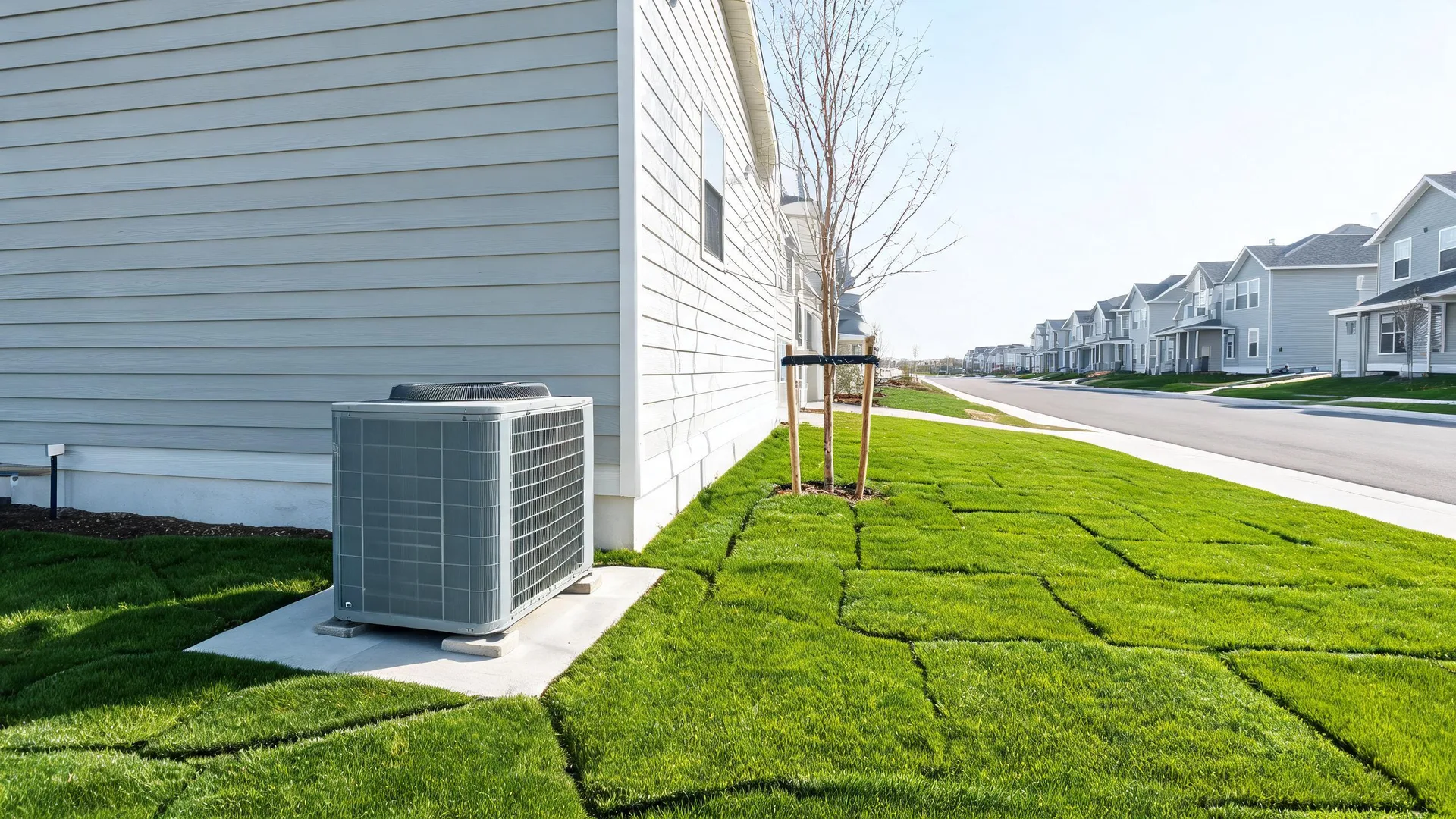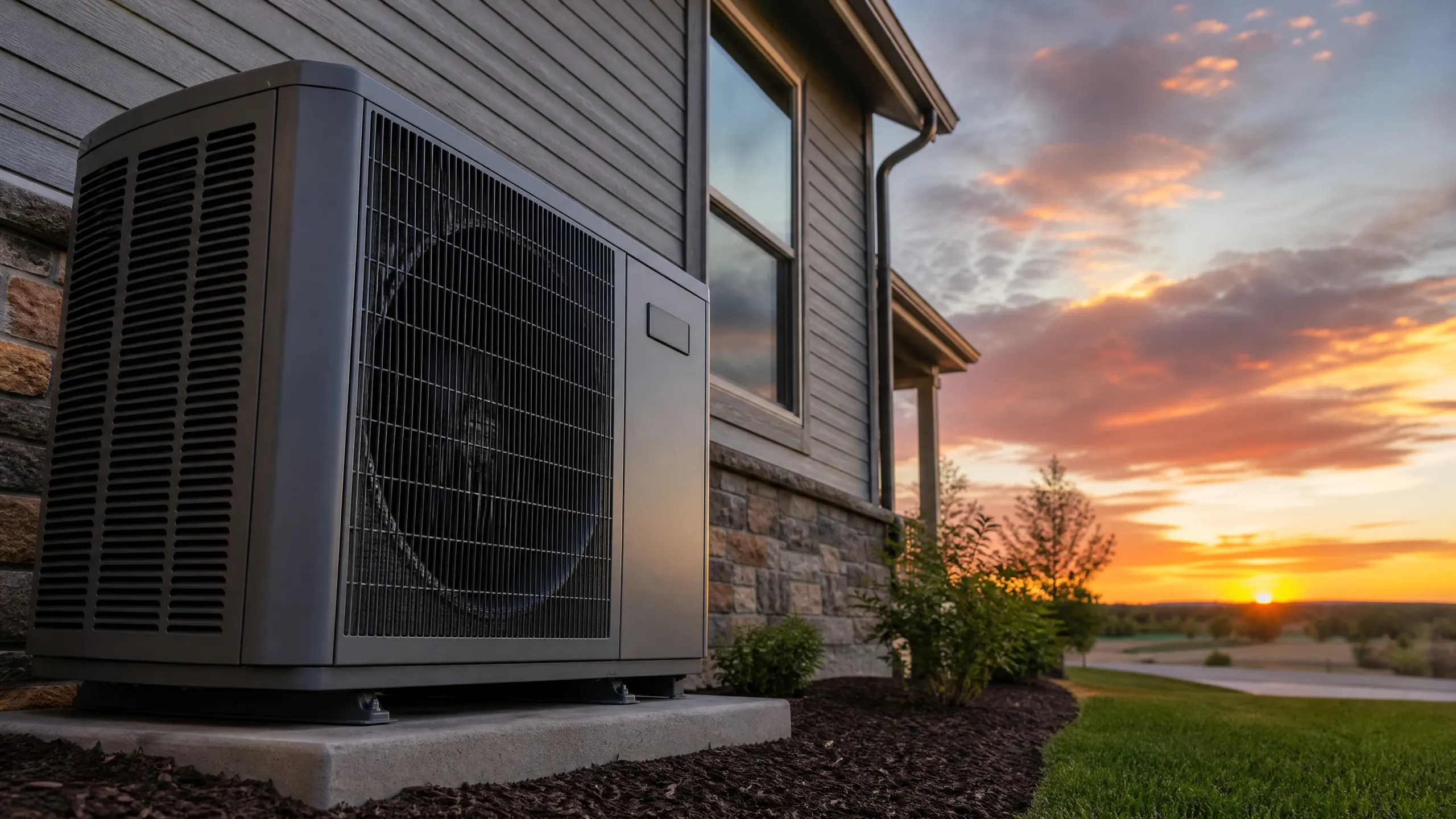
An outdoor air conditioning condenser unit mounted on a concrete pad next to a residential house at sunset.

Heat Pump Repair in Douglasville, GA

Tell us about the job

Takes about a minute. No obligation.

RepairHeat PumpDouglas County, GA
Step 1 of 2

What ZIP code is the job in?

This county gets hit a lot

Douglas County saw 141 severe weather events between 2015 and 2024. Most of that was damaging wind. Hail and tornadoes hit too, fewer times but still on record. A heat pump's outdoor unit sits outside through all of it, no matter which kind of storm it is.


A unit that still runs can still be damaged

Hail dents fins and bends the cabinet. Wind-driven debris can nick the coil or jam the fan. None of that stops a heat pump from running. It just makes the unit work harder to do what it used to do easily.

6 months
November through April, your system heats
5 months
May through September, it cools
34°F
the average winter night it heats against
88°F
the average summer afternoon it cools against
Isometric cutaway illustration of a single-story house showing interior rooms with furniture, an attic duct network connected to a furnace or air handler, and an outdoor condenser unit linked by lines outside the wall.
Your system heats November through April and cools May through September.

NOAA nClimDiv, 1991–2020 normals

Half the houses in Douglas County were built in 1996 or later.

A heat pump installed with a house that age still has working life in it, so a repair call makes more sense than a replacement call.

Call when it first turns coldHeat runs November through April here. October is when a weak heat pump starts to show it.

After wind or hail comes through, walk out and look at the outdoor unit before you decide it's fine. Check the fins for dents and the cabinet for dings. Look for leaves or debris caught around the fan. A unit that starts up and blows air can still be running on a bent fin or a fan that's rubbing where it shouldn't. That kind of damage doesn't always show up as a breakdown right away. It shows up as a system that runs longer to do the same job, or one that quits a season early. Worth a look after any storm that brought wind or hail through Douglasville, not just the ones that knocked the power out.

Get the heat pump looked at before you call it done

A repair tech can tell you whether your heat pump's problem is wear or storm damage, and whether it's worth fixing. If your house dates to the newer half of Douglas County, the unit that came with it likely still has life in it worth repairing.

Find a contractor
A man seen from behind in a grey shirt and tan work pants climbs stone steps toward a blue front door, carrying a canvas tool bag with hand tools in its side pockets, beside a blue planter with a small shrub.
A gray heat pump outdoor unit mounted on a concrete pad next to the stone-accented exterior wall of a house.

A small problem doesn't stay small if the unit keeps running

A heat pump that's struggling doesn't stop and wait to get fixed. It keeps cycling, trying to hit the setpoint, and whatever's wrong gets asked to do its job over and over. A refrigerant leak gets worse under that kind of running, because the compressor keeps pumping what's left through the system and loses more at the leak point each cycle. A failing capacitor has to kick the fan motor or compressor on repeatedly, and every hard start wears it down further until it fails completely, often taking the motor with it. Ice on the outdoor coil is the same story. Once frost starts building because airflow is restricted or the defrost cycle isn't working right, running the system longer just packs more ice on, which blocks airflow further and makes the ice worse. None of these start as emergencies. They start as small faults that get bigger every hour the system keeps running to cover for them.

What you can check from the thermostat

Look at the setting first. Heat mode, not cool, and the setpoint a few degrees above room temperature. Check the breaker for the outdoor unit and the one for the air handler, both can trip separately. Change the filter if you can't remember the last time you did. A clogged filter starves the system of airflow, and a heat pump that can't move air has to work harder to get heat into the house.

What to look at outside before you call

Walk out to the outdoor unit. Clear away leaves, mulch or anything piled against the cabinet, it needs open air on all sides to work. In cold weather a layer of frost on the coil is normal, the unit defrosts itself on a cycle. A solid block of ice is not normal and means something's keeping it from defrosting right. Listen for the outdoor fan, if the unit is running but the fan isn't turning, that's worth telling the tech before they arrive.

A heat pump in trouble usually tells you before it quits outright. Air that feels cool instead of warm is often the first sign, even though a heat pump never blows air as hot as a furnace does. What you're listening for is a steady stream of barely warm air when it should feel comfortably warm, not just mild. Short cycling is another one. The unit kicks on, runs a few minutes, shuts off, then starts again before the house has caught up. A click when the system switches into defrost is normal. Grinding, squealing or banging is not, and usually points to a motor bearing or a fan blade hitting something it shouldn't. If the outdoor unit is running but the fan isn't turning, or the system stops answering the thermostat altogether, that one won't wait.

A diagnostic visit starts outside at the unit itself, not with a tool plugged in. A tech checks refrigerant pressure, looks at the electrical connections, and runs the system through a full cycle, heat and defrost both, to see where it stops behaving the way it should. Gauges tell you where the refrigerant charge stands, a meter tells you whether the capacitor is holding up or the motor windings are pulling the current they should. Airflow gets checked too, at the return and at the vents, because a heat pump moving too little air will show the same symptoms as one low on refrigerant even though the fix is completely different. Most of this is ruling things out one at a time until only one explanation still fits what the system is doing. The point of the visit isn't just naming the broken part. It's confirming that fixing that part is what actually solves what you're feeling in the house.