






A red brick house with a white-columned porch and a row of pale clapboard cottages sit behind a trimmed hedge and lawn, under oak branches draped with Spanish moss.

Heat Pump Repair in Dalton, GA

Tell us about the job

Takes about a minute. No obligation.

RepairHeat PumpWhitfield County, GA
Step 1 of 2

What ZIP code is the job in?

Whitfield County saw 115 severe weather events between 2015 and 2024. Most of that was damaging wind, which hit the county 100 times in that span. Add 8 hail events and a tornado on top of that, and the outdoor unit sitting outside your house has taken a beating more than once. Hail dents the cabinet and bends the fins on the coil. Wind throws branches and debris into the fan. A unit can take a hit like that and keep running for months before it shows up as a problem, so running fine today doesn't mean it came through clean.

7 months
October through April, your system heats
5 months
May through September, it cools
33°F
the average winter night it heats against
88°F
the average summer afternoon it cools against
Isometric cutaway illustration of a small house showing interior rooms with furniture, an indoor air handler with flexible ducting, and refrigerant lines running to an outdoor condenser unit beside the building.
Your system heats October through April and cools May through September.

NOAA nClimDiv, 1991–2020 normals

Half the homes in Whitfield County were built in 1987 or later.

A heat pump that came with a newer house still has working life in it, and that's worth knowing before you decide whether to repair it.

Your heat pump works hardest right when October and May begin

Cooling runs May through September
Heat runs October through April
100 damaging wind events from 2015 to 2024

If your heat pump came with the house and the house is newer, repair is the right first call, not replacement. A contractor can check the age off the unit's data plate in a few minutes. Parts on a newer system are easier to source too, since the model hasn't been discontinued yet. Worth asking the contractor straight out whether what's wrong is worth fixing on a unit this age, rather than assuming the worst because something broke.

If your outdoor unit has taken a hit, get it looked at now

Have the outdoor unit checked for hail dents and bent fins, even if it's still running. A contractor can look it over and tell you whether anything needs fixing before it turns into a bigger repair.

Find a contractor
A man in a navy long-sleeve shirt and tan work pants, seen from behind, carries a canvas tool bag up light-colored porch steps toward a blue front door.
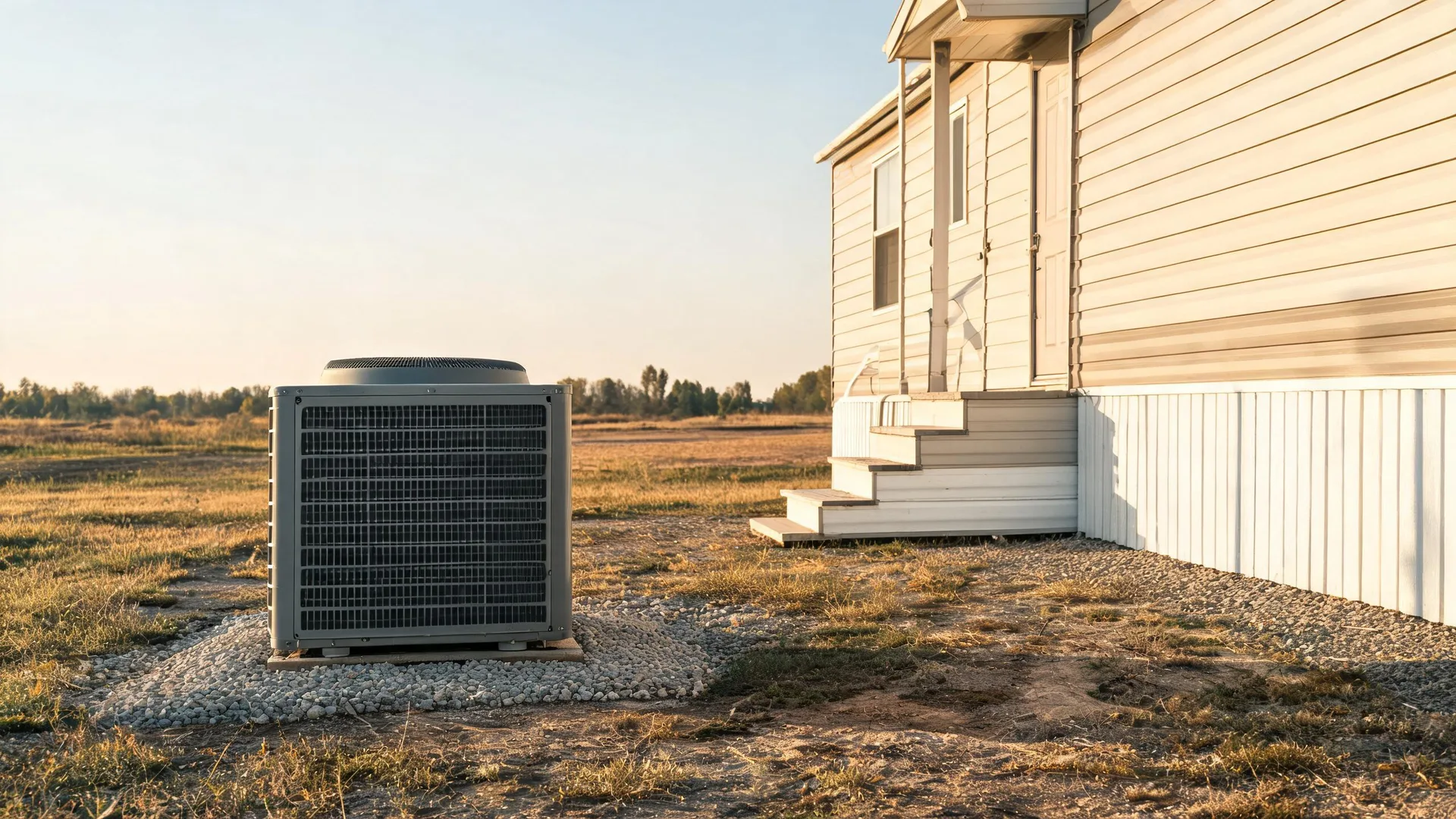
A gray heat pump condenser unit mounted on a concrete pad against the gray lap-siding exterior wall of a house.

This runs every month of the year, not just the hot or cold ones

A heat pump doesn't get a season off. It runs on the hot days to move heat out of the house, then switches direction on the cold ones to pull heat in from outside, and in between it's still cycling to hold the house steady. That reversing valve is what switches it between modes, and it's one of the first places trouble shows up. If the system starts blowing air that's not as warm or as cool as it should be, or it won't switch over when you'd expect, that valve is worth having checked. The outdoor unit takes the brunt of the wear since it's exposed to the weather on every one of those cycles, and the fan motor and compressor inside it are running more total hours than almost anything else at the house. Listen for a hum that doesn't turn into the fan actually spinning, or a unit that short cycles, shutting off and restarting every few minutes instead of running a full cycle. Both are signs of a part working harder than it should to do the same job.

What you can check before anyone comes out

Look at the thermostat first. Make sure it's set to the mode you want and the temperature is actually past where the room sits, since a setting bumped by accident looks like a broken system. Check the breaker box for a tripped switch. Go outside and look at the unit itself: clear away leaves, grass clippings or anything piled against the cabinet, since blocked airflow around the coil makes the whole system struggle. Pull the filter and hold it up to light. If you can't see through it, swap it or clean it, since a clogged filter chokes airflow on both the heating and cooling side.
What to leave for the contractor

Don't take the cabinet apart or go near the electrical disconnect. The refrigerant lines, the compressor and the reversing valve all need gauges and training to diagnose safely, and opening the unit without that just risks a bent fin or a burn. If the breaker trips more than once after you reset it, stop resetting it and call someone, since that usually means a short or a failing component drawing too much current. The same goes for a burning smell, standing water around the indoor unit, or ice built up on the outdoor coil. Those point to something inside that needs a trained eye, not a screwdriver.

A heat pump that's struggling will usually still run, and that's the trap. If the compressor is low on charge or starting to stick, it keeps trying to do the job with less than it needs, and that strain doesn't stay put. A compressor working against a bad reversing valve or a weak capacitor draws more current than it should every time it starts, and heat builds up in the windings that has nowhere to go. Run it long enough in that state and the compressor can burn out for good, which turns a repair into a full replacement of the outdoor unit. A fan motor that hums but won't spin is the same story. The compressor still fires, the system still calls for heat transfer, but without airflow across the coil it can't move heat the way it's supposed to, and that backs pressure up into parts not built to hold it. The fix early on is usually one part. Left running, it's whatever that part was about to take down with it.

Age isn't the only thing that decides this. A unit can be young and still not worth fixing if the compressor is the part that failed, since a compressor swap costs most of what a new outdoor unit costs anyway. A unit can be older and still worth fixing if the problem is a capacitor, a contactor or a fan motor, since those are cheap parts regardless of how old the system is around them. The question worth asking isn't just how old the unit is but what broke. A refrigerant leak that's been patched once before is a different conversation than a first-time leak. Ask the contractor what failed and whether that part tends to take others with it, and let that answer carry as much weight as the age does.