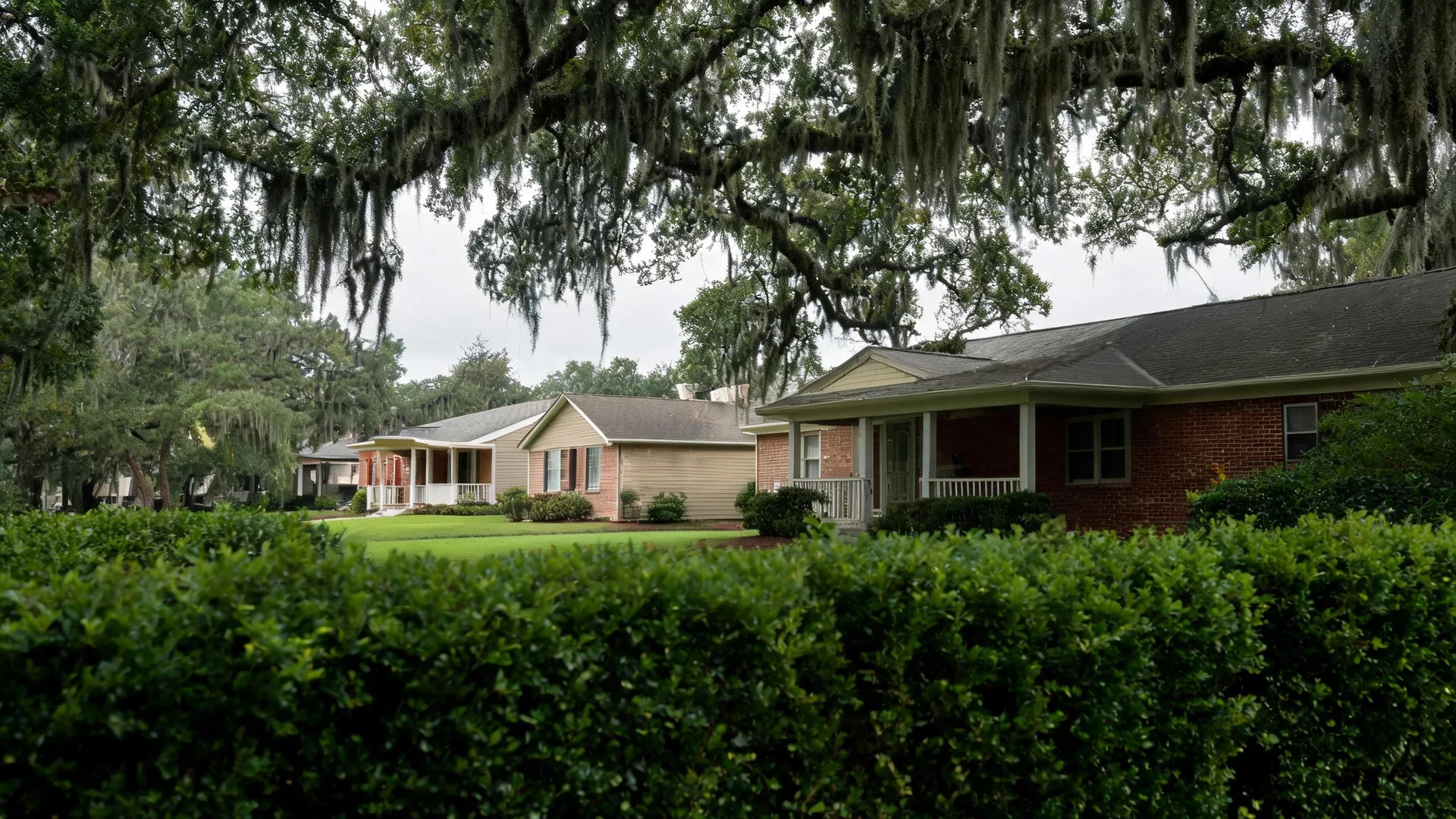






Single-story brick and siding houses with covered porches behind a trimmed hedge and lawn, framed by large oak branches draped with hanging moss under an overcast sky.

Heat Pump Repair in Calhoun, GA

Tell us about the job

Takes about a minute. No obligation.

RepairHeat PumpGordon County, GA
Step 1 of 2

What ZIP code is the job in?

Zone 3A, where Gordon County sits, is rated as a warm climate in the energy code. Summer is the long season here, and the air carries a lot of moisture with it, averaging a dew point of 67°F through June, July and August. That's heavier air than most of the country deals with. But a heat pump cooling thick air still isn't working as hard as one fighting the kind of heat that gets dry and extreme out west. The strain on the system comes more from hours run than from how hard each hour is. So a unit here that's acting up is more likely dealing with a worn part or a few years of buildup than real wear from the climate. That's usually a good reason to get it looked at rather than replaced.

7 months
October through April, your system heats
5 months
May through September, it cools
33°F
the average winter night it heats against
89°F
the average summer afternoon it cools against
Isometric cutaway illustration of a single-story house showing interior ductwork, an indoor air handler, and an outdoor condenser unit connected by lines along the exterior wall.
Your system heats October through April and cools May through September.

NOAA nClimDiv, 1991–2020 normals

A heat pump that cycles on and off all day puts wear on the same parts over and over, not on any single brutal stretch of heat.

If yours is acting up after years of normal runtime, a contactor or capacitor worth replacing is more likely than a compressor worth giving up on.

Half the homes in Gordon County are newer than that, and so is the equipment in them

Half the homes here were built by 1987
Climate zone 3A
Power here costs 14.33 cents per kilowatt-hour
October brings the first cold snap and the first breakdownHeat switches on in October here, and a weak part usually gives out in those first cold weeks.

A few things are worth checking before you call anyone out. Start at the thermostat. Make sure it's set to the mode you want and the temperature is actually past where the system would kick on. A dead thermostat battery can look exactly like a dead system. Next, go find the outdoor unit and see if the fan is spinning and air is moving through it. If the coil outside is packed with leaves, grass clippings or ice, clear what you can reach by hand, since restricted airflow there makes the whole system struggle. Inside, pull the filter and hold it up to a light. If you can't see light through it, replace it. A clogged filter starves the system of airflow and can cause it to freeze up or shut down on its own. Check that supply vents around the house are open and not blocked by furniture or rugs. Last, look at the breaker panel. A tripped breaker will sit in a middle position, not fully off, so look closely rather than just scanning for anything flipped. If you reset it and it trips again, stop there and let a contractor take it from that point.

Worth a repair call before a replacement one

A heat pump here isn't fighting the kind of climate that wears equipment down fast. That's a good reason to get a diagnosis before you write the system off. A worn part can be replaced. A compressor given up on too early can't be un-replaced.

Find a contractor
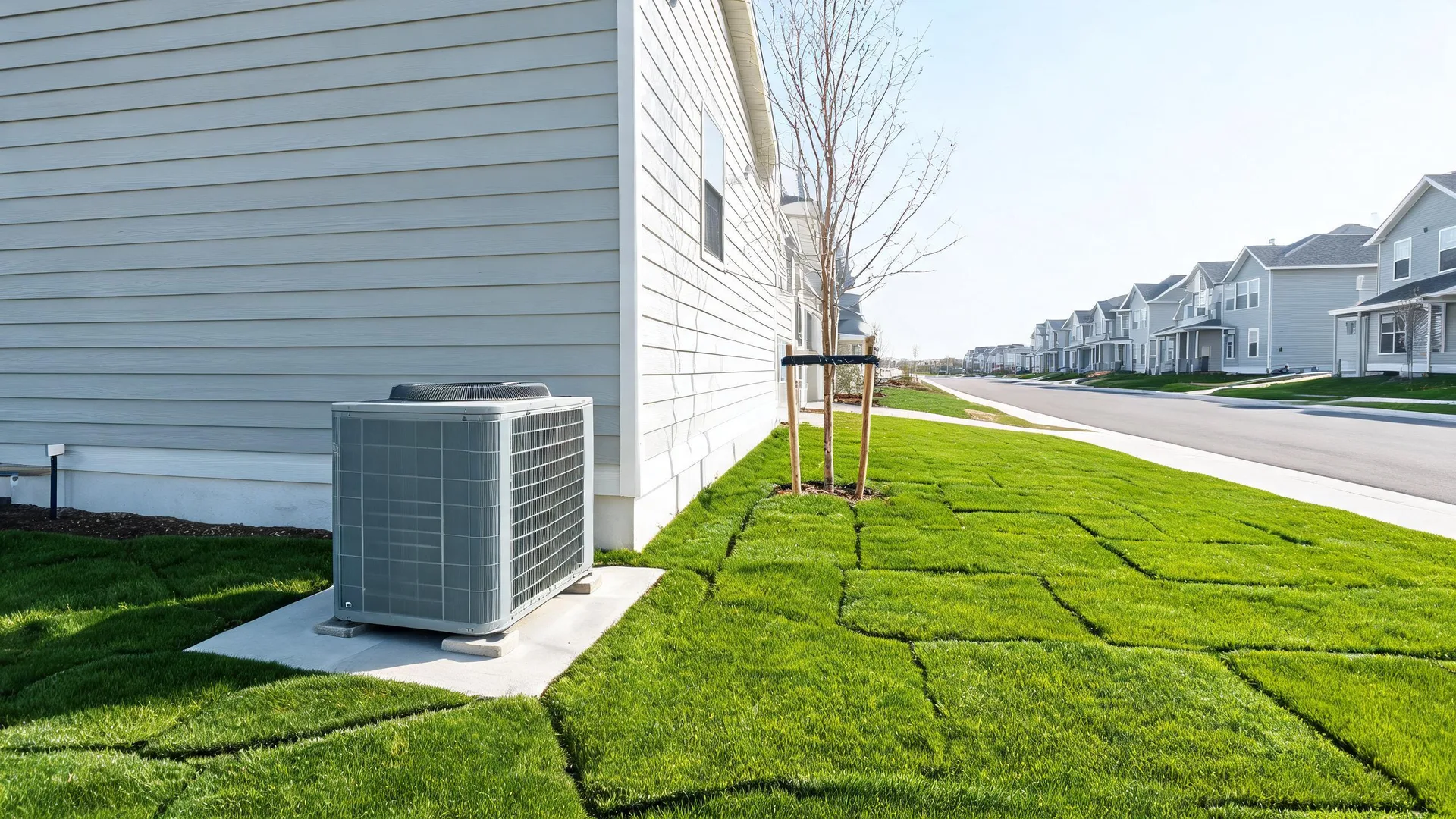
A gray heat pump outdoor unit mounted on a concrete pad next to the stone-accented exterior wall of a house.

How many years has this one got on it

If your heat pump came with the house, check what year that was. In a county where half the homes were built in 1987 or later, there's a decent chance yours still has years ahead of it. A system with life left in it is worth a repair call before a replacement one. The time-lapse above is the same unit, the same year, running day after day. What ages a heat pump is that running time, not a single bad stretch of weather. A few more years on a newer system is a reason to fix what's wrong.

What a failing heat pump sounds and feels like

Warm air blowing when it should be cool, or cool air blowing when it should be warm, usually means the reversing valve is stuck. Ice on the outdoor coil during a mild day points to a refrigerant leak or a failing defrost control. A grinding or screeching noise from the outdoor unit is a motor bearing going bad, not something that gets quieter on its own. Short cycling, where it kicks on and shuts off again within a few minutes, points to a thermostat problem, a dirty sensor, or a compressor that's struggling to start.
What to do once you notice it

None of these signs mean shut the whole system off and wait. A heat pump making a bad noise or blowing the wrong temperature of air is still safe to leave running while you get someone scheduled, unless breakers keep tripping or you smell something burning. Those two call for cutting power at the breaker first. Waiting too long on a small problem, like a failing capacitor, is how it turns into a bigger one, like a seized compressor.

A part that's struggling still does its job for a while, and that's what makes it easy to ignore. A capacitor losing strength makes the compressor pull harder to start every time it cycles on. A low refrigerant charge makes the compressor work to move heat it doesn't have enough refrigerant to move. Either way the compressor absorbs the difference, cycle after cycle, until it's the compressor that fails instead of the cheaper part that caused it. Airflow problems do the same thing from a different angle. A coil losing airflow, whether from a dirty filter or a blocked outdoor unit, forces the system to run longer to hit the same temperature, and a motor running longer wears faster. None of this happens on the first bad cycle. It happens over the cycles you let pass while the noise or the short cycling is already telling you something's wrong.

A diagnostic visit starts before any panel comes off. A tech will ask what it's doing, when it started, and whether it's one symptom or several, because a stuck reversing valve and a weak capacitor point in different directions from the first sentence. From there it's gauges and a meter, not guesswork. Refrigerant pressures get checked against what the system should be running at. Electrical components get tested under load, since a capacitor or contactor can look fine sitting still and fail the moment it's asked to do its job. The air handler and the outdoor unit both get a look, because a problem in one often shows up as a symptom in the other. By the end, the tech should be able to point to the one part causing the trouble and explain what happens if it's left alone.