





Single-story houses, one brick and one with light siding, both with covered porches, behind a mowed lawn and trimmed hedge, under large moss-draped oak branches.

Heat Pump Maintenance in Cumming, GA

Tell us about the job

Takes about a minute. No obligation.

Tune-up, service, or cleaningHeat PumpForsyth County, GA
Step 1 of 2

What ZIP code is the job in?

Winters here stay mild. Overnight lows average 33 degrees across December, January and February, so a heat pump in Cumming rarely has to work hard to keep up. That's lighter duty than what the same system would face further north. But mild doesn't mean maintenance free. The coils still collect dust, the refrigerant charge still needs checking, and the county has seen 48 damaging wind events and 14 hail events over the past decade, any of which can knock a unit out of alignment or dent the cabinet without you noticing right away. A yearly check catches that kind of wear before it turns into a breakdown.

Half the homes in Forsyth County were built in 2004 or later.

A heat pump that age still has years ahead of it, and a yearly check is what gets it there.

Heat here starts in October and runs seven months straight. Have it checked in September.

Cooling runs May through September
Heat runs October through April
48 damaging wind events from 2015 to 2024

A heat pump that needs a look usually tells you before it quits outright. Short cycling is one sign. It kicks on, runs a couple minutes, shuts off, then starts again soon after. That pattern often points to a refrigerant charge that's off or a sensor misreading the room. Weak airflow at the vents is another sign, especially when one room never gets comfortable while the rest of the house does fine. Ice on the outdoor unit outside of a normal defrost cycle means the refrigerant charge or the airflow across the coil needs attention. If the system seems to run longer than it used to just to hold the same temperature, it's working harder for the same result, and that's usually the first thing to show up before a real failure does.

Keep up the yearly check

Easy duty still wears parts. A yearly check keeps it going a long time.

Find a contractor
A man in a dark jacket, tan work pants and a cap, seen from behind, climbs stone steps toward a blue front door while carrying a canvas tool bag, with a blue planter of greenery at left.
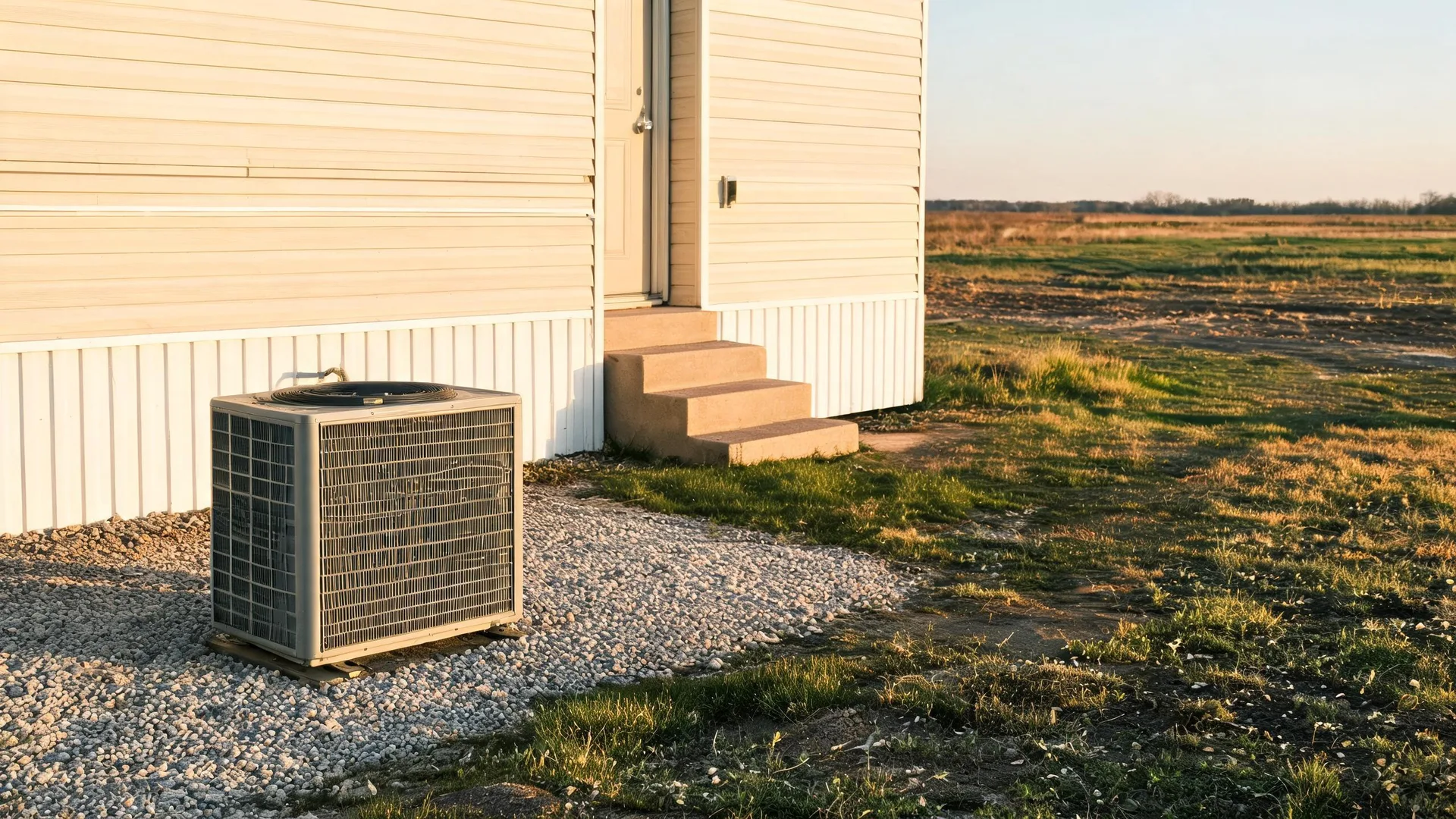
A residential heat pump outdoor unit mounted on a concrete pad next to a house with gray vinyl siding.

Newer system, still worth protecting

If your heat pump went in when the house was built, and the house went up in 2004 or later, that unit still has years ahead of it. Worth checking the install date if you're not sure which one you've got. Either way, a yearly check is what gets a system that age to its full working life instead of cutting it short.

Keep the outdoor unit clear

The outdoor unit needs open space around it to move air through the coil. Leaves, pine straw, mulch, and grass clippings build up against the cabinet and block that airflow. Keep a clear space on all sides and keep the top uncovered. Never lean anything against it or set a cover over it while it's running.
Change the filter, leave the rest alone

A dirty filter is the one thing that causes real damage if it's ignored, and it's the one thing safe to handle without a contractor. Check it monthly and swap it when it looks gray or clogged. Beyond that, don't open the cabinet or touch the refrigerant lines. Diagnosing a charge or a sensor takes gauges and training, and getting into those parts without them can cause the exact failure you're trying to prevent.

A tune-up gets inside parts of the system a homeowner never sees in daily use. The reversing valve, the part that switches the system between heating and cooling, gets tested to make sure it shifts cleanly both ways. The contactor and capacitor, which handle the electrical load every time the system cycles on, get checked for wear since those are common points of failure even when everything looks fine from outside. The refrigerant charge gets measured against what the system was designed to hold, not just checked for frost on the lines. Electrical connections get tightened, because a loose connection generates heat and that heat degrades the wire over time. None of this shows up as a visible problem until it fails outright, which is the point of catching it early.

The outdoor coil gets cleaned as part of a tune-up, not just looked at. Dust and grime settle into the fins between visits, and that film makes the coil work harder to move heat even when the airflow around the cabinet is clear. A contractor also checks the defrost cycle, since that's what clears frost off the coil in heating mode, and a defrost sensor or control board that's misreading things can leave the unit icing over or running a defrost cycle it doesn't need. The blower motor and its bearings get checked too, since a motor that's starting to wear sounds fine most days and then seizes on the day you need it most. None of this is guesswork. It's the same handful of checks every time, done whether the system seems fine or not, because the parts that fail are the ones nobody can see from the thermostat.