


Does a heat pump hold up on your coldest nights here
Your winters here are mild, but they are not short. Heat runs seven months a year, October through April, longer than the five months you run air conditioning. Whatever you pick spends more of the year heating than cooling.
The overnight low averages 33°F across December, January and February. That number matters more than it looks like it should, because a standard heat pump's output starts falling short of its rating below 40°F, and it often needs backup heat below about 35°F. Your average winter night is below both marks.
That does not mean the cold is severe. It falls to freezing or below about 60 nights a year, under a third of the nights in heating season, and almost none of those reach 0°F. A standard heat pump will lean on backup heat on some of those 60 nights. It will not be fighting single digits while it does it.
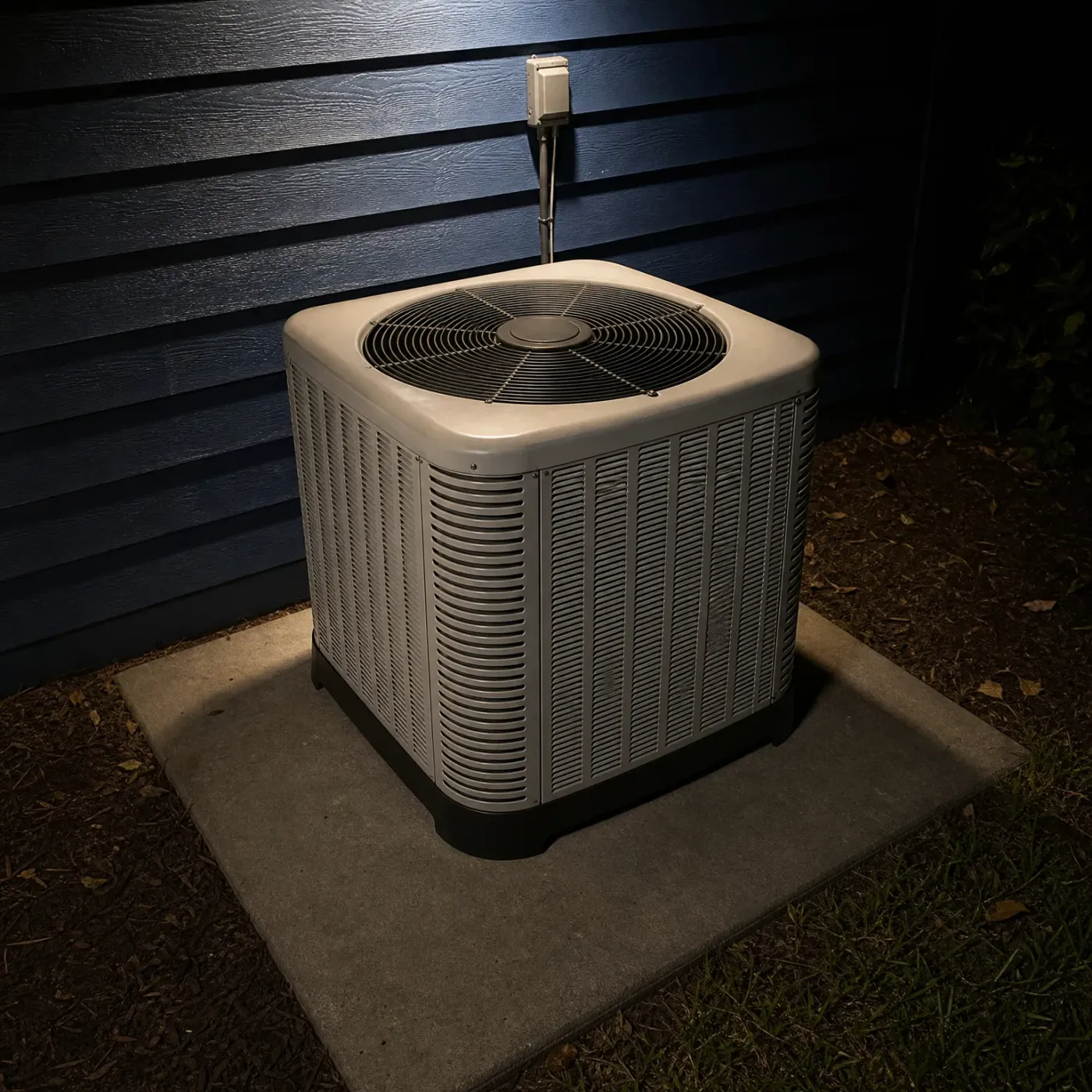
If you want to skip that question entirely, a heat pump built to the ENERGY STAR Cold Climate spec is tested to keep most of its heating power down to 5°F. Field tests on prototypes of these found that backup heat carried only a small share of the load between 0°F and 35°F, and running on backup alone was rare even above 0°F. That is the version of a heat pump built for a night like your coldest, not just your average one.